
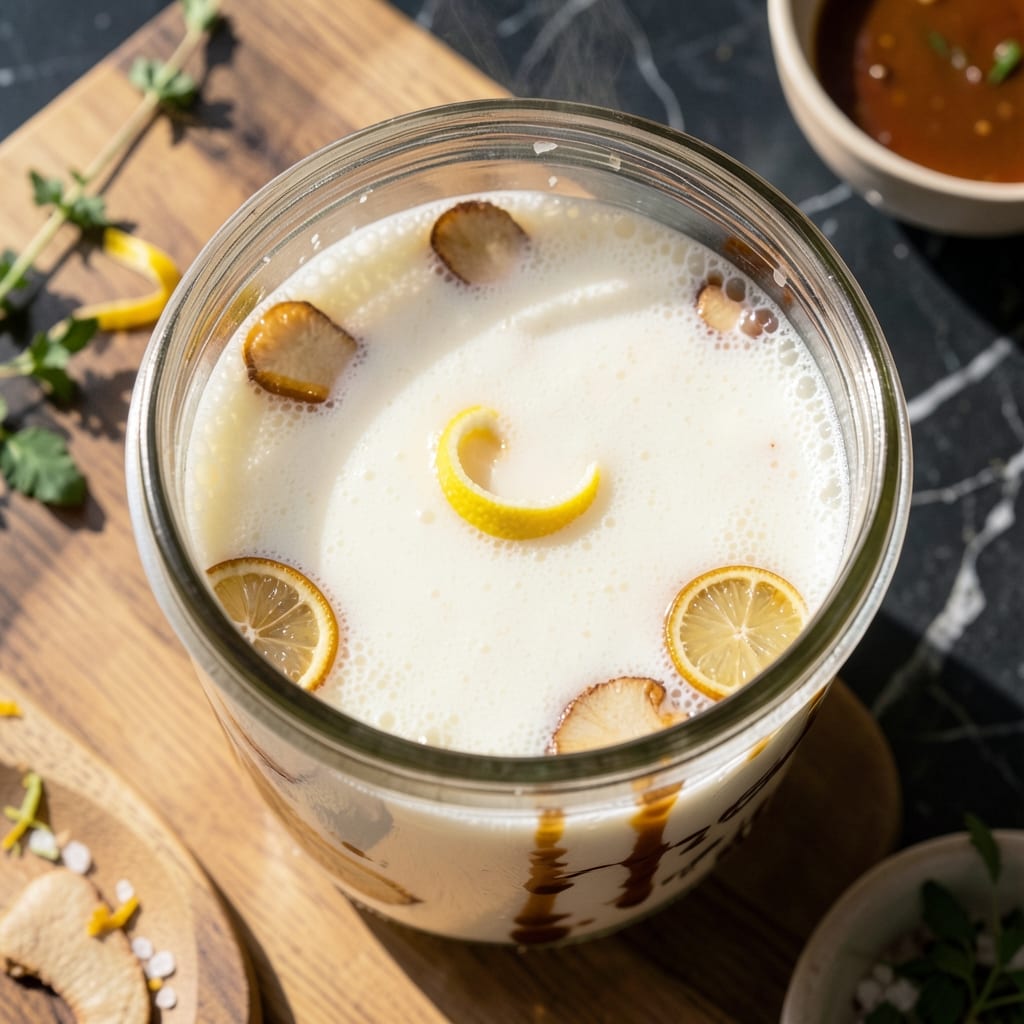
This simple fermented liquid transforms ordinary rice water into a probiotic-rich tonic for hair, skin, and even cooking applications. The process requires minimal effort but delivers maximum benefits through natural fermentation.
With just rice, water, and time, you’ll create a versatile solution that’s been used for centuries. The result is a milky, slightly tangy liquid packed with nutrients and beneficial bacteria.
Ingredients for Fermented Rice Water
Just rice, water, and a little patience for this gut-friendly elixir.
| Ingredient | Amount | Notes |
|---|---|---|
| White Rice 🍚 | 1 cup | Jasmine or basmati preferred |
| Filtered Water 💧 | 4 cups | Room temperature, chlorine-free |
| Sea Salt 🧂 | ½ tsp | Optional, for mineral boost |
| Lemon Peel 🍋 | 1 piece | Optional, for citrus notes |
| Ginger Slice 🌿 | 1 slice | Optional, for warmth |
| Raw Honey 🍯 | 0 cup | Omit for strict vegan |
The rice matters here. Jasmine or basmati give the cleanest results—avoid instant rice, which lacks starch. Use filtered water to prevent chlorine from inhibiting fermentation. I grab my rice from Trader Joe’s or the bulk bins at Whole Foods. The container should be glass or food-grade plastic (no metal). A wide-mouth jar makes stirring easier.
No jasmine rice? Any white rice works, but avoid brown rice for this—it ferments differently. Want to speed things up? A pinch of sugar (organic cane or coconut) feeds the bacteria. The optional add-ins are just that—optional. Lemon peel adds brightness, ginger gives a subtle kick. For the salt, Himalayan pink or Celtic sea salt add trace minerals.
Store at room temperature for 2-3 days while fermenting. Once tangy and milky, refrigerate for up to 1 week. The fermentation slows in the fridge but doesn’t stop—use it within 5 days for peak probiotic power. Strained liquid keeps in the fridge for 2 weeks.
Why You’ll Love This Recipe
- Set and Forget: I toss rice, water, and a pinch of sea salt in a jar, then let time do the work—no babysitting required.
- Zesty Brightness: The lemon peel and ginger slice infuse it with a subtle tang that’s weirdly addictive.
- Morning Ritual: Honestly, I reach for this before coffee now—great for toning skin or kickstarting my gut.
- Pennywise Glow: One batch lasts a week, and I’m basically turning leftover rice into liquid gold.
Step-by-Step Instructions for Fermented Rice Water
Here’s the method for creating this probiotic-rich liquid at home with minimal effort.
Step 1: Rinse and Prepare the White Rice
Place the 1 cup White Rice in a medium bowl and cover it with cool water. Gently swirl the rice with your hand for 30 seconds until the water becomes cloudy. This first rinse removes surface starch and any impurities.
Drain the rice carefully, then repeat the rinsing process two more times with fresh water. After the third rinse, the water should be noticeably clearer. This thorough cleaning ensures your fermented product has a clean, mild flavor without any bitterness from excess starch or contaminants.
Step 2: Combine Ingredients and Initial Soak
Transfer the rinsed 1 cup White Rice to a clean glass jar with a wide mouth. Add the 4 cups Filtered Water and stir gently to distribute the grains evenly. The room temperature, chlorine-free water provides the ideal environment for beneficial bacteria to start proliferating.
If using, add the 0.5 tsp Sea Salt, 1 piece Lemon Peel, and 1 slice Ginger Slice at this stage. These optional ingredients won’t just add subtle flavor—the salt provides minerals, while the lemon and ginger offer additional antimicrobial properties that support the fermentation process.
Step 3: Ferment at Room Temperature
Cover the jar with a breathable cloth or paper towel secured with a rubber band. This allows airflow while keeping out dust and insects. Place the jar in a warm spot away from direct sunlight, ideally where the temperature stays between 70-85°F.
Let the mixture sit undisturbed for 24-48 hours. You’ll know fermentation is progressing when you see tiny bubbles forming on the surface and the water develops a slightly tangy, yeasts aroma. The rice grains may rise to the top—that’s completely normal and indicates active fermentation.
Step 4: Strain and Store the Fermented Water
After 48 hours, or when the mixture has developed a distinct sour scent, it’s time to separate the liquid from the solids. Line a fine-mesh strainer with cheesecloth and place it over a clean bowl. Pour the mixture through, allowing all the liquid to drain completely.
The resulting cloudy white liquid is your fermented rice water. Transfer it to a clean glass bottle or jar and store it in the refrigerator. It will keep for up to 1 week when properly chilled. The cold temperature slows down further fermentation while preserving all the beneficial enzymes and probiotics you’ve cultivated.
Pro Tips For Making Fermented Rice Water
- Use Room Temp Water: Cold water slows fermentation—fill your jar with filtered water that’s been sitting out for an hour, especially in cooler kitchens.
- Rinse the Rice First: I learned this the hard way—unrinsed rice leaves starch that can turn your water cloudy and sour too fast; swirl and drain until it runs clear.
- Skip Metal Containers: Metal can react with the acidity from lemon peel and ginger, so stick to glass or ceramic for the full 24-48 hour ferment.
- Add Salt Last: Salt early can inhibit fermentation; wait until the final hour before straining to stir in the sea salt—about ½ teaspoon per cup of water.
Wine and Beer Pairings for This fermented rice water
Non-Alcoholic Pairings
This tangy liquid pairs beautifully with herbal teas like chamomile or mint. The slight acidity complements the floral notes perfectly. I love adding 1 oz to my morning green tea for a probiotic boost. 🌿
Cocktail Enhancer
Use 2 oz fermented rice water in a gin and tonic for a unique twist. The subtle rice notes add depth without overpowering the botanicals. It also works well in a moscow mule with vodka and ginger beer.
Beer Pairings
A light pilsner or wheat beer balances the tanginess beautifully. The crisp, clean finish of a German Hefeweizen like Paulaner is my top choice. Avoid hoppy IPAs that might clash with the delicate flavor. 🍺
Wine Options
Dry white wines like Sauvignon Blanc or Pinot Grigio complement the subtle sourness. A New Zealand Sauvignon Blanc with its citrus notes is particularly refreshing. Serve chilled at 45-50°F for best results.
Mocktail Creations
Mix 3 oz fermented rice water with 1 oz lime juice and 4 oz sparkling water for a refreshing spritzer. Add a splash of coconut water and fresh berries for a fruity twist. This makes a great non-alcoholic option.
Flavor Booster
Add 1 tbsp to fresh lemonade or iced tea for extra complexity. The probiotics make these summer drinks even more refreshing. I always keep some on hand for this purpose. ✨
Nutrition Facts
Frequently Asked Questions
How long does fermentation take?
Typically 24-48 hours at room temperature. Look for bubbles and a tangy smell to confirm it’s ready. Warmer environments may speed this up slightly.
What kind of rice works best?
Jasmine or basmati give the cleanest flavor and clearest results. Avoid instant rice, as it lacks the starch needed for proper fermentation.
Can I use metal containers during fermentation?
No, metal can react with the acidic liquid. Always use glass or food-grade plastic containers to prevent contamination.
How do I know if it’s gone bad?
Toss it if you see mold, an off smell, or slimy texture. Proper fermentation should smell slightly sour, not rotten.

- Fresh Turmeric Rice Recipe: Golden Grains with Earthy Warmth - October 7, 2026
- French Onion Brown Rice Recipe: Umami-Rich Grains With Caramelized Depth - October 7, 2026
- Rice Noodle Soup Recipe: Aromatic Broth with Silky Strands - October 7, 2026