
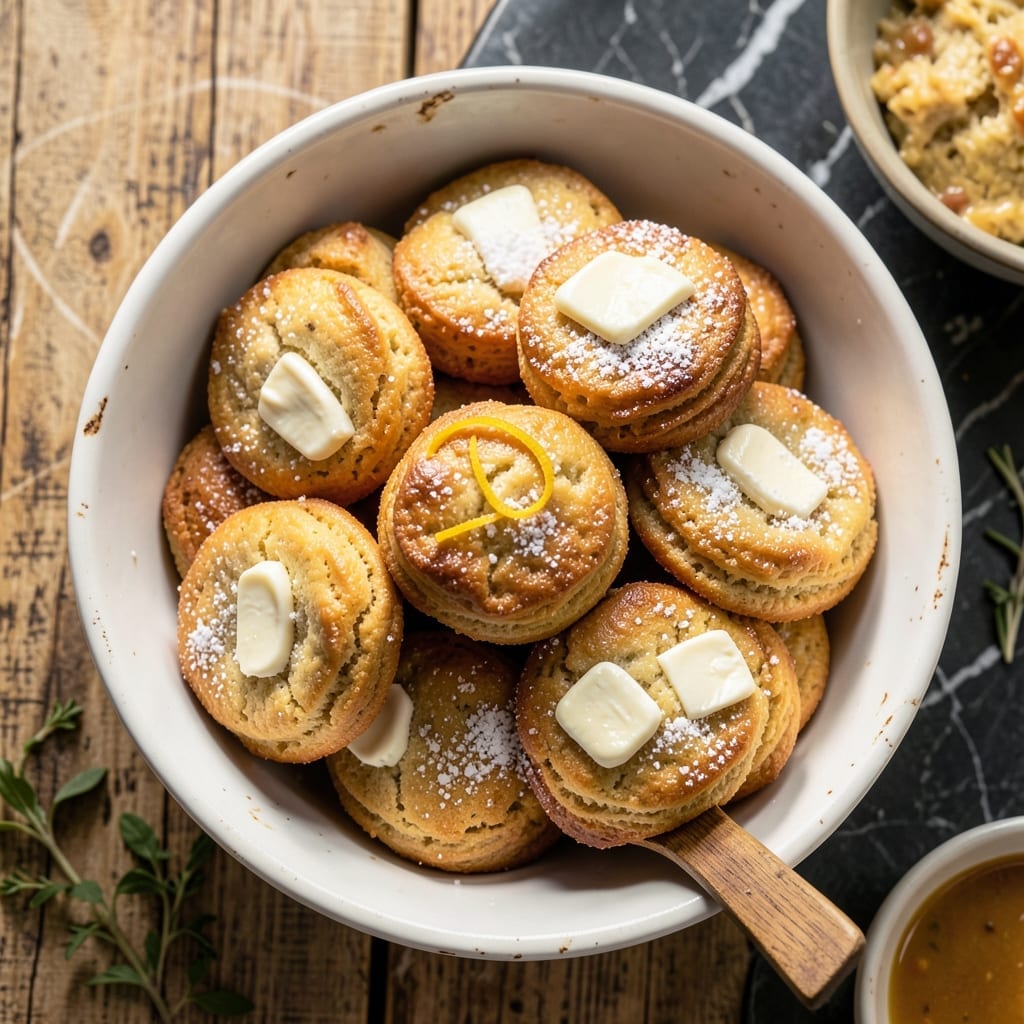
This recipe delivers flaky gluten-free biscuits that rise beautifully thanks to rice flour’s unique texture. The secret lies in cold ingredients and minimal handling to preserve those delicate layers.
You’ll achieve tender, golden biscuits with a crisp exterior—perfect alongside any meal. The rice flour base creates a lightness that rivals traditional versions while keeping it entirely gluten-free.
Ingredients for Gluten Free Biscuit Recipe with Rice Flour
Light, flaky layers start with rice flour and just a handful of pantry staples.
| Ingredient | Amount | Notes |
|---|---|---|
| White Rice Flour 🌾 | 2 cups | Fine grind, not sweet rice flour |
| Tapioca Starch 🌾 | ½ cup | For elasticity and structure |
| Baking Powder 🧂 | 1 tbsp | Aluminum-free preferred |
| Salt 🧂 | 1 tsp | Fine sea salt recommended |
| Granulated Sugar 🍚 | 1 tbsp | Optional, for slight sweetness |
| Cold Unsalted Butter 🧈 | ½ cup | Cut into small cubes |
| Large Egg 🥚 | 1 whole | Cold, for binding |
| Buttermilk 🥛 | ¾ cup | Cold, full-fat preferred |
| Xanthan Gum 🧪 | ½ tsp | For better texture and rise |
| All-Purpose Gluten-Free Flour Blend 🌾 | ½ cup | Like Bob's Red Mill 1-to-1 |
The rice flour is non-negotiable for texture. Bob’s Red Mill white rice flour is widely available and reliable. Tapioca starch adds chew—don’t substitute cornstarch here. For the gluten-free blend, use one with xanthan gum already included (like King Arthur’s Measure for Measure) or add your own as listed. Cold butter is critical; cube it and chill until ready to use.
No buttermilk? Mix 3/4 cup milk with 2 tsp lemon juice and let sit 5 minutes. Out of xanthan gum? Psyllium husk powder at half the amount works in a pinch. For a richer flavor, swap the egg for 1/4 cup plain Greek yogurt. The tapioca starch can be replaced with arrowroot powder if needed, but the texture will be slightly different.
Biscuits are best eaten fresh but can be stored. Keep in an airtight container at room temperature for 1-2 days. Reheat in a 350°F oven for 5-10 minutes to restore flakiness. Freeze unbaked dough for up to 1 month—bake straight from frozen, adding a few extra minutes.
Why You’ll Love This Recipe
- Mix and Bake: I love that I just dump the rice flour, tapioca starch, and a few pantry staples in a bowl—no fancy steps.
- Flaky Crust: The combo of rice flour and tapioca starch gives them that buttery, layered texture I crave.
- Breakfast to Dinner: Honestly, they work with jam at dawn or gravy at dusk.
- Freezer Friendly: I double the batch and freeze half—pop one in the oven whenever the mood strikes.
Step-by-Step Instructions for Gluten Free Biscuits With Rice Flour
Master these precise steps for bakery-style flaky layers with gluten-free ingredients.
Step 1: Combine Dry Ingredients for Structure
In a large mixing bowl, whisk together the 2 cups White Rice Flour, 0.5 cup Tapioca Starch, 0.5 cup All-Purpose Gluten-Free Flour Blend, 1 tbsp Baking Powder, 1 tsp Salt, 1 tbsp Granulated Sugar, and 0.5 tsp Xanthan Gum. The xanthan gum is critical here—it mimics gluten’s elasticity for proper rise.
Whisk vigorously for 30 seconds until no lumps remain. The mixture should look uniform and slightly aerated. This ensures even distribution of leavening agents, which is essential for achieving those coveted flaky layers in gluten-free baking.
Step 2: Cut in Cold Butter for Flakiness
Add the 0.5 cup Cold Unsalted Butter (already cut into small cubes) to the dry mixture. Using a pastry cutter or your fingertips, work the butter into the flour until the mixture resembles coarse crumbs with pea-sized butter pieces visible. The butter must stay cold—this creates steam during baking that lifts the dough into layers.
If the butter begins to melt from your hands, chill the bowl in the freezer for 5 minutes before continuing. The texture should be uneven, with distinct butter pieces. This is the secret to achieving that classic biscuit flakiness without gluten.
Step 3: Incorporate Wet Ingredients Gently
Make a well in the center of the flour-butter mixture. Add the 1 whole Large Egg and 0.75 cup Buttermilk. Using a fork, gently stir from the center outward until the dough just comes together. It will look shaggy and slightly sticky—that’s exactly right.
Do not overmix. Gluten-free biscuit dough requires a light touch to maintain air pockets. The dough should hold together when pressed but still have visible streaks of flour. This gentle handling preserves the layers formed by the cold butter.
Step 4: Shape and Cut with Precision
Turn the dough onto a lightly floured surface (use some of the White Rice Flour from your mixture). Pat it into a 1-inch thick rectangle. Fold the rectangle in half like a book, then pat down again to 1-inch thickness. Repeat this folding and patting process twice more.
This laminating technique creates distinct layers in your biscuits. Use a 2.5-inch biscuit cutter to cut out rounds, pressing straight down without twisting. Twisting seals the edges and prevents proper rise. Gather scraps, re-pat, and cut until all dough is used.
Step 5: Bake Until Golden and Flaky
Preheat oven to 425°F. Place biscuits on a parchment-lined baking sheet, touching slightly for softer sides or spaced apart for crispier edges. Bake for 12-15 minutes until the tops are golden brown and the layers are visibly separated.
Resist opening the oven during the first 10 minutes—the initial high heat is crucial for maximum rise. The biscuits are done when the bottoms are deep golden and a toothpick inserted in the center comes out clean. Transfer to a wire rack and serve warm for the best texture.
Pro Tips For Making Gluten Free Biscuit Recipe With Rice Flour
- Chill the Dough: I learned this the hard way—gluten-free biscuit dough with rice flour needs 15-20 minutes in the fridge before shaping. It prevents crumbling and gives the starches time to hydrate properly.
- Preheat the Oven: Sounds obvious, but I skipped this once and ended up with dense, flat biscuits. A fully preheated oven at 425°F guarantees the baking powder activates right away for maximum rise.
- Measure Precisely: Rice flour and tapioca starch behave differently than wheat flour—scoop and level each cup, or better yet, weigh them (120g rice flour, 60g tapioca starch). Eyeballing it usually means dry, gritty biscuits.
- Add Vinegar: Sounds weird, but it works: mix 1 teaspoon of apple cider vinegar into your wet ingredients. It reacts with the baking powder for a little extra lift, which gluten-free biscuits desperately need.
Health Benefits of This Recipe
Easy Digestion
Rice flour is naturally gluten-free and gentle on sensitive stomachs, making these biscuits ideal for anyone with celiac disease or gluten intolerance. The fine grind creates a light texture that’s easier to digest than many grain-based flours. I’ve served these to gluten-sensitive friends with zero issues. 💪
Rich in Nutrients
This flour provides essential B vitamins, iron, and magnesium that support energy metabolism. The buttermilk adds calcium and vitamin D, while the egg contributes high-quality protein. Each biscuit delivers a balanced mix of nutrients without heavy processing.
Lower Glycemic Impact
White rice flour has a moderate glycemic index, which means it causes a slower, steadier rise in blood sugar compared to wheat flour. The combination with tapioca starch and butter further slows digestion, helping maintain stable energy levels throughout your morning.
Allergy-Friendly
Beyond being gluten-free, this recipe avoids common allergens like nuts and soy. The simple ingredient list makes it easier to control for dietary restrictions. I always check labels on my Bob’s Red Mill flours to ensure no cross-contamination.
For nut-free certification, verify your baking powder is produced in dedicated facilities.
Gut Health Support
The resistant starch in rice flour acts as a prebiotic, feeding the good bacteria in your gut. When paired with the probiotics in buttermilk, these biscuits may actually support your digestive health. It’s a delicious way to nourish your microbiome.
Nutrition Facts
Frequently Asked Questions
Why use rice flour in gluten-free biscuits?
Rice flour provides a light, delicate texture that mimics traditional biscuits. Its fine grind creates flaky layers without the density of other gluten-free flours. It also has a neutral taste that lets other flavors shine.
Can I substitute almond flour for rice flour?
No, almond flour behaves differently and won’t produce the same flaky texture. It also adds a nutty flavor that may not suit all dishes. For best results, stick with rice flour or a similar starch-based alternative.
How do I prevent my biscuits from being crumbly?
Ensure you use xanthan gum and don’t overmix the dough. Cold butter and minimal handling are key. If they still crumble, try adding 1 extra tablespoon of buttermilk next time.

- Fresh Turmeric Rice Recipe: Golden Grains with Earthy Warmth - October 7, 2026
- French Onion Brown Rice Recipe: Umami-Rich Grains With Caramelized Depth - October 7, 2026
- Rice Noodle Soup Recipe: Aromatic Broth with Silky Strands - October 7, 2026