
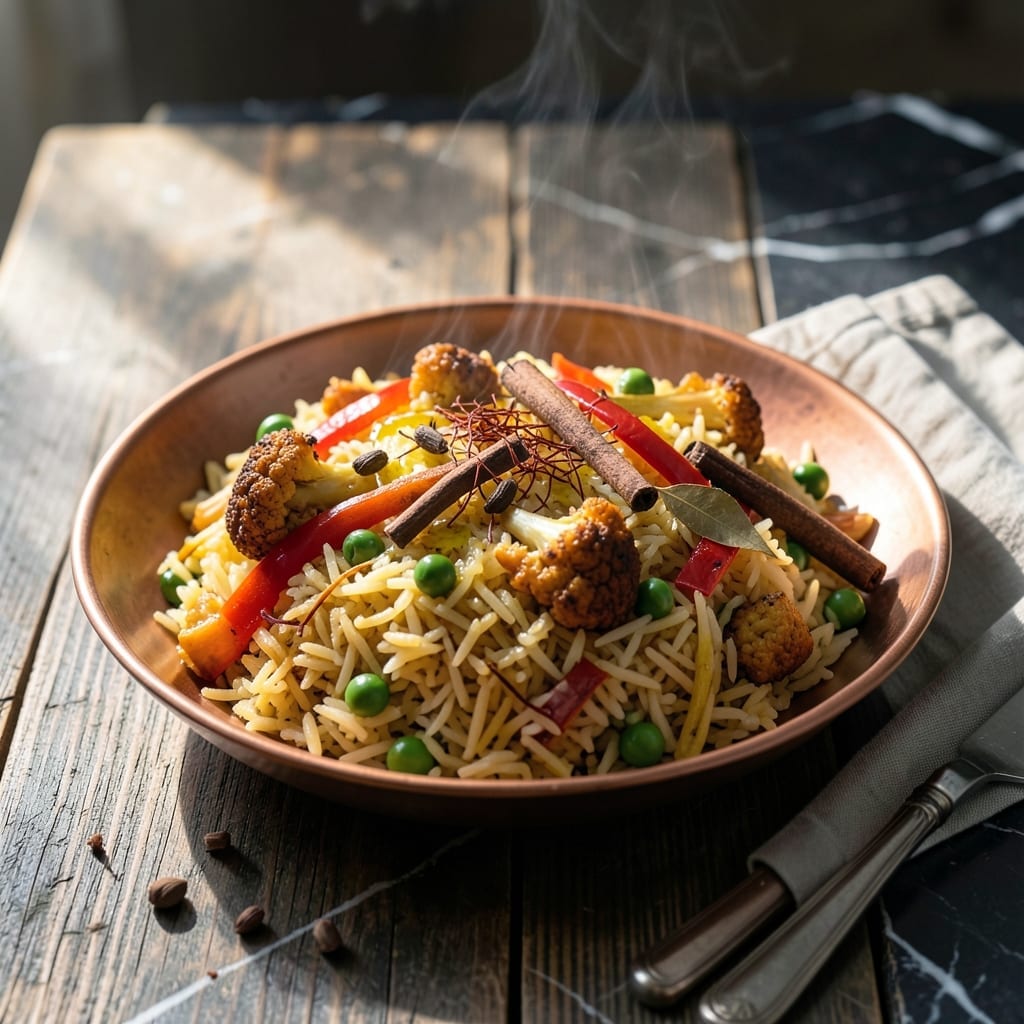
This fragrant pilaf transforms simple rice into a vibrant, spice-infused dish that brings Indian flavors to your table. I developed this recipe to capture the essence of traditional techniques without complicating the process.
Whole spices like cumin and cardamom bloom in hot oil, releasing their aromatic depth before the rice and vegetables join the mix. The result is a dish where every grain carries the warmth of the spices and the freshness of the produce.
What you get is a one-pot meal that’s as visually stunning as it is delicious, with colorful vegetables peeking through golden rice. The spices are balanced to enhance, not overpower, making this a versatile side for any main course.
Perfect for weeknight dinners or special occasions, this pilaf delivers restaurant-quality taste with minimal effort. Here’s how to make it.
Ingredients for Indian Vegetable Rice Pilaf
Basmati rice and fresh veggies meet warm spices for a one-pot Indian feast.
| Ingredient | Amount | Notes |
|---|---|---|
| Basmati Rice 🌾 | 1 ½ cups | Rinsed until water runs clear |
| Cumin Seeds 🌿 | 1 tsp | Whole, for blooming in oil |
| Green Cardamom Pods 🌿 | 4 pieces | Lightly crushed to release aroma |
| Cinnamon Stick 🌿 | 1 whole | 2-inch piece for depth |
| Bay Leaf 🍃 | 1 whole | Dried, for infusion |
| Cloves 🌿 | 3 whole | For aromatic warmth |
| Vegetable Oil 🫒 | 2 tbsp | Neutral flavor for blooming spices |
| Yellow Onion 🧅 | 1 whole | Medium, finely diced |
| Garlic Cloves 🧄 | 3 cloves | Minced for even distribution |
| Carrots 🥕 | 2 whole | Medium, diced into small cubes |
| Green Beans 🌱 | 1 cup | Trimmed, cut into 1-inch pieces |
| Frozen Green Peas 🌱 | ½ cup | No need to thaw first |
| Fresh Cilantro 🌿 | ¼ cup | Chopped, for garnish |
| Vegetable Stock 💧 | 2 ½ cups | Low-sodium preferred for control |
| Kosher Salt 🧂 | 1 tsp | Adjust to taste at end |
The spices are non-negotiable here. Whole cumin, cardamom, and cloves bloom in hot oil to release their full aroma—pre-ground just won’t cut it. I grab mine from Patel Brothers or any Indian grocery for the freshest stock. Basmati rice is key too; look for aged rice (it’ll say so on the package) for that perfect, separate grain texture. Rinse it well—until the water runs clear—to remove excess starch.
Out of green beans? Zucchini or bell peppers work beautifully—just cut them small so they cook through. No fresh cilantro? Parsley or mint can stand in (though the flavor shifts slightly). For the stock, Better Than Bouillon vegetable base is my go-to—dissolve it in hot water. The peas are flexible too (frozen works in a pinch, but fresh is divine if you can find them).
Pilaf tastes even better the next day once the spices meld. Store in an airtight container in the fridge for up to 4 days. Reheat with a splash of water to bring back the moisture. Doesn’t freeze well—the rice gets mushy.
Why You’ll Love This Recipe
- One Pot Wonder: I just dump everything in, let the basmati soak up those cumin and cardamom aromas, and walk away.
- Fragrant First Bite: The cinnamon and bay leaf hit you before the rice even touches your tongue.
- Meal Prep Hero: I make a big batch Sunday and it’s still delicious by Wednesday’s lunch.
- Stretches Far: A pound of rice and a handful of spices feeds my whole family for two nights.
Step-by-Step Instructions for Indian Vegetable Rice Pilaf
Here’s the method. Simple steps, big flavors, foolproof results every time.
Step 1: Bloom the Spices in Hot Oil
Heat the 2 tbsp vegetable oil in a large, heavy-bottomed pot over medium heat. Add the 1 tsp cumin seeds, 4 pieces green cardamom pods, 1 whole cinnamon stick, 1 whole bay leaf, and 3 whole cloves. Stir constantly for 30-45 seconds until the spices release their aroma and the cumin seeds begin to sizzle.
This step is non-negotiable—it awakens the essential oils in the spices, creating the fragrant foundation of the dish. Be careful not to burn them; if the cumin turns dark brown, you’ve gone too far. Remove the pot from heat immediately if this happens.
Step 2: Sauté the Aromatics and Vegetables
Add the finely diced 1 whole yellow onion to the spiced oil and cook for 4-5 minutes until softened and just starting to turn translucent. Stir in the minced 3 cloves garlic cloves and cook for another 30 seconds until fragrant.
Next, add the diced 2 whole carrots and cook for 3 minutes, stirring occasionally. Then add the trimmed 1 cup green beans and 0.5 cup frozen green peas. Cook for an additional 2 minutes to take the raw edge off the vegetables. The goal here is to soften them slightly without fully cooking them—they’ll finish in the rice.
Step 3: Toast the Rice and Add Liquids
Add the rinsed and drained 1.5 cups basmati rice to the pot and stir to coat the grains in the spiced oil and vegetables. Toast the rice for 2-3 minutes, stirring frequently, until the edges of the grains appear slightly translucent and the rice smells nutty.
Pour in the 2.5 cups vegetable stock and add the 1 tsp kosher salt. Stir well to combine, ensuring the rice is evenly distributed in the liquid. The stock should come about ½ inch above the rice—if it doesn’t, add a splash of water to compensate.
Step 4: Simmer and Steam to Perfection
Bring the mixture to a boil over medium-high heat. Once boiling, reduce the heat to low, cover the pot with a tight-fitting lid, and let it simmer undisturbed for 15 minutes. Resist the urge to peek—releasing steam interrupts the cooking process and can lead to unevenly cooked rice.
After 15 minutes, turn off the heat and let the rice sit, still covered, for an additional 10 minutes. This steaming step is critical for fluffy, separate grains. The rice is done when all the liquid has been absorbed and the grains are tender but not mushy.
Step 5: Fluff and Garnish for Serving
Remove the lid and fluff the rice gently with a fork, taking care not to break the grains. Taste and adjust the seasoning with additional salt if needed—remember, the stock was low-sodium, so you’ll likely need a bit more.
Discard the whole spices (cinnamon stick, bay leaf, cardamom pods, and cloves) if you prefer, or leave them in for a more pronounced flavor. Sprinkle the chopped 0.25 cup fresh cilantro over the top and toss lightly to distribute. Serve warm, with extra cilantro on the side for garnish.
Pro Tips For Making Indian Vegetable Rice Pilaf
- Soak the Basmati: Cover basmati rice in cold water for 20-30 minutes before cooking—this keeps the grains separate and fluffy, not mushy. I learned this the hard way after ending up with sticky rice more than once.
- Toast Whole Spices: Heat cumin seeds, cardamom pods, cinnamon stick, and bay leaf in hot oil for 30 seconds until fragrant before adding anything else. Sounds simple, but it actually changes the outcome by waking up their flavors.
- Skip the Stirring: Resist the urge to stir the rice while it cooks. Disturbing it breaks the grains and releases excess starch, and you’ll lose that perfect pilaf texture.
- Use a Heavy Pot: A thick-bottomed pot prevents scorching and guarantees even cooking for the rice and spices. After burning three batches in thin pans, I finally switched and never looked back.
Health Benefits of This Dish
Nutrient-Rich Grains
Basmati rice provides complex carbohydrates for sustained energy, plus fiber to support digestion. A 1.5-cup serving of cooked rice offers about 10% of your daily fiber needs. I love how it keeps me full without feeling weighed down. 💪
Vitamin-Packed Vegetables
The colorful mix of carrots, green beans, and peas delivers a powerhouse of vitamins. You get vitamin A from carrots, vitamin C from peas, and folate from green beans. Together, they create a balanced, nutrient-dense profile.
Spice-Driven Health
Whole spices like cumin and cardamom aren’t just flavorful—they’re packed with antioxidants. Cumin may aid digestion, while cardamom has anti-inflammatory properties. Even the cinnamon stick adds a boost of manganese and calcium.
Low-Calorie, High-Impact
This dish is naturally low in calories but high in nutrients, making it perfect for a healthy diet. A serving of pilaf comes in at around 250-300 calories, with most of the calories coming from the rice and vegetables.
Plant-Based Protein
Peas and basmati rice together provide a surprising amount of plant-based protein. A single serving contributes roughly 8-10 grams of protein, making this a great option for vegetarians or anyone looking to reduce meat intake.
Heart-Healthy Fats
The dish uses minimal oil—just 2 tbsp for the entire recipe. Most of the fat comes from the healthy unsaturated fats in vegetable oil, which support heart health. I always use neutral oils to let the spices shine. ✨
Nutrition Facts
Frequently Asked Questions
Can I use jasmine rice instead of basmati?
Yes, but the texture will differ. Jasmine rice is stickier and less fragrant. For best results, use 1.5 cups and reduce cooking liquid by ¼ cup to prevent mushiness.
How do I prevent the rice from turning mushy?
Rinse the rice thoroughly until water runs clear and avoid stirring while cooking. Let it steam covered for the full 10 minutes after simmering. This keeps grains separate.
What’s the best way to store leftovers?
Transfer to an airtight container once cooled. Refrigerate for up to 4 days. Reheat with a splash of water to restore moisture.

- Mujadara Rice and Lentils Recipe: Earthy Spiced Lentils With Caramelized Onions - November 1, 2026
- Naija Fried Rice Recipe: Street-Style Spice With Veggie Crunch - November 1, 2026
- Mushy Rice Recipe: Fluffy Grains Transformed in Minutes - November 1, 2026