
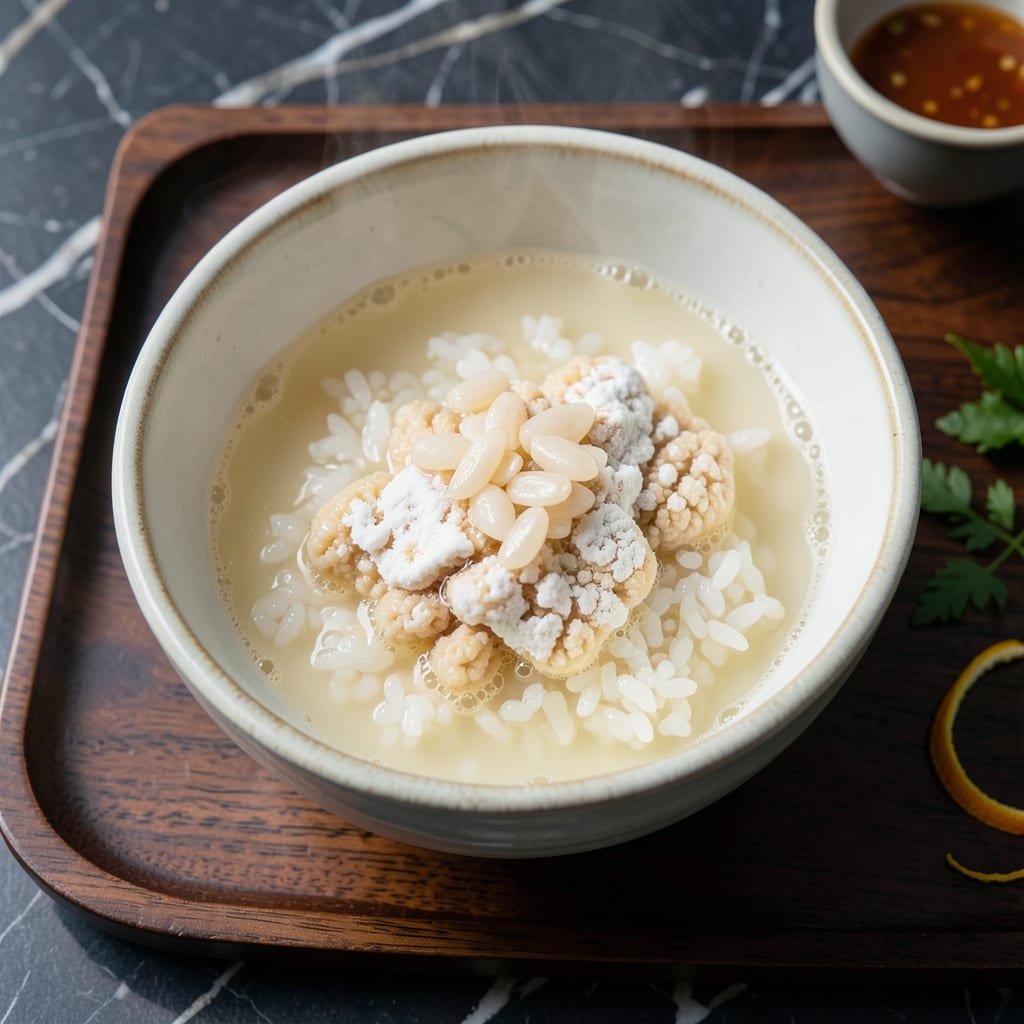
This traditional beverage offers a unique way to experience Japanese fermentation at home. The process transforms simple rice into a lightly effervescent drink with subtle sweetness and delicate aromas.
What sets this creation apart is the careful balance of koji mold, yeast, and precise fermentation times. The rice breaks down slowly, developing complex flavors that improve with each passing day.
You’ll end up with a clean, slightly tart liquid that’s both refreshing and culturally significant. The final product carries hints of melon and rice, with a gentle fizz that dances on the palate.
Serve chilled for the best experience. The method rewards patience and attention to detail.
Ingredients for Japanese Rice Beer
These traditional ingredients ferment into a refreshing, lightly fizzy Japanese beverage with subtle complexity.
| Ingredient | Amount | Notes |
|---|---|---|
| Short-Grain White Rice 🍚 | 2 cups | Rinsed until water runs clear |
| Koji Rice 🍚 | ½ cup | Cultured rice with Aspergillus oryzae |
| Water 💧 | 4 cups | Filtered or spring water preferred |
| Sake Yeast 🍺 | ½ tsp | Dry yeast for fermentation |
| Lactic Acid Bacteria 🧫 | ¼ tsp | Optional for acidity development |
| Organic Cane Sugar 🍚 | 2 tbsp | Dissolved in warm water |
| Ginger Root 🌿 | 1 piece | 1-inch knob, peeled and sliced |
| Lemon Zest 🍋 | 1 tsp | For subtle citrus aroma |
| Sea Salt 🧂 | ¼ tsp | Fine grain for dissolution |
| Dried Raisins 🍇 | ¼ cup | Optional for additional sweetness |
The rice is everything here. Short-grain white rice (like Calrose or Koshihikari) gives the right starch content for fermentation. Koji rice is non-negotiable—look for it at Asian markets or online from Cultures for Health. Avoid long-grain rice; it lacks the sticky quality needed. Filtered water matters too, as chlorine can inhibit fermentation.
No koji rice? You can make your own by inoculating steamed rice with koji spores (available from Northwest Ferment), but it adds a week to the process. Sake yeast can be swapped for champagne yeast at the same ratio. The sugar can be replaced with agave syrup at one-third the amount for a different sweetness profile.
Store the fermenting mixture in a dark, warm place (70-75°F) for 3-5 days. Once complete, refrigerate and consume within 2 weeks. The flavor continues to develop, so taste daily after day 2. Always use sanitized equipment to prevent contamination.
Why You’ll Love This Recipe
- Set and Forget: I mix the rice, koji, and water, then let the yeast do the work—no babysitting required.
- Umami Bomb: The koji rice adds this deep, savory richness that makes every sip ridiculously satisfying.
- Party Starter: I serve this at gatherings and it’s always the conversation piece—light, bubbly, and just different enough.
- Budget Sip: A batch costs pennies compared to store-bought sake, and I get liters from a few pounds of rice.
Step-by-Step Instructions for Japanese Rice Beer
This traditional fermentation process requires precision and patience for optimal flavor development.
Step 1: Prepare the Rice Base
Rinse the 2 cups Short-Grain White Rice under cold water until the water runs completely clear. This removes excess starch that could inhibit fermentation. Drain thoroughly in a fine-mesh strainer.
Combine the rinsed rice with the 0.5 cup Koji Rice in a large fermentation vessel. The koji rice introduces the necessary enzymes to convert starches into fermentable sugars. Add the 4 cups Water and stir gently to distribute the grains evenly.
Step 2: Activate the Fermentation Cultures
In a small bowl, dissolve the 2 tbsp Organic Cane Sugar in ¼ cup of the warm water from your measured amount. This creates an ideal environment for the microorganisms to activate.
Add the 0.5 tsp Sake Yeast and 0.25 tsp Lactic Acid Bacteria to the sugar water. Let this mixture sit for 10-15 minutes until it becomes slightly foamy, indicating the cultures are active. Then pour this starter into your rice mixture.
Step 3: Incorporate Flavor Enhancers
Peel and slice the 1 piece Ginger Root into thin rounds. Add these along with the 1 tsp Lemon Zest, 0.25 tsp Sea Salt, and 0.25 cup Dried Raisins to the vessel. The ginger adds subtle warmth, while the lemon zest provides a bright counterpoint to the sweetness.
Stir all ingredients thoroughly to ensure even distribution. The raisins will plump during fermentation, contributing natural sweetness and complexity to the final product.
Step 4: Ferment Under Controlled Conditions
Cover the vessel with a clean cloth secured with a rubber band to allow airflow while keeping contaminants out. Store at room temperature (70-75°F) in a dark place for 48-72 hours, stirring once daily.
You’ll notice bubbling activity within 24 hours, signaling active fermentation. The mixture should develop a slightly sweet, tangy aroma with no off-odors. The surface may appear foamy—this is normal and indicates healthy fermentation.
Step 5: Strain and Bottle for Secondary Fermentation
After primary fermentation, strain the liquid through a fine-mesh sieve lined with cheesecloth into clean glass bottles, leaving 1 inch of headspace. The liquid should be slightly cloudy with a pale golden color.
Seal the bottles and let them sit at room temperature for an additional 24-48 hours to develop carbonation. Refrigerate for at least 24 hours before serving to halt fermentation and chill the beverage to 40-45°F for optimal flavor.
Pro Tips For Making Japanese Rice Beer
- Steam the Rice: Use short-grain white rice steamed to 160°F—any hotter and the koji can’t do its work properly.
- Use Fresh Koji: I learned this the hard way—old koji loses its enzymes and your fermentation will drag on forever.
- Skip Tap Water: Chlorine in tap water kills the lactic acid bacteria; filtered or bottled water guarantees a clean start.
- Keep It Warm: Maintain a steady 86-90°F during fermentation—my first batch failed because I let it dip to 75°F overnight.
Make-Ahead Tips for This japanese rice beer
Prep the Rice Base
You can rinse and combine the 2 cups Short-Grain White Rice and 0.5 cup Koji Rice the night before. Store the mixture in a sealed container at room temperature. This head start saves you 30 minutes on brewing day. I do this when I know I’ll be busy in the morning. 💡
Activate Yeast Early
Mix the 0.5 tsp Sake Yeast and 2 tbsp Organic Cane Sugar with warm water up to 24 hours ahead. Keep it covered in a warm spot. The yeast will wake up slowly, giving you a stronger starter for faster fermentation.
Flavor Infusion
Slice the 1 piece Ginger Root and measure the 1 tsp Lemon Zest the day before. Store them together in a small container. Adding these fresh the next day ensures their aromas stay bright and potent. The ginger’s warmth really shines when prepped fresh.
Bottle Prep
Sanitize your glass bottles and cheesecloth 48 hours before straining. I use Star San solution for a thorough clean. This step prevents contamination and ensures your creation ferments cleanly without off-flavors. ❄️
Secondary Fermentation
After straining, let the bottles sit at room temperature for 24-48 hours to carbonate. Then refrigerate for up to 2 weeks. The flavors deepen beautifully over time, so I often make a double batch.
Quick Chill
For faster results, chill the bottles in an ice bath for 30 minutes before refrigerating. This stops fermentation quickly if you’re in a hurry. The fizz develops best when the process isn’t rushed, though.
Nutrition Facts
Frequently Asked Questions
Can I use regular rice instead of short-grain?
No, short-grain white rice is essential for the right starch content. Long-grain varieties lack the sticky texture needed for proper fermentation and flavor development.
How do I know when fermentation is complete?
Look for bubbling activity within 24 hours and a sweet, tangy aroma. The mixture should be foamy on top. After 48-72 hours, strain and bottle for secondary fermentation.
Why is koji rice necessary?
Koji rice contains enzymes that break down starches into fermentable sugars. Without it, the yeast won’t have the food it needs to produce alcohol and carbonation.
How long does it stay fresh in the fridge?
Once bottled and refrigerated, enjoy within 2 weeks for peak flavor. The taste continues to develop, so sample periodically to find your preferred maturity.

- Mujadara Rice and Lentils Recipe: Earthy Spiced Lentils With Caramelized Onions - November 1, 2026
- Naija Fried Rice Recipe: Street-Style Spice With Veggie Crunch - November 1, 2026
- Mushy Rice Recipe: Fluffy Grains Transformed in Minutes - November 1, 2026