
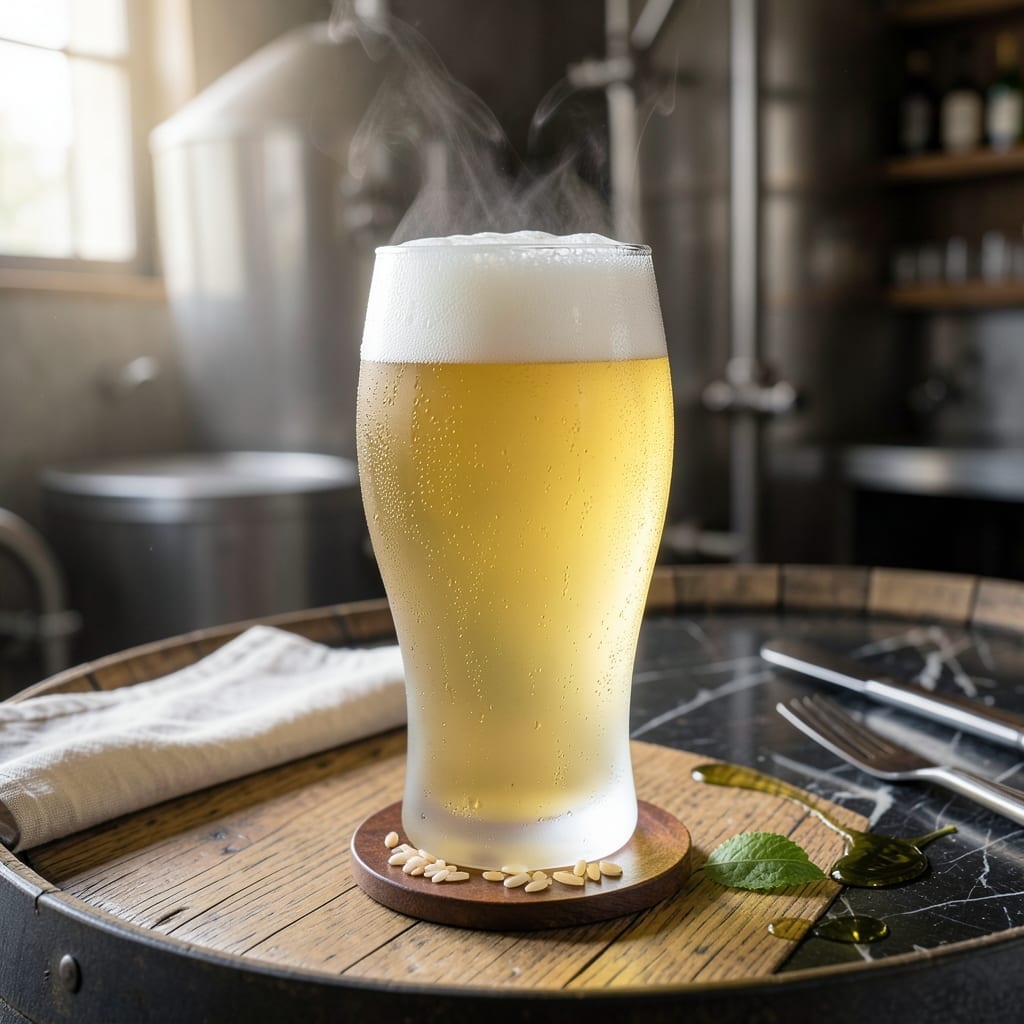
This homebrew delivers the crisp, clean finish that defines authentic Japanese lagers. The rice addition lightens the body while maintaining a subtle sweetness that balances the hop bitterness perfectly.
With a simple ingredient list and a 4-week fermentation process, you’ll achieve professional-quality results that rival commercial offerings. The key is precise temperature control throughout brewing.
Ingredients for Japanese Rice Lager
Simple list, big flavor. Crisp, clean, and perfectly balanced for authentic results.
| Ingredient | Amount | Notes |
|---|---|---|
| Pilsner Malt 🌾 | 6 lb | Base malt for lager fermentation |
| Flaked Rice 🌾 | 2 lb | Lightens body, adds crispness |
| German Hallertau Hops 🍃 | 1 oz | Bittering hops, 60-minute addition |
| Czech Saaz Hops 🍃 | 1 oz | Aroma hops, 5-minute addition |
| Lager Yeast 🧫 | 1 package | Bottom-fermenting strain for clean finish |
| Water 💧 | 5 cups | Filtered, for mashing and sparging |
| Irish Moss 🌿 | ½ tsp | Clarifying agent, 15-minute addition |
| Priming Sugar 🧂 | ¾ cup | Corn sugar for carbonation |
| Gypsum ⚗️ | ½ tsp | Water treatment for mineral balance |
| Yeast Nutrient 🧪 | ½ tsp | Supports healthy fermentation |
The malt matters here. Pilsner malt from Brewers Best or Briess gives you that clean, light base you want. Flaked rice is non-negotiable—look for it in the homebrew section at your local shop or online at MoreBeer!. Don’t skip the gypsum; it tweaks your water chemistry for better hop utilization. If you’re buying in bulk, store grains in airtight containers away from light and heat.
No Hallertau? Magnum or Perle work for bittering. For aroma, Tettnang or Liberty can sub for Saaz. The rice can be swapped for corn flakes in a pinch (same weight), but rice stays truer to style. If you’re short on priming sugar, table sugar at 80% the amount works—just know it might add a touch of cidery flavor.
Store grains in a cool, dark place—they’ll keep for 6-12 months. Hops last 1 year in the freezer. Yeast? Use it within 3 months or make a starter to check viability. This lager improves with age—4 weeks minimum in the bottle before cracking one open.
Why You’ll Love This Recipe
- I’ll be real: this beer pairs with grilled chicken, sushi, or just a sunny afternoon with friends.
- Simple Ferment: The flaked rice and Pilsner Malt make for a low-maintenance brew day—just mash, sparge, and let the lager yeast do its thing.
- Crisp & Clean: Honestly, the Hallertau and Saaz hops create that signature light, slightly floral finish that’s so refreshing.
- Backyard BBQ Staple: I’ll be real: this beer pairs with grilled chicken, sushi, or just a sunny afternoon with friends.
Step-by-Step Instructions for Japanese Rice Lager
This method delivers a clean, crisp brew with that signature light body and subtle sweetness.
Step 1: Mash the Grains for Optimal Conversion
Begin by heating the 5 cups water to 165°F in your mash tun. I like to add the 0.5 tsp gypsum at this stage to adjust the mineral profile for better enzyme activity.
Slowly add the 6 lb Pilsner Malt and 2 lb Flaked Rice, stirring constantly to prevent clumping. The flaked rice needs this precise temperature to break down its starches completely. Maintain 152-154°F for 60 minutes, checking that the mash stays in this sweet spot—this is where the magic happens for that light, clean lager profile.
Step 2: Sparge and Begin the Boil with Bittering Hops
After the mash, sparge with 170°F water to collect your wort. Transfer to your brew kettle and bring to a rolling boil. Once boiling, add the 1 oz German Hallertau Hops immediately—this is your bittering addition and needs the full 60-minute boil to extract those clean, noble hop qualities.
Watch for hot breaks (those foam bubbles) and skim them off as they form. This keeps your beer cleaner down the line. The wort should turn a beautiful golden color as it boils, with that hop aroma starting to fill your kitchen.
Step 3: Add Finishing Hops and Clarifiers
With 15 minutes left in the boil, stir in the 0.5 tsp Irish Moss. This helps clarify your beer by binding to proteins that would otherwise make it cloudy. Then, with just 5 minutes remaining, add the 1 oz Czech Saaz Hops—this late addition preserves those delicate floral and spicy aroma notes that define this style.
At the very end of the boil, I add the 0.5 tsp yeast nutrient to ensure a healthy fermentation. The wort should now have a pronounced hop aroma with a slightly bitter edge. Cool it as quickly as possible to 70°F to prepare for pitching the yeast.
Step 4: Ferment with Lager Yeast
Once cooled, transfer the wort to your sanitized fermenter and pitch the 1 package Lager Yeast. Lager yeast prefers cooler temperatures, so maintain 50-55°F for the primary fermentation. You should see active fermentation within 12-24 hours, with bubbles in your airlock.
Let it ferment for 2 weeks at this temperature, then do a diacetyl rest by raising the temp to 65°F for 24 hours to clean up any off-flavors. The beer should look clear with a layer of yeast at the bottom.
Step 5: Bottle with Priming Sugar for Carbonation
Before bottling, dissolve the 0.75 cup priming sugar in a small amount of boiling water and add it to your bottling bucket. Siphon the beer on top, being careful not to disturb the sediment. This sugar will create the carbonation in the bottle.
Bottle and let condition at 70°F for 2 weeks. The beer should be fully carbonated with a crisp finish and that signature clean, refreshing taste. Chill thoroughly before serving—this lager shines when served ice cold.
Pro Tips For Making Japanese Rice Lager
- Mash the Rice Well: I learned this the hard way—flaked rice needs a thorough mash at 152°F for 60 minutes to fully convert its starches, otherwise you’ll end up with a thin, watery beer.
- Use Fresh Pilsner Malt: Sounds obvious, but stale Pilsner Malt loses its crisp, clean character. Check the crush date and store it in an airtight container if you’re not brewing immediately.
- Skip Over-Hopping: Japanese rice lagers are subtle. Stick to 20-25 IBUs with Hallertau for bittering and Saaz for aroma—more than that and you’ll drown out the delicate rice notes.
- Lager It Cold: After primary fermentation, drop the temp to 34°F for at least 4 weeks. I was skeptical until I tried it, but the clarity and smoothness are worth the wait.
Health Benefits of This Dish
Digestive Benefits
Rice in this brew provides easily digestible carbohydrates that support gut health. The fermentation process breaks down complex sugars, making them gentler on your stomach than many commercial beers. I notice I feel less bloated after enjoying a homebrewed lager. 💪
Lower Gluten Content
The 2 lb flaked rice replaces some barley malt, naturally reducing gluten levels. While not gluten-free, this makes the beer more accessible for those with mild sensitivities. The Pilsner Malt base keeps it light without compromising flavor.
Rich in B Vitamins
Yeast fermentation produces B vitamins, particularly B6 and B9, essential for energy metabolism. A 12-ounce serving contributes about 10-15% of your daily B vitamin needs. These nutrients help your body process the beer’s natural sugars efficiently.
Antioxidant Properties
The German Hallertau and Czech Saaz hops contain polyphenols, natural antioxidants that combat cell damage. These compounds are more concentrated in homebrewed beer since we use whole hops rather than processed extracts. 🌟
Hydration Support
With a lower alcohol content than many craft beers, this lager can be part of balanced hydration. The clean fermentation profile means fewer congeners, reducing next-day dehydration. I always pair mine with water to stay refreshed.
Moderate Calorie Count
At approximately 120-140 calories per 12-ounce serving, this beer fits well into a balanced lifestyle. The rice addition lightens the body without adding empty calories. It’s my go-to for social gatherings without the guilt.
Nutrition Facts
Frequently Asked Questions
Can I use regular rice instead of flaked rice?
No, flaked rice is pre-gelatinized for brewing. Regular rice needs cooking first, which can create a sticky mess in your mash. Stick with 2 lb flaked rice for clean conversion and proper body.
Why does the fermentation need to stay so cold?
Lager yeast produces clean flavors at 50-55°F. Warmer temps create fruity esters that clash with the crisp profile. A fridge with a temperature controller works perfectly for this.
How long should I age this beer before drinking?
Minimum 4 weeks total: 2 weeks primary fermentation, then 2 weeks bottle conditioning. For best results, wait 6-8 weeks—the flavors meld beautifully with time.

- Indian Jasmine Rice Recipe: Fragrant Basmati-Free Elegance - October 19, 2026
- KFC Rizo Rice Recipe: Copycat Side Dish With Savory Spice Blend - October 19, 2026
- Jeerakasala Rice Recipe: Fragrant Cumin-Infused Kerala Delight - October 19, 2026