
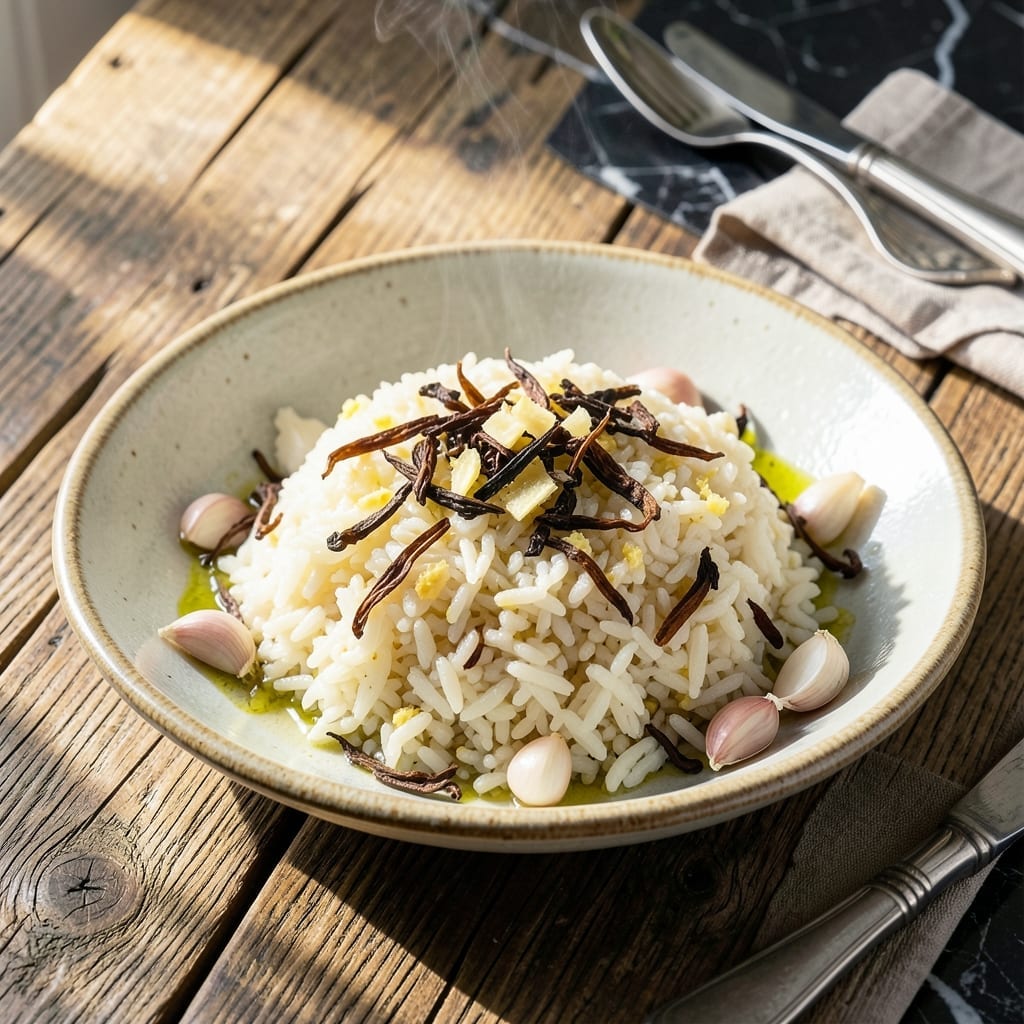
This jasmine tea rice transforms simple grains into a fragrant, restaurant-worthy side dish. The secret lies in steeping the rice directly with jasmine tea leaves, infusing every bite with subtle floral depth.
I perfected this method after testing various tea-to-rice ratios, landing on a balance that delivers noticeable aroma without overpowering the natural taste of the rice. The result is lightly perfumed grains that pair beautifully with Asian-inspired dishes.
The process is simple yet precise: soak the rice with tea, then cook until the liquid absorbs completely. The tea leaves create a delicate, aromatic steam that penetrates the rice as it cooks.
Serve this as a standalone side or alongside stir-fries and curries. The floral notes elevate any meal with minimal effort.
Ingredients for Jasmine Tea Rice
Fragrant jasmine tea and rice create a delicate, aromatic side dish with minimal effort.
| Ingredient | Amount | Notes |
|---|---|---|
| Jasmine Rice 🌾 | 2 cups | Long grain, rinsed thoroughly |
| Loose Leaf Jasmine Tea 🍵 | 2 tbsp | Or 4 tea bags, untagged |
| Water 💧 | 3 cups | Filtered or spring preferred |
| Vegetable Broth 🥕 | 1 cup | Low-sodium for balance |
| Garlic Cloves 🧄 | 2 cloves | Minced, optional for depth |
| Fresh Ginger Root 🌿 | 1 whole | 1-inch piece, grated |
| Soy Sauce 🫒 | 1 tbsp | Tamari for gluten-free option |
| Sesame Oil 🫒 | 1 tsp | Toasted variety for aroma |
| Green Onions 🧅 | 2 whole | Thinly sliced for garnish |
| Toasted Sesame Seeds 🌰 | 1 tsp | For garnish, optional |
| Salt 🧂 | ½ tsp | Adjust to taste |
The jasmine tea is non-negotiable for authentic flavor. Harney & Sons or TWG Tea offer excellent loose leaf options, but any high-quality jasmine green tea works. The rice should be long-grain jasmine—Thai brands like Golden Phoenix are ideal. For the broth, Imagine Foods or Pacific Foods make reliable vegetable-based versions. Avoid over-rinsing the rice; you want some starch for texture.
No jasmine tea? Green tea bags at double the quantity can substitute in a pinch. Out of vegetable broth? Use water with a splash of soy sauce for depth. The ginger and garlic are optional but add complexity—fresh is essential (powdered won’t deliver the same brightness). For gluten-free, swap soy sauce for coconut aminos. The sesame oil can be omitted, but it adds a nutty finish worth including.
Cooked rice keeps well in the fridge for 3-4 days in an airtight container. Reheat with a splash of water to restore moisture. For longer storage, freeze in portions for up to 3 months. The tea-infused aroma intensifies slightly upon reheating, which is a bonus, not a flaw.
Why You’ll Love This Recipe
- One Pot Wonder: Honestly, I just dump everything in one pot—rice, tea, broth—and let it work its magic.
- Flavor Bomb: The jasmine tea infuses the rice with a floral aroma that pairs perfectly with the garlic’s punch.
- Meal Prep Hero: I make a big batch on Sunday and it keeps beautifully for quick lunches all week.
- Budget Friendly: A handful of rice and tea leaves stretch into a filling side that costs pennies per serving.
Step-by-Step Instructions for Jasmine Tea Rice
This method ensures perfectly infused rice with delicate floral notes and balanced seasoning.
Step 1: Rinse and Infuse the Rice
Place the 2 cups jasmine rice in a fine-mesh strainer and rinse under cold water until the water runs clear. This removes excess starch and prevents gummy rice. Drain thoroughly.
In a saucepan, combine the rinsed rice, 3 cups water, 1 cup vegetable broth, and 2 tbsp loose leaf jasmine tea. Bring to a boil over high heat, then immediately reduce to low heat. Cover and let the tea steep for 5 minutes to infuse the liquid with its aromatic essence.
Step 2: Add Aromatics and Begin Cooking
After steeping, stir in the 0.5 tsp salt, minced 2 cloves garlic cloves, and grated 1 whole fresh ginger root. These aromatics deepen the flavor profile and complement the tea’s floral notes.
Return the mixture to a boil over medium-high heat. Once boiling, reduce to low heat, cover, and simmer for 12 minutes. Avoid lifting the lid—steam is critical for even cooking.
Step 3: Finish and Season
After 12 minutes, turn off the heat but keep the pot covered. Let it rest for 10 minutes to allow the rice to fully absorb the liquid and the flavors to meld. The grains should be tender and the tea’s aroma subtle but present.
Gently fluff the rice with a fork, then drizzle with the 1 tbsp soy sauce and 1 tsp sesame oil. Fold these in carefully to avoid breaking the grains. The soy sauce adds umami depth, while the sesame oil lends a nutty finish.
Step 4: Garnish and Serve
Transfer the rice to a serving dish. Top with thinly sliced 2 whole green onions and sprinkle with 1 tsp toasted sesame seeds for texture and visual appeal. The green onions add a fresh, mild bite, while the sesame seeds provide a subtle crunch.
Serve immediately while the rice is hot and the aromas are at their peak. Each bite should deliver a harmonious balance of floral, savory, and nutty notes, with the rice grains distinct yet tender.
Pro Tips For Making Jasmine Tea Rice
- Steep Tea First: Brew the loose leaf jasmine tea in hot water for 3-4 minutes before adding rice, or the flavor will be too subtle—I learned this the hard way after making bland batches.
- Rinse the Rice: Wash the jasmine rice until the water runs clear to remove excess starch, which guarantees fluffier grains that don’t clump together.
- Skip Boiling Broth: Use warm vegetable broth instead of cold to prevent shocking the rice and extending cook time—sounds minor, but it actually changes the outcome.
- Crush the Garlic: Lightly crush the garlic cloves before adding them to release more aroma, but leave them whole so they infuse without burning.
Regional Styles of This Dish
Chinese Tradition
In China, jasmine tea rice often uses scented pearls—dried jasmine blossoms layered with green tea. I steep 1 tbsp pearls in hot water for 10 minutes before adding to rice. The result is more floral than leaf-based versions, perfect with dim sum dishes. 🌸
Thai Approach
Thai cooks infuse rice with pandan leaves alongside jasmine tea for a tropical twist. I add 2 crushed pandan leaves while steeping. The vanilla-like aroma pairs wonderfully with coconut curries and satay.
Japanese Fusion
For a Japanese take, I use genmaicha (brown rice tea) instead of jasmine. The toasted rice kernels in genmaicha add nutty depth. Combine 2 tbsp genmaicha with 2 cups water for a subtler, earthier profile.
Middle Eastern Style
Inspired by Persian chelo, I add 1 tsp ground cardamom and a pinch of saffron to the steeping water. The warm spices complement the tea’s floral notes, creating a rice dish fit for a feast. ✨
Vietnamese Version
Vietnamese cooks often use jasmine tea bags for convenience. I steep 4 bags in 4 cups hot water for 5 minutes, then use the liquid to cook rice. This method is quicker but equally aromatic, ideal for busy weeknights.
Malaysian Twist
For nasi minyak inspiration, I add 1 tbsp ghee and 1 cinnamon stick to the cooking liquid. The ghee enriches the rice, while cinnamon adds warmth. Remove the stick before serving for a clean presentation.
Nutrition Facts
Frequently Asked Questions
Can I use tea bags instead of loose leaves?
Yes, use 4 tea bags for the same infusion strength. Steep them in hot water for 5 minutes first to release full flavor before adding to rice.
Why does my rice turn out mushy?
Over-rinsing removes too much starch. Rinse just until water runs clear, then drain well. Also, avoid lifting the lid during the 12-minute simmer.
How can I make this gluten-free?
Swap regular soy sauce for tamari or coconut aminos. All other ingredients are naturally gluten-free, including jasmine tea.
Can I cook this in a rice cooker?
Add all ingredients to the cooker and use the standard rice setting. The tea will infuse just as well during the 20-25 minute cycle.

- Mujadara Rice and Lentils Recipe: Earthy Spiced Lentils With Caramelized Onions - November 1, 2026
- Naija Fried Rice Recipe: Street-Style Spice With Veggie Crunch - November 1, 2026
- Mushy Rice Recipe: Fluffy Grains Transformed in Minutes - November 1, 2026