
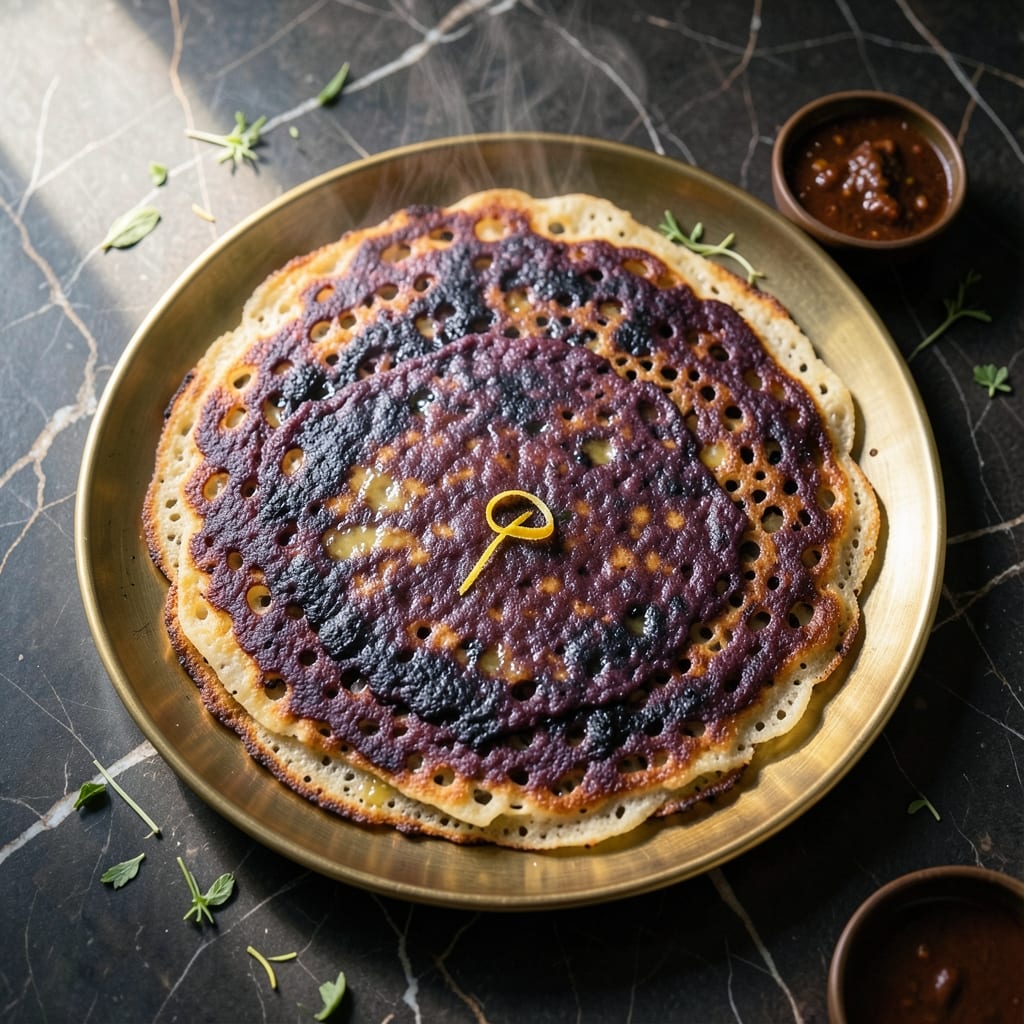
I first discovered the magic of karuppu kavuni rice in my grandmother’s kitchen, where this dosa became a breakfast staple. The fermented batter creates a crispy exterior with a soft, slightly chewy center that’s impossible to resist.
The secret lies in the fermentation process, which develops complex flavors and ensures that perfect texture. This traditional recipe transforms simple ingredients into something extraordinary with just a little patience and the right technique.
What sets this dosa apart is the deep, nutty flavor of black rice combined with the tangy notes from fermentation. Each bite delivers a satisfying contrast of textures that makes it worth the extra effort.
Serve it hot with coconut chutney or sambar for a truly authentic experience. Here’s how to make this Tamil Nadu specialty at home.
Ingredients for Karuppu Kavuni Rice Dosa
Traditional black rice and urad dal create this fermented Tamil Nadu specialty with crispy edges.
| Ingredient | Amount | Notes |
|---|---|---|
| Karuppu Kavuni Rice 🍚 | 2 cups | Black rice, soaked overnight |
| Parboiled Rice 🍚 | 1 cup | Long grain variety preferred |
| Urad Dal 🌾 | ½ cup | Split black gram, soaked |
| Fenugreek Seeds 🌿 | 1 tsp | For fermentation boost |
| Salt 🧂 | 1 ½ tsp | Adjust to taste after fermentation |
| Water 💧 | 4 cups | For soaking and grinding |
| Coconut Oil 🥥 | ¼ cup | For cooking dosas |
| Cumin Seeds 🌿 | 1 tsp | Optional, for extra flavor |
| Curry Leaves 🍃 | 10 pieces | Fresh, for tempering batter |
| Green Chili 🌶️ | 2 whole | Finely chopped, optional |
| Ginger 🌿 | 1 whole | Small piece, grated |
| Coconut Chutney 🥥 | 1 cup | For serving, optional |
The karuppu kavuni rice is non-negotiable here—Indian grocery stores like Patel Brothers or local South Indian markets will have it. Look for whole black rice (not instant or parboiled) with a deep purple hue. Urad dal must be split and skinless; the skinned variety won’t ferment properly. Fenugreek seeds act as a natural leavening agent, so ensure they’re fresh (old seeds lose potency). Soak all grains for at least 6 hours for optimal texture development.
No urad dal? Split mung beans at a 1:1 ratio work in a pinch, though the flavor will differ slightly. Short on black rice? Substitute half with regular brown rice, but expect less depth. For a gluten-free version, ensure your coconut chutney uses certified gluten-free ingredients. The batter’s consistency should resemble pancake batter—add water gradually during grinding to avoid oversaturating.
The fermented batter keeps in the fridge for 3-4 days. Store it in a large bowl to allow expansion. Cooked dosas are best enjoyed fresh but can be reheated on a skillet. For longer storage, freeze the batter in portions for up to 1 month—thaw overnight before using.
Why You’ll Love This Recipe
- Soak and Forget: I toss the karuppu kavuni and parboiled rice with urad dal in the morning, and by evening the batter is ready—no last-minute rush.
- Crispy Yet Soft: That perfect balance of a golden, crunchy edge with a fluffy center comes from the kavuni rice, and honestly, it’s the only dosa I crave now.
- Breakfast to Dinner: I’ve served this for quick breakfasts, packed it for lunchboxes, and even made it for Sunday brunch—it never feels out of place.
- Budget-Friendly Batch: A kilogram of karuppu kavuni rice makes enough batter for a week, and it costs me less than a single takeout meal.
Step-by-Step Instructions for Fermented Black Rice Dosa
Follow this precise method to achieve perfectly crisp dosas with rich, fermented flavor.
Step 1: Soak and Prepare the Grains
Combine the 2 cups Karuppu Kavuni Rice, 1 cup Parboiled Rice, and 0.5 cup Urad Dal in a large bowl. Add the 1 tsp Fenugreek Seeds—this small addition significantly boosts fermentation.
Rinse thoroughly under running water until the water runs clear, then add the 4 cups Water and soak for 8-12 hours or overnight. The grains should plump up noticeably and the Urad Dal will nearly double in size. Proper soaking ensures smooth grinding and complete fermentation.
Step 2: Grind and Ferment the Batter
Drain all the water from the soaked grains. Grind the 0.5 cup Urad Dal first with a little water until smooth and fluffy, then add the 2 cups Karuppu Kavuni Rice and 1 cup Parboiled Rice in batches, grinding to a fine batter consistency.
Transfer to a large fermentation vessel (leave room for expansion). Add the 1.5 tsp Salt, mix well, and cover loosely. Let ferment in a warm place for 12-18 hours until the batter doubles in volume and develops a slightly tangy aroma. The Karuppu Kavuni Rice gives the batter a distinctive dark purple hue.
Step 3: Prepare the Tempering
Finely chop the 2 whole Green Chili and grate the 1 whole Ginger. Heat the 0.25 cup Coconut Oil in a small pan over medium heat until warm but not smoking.
Add the 1 tsp Cumin Seeds and 10 pieces Curry Leaves, followed by the green chili and ginger. Sauté for 30-45 seconds until the cumin seeds sizzle and the curry leaves become fragrant. Remove from heat and let cool slightly before adding to the batter.
Step 4: Cook the Dosas
Heat a non-stick or cast iron griddle over medium-high heat. Lightly grease with a few drops of the 0.25 cup Coconut Oil—the oil’s high smoke point makes it ideal for this. Pour a ladle of batter onto the center and spread outward in a circular motion to form a thin, even layer.
Drizzle a little more Coconut Oil around the edges and cook for 2-3 minutes until the surface appears dry and the edges start to lift. Flip carefully and cook for another 1-2 minutes until golden brown spots appear. The Karuppu Kavuni Rice creates dosas with a unique deep purple hue and extra crispiness.
Step 5: Serve with Coconut Chutney
Transfer the dosa to a plate while hot. The ideal texture should be crisp on the outside with a slightly soft interior. Repeat with the remaining batter, adjusting heat as needed to maintain consistent cooking.
Serve immediately with the 1 cup Coconut Chutney on the side. The chutney’s cool, creamy texture perfectly complements the nutty, earthy flavors of the black rice dosa. For best results, make the chutney fresh just before serving.
Pro Tips For Making Karuppu Kavuni Rice Dosa
- Soak Overnight: I learned this the hard way—both the karuppu kavuni rice and urad dal need a full 8-10 hours in water to soften properly, or your dosa batter won’t ferment evenly.
- Grind Urad Dal First: Always grind the urad dal with fenugreek seeds first until fluffy, then add the rice—this gives the dosa that perfect light, airy texture.
- Ferment in Warmth: Skip the fridge for fermentation; leave the batter in a warm spot for 6-8 hours, or it’ll turn out dense and sour.
- Use a Wet Cloth: Spread the batter on a hot tawa, then press it gently with a damp cloth for an even, thin dosa—no tearing, no sticking.
Serving Suggestions for This Recipe
Traditional Pairings
I always serve these dosas with coconut chutney—its cool, creamy texture balances the nutty, earthy notes perfectly. The chutney’s mild sweetness also complements the fermentation’s tangy depth beautifully. 🥥
Spicy Sambar
A steaming bowl of vegetable sambar adds protein and a hearty, lentil-based contrast. The tamarind and spices in sambar cut through the dosa’s richness while enhancing its fermented complexity.
Fresh Accompaniments
For a lighter touch, offer onion-tomato chutney or a simple cucumber raita. The freshness of these sides brightens the meal, especially when the dosas are extra crispy.
Beverage Choices
I love pairing this with filter coffee—its bold, bitter notes stand up to the dosa’s deep flavors. For a non-caffeinated option, try spiced buttermilk to refresh the palate between bites. 💛
Garnish Ideas
Sprinkle fresh cilantro or grated coconut over the dosas just before serving. A squeeze of lime adds a zesty kick that elevates the entire dish.
For extra crunch, add a handful of roasted peanuts or cashews to the batter before cooking.
Nutrition Facts
Frequently Asked Questions
Why soak the grains overnight?
Soaking for 8-12 hours softens the grains, ensuring smooth grinding and complete fermentation. This step develops the batter’s signature tangy flavor and crispy texture.
Can I skip the fenugreek seeds?
Not recommended. 1 tsp Fenugreek Seeds acts as a natural fermentation booster. Without them, the batter may not rise properly or develop the right tang.
How do I know when the batter is ready?
The batter should double in volume and smell slightly sour after 12-18 hours. Look for small bubbles on the surface as a sign of active fermentation.
What if my dosa sticks to the pan?
Ensure your griddle is medium-high heat and properly greased with coconut oil. If sticking persists, the batter may need more water for a thinner consistency.

- Mujadara Rice and Lentils Recipe: Earthy Spiced Lentils With Caramelized Onions - November 1, 2026
- Naija Fried Rice Recipe: Street-Style Spice With Veggie Crunch - November 1, 2026
- Mushy Rice Recipe: Fluffy Grains Transformed in Minutes - November 1, 2026