
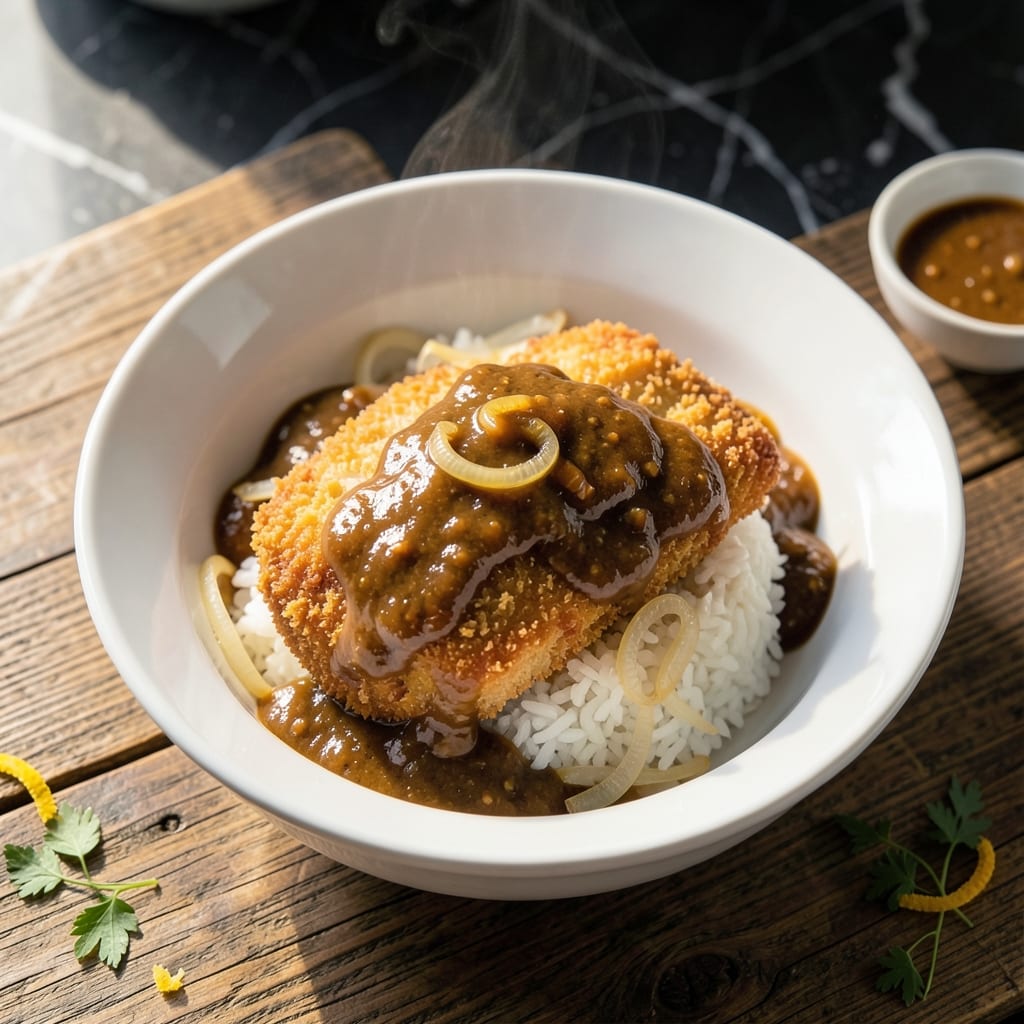
This Japanese classic combines a crispy breaded cutlet with a velvety curry sauce served over steamed rice. I developed this method to ensure the katsu stays perfectly crunchy even after being smothered in gravy.
The secret lies in double-breading the pork or chicken cutlet and frying it at the right temperature. The curry sauce, made from scratch with aromatic spices, complements the cutlet without making it soggy.
You’ll achieve a harmonious balance of textures and flavors—tender meat, crispy coating, and a rich, savory gravy. Serve it hot for the best experience.
Ideal for a comforting meal, this dish brings restaurant-quality results to your kitchen with straightforward steps.
Ingredients for Katsu Curry Rice
Pantry staples meet a few special ingredients for this comforting Japanese classic.
| Ingredient | Amount | Notes |
|---|---|---|
| Pork Cutlets 🥩 | 1 ½ lb | Thin-cut, bone-in or boneless |
| All-Purpose Flour 🌾 | ¾ cup | For initial dredging |
| Large Eggs 🥚 | 2 whole | Beaten for egg wash |
| Panko Breadcrumbs 🍞 | 2 cups | Japanese-style for extra crispiness |
| Vegetable Oil 🫒 | 3 cups | For deep frying cutlets |
| Onion 🧅 | 1 whole | Medium, finely diced for sauce |
| Carrots 🥕 | 2 whole | Medium, diced for sauce |
| Garlic Cloves 🧄 | 3 cloves | Minced for curry base |
| Ginger Root 🌿 | 1 tbsp | Freshly grated for sauce |
| Curry Powder 🌶️ | 3 tbsp | Japanese-style preferred |
| All-Purpose Flour 🌾 | 2 tbsp | For thickening curry sauce |
| Chicken or Vegetable Stock 💧 | 2 cups | Low-sodium preferred |
| Soy Sauce 🫒 | 2 tbsp | Low-sodium for balance |
| Honey 🍯 | 1 tbsp | For subtle sweetness |
| Jasmin Rice 🍚 | 2 cups | Uncooked, rinsed before cooking |
The pork cutlets are key here—bone-in pork loin chops pounded thin give the best texture. Asian markets often have them pre-sliced, or grab a pork loin and cut it yourself. For panko, Kikkoman or Progresso brands are reliable and widely available. The curry powder should be Japanese-style (SBS or House Foods are solid choices) for authentic flavor. Don’t skip the double-breading step (flour, egg, panko) if you want that signature crunch.
No pork? Chicken thighs or breast work great—just adjust cooking time (thighs stay juicier). Out of panko? Regular breadcrumbs in a pinch, but the texture won’t be as crispy. Vegetable stock instead of chicken keeps it vegetarian-friendly. The honey can be swapped for maple syrup or sugar if needed. For extra depth, add a pinch of turmeric or garam masala to the curry powder blend.
Fry the cutlets just before serving to keep them crispy—10 minutes max in the oil. The curry sauce actually tastes better the next day, so make extra and store in the fridge for up to 4 days. Cooked rice holds for 2-3 days (reheat with a splash of water).
Why You’ll Love This Recipe
- Fuss-Free Coating: I love that it’s just flour, egg, and panko—no fancy steps, just dip and fry.
- Crispy Meets Comfort: That panko crust stays crunchy even smothered in rich curry sauce. Honestly, it’s the best texture contrast.
- Crowd-Pleasing Meal: Between us, it’s my go-to for picky eaters and dinner parties alike.
- Leftover Magic: The pork stays tender when reheated, so I can pack it for lunch the next day.
Step-by-Step Instructions for Katsu Curry Rice
Here’s the method I use to get that perfect crunch on the cutlets every time.
Step 1: Bread and Fry the Pork Cutlets to Golden Perfection
Set up a breading station with three shallow dishes. Place the 0.75 cup All-Purpose Flour in the first, beat the 2 whole Large Eggs in the second, and put the 2 cups Panko Breadcrumbs in the third. Pat the 1.5 lb Pork Cutlets dry with paper towels, then dredge each in flour, shaking off excess.
Dip into the beaten eggs, letting any excess drip off, then press firmly into the panko to create a thick, even coating. Heat the 3 cups Vegetable Oil in a deep pot to 350°F. Fry the cutlets for 4-5 minutes per side until deep golden brown and crispy. Drain on a wire rack to maintain that perfect crunch.
Step 2: Sauté the Aromatics for the Curry Base
While the cutlets fry, finely dice the 1 whole Onion and 2 whole Carrots. Heat a saucepan over medium heat and sauté the onion and carrots in a splash of the hot oil for 5-6 minutes until softened and translucent.
Add the minced 3 cloves Garlic Cloves and freshly grated 1 tbsp Ginger Root, cooking for another 1-2 minutes until fragrant. This builds the flavor foundation for your curry sauce, so don’t rush it—let those aromatics develop fully.
Step 3: Build and Simmer the Rich Curry Sauce
Stir in the 3 tbsp Curry Powder and cook for 30 seconds to toast the spices. Sprinkle in the 2 tbsp All-Purpose Flour and stir to create a smooth paste. Gradually whisk in the 2 cups Chicken or Vegetable Stock, ensuring no lumps form.
Add the 2 tbsp Soy Sauce and 1 tbsp Honey, then bring to a simmer. Cook for 10-12 minutes, stirring occasionally, until the sauce thickens enough to coat the back of a spoon. Taste and adjust seasoning if needed—the sauce should be rich and slightly sweet with a deep curry flavor.
Step 4: Cook the Jasmine Rice and Assemble
Rinse the 2 cups Jasmin Rice under cold water until the water runs clear. Cook according to package instructions—typically 1.5 cups water per 1 cup rice—until fluffy and tender, about 15-18 minutes.
To serve, slice the crispy cutlets into strips and arrange over a bed of steamed jasmine rice. Ladle the hot curry sauce generously over the top, ensuring every bite gets that perfect balance of crunch and creamy gravy. Serve immediately while the cutlets are still crispy.
Pro Tips For Making Katsu Curry Rice
- Double Fry the Cutlets: I learned this the hard way—fry the pork cutlets once at 340°F until golden, rest for 2 minutes, then fry again at 375°F for that shatteringly crisp panko crust that stays crunchy even under curry.
- Press the Panko Hard: After breading, press the panko into the cutlets with the flat of your hand—this makes a real difference in getting those craggy, extra-crispy bits that don’t fall off in the oil.
- Skip Cold Pork: Let the pork cutlets sit at room temperature for 15-20 minutes before frying—cold meat lowers the oil temp and gives you a greasy, soggy coating instead of that perfect golden crust.
- Use a Wire Rack: After frying, place the cutlets on a wire rack, not paper towels—this prevents steam from making the bottom of your katsu soggy while you finish the curry.
Best Sauces and Condiments for This Recipe
Classic Tonkatsu Sauce
This thick, tangy-sweet sauce is the traditional pairing for katsu. I mix ¼ cup ketchup with 2 tbsp Worcestershire sauce, 1 tbsp soy sauce, and 1 tbsp honey for a balanced flavor. Drizzle it over the cutlet or serve on the side for dipping. 💛
Japanese Curry Roux
For an extra-rich experience, stir 1 tbsp Japanese curry roux (like SBS Golden Curry) into ½ cup hot water until smooth. This creates a thicker, more concentrated gravy to pour over your dish. It deepens the curry flavor beautifully.
Spicy Mayo
Combine ¼ cup mayonnaise with 1 tbsp sriracha and 1 tsp lime juice for a creamy, spicy kick. This adds a delightful contrast to the savory curry and crispy katsu. I love how it cuts through the richness.
Pickled Vegetables
Serve with pickled daikon radish or red ginger on the side. The acidity refreshes your palate between bites. You can find these in the refrigerated section of most Asian grocery stores.
Fukujinzuke Relish
This Japanese condiment made from pickled vegetables adds crunch and tang. Look for it in jars near other Asian condiments. A small spoonful on top of your dish adds authentic texture and flavor. 🌟
Nutrition Facts
Frequently Asked Questions
Can I use chicken instead of pork?
Use boneless chicken thighs for juicier results. Pound to ½-inch thickness and fry for 3-4 minutes per side at 350°F. Chicken breast works too but can dry out more easily.
How do I keep the katsu crispy?
Fry just before serving and place on a wire rack, not paper towels. The rack allows air circulation, preventing steam from making the coating soggy. Serve immediately with hot sauce.
Can I make the curry sauce ahead?
Yes, the sauce actually improves overnight! Store in an airtight container for up to 4 days. Reheat gently on the stove, adding water if it thickens too much.
What rice works best?
Short-grain jasmine or Japanese rice is ideal for its sticky texture that holds up to the sauce. Rinse well before cooking for the best consistency.

- Mujadara Rice and Lentils Recipe: Earthy Spiced Lentils With Caramelized Onions - November 1, 2026
- Naija Fried Rice Recipe: Street-Style Spice With Veggie Crunch - November 1, 2026
- Mushy Rice Recipe: Fluffy Grains Transformed in Minutes - November 1, 2026