
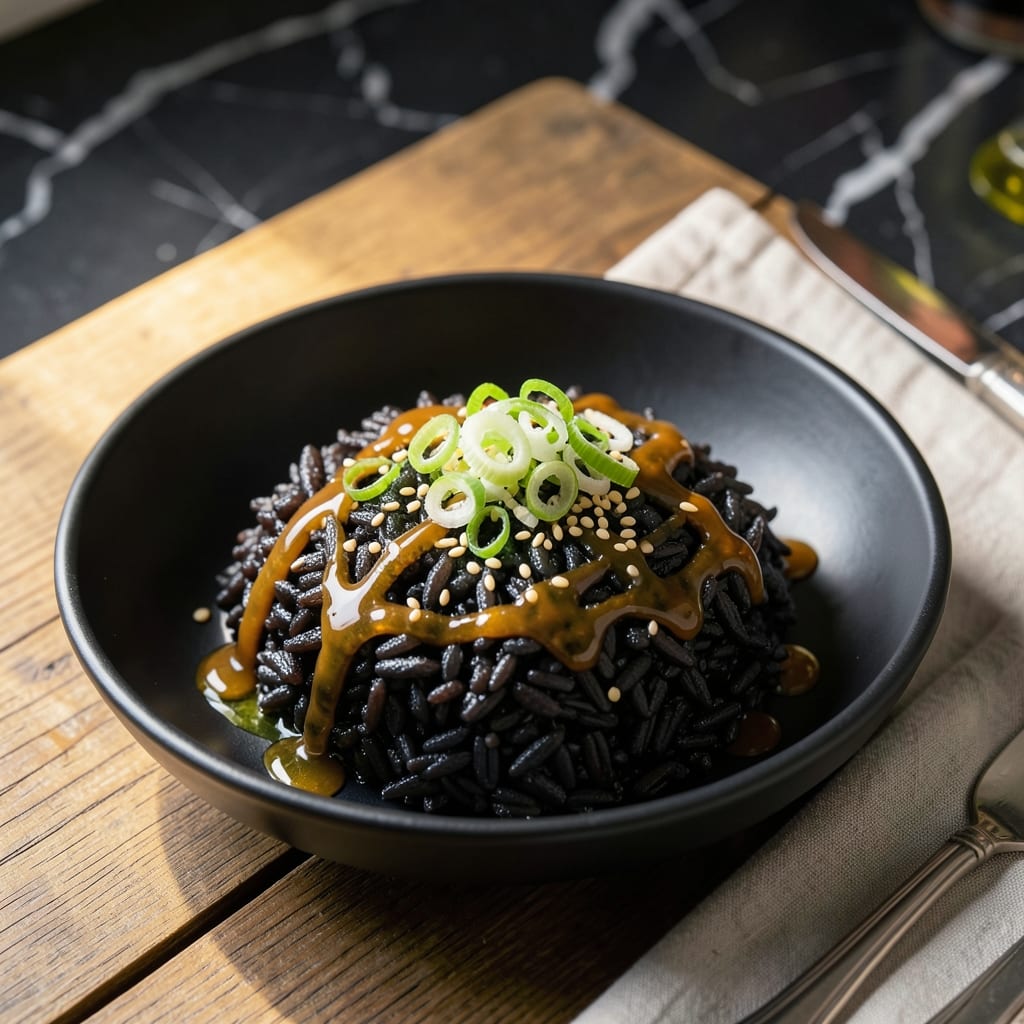
This recipe reveals the hidden elegance of black rice, transforming simple grains into a visually stunning side with deep, nutty flavor. The key lies in proper soaking and cooking techniques that bring out its signature purple hue.
You’ll achieve perfectly tender rice with a slight chew, ideal for pairing with grilled proteins or stir-fried vegetables. The natural richness makes it a standout addition to any meal.
Ingredients for Korean Black Rice
Transform simple grains into this visually stunning side with just a few pantry staples.
| Ingredient | Amount | Notes |
|---|---|---|
| Black Rice 🍚 | 1 ½ cups | Rinsed until water runs clear |
| Water 💧 | 3 ½ cups | Or vegetable broth for extra flavor |
| Coconut Oil 🥥 | 1 tbsp | Or neutral oil like avocado |
| Soy Sauce 🫒 | 2 tbsp | Low-sodium preferred, or tamari for gluten-free |
| Toasted Sesame Oil 🫒 | 1 tsp | For finishing, not cooking |
| Rice Vinegar 🍚 | 1 tbsp | Adds brightness to balance the dish |
| Scallions 🧅 | 3 whole | Thinly sliced for garnish |
| Garlic Cloves 🧄 | 2 cloves | Minced for aromatic depth |
| Ginger Root 🌿 | 1 tbsp | Freshly grated for zing |
| Sesame Seeds 🌰 | 1 tbsp | Toasted for garnish, optional |
| Salt 🧂 | ½ tsp | Adjust to taste after cooking |
| Black Pepper 🌶️ | ¼ tsp | Freshly ground preferred |
The black rice is non-negotiable for that signature purple hue. Look for Korean or Thai black rice at Asian markets or Whole Foods—it’s got more depth than the common forbidden rice. Soaking is key (at least 30 minutes, overnight is better) to reduce cook time and ensure even tenderness. I grab mine in bulk at H Mart when I’m stocking up on other Korean staples.
No coconut oil? Any neutral oil like avocado or grapeseed works fine. Out of soy sauce? Tamari or coconut aminos at one-to-one ratio are great swaps. Want extra richness? Stir in a spoon of miso paste at the end. The scallions can be subbed with chives, but the sesame seeds add that crucial crunch—don’t skip them (unless you’re allergic, of course).
Cooked rice keeps beautifully in the fridge for 4-5 days in an airtight container. Freeze for up to 3 months if you’ve made a big batch. Reheat with a splash of water to revive the texture. The purple color fades slightly over time, but the flavor only gets better.
Why You’ll Love This Recipe
- Set and Forget: I just toss everything in the rice cooker and walk away—no stirring, no fuss.
- Umami Bomb: The combo of soy sauce and toasted sesame oil gives it this deep, nutty richness that’s honestly addictive.
- Meal Prep Hero: It keeps beautifully for days, so I make a big batch for lunches and quick dinners.
- Budget Stretch: Black rice is filling, flavorful, and a little goes a long way—my wallet thanks me.
Step-by-Step Instructions for Korean Black Rice
Master the technique for perfectly cooked grains with vibrant color and rich flavor.
Step 1: Rinse and Soak the Black Rice
Place the 1.5 cups Black Rice in a fine-mesh strainer and rinse under cold running water until the water runs completely clear. This removes excess starch and prevents the cooked rice from becoming gummy. I find this takes about 3-4 minutes of continuous rinsing.
After rinsing, transfer the rice to a bowl and cover with fresh water. Let it soak for 30 minutes. Soaking shortens the cooking time and ensures even hydration throughout each grain. The rice will plump slightly and darken as it absorbs water.
Step 2: Cook the Rice with Aromatics
In a medium saucepan, heat the 1 tbsp Coconut Oil over medium heat. Add the 2 cloves Garlic Cloves (minced) and 1 tbsp Ginger Root (freshly grated). Sauté for 1-2 minutes until fragrant but not browned—this builds a flavor foundation for the rice.
Drain the soaked rice and add it to the saucepan along with the 3.5 cups Water and 0.5 tsp Salt. Stir once to distribute the aromatics, then bring to a boil. The water will take on a deep purple hue as the rice begins to release its natural pigments.
Step 3: Simmer Until Tender and Absorptive
Once boiling, reduce the heat to low, cover the saucepan tightly with a lid, and let it simmer for 35-40 minutes. Resist the urge to lift the lid during this time—trapped steam is what cooks the rice evenly. You’ll know it’s ready when the water is fully absorbed and the grains are tender with a slight chew.
The rice should be a deep, glossy purple-black color when done. If there’s still water at the 35-minute mark, cook for another 5 minutes and check again. The texture should be uniformly soft with no hard centers.
Step 4: Finish with Seasonings and Rest
Remove the saucepan from heat and let the rice rest, covered, for 10 minutes. This allows the grains to steam and become even more tender. Then, gently fluff the rice with a fork to separate the grains. Drizzle with the 2 tbsp Soy Sauce, 1 tsp Toasted Sesame Oil, and 1 tbsp Rice Vinegar.
Fold these liquids into the rice carefully to avoid breaking the grains. The soy sauce adds umami depth, the sesame oil contributes a nutty aroma, and the rice vinegar provides a subtle brightness that balances the dish.
Step 5: Garnish and Serve
Transfer the rice to a serving bowl. Top with the 3 whole Scallions (thinly sliced) and 1 tbsp Sesame Seeds (toasted). The scallions add a fresh, crisp contrast, while the sesame seeds provide a delicate crunch. Finish with a pinch of 0.25 tsp Black Pepper for a slight kick.
Serve warm, when the rice is at its most fragrant and the colors are most vibrant. Each bite should offer a nutty, slightly sweet flavor with a tender yet satisfying chew. The garnishes not only add visual appeal but also layers of texture and taste.
Pro Tips For Making Korean Black Rice
- Soak the Rice: I learned this the hard way—soak your black rice for at least 4 hours, or overnight if possible. It cuts the cooking time nearly in half and guarantees even tenderness.
- Toast in Coconut Oil: Before adding water, toast the drained black rice in coconut oil for 2-3 minutes on medium heat. It deepens the nutty flavor and prevents a mushy texture.
- Skip the Salt: Resist the urge to add salt—soy sauce already brings enough sodium, and balancing it later is easier than fixing an over-salted pot.
- Rest Before Serving: After cooking, let the rice sit covered for 10 minutes off the heat. This lets the grains firm up slightly and absorb any lingering moisture—my grandmother swore by this, and she was right.
Make-Ahead Tips for This korean black rice
Overnight Soaking
For the best texture and most vibrant purple hue, I soak the rice overnight in the fridge. This reduces cooking time by about 10 minutes and ensures every grain cooks evenly. Just cover the 1.5 cups Black Rice with cold water and refrigerate for up to 12 hours. 💡
Batch Cooking
This recipe doubles beautifully for meal prep. Cook 3 cups rice with 7 cups water using the same method. The larger volume may need an extra 5 minutes of simmering time. I make a big batch on Sunday for easy lunches all week.
Fridge Storage
Store cooked rice in airtight containers in the fridge for up to 5 days. The color will deepen slightly as it rests. I use glass containers to preserve the vibrant hue and prevent plastic odors from absorbing into the rice.
Freezing Method
For longer storage, portion cooled rice into freezer bags, squeezing out excess air. It keeps well for 3 months. I freeze in 1-cup portions for easy single-serving reheating. Label bags with the date to track freshness.
Reheating Tips
Microwave individual portions with a splash of water covered for 1-2 minutes. For stovetop, heat in a pan with 2 tbsp water over medium-low heat for 5 minutes, stirring occasionally. This restores the perfect chewy texture. 🔥
Garnish Later
Add fresh garnishes like scallions and sesame seeds just before serving, not before storing. This keeps them crisp and prevents sogginess. I store garnishes separately in small containers to maintain their texture and color.
Nutrition Facts
Frequently Asked Questions
Why does it turn purple when cooked?
The deep purple color comes from anthocyanins, natural pigments in the rice that release during cooking. The longer it soaks and cooks, the more vibrant the hue becomes.
Can I skip the soaking step?
Not recommended. Soaking for at least 30 minutes ensures even cooking and reduces the total time needed. Skipping it may result in uneven texture or longer cooking.
What’s the best way to reheat leftovers?
Microwave with a splash of water and covered for 1-2 minutes, or heat in a pan with 2 tbsp water over medium-low heat for 5 minutes. This keeps the grains tender.
Can I use a rice cooker?
Yes! Use the same 1:2 rice-to-water ratio and cook on the standard setting. Add aromatics with the water for full flavor. The cooker’s timer may need 5 extra minutes.

- Mujadara Rice and Lentils Recipe: Earthy Spiced Lentils With Caramelized Onions - November 1, 2026
- Naija Fried Rice Recipe: Street-Style Spice With Veggie Crunch - November 1, 2026
- Mushy Rice Recipe: Fluffy Grains Transformed in Minutes - November 1, 2026