
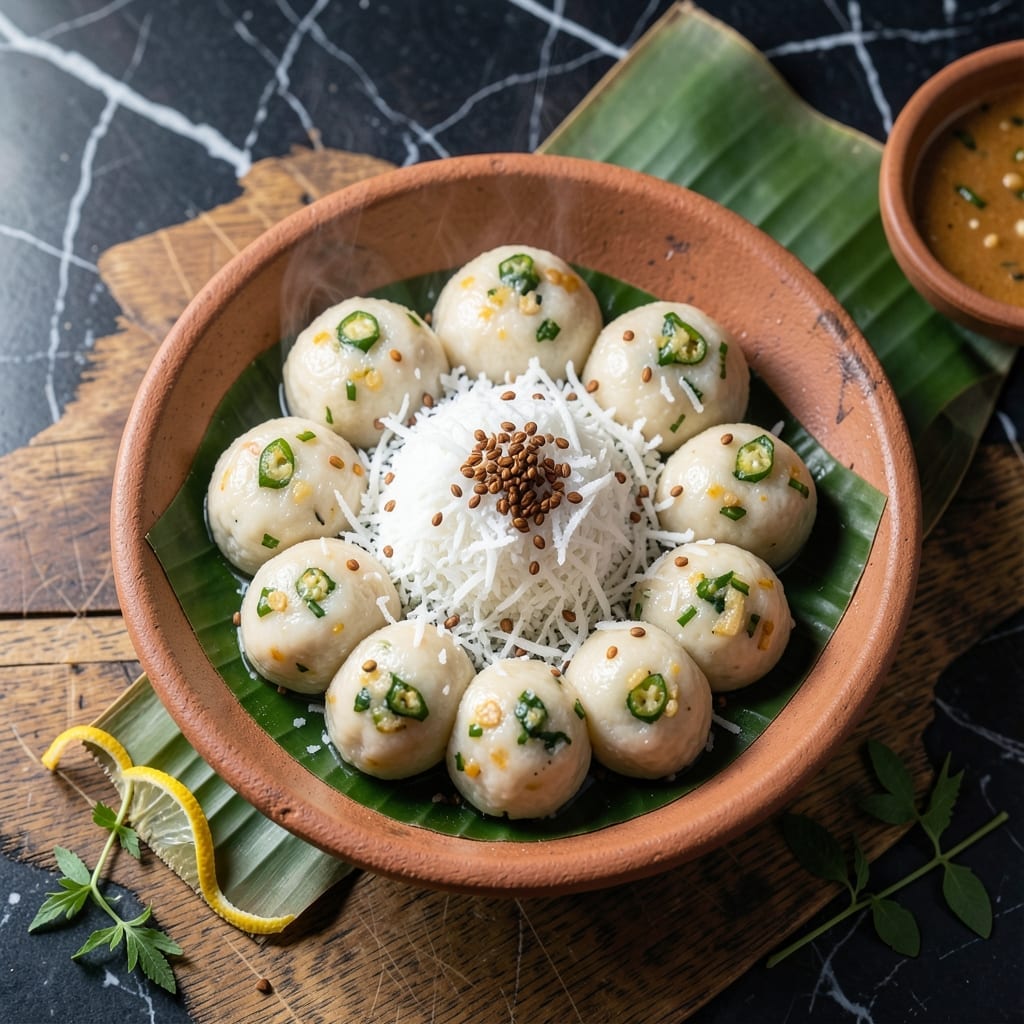
These soft, fluffy dumplings capture the essence of South Indian comfort food with their delicate texture and coconut aroma. I developed this version to maintain authenticity while simplifying the process for home cooks.
The rice flour base creates a naturally gluten-free foundation that steams up light and airy. Fresh coconut adds sweetness and moisture, while cumin seeds provide a subtle earthy note that balances the dish perfectly.
What emerges from the steamer is a batch of pillowy dumplings with a slightly sticky exterior and tender interior. The coconut flavor shines through without overpowering, making these ideal for breakfast or as a side dish.
Serve warm with coconut chutney or a simple spiced yogurt dip. Here’s how to make them at home.
Ingredients for Kudumulu Recipe with Rice Flour
Simple pantry staples bring these aromatic, gluten-free dumplings to life.
| Ingredient | Amount | Notes |
|---|---|---|
| Rice Flour 🌾 | 2 cups | Fine, white rice flour preferred |
| Fresh Coconut 🥥 | 1 cup | Grated or finely chopped |
| Cumin Seeds 🌿 | 1 tsp | Lightly toasted for aroma |
| Green Chilies 🌶️ | 2 whole | Finely chopped, adjust to taste |
| Fresh Ginger 🌱 | 1 tbsp | Peeled and grated |
| Salt 🧂 | 1 tsp | Adjust to taste |
| Water 💧 | 1 ½ cups | Warm, for dough consistency |
| Curry Leaves 🍃 | 10 pieces | Fresh, finely chopped |
| Asafoetida 🌿 | ¼ tsp | Optional, for traditional flavor |
| Sugar 🍚 | 1 tsp | Optional, to balance flavors |
| Vegetable Oil 🫒 | 1 tbsp | For greasing steamer |
The rice flour is the foundation here—look for fine, white rice flour at an Indian grocery store or Bob’s Red Mill works well too. Fresh coconut is non-negotiable for that authentic aroma, but frozen grated coconut (thawed) can work in a pinch. Cumin seeds should be toasted lightly to release their oils, but don’t let them burn. Curry leaves add that signature South Indian touch, so grab a bunch if you spot them fresh.
No fresh coconut? Unsweetened desiccated coconut (rehydrated in warm water) is your best bet, though the texture won’t be quite the same. Asafoetida can be tricky to find—check the spice aisle at an Indian market or skip it if you must. For heat control, reduce or omit the green chilies. The ginger can be swapped for ginger paste at half the amount, but fresh is always better.
Store rice flour in an airtight container for up to 6 months. Fresh coconut lasts 1 week in the fridge. The dumplings themselves keep 2-3 days refrigerated, but they’re best served fresh and warm from the steamer—just reheat with a quick steam.
Why You’ll Love This Recipe
- No Fuss Mixing: I just dump rice flour, grated coconut, and the spices in a bowl—no fancy techniques, just stir and steam.
- Flavor Explosion: The cumin, ginger, and green chilies hit you with warmth, while the coconut adds this sweet, creamy balance.
- Breakfast to Snack: Honestly, I make a batch on Sunday and we grab them for breakfast, pack for lunch, or munch as a 4pm pick-me-up.
- Pantry Hero: Rice flour is cheap, coconut keeps for days, and the spices are already in my cupboard—no last-minute store runs.
Step-by-Step Instructions for Kudumulu With Rice Flour
Here’s the method that guarantees perfectly steamed dumplings with irresistible coconut aroma.
Step 1: Prepare the Flavor Base
In a large mixing bowl, combine the 2 cups Rice Flour with 1 cup Fresh Coconut, 1 tsp Cumin Seeds, finely chopped 2 whole Green Chilies, and 1 tbsp Fresh Ginger. I like to rub the ingredients between my fingers to distribute everything evenly.
This step builds the aromatic foundation. The cumin seeds should release their earthy fragrance, while the ginger and green chilies add that signature zing. Don’t skip the rubbing—it ensures every bite has balanced flavor.
Step 2: Season and Moisten the Dough
Add 1 tsp Salt, 1 tsp Sugar, and 0.25 tsp Asafoetida to the bowl. The asafoetida might seem odd, but it adds that authentic depth traditional to these dumplings. Mix well to combine all the dry ingredients thoroughly.
Gradually pour in 1.5 cups Water while mixing with your hands. You’re aiming for a soft, slightly sticky dough that holds together. If it feels too dry, add water 1 tablespoon at a time—the rice flour will absorb liquid as you work it.
The dough should be pliable but not wet. I find kneading for 5 minutes develops just the right texture. You’ll notice it becomes smoother and more elastic as you work it.
Step 3: Incorporate the Aromatics
Add the finely chopped 10 pieces Curry Leaves to the dough. These leaves are potent, so chop them finely to distribute their citrusy, slightly bitter flavor evenly throughout each dumpling.
Knead the dough for another 2-3 minutes until the curry leaves are fully incorporated and the dough becomes uniform in color. The aroma at this stage should be intoxicating—fresh, green, and slightly pungent from the asafoetida.
Step 4: Shape and Prepare for Steaming
Divide the dough into 12-16 equal portions and roll each into smooth balls between your palms. For traditional kudumulu, you can leave them as balls or flatten slightly into disc shapes. I prefer the disc shape as it cooks more evenly.
Grease your steamer plates or idli molds lightly with 1 tbsp Vegetable Oil. This prevents sticking and helps the dumplings release easily after steaming. Arrange the shaped dumplings in a single layer, leaving ½ inch space between each for expansion.
Step 5: Steam to Perfection
Bring water to a rolling boil in your steamer. Place the tray with dumplings in the steamer, cover with a tight lid, and steam on medium-high heat for 15-18 minutes. Don’t peek during the first 10 minutes—this allows the dumplings to set properly.
You’ll know they’re done when the dumplings look matte and feel firm to the touch. Insert a toothpick into one—it should come out clean. Oversteaming makes them dense, so start checking at 15 minutes.
Remove from the steamer and let them cool for 5 minutes before serving. The dumplings should have a slightly springy texture and a beautiful aromatic scent from the coconut and spices.
Pro Tips For Making Kudumulu Recipe With Rice Flour
- Steam Evenly: Use a tight-fitting lid and medium heat for 12-15 minutes—any less and the rice flour centers stay gummy, any more and they dry out.
- Grate Coconut Fresh: I learned this the hard way—pre-shredded coconut lacks the moisture and aroma of freshly grated, which actually changes the texture of your kudumulu.
- Skip Overmixing: Once you add water to the rice flour, stir just until combined—overworking develops gluten-like strings that make the dumplings tough.
- Toast Cumin First: Dry-roast the cumin seeds for 30 seconds before grinding; it deepens their flavor without overpowering the ginger and green chilies.
Regional Styles of This Recipe
Andhra Style
In Andhra Pradesh, kudumulu often includes extra green chilies for heat and sesame seeds for nutty crunch. I add ½ tsp black sesame seeds to the dough for authenticity. The shape tends to be slightly flattened discs rather than perfect spheres. 🔥
Telangana Variation
Telangana versions frequently incorporate peanuts into the dough. I fold in ¼ cup crushed roasted peanuts for texture. The steaming time remains the same, but the peanuts add a satisfying bite that contrasts beautifully with the soft dumplings.
Karnataka Twist
In Karnataka, they sometimes use grated jaggery instead of sugar for sweetness. I substitute 2 tbsp grated jaggery for depth. The dumplings develop a subtle caramel note that pairs wonderfully with the coconut.
Tamil Nadu Approach
Tamil cooks often add urad dal to their kudumulu. Soak 2 tbsp urad dal for 4 hours, grind into a paste, then mix into the dough. This creates a slightly denser texture with a nutty undertone.
The dal also helps the dumplings hold their shape better during steaming.
Hyderabad Special
Hyderabadi kudumulu sometimes includes poppy seeds for extra richness. I sprinkle 1 tsp white poppy seeds into the dough. The result is a luxurious version that’s popular at festive occasions.
Nutrition Facts
Frequently Asked Questions
Can I use desiccated coconut instead of fresh?
Yes, but rehydrate 1 cup desiccated coconut in warm water first. The texture won’t be identical, but it works in a pinch. Fresh coconut gives the best aroma and moisture.
Why did my dumplings turn out dense?
Over-kneading or oversteaming causes density. Knead just until smooth and steam for no more than 18 minutes. Check at 15 minutes for perfect fluffiness.
What can I serve with these?
Pair with coconut chutney, spiced yogurt dip, or tomato rasam. For breakfast, try with millet porridge. They also taste great with simple coconut milk.
Can I make these ahead of time?
Shape and refrigerate dough balls for up to 4 hours before steaming. Cooked dumplings keep 2-3 days refrigerated—reheat by steaming 3-4 minutes.

- Mujadara Rice and Lentils Recipe: Earthy Spiced Lentils With Caramelized Onions - November 1, 2026
- Naija Fried Rice Recipe: Street-Style Spice With Veggie Crunch - November 1, 2026
- Mushy Rice Recipe: Fluffy Grains Transformed in Minutes - November 1, 2026