
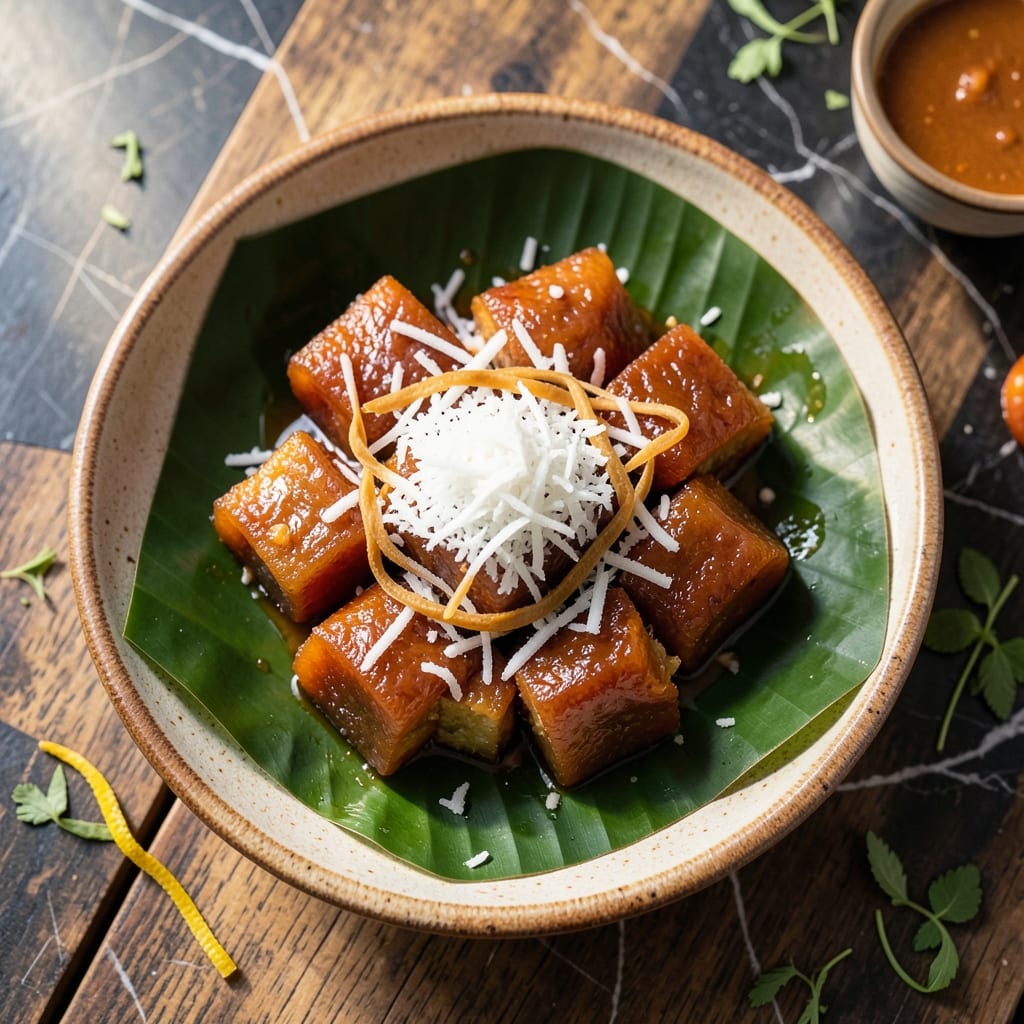
There’s a special satisfaction in creating this traditional Filipino treat from scratch. The process transforms simple ingredients into a chewy, slightly dense cake with a distinctive brown sugar flavor.
This steamed delicacy uses glutinous rice flour as its base, creating a texture that’s both springy and moist. The key is properly combining the batter and allowing it to steam until set, resulting in a golden-brown top.
Each bite delivers the perfect balance of sweetness and chewiness that makes this dish so beloved. The brown sugar creates a caramelized layer that contrasts beautifully with the soft interior.
Serve warm for the best experience, when the flavors and textures are at their peak. This classic treat brings authentic taste to your table.
Ingredients for Kutsinta Recipe Glutinous Rice Flour
Simple pantry staples create this authentic Filipino steamed cake with its signature chew.
| Ingredient | Amount | Notes |
|---|---|---|
| Glutinous Rice Flour 🌾 | 2 cups | Also called sweet rice flour |
| Brown Sugar 🍚 | 1 ½ cups | Dark or light, firmly packed |
| Lye Water 💧 | 1 tsp | Food-grade, essential for texture |
| Baking Soda 🧂 | ½ tsp | Helps with rise and texture |
| Salt 🧂 | ¼ tsp | Balances sweetness |
| Water 💧 | 2 ½ cups | Room temperature |
| Coconut Milk 🥥 | 1 cup | Full-fat for richness |
| Grated Coconut 🥥 | ½ cup | Fresh or frozen, unsweetened |
| Annatto Seeds 🌶️ | ¼ tsp | For natural orange color |
| Vanilla Extract 🌿 | 1 tsp | Pure, not imitation |
| Cornstarch 🌾 | 2 tbsp | For dusting molds |
Glutinous rice flour is non-negotiable here—look for brands like Mochiko or Bob’s Red Mill in the Asian aisle. The lye water (found at Asian markets or online) gives kutsinta its characteristic texture and color. Skip it and you’ll miss the magic. Brown sugar should be fresh and moist (the kind that clumps together). For the coconut milk, full-fat canned delivers the best richness and mouthfeel.
No lye water? Some bakers use baking soda at double the amount, but the texture won’t be identical. Brown sugar can be swapped with panutsa (Filipino raw sugar) for authenticity. For color, a pinch of turmeric works in a pinch (but annatto seeds are traditional). The grated coconut is optional but adds wonderful texture. Fresh is ideal, but frozen unsweetened works too.
Store glutinous rice flour in an airtight container for up to 6 months. Lye water keeps indefinitely at room temperature. The finished kutsinta stays fresh for 2-3 days at room temperature, covered. For longer storage, freeze for up to 1 month—steam briefly to refresh before serving.
Why You’ll Love This Recipe
- Minimal Effort: I mix the glutinous rice flour, brown sugar, and lye water, then steam—no fancy techniques, just straightforward steps.
- Chewy Sweetness: That glossy, jelly-like texture with deep caramel notes from the brown sugar? It’s what keeps me coming back.
- Party Favorite: I bring these to potlucks and they’re always the first to disappear—great for gatherings or a simple merienda.
- Budget Stretcher: A bag of glutinous rice flour and basic pantry staples make a big batch, so I save money without sacrificing flavor.
Step-by-Step Instructions for Chewy Brown Sugar Kutsinta
Master the technique for achieving that signature jelly-like texture and glossy finish every time.
Step 1: Prepare the Annatto-Infused Liquid Base
Combine the 2.5 cups Water and 0.25 tsp Annatto Seeds in a saucepan and bring to a gentle simmer over medium heat. Remove from heat immediately once the water turns a vibrant orange, about 3-4 minutes.
Strain through a fine-mesh sieve to remove the seeds, then return the infused water to the saucepan. Add the 1.5 cups Brown Sugar and stir until completely dissolved. This colored sugar syrup forms the foundation of your kutsinta’s characteristic hue and sweetness.
Step 2: Create the Smooth Batter
In a large mixing bowl, whisk together the 2 cups Glutinous Rice Flour, 0.5 tsp Baking Soda, and 0.25 tsp Salt until fully combined. These dry ingredients work in tandem to create the proper chewy texture.
Gradually pour the warm annatto-infused sugar syrup into the dry mixture while whisking continuously to prevent lumps. Add the 1 cup Coconut Milk, 1 tsp Lye Water, and 1 tsp Vanilla Extract, whisking until you achieve a smooth, thin batter with no visible streaks. The lye water is critical here—it creates the signature chewy, slightly springy texture.
Step 3: Steam to Perfection
Lightly grease your kutsinta molds with oil or line with banana leaves if desired. Dust the molds with 2 tbsp Cornstarch to prevent sticking and create that characteristic matte finish on the bottom. This step ensures easy release and prevents the kutsinta from tearing when unmolded.
Pour the batter into prepared molds, filling each about ¾ full. Steam in a preheated steamer over boiling water for 30-35 minutes until the tops are set and slightly domed. The kutsinta should pull away from the edges of the mold and have a glossy, slightly sticky surface when done.
Step 4: Add the Coconut Topping and Finish
While the kutsinta are still warm, sprinkle the tops generously with 0.5 cup Grated Coconut, pressing lightly so it adheres. The residual heat will help the coconut stick to the surface, creating that classic textural contrast between the chewy cake and crisp coconut topping.
Let them cool in the molds for 10 minutes before transferring to a wire rack. The kutsinta will firm up as they cool, developing that perfect jelly-like consistency. Serve at room temperature for the best texture, where each bite offers a delightful balance of chewy cake and sweet coconut crunch.
Pro Tips For Making Kutsinta Recipe Glutinous Rice Flour
- Steam Evenly: Use a well-fitted lid and medium-low heat to prevent water droplets from dripping onto the kutsinta, which can cause uneven cooking and a lumpy texture.
- Measure Lye Carefully: Lye water is potent—stick to 1/4 teaspoon per cup of flour, or the cutsinta will taste bitter instead of subtly alkaline.
- Skip Cold Mixing: I learned this the hard way—mix the batter with warm water so the brown sugar dissolves completely and the texture stays smooth.
- Grease Well: Coat your molds with a thin layer of oil before pouring the batter, or you’ll be scraping half your kutsinta off the pan like I did my first few tries.
Troubleshooting Great kutsinta recipe glutinous rice flour
Batter Too Thin
If your mixture resembles water, you likely added excess liquid. Add 1-2 tbsp glutinous rice flour gradually while whisking until it reaches a pancake batter consistency. Remember, the annatto-infused sugar syrup should be warm, not boiling, when mixed. 💡
No Glossy Top
The signature sheen comes from proper steaming. Ensure your steamer lid fits tightly to trap steam. If using a bamboo steamer, line it with a damp cloth to prevent condensation from dripping onto the kutsinta, which can create dull spots.
Cracked Surface
This usually indicates uneven heat distribution. Preheat your steamer for 5-10 minutes before adding the molds. Also, avoid opening the lid during the first 20 minutes of steaming, as temperature fluctuations cause cracking.
Stuck to Molds
Even with cornstarch dusting, sticking can happen. I always lightly grease molds with coconut oil before dusting with cornstarch. For stubborn pieces, run a thin knife around the edges before unmolding. Banana leaves work even better than molds for easy release.
Overly Dense Texture
This typically means the batter was overmixed or the lye water was omitted. Whisk just until smooth—overmixing develops too much gluten. If you skipped lye water, try adding ½ tsp baking soda next time, though the texture won’t be identical.
Pale Color
For a deeper orange hue, increase annatto seeds to ½ tsp or steep them longer in hot water. Alternatively, add ¼ tsp turmeric powder to the dry ingredients. The color develops more during steaming, so don’t judge the batter’s shade alone. ✨
Nutrition Facts
Frequently Asked Questions
Can I substitute regular rice flour?
No, regular rice flour won’t give the right chewy texture. Glutinous rice flour is essential for that signature jelly-like consistency. It has higher starch content that creates the proper springiness.
Why did my kutsinta turn out dense?
This usually happens if the batter was overmixed or lye water was omitted. Whisk just until smooth and always include the 1 tsp lye water for proper texture. The chemical reaction is key for that perfect chew.
Can I make this without a steamer?
Yes, use a large pot with a rack and tight lid. Add 2 inches of boiling water, place molds on the rack, and cover tightly. Steam for 35-40 minutes instead of 30-35. Check water level halfway through.
How do I store leftovers?
Keep in an airtight container at room temperature for up to 3 days. For longer storage, freeze for up to 1 month. Re-steam for 5 minutes to restore the chewy texture before serving.

- Mujadara Rice and Lentils Recipe: Earthy Spiced Lentils With Caramelized Onions - November 1, 2026
- Naija Fried Rice Recipe: Street-Style Spice With Veggie Crunch - November 1, 2026
- Mushy Rice Recipe: Fluffy Grains Transformed in Minutes - November 1, 2026