
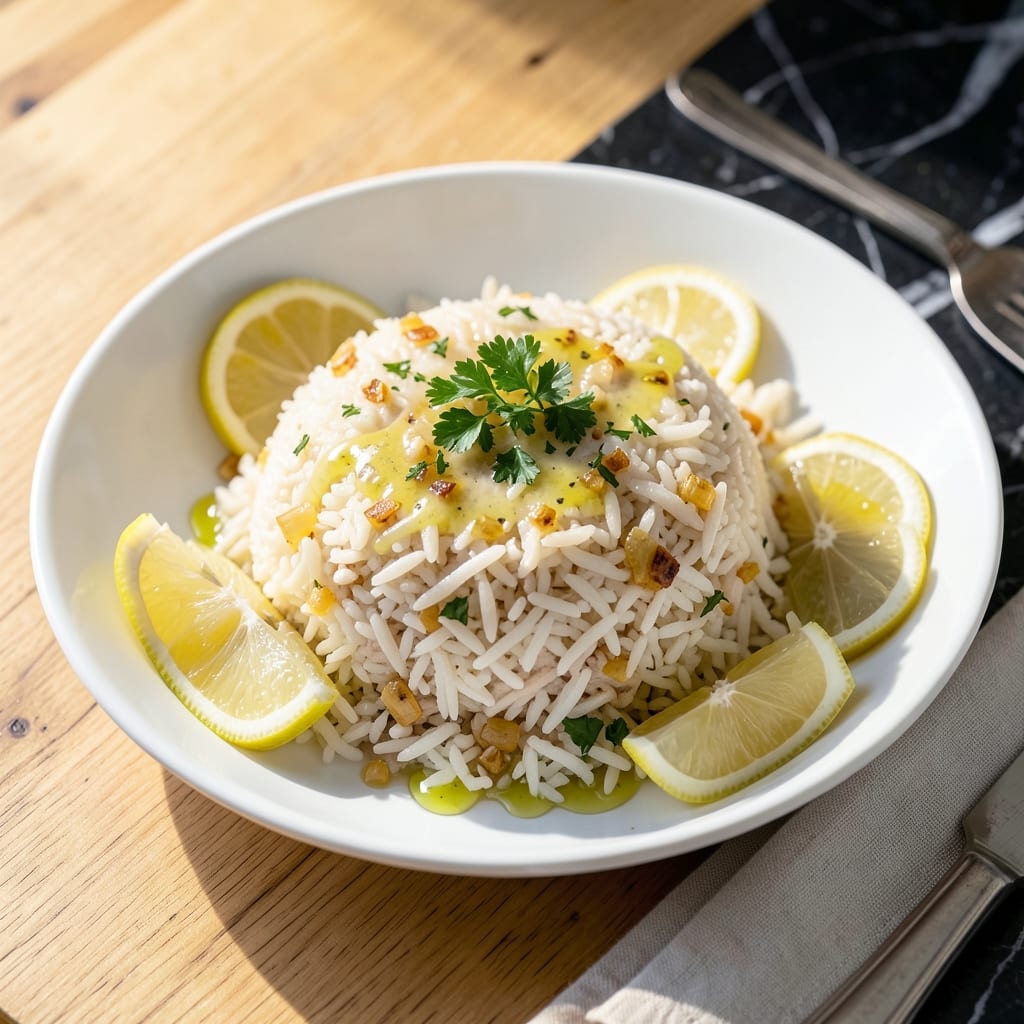
This lemon rice pilaf transforms a simple side into a bright, flavorful accompaniment for any meal.
I developed this recipe to bring a touch of Mediterranean flair to the table with minimal effort. The key lies in toasting the rice first, which enhances its nutty flavor before the citrus takes center stage.
The result is a dish with perfectly tender grains, each infused with zesty lemon and aromatic herbs. It pairs beautifully with grilled proteins or roasted vegetables, adding a light yet satisfying element to your plate.
Ready in under 30 minutes, this pilaf is as practical as it is delicious. Here’s how to make it.
Ingredients for Lemon Rice Pilaf
Bright citrus and aromatic herbs elevate this simple rice into something special.
| Ingredient | Amount | Notes |
|---|---|---|
| Long-Grain White Rice 🍚 | 1 ½ cups | Basmati or jasmine preferred |
| Unsalted Butter 🧈 | 3 tbsp | Divided for toasting and finishing |
| Yellow Onion 🧅 | 1 whole | Finely diced for even distribution |
| Garlic Cloves 🧄 | 3 cloves | Minced for aromatic base |
| Chicken Stock 🥣 | 3 cups | Vegetable stock for vegetarian version |
| Fresh Lemon Juice 🍋 | ⅓ cup | About 2-3 large lemons |
| Lemon Zest 🍋 | 1 tbsp | Finely grated from fresh lemons |
| Dried Thyme 🌿 | 1 tsp | Or 1 tbsp fresh thyme leaves |
| Dried Oregano 🍃 | 1 tsp | Mediterranean oregano preferred |
| Bay Leaf 🌿 | 1 whole | Removed before serving |
| Kosher Salt 🧂 | 1 ½ tsp | Diamond Crystal preferred for even seasoning |
| Freshly Ground Black Pepper 🌶️ | ½ tsp | Adjust to taste preference |
| Fresh Parsley 🌿 | ¼ cup | Chopped for garnish |
The rice is the foundation—basmati or jasmine give you those separate, fluffy grains that soak up the lemon beautifully. For the stock, I always keep Better Than Bouillon in my pantry (the chicken base is my go-to), but use vegetable stock to keep it vegetarian. The butter should be unsalted so you control the salt level, and don’t skip toasting the rice first (that’s where the nutty depth comes from).
No fresh lemons? Bottled juice at half the amount works in a pinch, but fresh zest is non-negotiable for that bright pop. Out of thyme? Substitute with marjoram—similar Mediterranean vibe. For the herbs, dried works at one-third the amount of fresh. If you’re using fresh parsley, grab the flat-leaf kind (it’s more flavorful than curly).
Leftover pilaf keeps well in the fridge for 4-5 days—reheat with a splash of water to fluff it up. The lemon flavor actually intensifies overnight, so it tastes even better the next day. Freezes for up to 3 months if you want to batch it.
Why You’ll Love This Recipe
- One Pot Wonder: I love that everything cooks together—rice, onions, garlic—in one pot with chicken stock, so cleanup is a breeze.
- Zesty Comfort: The butter-toasted rice with bright lemon and savory garlic hits that perfect balance between rich and fresh.
- Meal Prep Magic: Honestly, this keeps beautifully for days and pairs just as well with grilled chicken as it does with roasted veggies.
- Budget Friendly: A big batch costs pennies per serving, and I always have these pantry staples on hand for last-minute dinners.
Step-by-Step Instructions for Lemon Rice Pilaf
Here’s the method I rely on for perfectly bright, fluffy rice with vibrant citrus notes every time.
Step 1: Sauté Aromatics in Butter
Melt 2 tablespoons of the unsalted butter in a medium saucepan over medium heat. Add the finely diced yellow onion and cook for 4-5 minutes, stirring occasionally, until the edges turn translucent and golden.
Add the minced garlic cloves and cook for 30 seconds, just until fragrant. I keep the heat at medium to prevent burning—the goal is soft, sweet onions that form the flavor foundation. Watch for the garlic to release its aroma, but don’t let it brown.
This base layer of onions and garlic infuses the pilaf with depth, balancing the bright citrus that comes later.
Step 2: Toast the Rice and Add Herbs
Stir in the 1.5 cups long-grain white rice and cook for 1-2 minutes, stirring constantly, until the grains turn slightly opaque and smell nutty. This toasting step enhances the rice’s natural flavor and prevents it from turning mushy.
Add the 1 teaspoon dried thyme, 1 teaspoon dried oregano, 1 whole bay leaf, 1.5 teaspoons kosher salt, and 0.5 teaspoon freshly ground black pepper. Stir to coat the rice evenly with the herbs and spices.
I find that toasting the rice with the herbs blooms their flavors, creating a more aromatic dish.
Step 3: Deglaze and Simmer to Perfection
Pour in the 3 cups chicken stock, 0.33 cup fresh lemon juice, and 1 tablespoon lemon zest. Stir well, scraping up any browned bits from the bottom of the pan—this adds incredible depth to the pilaf.
Bring the mixture to a boil, then reduce the heat to low, cover the saucepan, and simmer for 15-18 minutes. You’ll know it’s ready when the liquid has been absorbed and the rice is tender with a slight bite.
Resist the urge to peek or stir during cooking. Steam is your friend here, and lifting the lid releases it prematurely.
Step 4: Rest and Finish with Freshness
Remove the saucepan from heat and let it sit, covered, for 10 minutes. This resting period allows the rice to steam in its own moisture, ensuring even cooking and fluffy texture.
After resting, discard the bay leaf. Fluff the rice gently with a fork, then stir in the remaining 1 tablespoon unsalted butter for a silky finish. The grains should separate easily and have a light, airy quality.
Finally, fold in the 0.25 cup fresh parsley, reserving a pinch for garnish. The parsley adds a fresh, herbal note that complements the zesty lemon beautifully.
Pro Tips For Making Lemon Rice Pilaf
- Toast the Rice: Cook the rice in the butter for 2-3 minutes before adding liquid—this gives it a nutty depth that plain steamed rice lacks. I learned this the hard way after making bland pilaf for years.
- Use Warm Stock: Add chicken stock straight from the fridge and the rice takes forever to cook evenly. Heat it first—it cuts the cooking time and prevents that weird underdone center.
- Skip the Rinsing: Sounds weird, but it works: don’t rinse long-grain white rice for pilaf. The starch actually helps create that light, fluffy texture you want.
- Zest Before Juicing: Grate the lemon zest directly into the rice while it cooks, then add the juice at the end. My grandmother swore by this, and she was right: it layers the citrus flavor instead of just dumping it all at once.
Regional Styles of These Flavors
Mediterranean Style
This version leans into the dish’s Greek roots. I add ½ cup crumbled feta and 1 tsp dried mint along with the herbs. The feta melts slightly into the rice, creating a creamy, tangy contrast to the bright lemon. It’s a flavor combo I discovered on a trip to Santorini. 💛
Middle Eastern Twist
For a Persian-inspired approach, I swap the thyme for ½ tsp ground turmeric and add ½ cup toasted slivered almonds before serving. The turmeric gives the rice a golden hue, while the almonds add crunch. Serve with a dollop of Greek yogurt on top.
Spanish Variation
Here, I incorporate ½ cup diced roasted red peppers and 1 tsp smoked paprika with the onions. The paprika adds a subtle smokiness that pairs beautifully with the citrus. I also use saffron-infused stock for a luxurious touch.
This version reminds me of paella’s vibrant colors and layers of flavor.
Indian-Inspired Pilaf
I toast 1 tsp cumin seeds and 1 tsp mustard seeds in the butter before adding the onions. Then, I stir in ½ cup frozen peas with the stock. The cumin and mustard seeds add warmth, while the peas bring a pop of color and sweetness.
French Provençal
This style highlights herbs de Provence. I use 1 tbsp Herbes de Provence blend instead of thyme and oregano, and add ½ cup diced zucchini with the onions. The herbes de Provence bring a floral note that complements the lemon beautifully. 🌿
Nutrition Facts
Frequently Asked Questions
Can I use brown rice instead of white?
Yes, but adjust the liquid to 3.5 cups and simmer for 40-45 minutes. The texture will be chewier, and the lemon flavor may be slightly muted.
How do I prevent mushy rice?
Toast the rice until nutty and avoid stirring while cooking. Use the exact 2:1 liquid-to-rice ratio and let it rest 10 minutes after cooking.
Can I make this ahead of time?
Cook and refrigerate for up to 5 days. Reheat with 1-2 tablespoons of water and fluff with a fork. The flavors deepen overnight.
What can I substitute for lemon juice?
Use lime juice or orange juice in equal amounts for a different citrus twist. For tartness without juice, add 1 teaspoon of vinegar per ¼ cup needed.

- Mujadara Rice and Lentils Recipe: Earthy Spiced Lentils With Caramelized Onions - November 1, 2026
- Naija Fried Rice Recipe: Street-Style Spice With Veggie Crunch - November 1, 2026
- Mushy Rice Recipe: Fluffy Grains Transformed in Minutes - November 1, 2026