
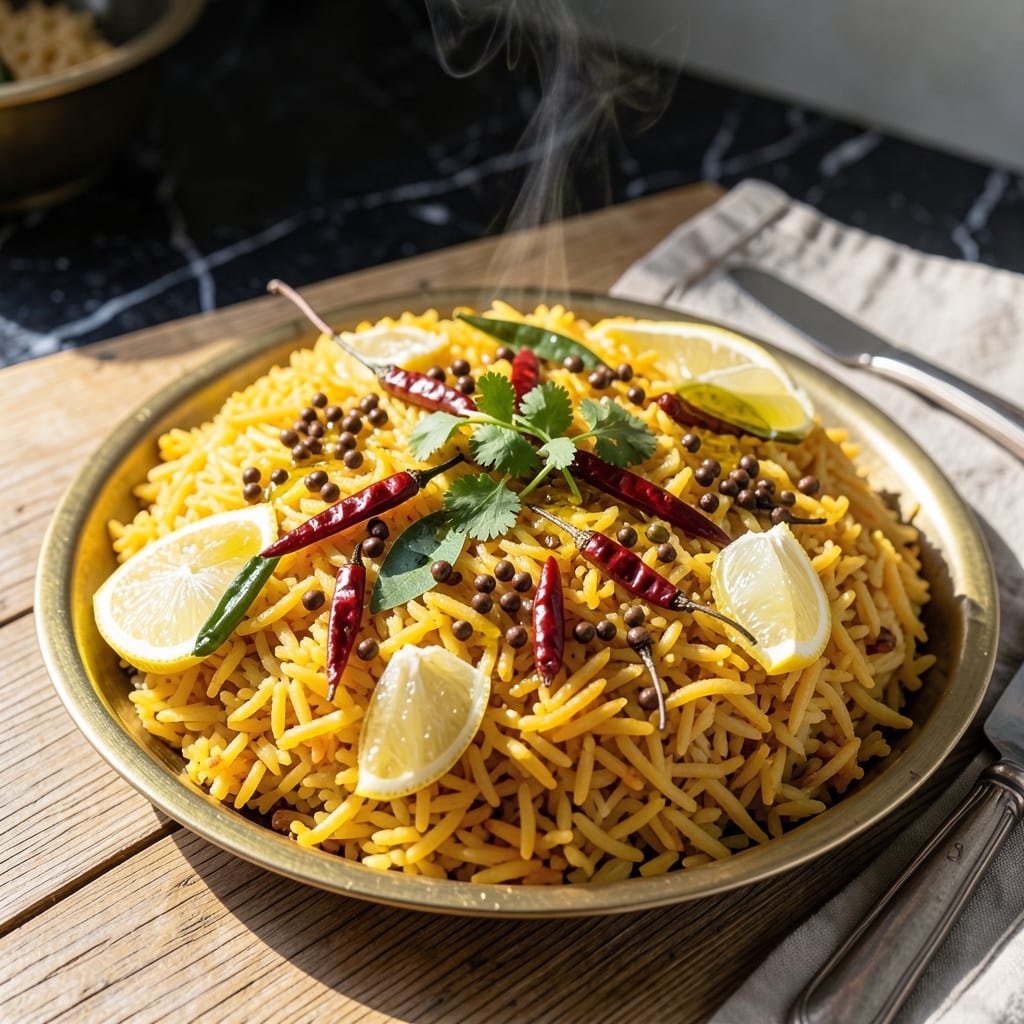
This South Indian specialty transforms simple rice into a vibrant, zesty dish that brightens any meal. The secret lies in tempering mustard seeds with curry leaves and turmeric, creating layers of aroma and flavor that define this classic.
I’ve perfected this method over years of trial and error, ensuring the rice stays fluffy while soaking up the tangy lemon juice and warm spices. The mustard seeds add a satisfying crunch that contrasts beautifully with the soft grains.
The result is a dish that’s both comforting and refreshing—ideal as a side or light main. Its balance of sour, spicy, and savory notes makes it a staple in South Indian households.
Ready in under 30 minutes, this recipe proves that simple ingredients can create extraordinary flavors. Here’s how to make it authentically at home.
Ingredients for Lemon Rice Recipe South Indian
Vibrant turmeric rice gets its signature zing from fresh lemon and crunchy tempered mustard seeds.
| Ingredient | Amount | Notes |
|---|---|---|
| Basmati Rice 🍚 | 1 ½ cups | Uncooked, rinsed thoroughly |
| Lemon Juice 🍋 | ⅓ cup | Freshly squeezed preferred |
| Mustard Seeds 🌱 | 2 tsp | Black or yellow variety |
| Curry Leaves 🍃 | 12 pieces | Fresh or dried |
| Turmeric Powder 🌿 | ½ tsp | Ground, for vibrant color |
| Dried Red Chilies 🌶️ | 3 whole | Broken into pieces |
| Split Pigeon Peas 🌾 | ¼ cup | Toor dal or chana dal |
| Peanuts 🥜 | ¼ cup | Raw, unsalted preferred |
| Asafoetida 🌿 | ¼ tsp | Hing, optional for depth |
| Green Chilies 🌶️ | 2 whole | Slit lengthwise, deseeded |
| Vegetable Oil 🫒 | 3 tbsp | Neutral flavor, for tempering |
| Salt 🧂 | 1 ½ tsp | Adjust to taste preference |
| Fresh Cilantro 🌿 | ¼ cup | Chopped, for garnish |
The mustard seeds and curry leaves are non-negotiable for authenticity. Indian grocery stores like Patel Brothers or Bharat Bazaar carry fresh curry leaves and high-quality turmeric. Asafoetida (hing) adds depth but can be skipped if unavailable. For the rice, Basmati or Sona Masoori varieties yield the best texture—avoid sticky short-grain rice. The peanuts should be raw and unsalted to absorb the tempering flavors properly.
No curry leaves? Dried curry leaf powder at one-third the amount works, though fresh is ideal. Swap peanuts for cashews or almonds if preferred. Green chilies can be adjusted for heat—remove seeds for milder flavor or omit entirely. For a quicker version, pre-cooked rice (day-old works best) cuts prep time in half. The lemon juice can be bottled in a pinch, but fresh provides brighter, more authentic flavor.
Lemon rice tastes best served immediately but keeps well for 2-3 days in an airtight container. Reheat gently with a splash of water to restore moisture. The tempering spices lose potency over time, so for optimal flavor, prepare the dish fresh. Leftovers make excellent lunchbox fillers (trust me on this).
Why You’ll Love This Recipe
- One Pot Wonder: I can cook the rice and temper the mustard seeds and curry leaves in the same pot—no extra pans to wash.
- Zesty Turmeric Kick: The tang of fresh lemon juice with earthy turmeric and the pop of mustard seeds hits just right.
- Lunchbox Hero: Honestly, it tastes even better the next day, making it my go-to for packed lunches.
- Budget Friendly: Basmati rice stretched with those bold flavors means a filling meal that doesn’t break the bank.
Step-by-Step Instructions for Lemon Rice
Master this traditional South Indian technique for bright, aromatic rice with perfect texture.
Step 1: Prepare the Rice Base
Rinse the 1.5 cups Basmati Rice thoroughly under cold water until the water runs clear. This removes excess starch and prevents the grains from becoming gummy during cooking. Drain well in a fine-mesh strainer.
Combine the rinsed rice with 3 cups of water in a medium saucepan. Add ½ tsp of the turmeric powder and 1 tsp of the salt. Bring to a boil over medium-high heat, then reduce to low, cover, and simmer for 15 minutes until the water is absorbed and the rice is tender but not mushy. Fluff with a fork and set aside to cool slightly.
Step 2: Temper the Spices and Legumes
Heat the 3 tbsp vegetable oil in a large, heavy-bottomed skillet over medium heat. Add the 2 tsp mustard seeds and wait for them to begin popping—this takes about 30-45 seconds. The moment they start to sputter, add the 0.25 tsp asafoetida, 3 whole dried red chilies (broken into pieces), 12 pieces curry leaves, and 2 whole green chilies (slit lengthwise).
Stir for 10-15 seconds until the curry leaves become fragrant. Immediately add the 0.25 cup peanuts and 0.25 cup split pigeon peas. Sauté for 3-4 minutes until the peanuts turn light golden brown and the pigeon peas are lightly toasted. This step builds the nutty, aromatic foundation of the dish.
Step 3: Combine and Season
Add the cooked rice to the skillet with the tempered spices. Gently fold everything together with a spatula, ensuring the turmeric-stained grains are evenly coated with the oil and spices. Be careful not to break the rice—this dish should have distinct, fluffy grains.
Drizzle the 0.33 cup lemon juice evenly over the rice. Add the remaining ½ tsp salt and the remaining ¼ tsp turmeric powder. Toss gently but thoroughly for 1-2 minutes over low heat to allow the flavors to meld. Taste and adjust the salt or lemon juice if needed—the balance should be bright and tangy without being overly sour.
Step 4: Finish and Garnish
Remove the skillet from heat and let the lemon rice sit covered for 5 minutes. This allows the grains to absorb the final seasonings and the flavors to deepen. The rice should be vibrant yellow with visible flecks of mustard seeds, peanuts, and curry leaves.
Just before serving, sprinkle the 0.25 cup fresh cilantro (chopped) over the top and fold it in gently. The cilantro adds a fresh, herbal note that complements the zesty, spiced profile. Serve warm, ideally with a side of yogurt or a cooling raita to balance the bold flavors.
Pro Tips For Making Lemon Rice Recipe South Indian
- Toast the Mustard Seeds: Heat the oil until it shimmers, then add mustard seeds—they should pop within 10-15 seconds. If they don’t, your oil isn’t hot enough, and the flavor will be dull.
- Use Room-Temperature Rice: Spread the cooked basmati rice on a plate to cool slightly before mixing with lemon juice. Hot rice soaks up the juice unevenly and turns mushy.
- Squeeze Fresh Lemons: Bottled lemon juice lacks the bright, sharp tang this dish needs. Roll 2-3 lemons on the counter first to get every last drop.
- Add Turmeric Last: Stir in the turmeric powder only after tempering the mustard seeds and curry leaves—adding it too early can make it bitter. A pinch is enough for that golden color.
Dietary Considerations for This Dish
Naturally Vegetarian
This dish is inherently vegetarian and vegan-friendly—no animal products are used in the traditional preparation. The protein comes from peanuts and split pigeon peas, making it a satisfying meat-free option. I love that it’s packed with plant-based goodness. 🌱
Gluten-Free Goodness
All ingredients are naturally gluten-free, including Basmati rice and the tempering spices. Just ensure your asafoetida is pure and not mixed with wheat flour—some brands add fillers. Always check labels if celiac disease is a concern.
Nut Allergy Note
The recipe includes peanuts, which are a common allergen. For nut-free versions, simply omit them or swap in sunflower seeds for similar crunch. The flavor profile remains intact without compromising on texture.
Low-Fat Option
To reduce fat, cut the vegetable oil to 2 tbsp and use a non-stick skillet. The tempering will still infuse flavor, though the peanuts may toast less evenly. I’ve made it this way often with great results.
Sodium Control
This recipe uses 1.5 tsp salt, but you can reduce it to 1 tsp or use a low-sodium alternative. The lemon juice and spices provide plenty of flavor, so the dish won’t taste bland. Taste as you go and adjust to your preference.
Spice Level Adjustment
For mild heat, reduce or omit the green chilies and dried red chilies. For extra kick, add ½ tsp cayenne pepper to the tempering. The beauty of this dish is its adaptability to your spice tolerance. 💛
Nutrition Facts
Frequently Asked Questions
Can I use regular rice instead of Basmati?
Yes, but Basmati gives the best texture. Use long-grain white rice if needed, but avoid short-grain as it becomes sticky. Rinse well to remove excess starch for fluffier results.
Why do mustard seeds pop during tempering?
Mustard seeds contain moisture that expands when heated, causing them to pop. This releases their nutty aroma, essential for authentic flavor. Keep a lid handy to prevent splattering.
How do I store leftovers?
Keep in an airtight container in the fridge for 2-3 days. Reheat gently with a splash of water to restore moisture. Avoid freezing as it affects texture.
Can I make this without curry leaves?
Use dried curry leaf powder at one-third the amount or skip entirely. The dish will still taste good but lacks the authentic aroma. Fresh leaves are worth seeking out.

- Mujadara Rice and Lentils Recipe: Earthy Spiced Lentils With Caramelized Onions - November 1, 2026
- Naija Fried Rice Recipe: Street-Style Spice With Veggie Crunch - November 1, 2026
- Mushy Rice Recipe: Fluffy Grains Transformed in Minutes - November 1, 2026