
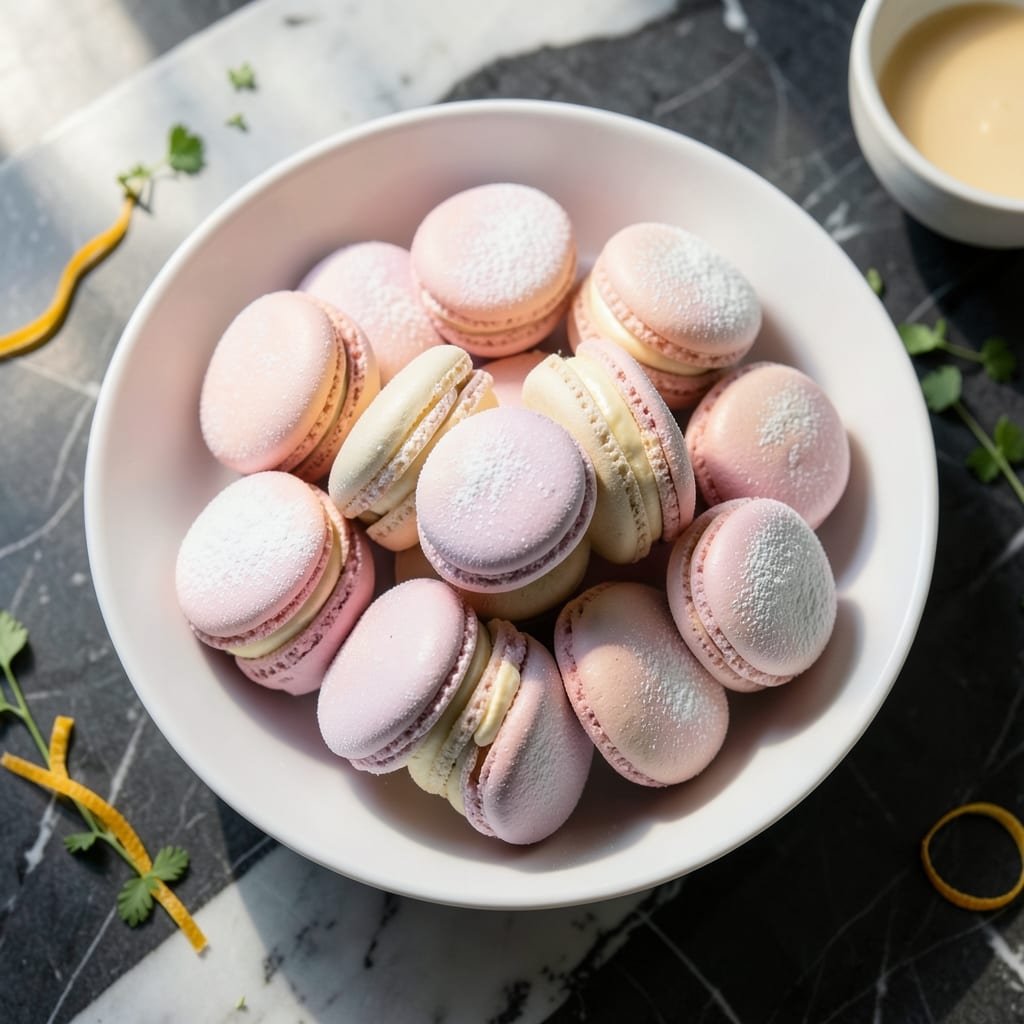
This gluten-free macaron recipe proves that delicate French pastries can be just as perfect without traditional wheat flour. The rice flour base creates a subtle texture that works beautifully with the classic almond meringue.
I developed this version after years of testing to achieve the ideal smooth shell and frilly feet. The key is precise measurement and proper resting time before baking to ensure that signature macaron appearance.
What emerges from the oven is a cookie with a crisp exterior giving way to a slightly chewy interior. The rice flour adds a delicate nuttiness that complements the sweetness without overpowering it.
Fill with your favorite ganache or buttercream for a treat that’s both elegant and accessible. This method delivers consistent results every time.
Ingredients for Macaron Recipe with Rice Flour
Precise measurements and quality ingredients create these delicate gluten-free French pastries with perfect texture.
| Ingredient | Amount | Notes |
|---|---|---|
| Almond Flour 🌰 | 2 cups | Super fine, blanched preferred |
| White Rice Flour 🌾 | ½ cup | Finely milled for smooth texture |
| Powdered Sugar 🍚 | 2 ½ cups | Sifted to remove lumps |
| Large Egg Whites 🥚 | 4 whole | Room temperature, aged 24 hours |
| Granulated Sugar 🍬 | ½ cup | Superfine preferred for meringue |
| Vanilla Extract 🌿 | 1 tsp | Pure vanilla for best flavor |
| Salt 🧂 | ¼ tsp | Fine sea salt preferred |
| Gel Food Coloring 🎨 | ½ tsp | Optional for colored shells |
| Buttercream Filling 🧈 | 1 ½ cups | Vanilla or chocolate variety |
| Ganache Filling 🍫 | 1 ½ cups | Dark chocolate for pairing |
The almond flour is non-negotiable—Bob’s Red Mill super fine is the gold standard. Rice flour must be white and finely milled; Authentic Foods or Anthony’s brands work well. Powdered sugar quality matters too; Domino or C&H dissolve smoothly. For egg whites, room temperature and 24-hour aging (left uncovered in the fridge) reduces moisture for better meringue stability.
No almond flour? Sunflower seed flour works in a pinch (though texture differs slightly). Swap rice flour for tapioca starch at a 1:1 ratio if needed. Superfine sugar is ideal but regular granulated works—just pulse it in a food processor first. For food coloring, gel-based only (liquid throws off the batter consistency). The fillings can be any buttercream or ganache you prefer.
Store almond and rice flours in the freezer to prevent rancidity—lasts 6-12 months sealed tight. Egg whites are best used fresh but can be frozen (thaw in fridge overnight). Unfilled macaron shells freeze beautifully for 1 month; fill just before serving. Always bring ingredients to room temperature before starting.
Why You’ll Love This Recipe
- No Fuss Mixing: I just whisk the egg whites and sugar, fold in the almond and rice flour, and pipe—no resting overnight like traditional macarons.
- Subtle Sweetness: The rice flour adds a delicate, almost nutty undertone that balances the powdered sugar perfectly.
- Gluten-Free Crowd Pleaser: Honestly, these are my go-to for parties where someone always needs a gluten-free option.
- Budget Stretcher: Almond flour is pricey, but swapping in rice flour cuts the cost without sacrificing that signature chewy texture.
Step-by-Step Instructions for Macarons With Rice Flour
Achieve perfect gluten-free macarons with this precise method and professional technique.
Step 1: Sift and Combine Dry Ingredients
Begin by sifting the 2 cups Almond Flour and 0.5 cup White Rice Flour together through a fine-mesh sieve into a large bowl. This eliminates any lumps and ensures a smooth texture in your final product.
Add the 2.5 cups Powdered Sugar and 0.25 tsp Salt to the same sieve and sift directly into the bowl with the flours. Whisk all the dry ingredients together until fully combined and uniform in color. This mixture forms the base of your macaron shells.
Step 2: Prepare the Meringue
In a clean, grease-free bowl of a stand mixer fitted with the whisk attachment, combine the 4 whole Large Egg Whites at room temperature. Begin whipping on medium speed until foamy, then gradually increase to high speed.
Slowly add the 0.5 cup Granulated Sugar one tablespoon at a time, allowing each addition to fully incorporate before adding the next. Once all the sugar is added, continue whipping for 8-10 minutes until stiff, glossy peaks form. Add the 1 tsp Vanilla Extract and 0.5 tsp Gel Food Coloring during the final minute of whipping.
Step 3: Fold the Macaronage
Add one-third of the dry ingredient mixture to the meringue and fold gently using a silicone spatula. The goal is to deflate the meringue slightly while incorporating the dry ingredients. After the first addition is fully combined, add the remaining dry mixture in one addition.
Continue folding the batter using a J-shaped motion, scraping along the bottom of the bowl and up the sides. The batter is ready when it flows like lava and forms a ribbon that settles back into itself within 20-30 seconds. Be careful not to overmix, as this will result in flat, cracked shells.
Step 4: Pipe and Rest the Shells
Transfer the batter to a piping bag fitted with a round tip. Pipe 1-inch circles onto a parchment-lined baking sheet, spacing them at least 1 inch apart. Tap the baking sheet firmly on the counter 3-4 times to release any air bubbles.
Let the piped shells rest at room temperature for 30-60 minutes until they form a dry, dull skin. They should feel firm to the touch and not stick to your finger when lightly pressed. This resting period is crucial for developing the characteristic smooth surface and feet of the macarons.
Step 5: Bake and Fill the Macarons
Preheat your oven to 300°F and bake one sheet at a time on the center rack for 15-18 minutes. Rotate the sheet halfway through baking for even results. The shells are done when they no longer wobble when touched and the feet are set.
Cool the shells completely on the baking sheet before removing. Pipe or spoon 1.5 cups Buttercream Filling or 1.5 cups Ganache Filling onto the flat side of one shell and sandwich with another. Mature the filled macarons in the refrigerator for 24 hours for the best texture and flavor development.
Pro Tips For Making Macaron Recipe With Rice Flour
- Sift Twice: Rice flour and almond flour clump like crazy—sift them together with the powdered sugar twice through a fine mesh sieve, or you’ll end up with lumpy shells.
- Age Your Egg Whites: Separate your egg whites 24 hours ahead and let them sit covered in the fridge; the thinner consistency whips up stiffer and more stable for piping.
- Fold Until Ribboned: When mixing the batter, stop folding the moment it flows like lava and forms a ribbon that dissolves in 20-30 seconds—overmixing kills the structure.
- Rest Before Baking: Pipe your macarons, then let them sit for 30-60 minutes until they form a dry skin; this prevents cracking and helps develop that signature smooth surface.
Best Sauces and Condiments for This Dish
Classic Pairings
Buttercream and ganache are the traditional choices for a reason—they complement the delicate almond and rice flour shells perfectly. I recommend vanilla buttercream for its smooth, creamy texture that contrasts beautifully with the crisp exterior of your macarons. 💫
Fruit-Inspired Fillings
For a fresh twist, try pairing these macarons with raspberry jam swirled into buttercream. The tartness of the berries balances the sweetness of the shells. Lemon curd works wonderfully too, adding a bright, zesty note.
Chocolate Variations
Dark chocolate ganache is my go-to for its rich, deep flavor that stands up to the nuttiness of the rice flour. For a lighter touch, white chocolate ganache infused with 1 tsp matcha powder adds an earthy complexity. 🍫
Spiced and Flavored
Salted caramel buttercream brings a sweet-salty contrast that elevates the macarons to gourmet status. Add ½ tsp cinnamon to your ganache for a warm, aromatic pairing that complements the almond and rice flour blend.
Dessert Sauces
Drizzle with warm chocolate sauce or berry coulis for added decadence. A dollop of dulce de leche between the shells creates a rich, caramelized filling that pairs especially well with the subtle nuttiness of the rice flour.
Nutrition Facts
Frequently Asked Questions
Why use rice flour in macarons?
Rice flour adds a delicate nuttiness and helps create a smoother texture in gluten-free versions. It also improves the structure of the shells without altering the classic macaron taste.
Can I substitute another flour?
Yes, but stick to fine, gluten-free flours like tapioca starch for similar results. Avoid dense flours like coconut, as they change the texture significantly.
How do I know when the batter is ready?
It should flow like lava and form a ribbon that settles in 20-30 seconds. If it’s too runny, the shells will spread too much.
Why rest the piped shells?
Resting forms a dry skin, preventing cracks and helping the feet develop properly. Skip this step, and your macarons may not rise evenly.

- Mujadara Rice and Lentils Recipe: Earthy Spiced Lentils With Caramelized Onions - November 1, 2026
- Naija Fried Rice Recipe: Street-Style Spice With Veggie Crunch - November 1, 2026
- Mushy Rice Recipe: Fluffy Grains Transformed in Minutes - November 1, 2026