
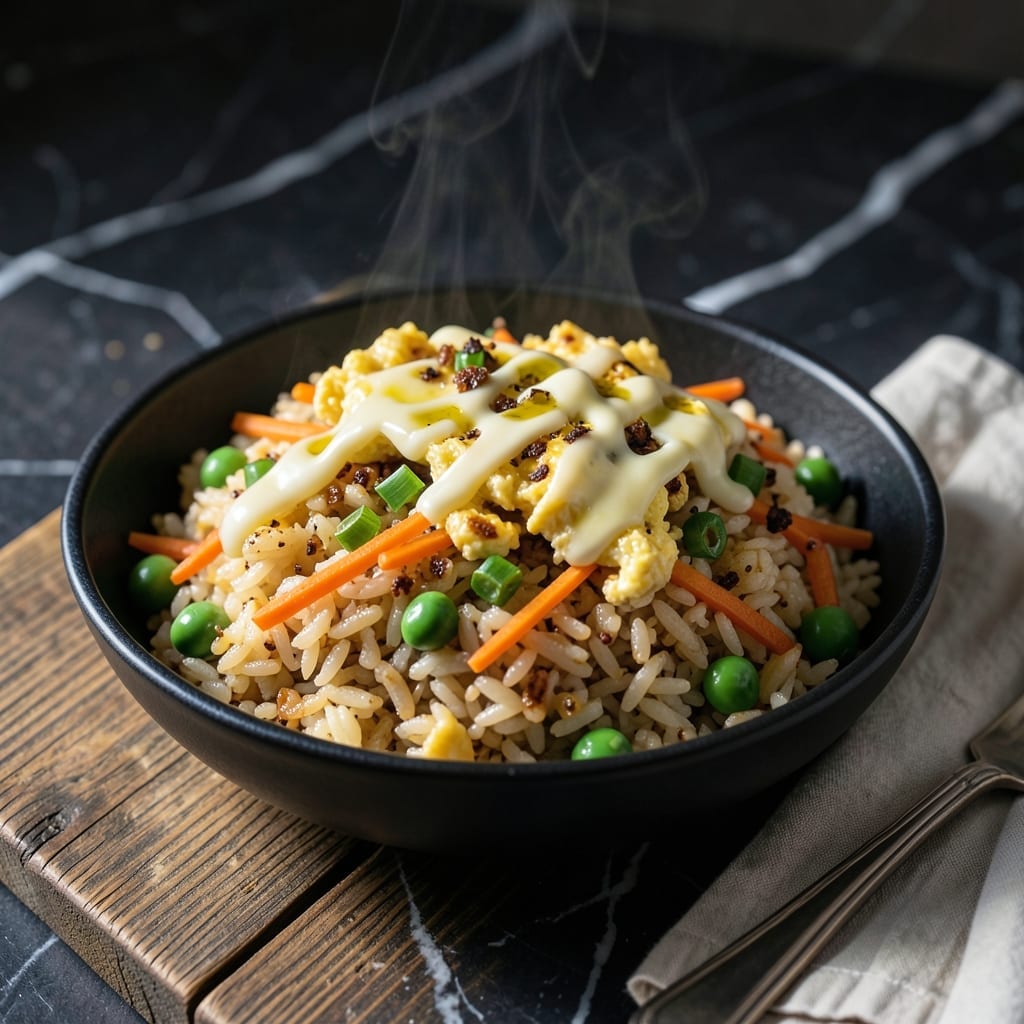
Achieving authentic wok-charred flavor at home requires the right technique and ingredients. This recipe delivers the signature taste and texture of Chinese takeout without the guesswork.
The secret lies in using day-old rice and cooking over high heat. Each grain stays separate and slightly crisp, while the vegetables maintain their vibrant color and snap.
With a few simple ingredients and proper wok tossing, you’ll create a dish that rivals your favorite restaurant. The aroma alone will transport you to a bustling street food stall.
Serve this as a side or main dish for a satisfying meal that’s ready in 20 minutes. The results are consistently restaurant-quality with every attempt.
Ingredients for Marion Grasby Chinese Fried Rice
Day-old rice and high-heat cooking create that signature wok-charred texture and flavor.
| Ingredient | Amount | Notes |
|---|---|---|
| Day-Old Cooked Jasmine Rice 🍚 | 4 cups | Cold, separated grains essential |
| Peanut Oil 🫒 | 3 tbsp | High smoke point required |
| Large Eggs 🥚 | 3 whole | Lightly beaten for scrambling |
| Carrots 🥕 | 2 whole | Medium dice, julienned preferred |
| Green Onions 🧅 | 4 whole | Thinly sliced, whites and greens separated |
| Frozen Green Peas 🌱 | 1 cup | Thawed and drained |
| Garlic Cloves 🧄 | 3 cloves | Minced for maximum flavor |
| Light Soy Sauce 🥢 | 2 tbsp | Low-sodium acceptable |
| Dark Soy Sauce 🥢 | 1 tsp | For depth and color |
| Sesame Oil 🫒 | 1 tsp | Toasted variety for aroma |
| White Pepper 🌶️ | ½ tsp | Freshly ground preferred |
| Shaoxing Wine 🍶 | 1 tbsp | Dry sherry works as substitute |
| Char Siu or BBQ Pork 🥩 | ½ cup | Diced, optional but traditional |
| Bean Sprouts 🌱 | ½ cup | Rinsed, tails trimmed |
The rice is non-negotiable—day-old jasmine rice from the fridge (or spread on a tray to cool) gives you those separate, slightly crisp grains. For the pork, Chinese BBQ shops sell char siu by the pound, or grab pre-cooked from the Asian market freezer section. Peanut oil handles the high heat better than vegetable oil, and its neutral flavor won’t compete with the soy and sesame.
No Shaoxing wine? Dry sherry is the classic swap (use the same amount). For a vegetarian version, mushrooms or tofu stand in beautifully for the pork. Fresh peas work if you’ve got them, but frozen are actually preferable—they hold their color better at high heat. The dark soy adds that restaurant depth, but skip it if you only have light (just boost the regular soy by half a teaspoon).
Cooked rice keeps in the fridge for 4-5 days—perfect for planning ahead. The finished dish reheats well for 3 days, though the texture is best fresh. Store leftovers in an airtight container, and bring to room temperature before rewarming in the wok for best results.
Why You’ll Love This Recipe
- No-Fuss Cooking: I love using day-old jasmine rice—no pre-cooking, just straight into the wok with peanut oil for that authentic taste.
- Umami Bomb: The peanut oil and eggs create this rich, savory depth that makes every bite ridiculously satisfying.
- Meal Prep Hero: Honestly, it’s my Sunday staple—doubles perfectly for lunches and tastes even better the next day.
- Budget Winner: Carrots and green onions stretch this dish far, and it’s way cheaper than takeout but just as good.
Step-by-Step Instructions for Chinese Fried Rice
Master the wok hei technique with these precise steps for authentic restaurant-quality results at home.
Step 1: Prepare and Velouté the Aromatics
Heat a wok over high heat until a bead of water sizzles and evaporates instantly. Add 2 tbsp Peanut Oil and swirl to coat the surface. Immediately add the minced Garlic Cloves and julienned Carrots, stir-frying for 45-60 seconds until the garlic turns fragrant and pale gold.
The carrots should retain a slight bite—they’ll finish cooking later. This initial high-heat sear develops the base layer of wok hei, that smoky breath of the wok essential to authentic flavor. Keep the ingredients moving constantly to prevent burning.
Step 2: Scramble the Eggs to Silky Perfection
Push the aromatics to one side of the wok and add the remaining 1 tbsp Peanut Oil. Pour in the lightly beaten Large Eggs and let them set for 10 seconds before gently scrambling with a spatula. The eggs should form soft, translucent curds—not dry or rubbery.
Once the eggs are just set but still glossy, combine them with the aromatics. The residual heat will finish cooking them. This step requires attention: overcooked eggs lose their tender texture and can make the final dish dry.
Step 3: Incorporate the Rice and Build Flavor Layers
Add the 4 cups Day-Old Cooked Jasmine Rice, breaking up any clumps with your spatula. Press the rice firmly against the wok surface for 20-30 seconds to achieve slight charring—this is where the wok hei deepens. The rice should be hot and slightly crisp at the edges.
Drizzle the 1 tbsp Shaoxing Wine around the edges of the wok, allowing it to sizzle and deglaze. This step lifts the fond (browned bits) from the wok, infusing the rice with complex, savory depth. Stir to distribute evenly before proceeding.
Step 4: Finish with Sauces and Final Components
Add the 1 cup Frozen Green Peas, 0.5 cup Char Siu or BBQ Pork, and 0.5 cup Bean Sprouts. Toss everything together for 1-2 minutes until heated through. The peas should turn bright green, and the pork should be warmed but not overcooked.
Create a well in the center and add the 2 tbsp Light Soy Sauce, 1 tsp Dark Soy Sauce, 0.5 tsp White Pepper, and 1 tsp Sesame Oil. Stir vigorously for 30 seconds to coat every grain evenly. The dark soy sauce adds a deep mahogany hue, while the sesame oil provides a final aromatic lift.
Step 5: Garnish and Serve Immediately
Remove from heat and fold in the thinly sliced Green Onions, reserving some greens for garnish. The rice should glisten with a light sheen from the oils, and each grain should be distinct yet cohesive. Taste and adjust seasoning if needed—though the sauces should provide sufficient saltiness.
Serve immediately while hot, topped with the remaining green onion greens. Authentic wok-fried rice is best consumed straight from the wok, as the texture and aroma diminish upon cooling. The final dish should have a balance of smoky, savory, and slightly sweet notes with a hint of umami depth.
Pro Tips For Making Marion Grasby Chinese Fried Rice
- Chill the Rice: Use day-old jasmine rice straight from the fridge—it’s drier and fries up fluffier. I learned this the hard way after making soggy fried rice with fresh, warm rice.
- High Heat Only: Crank the wok or skillet to smoking hot before adding peanut oil and rice. Sounds intense, but it’s the only way to get that classic wok hei flavor.
- Scramble Eggs First: Push the rice to one side, pour beaten eggs into the empty space, and scramble until just set before mixing. Skip this and you’ll end up with rubbery egg bits.
- Dice Carrots Small: Cut carrots into tiny cubes—about ¼-inch—so they soften quickly without turning mushy. After burning a few batches, I finally figured out bigger pieces just don’t work.
Perfect Pairings for This Recipe
Side Dish Pairings
This fried rice shines alongside simple, fresh flavors. I love serving it with steamed bok choy—just 4-5 baby bok choy halved and steamed for 5 minutes. The mild, slightly sweet greens balance the savory rice beautifully. 🥗
Protein Companions
For a complete meal, add crispy skin chicken or honey walnut shrimp. The chicken’s golden skin contrasts perfectly with the rice’s texture. I often pick up pre-cooked Peking duck from my local Chinese market for an easy protein boost.
Soup Pairings
A light soup like egg drop or hot and sour complements the meal without overwhelming it. The brothy warmth cuts through the richness. I prefer hot and sour for its tangy kick that wakes up the palate. 🍜
Beverage Choices
Jasmine tea is my go-to—its floral notes pair wonderfully with the dish’s savory depths. For something stronger, try a crisp Sauvignon Blanc or a Tsintgtao beer. The beer’s light bitterness cleanses your palate between bites.
Condiment Additions
Set out chili oil or Sriracha for heat lovers. A small bowl of pickled vegetables adds a refreshing crunch. I always include extra soy sauce for those who want a saltier kick.
Nutrition Facts
Frequently Asked Questions
Why must the rice be day-old?
Fresh rice contains too much moisture, causing it to clump and turn mushy when stir-fried. Day-old rice has dried out slightly, allowing each grain to stay separate and develop that coveted wok-charred texture
Can I substitute regular soy sauce for dark?
You can, but add an extra ½ tsp of light soy sauce to compensate for depth of color and flavor. Dark soy adds richness and that signature mahogany hue to the dish
How do I achieve wok hei at home?
Use a well-seasoned wok over maximum heat and press the rice against the surface for 20-30 seconds. The high temperature and quick cooking create that smoky “breath of the wok” flavor
What if my wok isn’t carbon steel?
A non-stick wok works, but avoid metal utensils. For best results, heat it until very hot before adding oil, and cook in smaller batches to maintain high temperature throughout

- Mujadara Rice and Lentils Recipe: Earthy Spiced Lentils With Caramelized Onions - November 1, 2026
- Naija Fried Rice Recipe: Street-Style Spice With Veggie Crunch - November 1, 2026
- Mushy Rice Recipe: Fluffy Grains Transformed in Minutes - November 1, 2026