
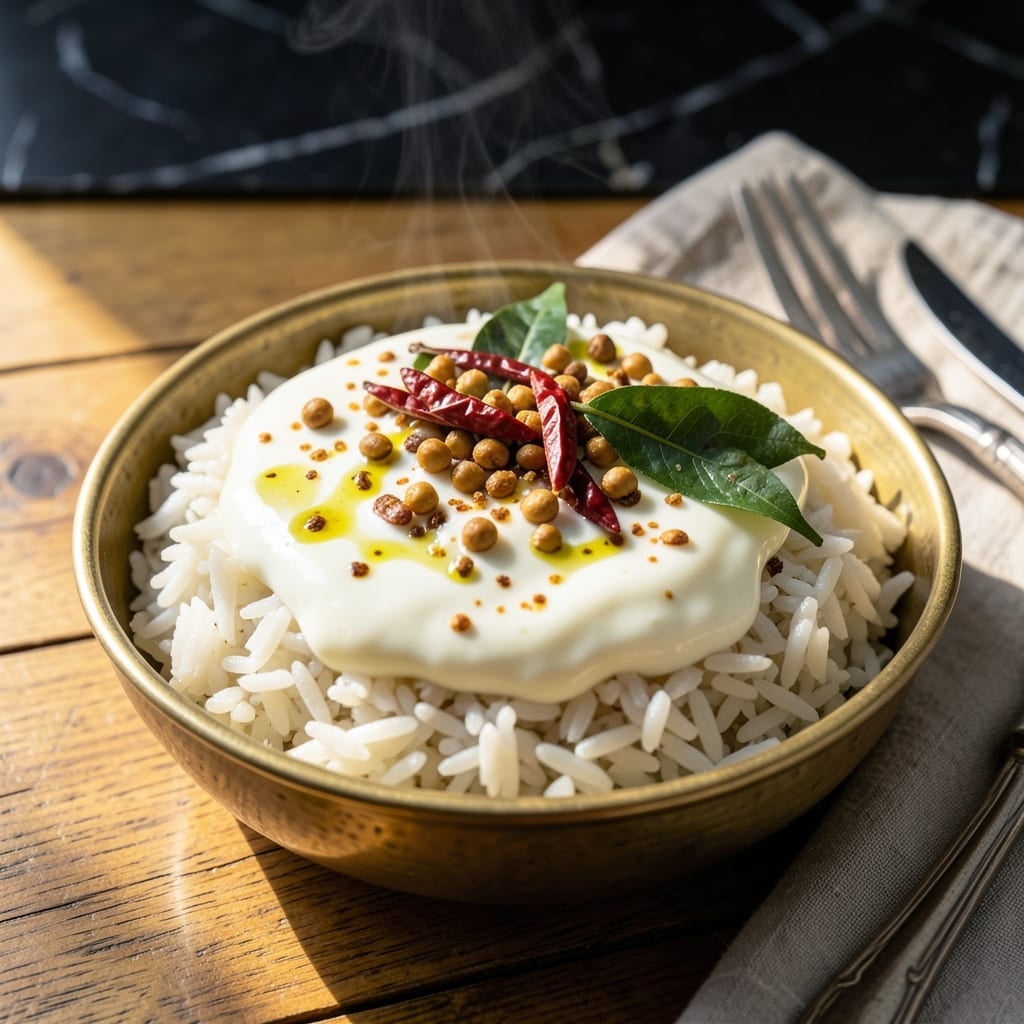
There’s a reason South Indian homes swear by this dish for its comforting simplicity and bold flavors. This tangy, spiced creation balances creamy curd with aromatic tempering, making it a staple for lazy afternoons or quick meals.
The magic lies in the tempering—mustard seeds, curry leaves, and dried red chilies sizzled in ghee, then folded into cooked rice and fresh yogurt. It’s a foolproof method that transforms basic ingredients into something extraordinary.
What emerges is a dish that’s cool, creamy, and packed with layers of spice and tang. The rice soaks up the yogurt, while the tempering adds crunch and depth in every bite.
Perfect for lunchboxes or as a light dinner, this recipe delivers authentic flavor with minimal effort. Here’s how to make it right.
Ingredients for Masala Curd Rice
Pantry staples and fresh herbs create this comforting South Indian classic with bold flavor layers.
| Ingredient | Amount | Notes |
|---|---|---|
| Cooked White Rice 🍚 | 4 cups | Day-old works best |
| Plain Yogurt 🥛 | 2 cups | Full-fat for creaminess |
| Mustard Seeds 🌿 | 1 tsp | Black or yellow variety |
| Dried Red Chilies 🌶️ | 2 whole | Broken into pieces |
| Curry Leaves 🍃 | 10 pieces | Fresh preferred |
| Urad Dal 🌾 | 1 tsp | Split black gram |
| Chana Dal 🌾 | 1 tsp | Split chickpeas |
| Asafoetida 🧂 | ¼ tsp | Pinch for tempering |
| Ghee 🧈 | 2 tbsp | Clarified butter preferred |
| Green Chilies 🌶️ | 2 whole | Finely chopped |
| Fresh Ginger 🌿 | 1 tsp | Grated or minced |
| Salt 🧂 | 1 tsp | Adjust to taste |
| Fresh Cilantro 🌿 | ¼ cup | Chopped for garnish |
| Lemon Juice 🍋 | 1 tbsp | Freshly squeezed |
The tempering ingredients are non-negotiable for authentic flavor. Find curry leaves and asafoetida at Indian grocery stores like Patel Brothers or online at Amazon. Use fresh ghee—Amul or Gowardhan are reliable brands. Mustard seeds should be black if possible, but yellow works in a pinch. Fresh curry leaves (bright green, aromatic) are ideal over dried.
No ghee? Neutral oil plus a splash of butter mimics the richness. Missing curry leaves? Dried bay leaves plus lime zest offers a different but pleasant aroma. For extra tang, substitute lemon juice with tamarind paste. The rice can be any leftover variety—basmati or jasmine work well. Yogurt must be unsweetened and thick (Greek yogurt works).
This keeps well for 2 days in the fridge, but the tempering loses crunch after the first day. Store rice and yogurt separately if prepping ahead. Best served at room temperature. Freezing isn’t recommended—yogurt separates and rice turns mushy.
Why You’ll Love This Recipe
- One Pot Wonder: I just mix the rice and yogurt, then temper mustard seeds, chilies, and curry leaves in oil—no fancy steps.
- Tangy Comfort: The cool yogurt with the kick of dried chilies and earthy curry leaves is ridiculously good.
- Lunchbox Hero: I pack this for work and it stays fresh, plus my kids actually finish it without complaints.
- Pantry Friendly: I always have these ingredients on hand, so it’s my go-to when the fridge looks sad.
Step-by-Step Instructions for Masala Curd Rice
Here is the method. Straightforward, tested, delivers comfort in every bite.
Step 1: Temper the Spices and Aromatics
Heat the 2 tbsp ghee in a large pan over medium heat. When it shimmers, add the 1 tsp mustard seeds, 1 tsp urad dal, and 1 tsp chana dal. Stir constantly until the mustard seeds begin to pop and the dals turn light golden brown.
Immediately add the 2 whole dried red chilies, 10 pieces curry leaves, 0.25 tsp asafoetida, 2 whole green chilies, and 1 tsp fresh ginger. Sauté for 30 seconds until the curry leaves release their aroma. This tempering step is crucial—it builds the flavor foundation.
Step 2: Combine with Cooked Rice
Add the 4 cups cooked white rice to the pan and stir gently to coat every grain with the tempered spices. Cook for 2 minutes on low heat, allowing the rice to absorb the flavors. Be careful not to break the rice grains—use a gentle folding motion.
Sprinkle the 1 tsp salt evenly over the rice and mix well. Taste and adjust seasoning if needed. The rice should be warm and fragrant, with visible flecks of tempering throughout.
Step 3: Incorporate the Yogurt
Remove the pan from heat and let the rice cool for 2 minutes—this prevents the yogurt from curdling. Add the 2 cups plain yogurt gradually, a little at a time, mixing gently to combine. The mixture should be creamy and slightly tangy.
If the consistency is too thick, you can add a splash of water, but the yogurt and rice should blend smoothly without being soupy. The rice grains should remain distinct yet well-coated.
Step 4: Finish and Serve
Stir in the 1 tbsp lemon juice and mix well. The acidity brightens the dish and balances the richness of the ghee and yogurt. Taste and adjust the salt or tanginess if needed.
Garnish with the 0.25 cup fresh cilantro just before serving. The cilantro adds a fresh, herbal note that complements the warm spices. Serve immediately while the rice is still warm, or chill for a refreshing cold version later.
Pro Tips For Making Masala Curd Rice
- Cool the Rice: Use rice that’s completely cooled to room temperature—hot rice will turn the yogurt lumpy and sour.
- Temper the Spices: Heat the oil until the mustard seeds start to pop, then add the dried red chilies and curry leaves for 10-15 seconds to release their full flavor.
- Skip Soggy Rice: I learned this the hard way—don’t mix the yogurt into the rice until right before serving, or it’ll turn mushy.
- Thicken the Yogurt: Drain plain yogurt in a muslin cloth for 15 minutes if it’s too watery—this keeps the curd rice creamy, not runny.
Troubleshooting This Dish
Yogurt Curdling
If your yogurt curdles when mixed, the rice was too hot. Always let it cool for 2 minutes off heat before adding yogurt. I also recommend using full-fat yogurt—it handles heat better than low-fat versions. 💡
Tempering Too Bitter
Burnt mustard seeds or dals cause bitterness. Keep the heat at medium and stir constantly. The mustard seeds should pop within 30-45 seconds, and dals should turn light golden, not dark brown.
Dull Flavors
If the dish tastes flat, your tempering might have been rushed. Sauté the curry leaves and ginger for a full 30 seconds to release their oils. A pinch of extra asafoetida or a squeeze of lemon juice can revive the flavors.
Mushy Rice
Overcooking the rice with tempering turns it mushy. Stir gently for only 2 minutes on low heat. Use day-old rice—it holds its shape better than freshly cooked rice. 🌾
Lumpy Yogurt
Add yogurt gradually, a little at a time, to prevent lumps. Mix with a light hand using a folding motion. If lumps form, gently break them with the back of your spoon without over-stirring.
Weak Aroma
Fresh curry leaves make all the difference. If using dried, soak them in 2 tbsp warm water for 10 minutes before tempering. Also, ensure your ghee is fresh and aromatic—Amul or Gowardhan brands work best.
Nutrition Facts
Frequently Asked Questions
Can I use fresh rice instead of day-old?
Fresh rice tends to turn mushy when mixed. Day-old rice holds its shape better. If using fresh, spread it on a plate for 10 minutes to cool and dry slightly before mixing.
Why did my tempering turn bitter?
Burnt mustard seeds or dals cause bitterness. Keep heat at medium and stir constantly. Seeds should pop within 30-45 seconds, and dals turn light golden, not dark brown.
How do I make it less tangy?
Balance the tang by adding a pinch of sugar or a splash of milk. Adjust salt to taste. For a milder flavor, use less lemon juice or opt for sweeter yogurt.
Can I make this ahead of time?
Store rice and tempering separately in the fridge for up to 2 days. Mix with yogurt just before serving. This keeps the textures fresh and prevents sogginess.

- Mujadara Rice and Lentils Recipe: Earthy Spiced Lentils With Caramelized Onions - November 1, 2026
- Naija Fried Rice Recipe: Street-Style Spice With Veggie Crunch - November 1, 2026
- Mushy Rice Recipe: Fluffy Grains Transformed in Minutes - November 1, 2026