
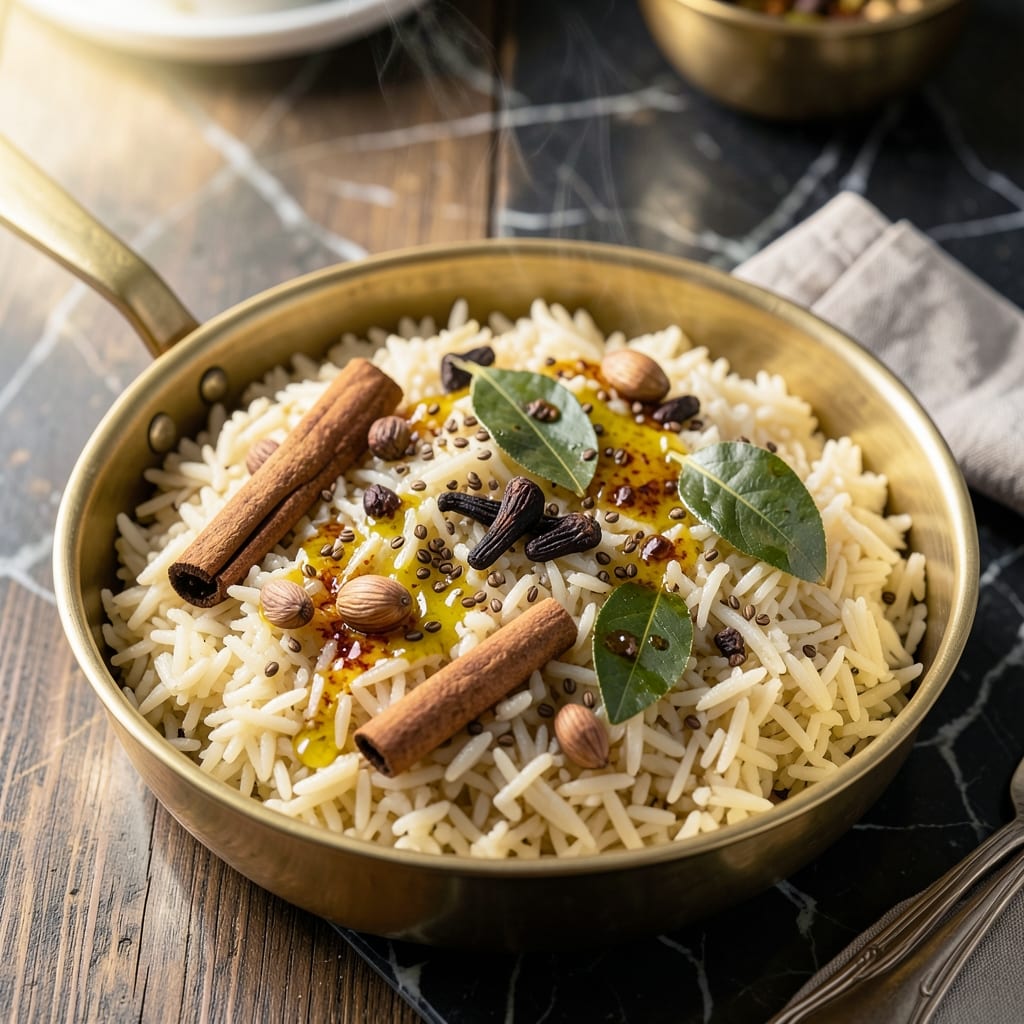
This masala rice delivers perfectly spiced grains without any vegetables, proving that simple ingredients can create extraordinary flavor. The key is toasting whole spices before cooking to release their aromatic oils.
I developed this method to achieve restaurant-quality results at home, using just rice, spices, and basic pantry staples. The technique ensures every grain absorbs maximum flavor while maintaining a light, fluffy texture.
What emerges is fragrant, golden rice with complex layers of spice in every bite. The absence of vegetables allows the spices to shine, creating a dish that’s both comforting and sophisticated.
Serve it as a side or main dish—this recipe adapts beautifully to any meal.
Ingredients for Masala Rice Recipe Without Vegetables
Whole spices, basmati rice, and a few pantry staples create this aromatic dish with restaurant-quality results.
| Ingredient | Amount | Notes |
|---|---|---|
| Basmati Rice 🌾 | 2 cups | Rinsed until water runs clear |
| Cumin Seeds 🌿 | 1 tsp | Whole, not ground |
| Cardamom Pods 🌿 | 4 whole | Lightly crushed to release seeds |
| Cloves 🌿 | 4 whole | Whole for toasting |
| Cinnamon Stick 🌿 | 1 piece | 2-inch length for infusion |
| Bay Leaves 🍃 | 2 whole | Dried, for aromatic depth |
| Black Peppercorns 🌶️ | 10 whole | Whole for toasting |
| Vegetable Oil 🫒 | 3 tbsp | Neutral flavor, for toasting spices |
| Onion 🧅 | 1 whole | Medium, finely chopped |
| Water 💧 | 4 cups | For cooking rice |
| Salt 🧂 | 1 ½ tsp | Diamond Crystal kosher preferred |
| Ghee Substitute 🧈 | 2 tbsp | Vegan butter or coconut oil |
| Turmeric Powder 🌿 | ½ tsp | For golden color |
| Fresh Cilantro 🌿 | ¼ cup | Chopped, for garnish |
The whole spices are non-negotiable for authentic flavor. Indian grocery stores like Patel Brothers offer the freshest stock, but most Whole Foods carry them too. Look for vibrant color and strong aroma—dull spices won’t deliver the same depth. Cardamom pods should be plump, not dried out or cracked. For the rice, basmati is essential; its long grains stay separate and fluffy after cooking.
No cumin seeds? Ground cumin at half the amount works in a pinch, but whole seeds toasted in oil release more flavor. Out of cardamom? Skip it entirely—it’s distinct and hard to substitute. For ghee, vegan butter or coconut oil provides the necessary fat. The turmeric can be omitted if you dislike its earthiness, but it adds that signature golden hue. Fresh cilantro is optional but adds brightness.
Store whole spices in airtight containers away from light for up to 1 year. Cooked rice keeps in the fridge for 4-5 days or freezes for 3 months. Toast extra spices and store in a jar for future batches—saves time and boosts flavor.
Why You’ll Love This Recipe
- One Pot Wonder: I just dump everything in and let the cumin, cardamom and cinnamon work their magic while the rice cooks.
- Aroma Bomb: The smell of whole spices toasting in hot oil is honestly intoxicating—it fills the whole house.
- Meal Prep Hero: I make a big batch on Sunday and it reheats perfectly for lunches all week.
- Budget Friendly: Basmati rice and a few spices stretch a long way, feeding my family for pennies per serving.
Step-by-Step Instructions for Masala Rice Without Vegetables
Achieve perfectly spiced rice with fragrant whole spices and golden color every time.
Step 1: Rinse and Soak the Basmati Rice
Place the 2 cups Basmati Rice in a fine-mesh strainer and rinse under cold running water, gently rubbing the grains between your fingers. Continue rinsing until the water runs completely clear—this removes excess starch that would make the rice gummy.
Once rinsed, transfer the rice to a bowl and cover with 2 cups of fresh water. Let it soak for 20-30 minutes. This soaking step is crucial as it allows the grains to absorb moisture evenly, preventing them from breaking during cooking and ensuring each grain remains distinct and fluffy.
Step 2: Toast the Whole Spices and Aromatics
In a heavy-bottomed pot, heat the 3 tbsp Vegetable Oil over medium heat. Add the 1 tsp Cumin Seeds, 4 whole Cardamom Pods, 4 whole Cloves, 1 piece Cinnamon Stick, 2 whole Bay Leaves, and 10 whole Black Peppercorns. Toast for 1-2 minutes until the cumin seeds start to sizzle and release their aroma.
Add the finely chopped onion and cook for 5-7 minutes until it turns golden brown and translucent. The spices should be fragrant and the cumin seeds slightly darker in color. Be careful not to burn the spices, as this will make them bitter. Stir frequently to ensure even toasting.
Step 3: Cook the Rice with Turmeric and Salt
Drain the soaked Basmati Rice completely and add it to the pot with the toasted spices and onions. Stir gently to coat the rice grains with the oil and spices. Pour in the 4 cups Water, then add the 1.5 tsp Salt and 0.5 tsp Turmeric Powder. Stir once to distribute the turmeric evenly, which will give the rice its signature golden hue.
Bring the mixture to a rolling boil over high heat. Once boiling, reduce the heat to low, cover the pot with a tight-fitting lid, and let it simmer undisturbed for 15 minutes. Resist the urge to lift the lid—steam is essential for even cooking.
Step 4: Finish with Ghee Substitute and Rest
After 15 minutes, turn off the heat and let the rice sit covered for an additional 10 minutes. This resting period allows the rice to steam fully and absorb any remaining liquid. Do not stir the rice during this time, as it can break the grains and release excess starch.
Gently fluff the rice with a fork, then drizzle the 2 tbsp Ghee Substitute over the top. Fold it in lightly to distribute the richness without pressing down on the grains. The rice should be light, fluffy, and each grain separate, with a vibrant golden color from the turmeric.
Step 5: Garnish and Serve
Transfer the masala rice to a serving dish and garnish with the 0.25 cup Fresh Cilantro. The cilantro adds a bright, fresh contrast to the warm, aromatic spices. Serve immediately while hot, with each grain perfectly spiced and distinct.
Pro Tips For Making Masala Rice Recipe Without Vegetables
- Soak the Rice: Soak basmati rice for 20-30 minutes before cooking—it swells up and cooks evenly, and I learned this the hard way when my first few batches turned out undercooked and grainy.
- Toast Whole Spices: Heat cumin, cardamom, cloves, and cinnamon in hot oil for 30 seconds until fragrant, but don’t let them burn—after burning a batch once, I now pull the pan off the heat just as they start to sizzle.
- Use the Right Ratio: Stick to 1:1.5 rice-to-water ratio for basmati in this recipe, or you’ll end up with either a dry mess or mush—I was skeptical until I measured it precisely and finally got it right.
- Rest Before Serving: Let the rice sit covered for 5-10 minutes off the heat after cooking, so the steam redistributes and the spices fully infuse—yes, even if you’re impatient like me.
Common Mistakes When Making Great masala rice recipe without vegetables
Over-Toasting Spices
Burnt spices create bitter flavors that dominate the dish. Toast your cumin seeds, cardamom pods, and cloves over medium heat for only 1-2 minutes until fragrant. Watch for the cumin to sizzle and turn slightly darker—this is your cue to add the onion.
Skipping the Soak
Unsoaked basmati rice often breaks during cooking, resulting in a mushy texture. Soaking for 20-30 minutes lets grains absorb water evenly, ensuring they stay distinct and fluffy. I never skip this step, even when pressed for time.
Lifting the Lid
Peeking while rice simmers releases precious steam, leading to uneven cooking. Keep the lid on tight for the full 15 minutes of simmering. The steam trapped inside is what cooks the grains perfectly from all sides.
Over-Stirring Rice
Stirring rice after adding water breaks the grains and releases excess starch. After adding 4 cups water, stir just once to distribute turmeric, then leave it alone. Gentle fluffing with a fork after cooking is all the mixing it needs.
Using Cold Water
Adding cold water to hot oil and spices causes temperature shock, muting the flavors. Always use room temperature or warm water when cooking the rice. This maintains consistent heat, helping the spices infuse evenly.
Ignoring Rest Time
Rice needs 10 minutes off the heat to steam fully and absorb remaining liquid. Skipping this rest results in undercooked grains. I set a timer—this final step makes all the difference in texture and flavor. 💡
Nutrition Facts
Frequently Asked Questions
Can I use jasmine rice instead of basmati?
Basmati is ideal for its long, separate grains, but jasmine works in a pinch. Expect slightly stickier results and a different fragrance.
Why do I need to soak the rice first?
Soaking for 20-30 minutes prevents grains from breaking and ensures even cooking. Skipping this step often leads to mushy or unevenly cooked rice.
How do I store leftovers?
Keep in an airtight container in the fridge for up to 5 days. Reheat with a splash of water to restore moisture.
Can I make this with pre-ground spices?
Whole spices toasted in oil release far more flavor, but ground spices at half the amount work if that’s all you have. Avoid old spices—freshness matters!

- Mujadara Rice and Lentils Recipe: Earthy Spiced Lentils With Caramelized Onions - November 1, 2026
- Naija Fried Rice Recipe: Street-Style Spice With Veggie Crunch - November 1, 2026
- Mushy Rice Recipe: Fluffy Grains Transformed in Minutes - November 1, 2026