
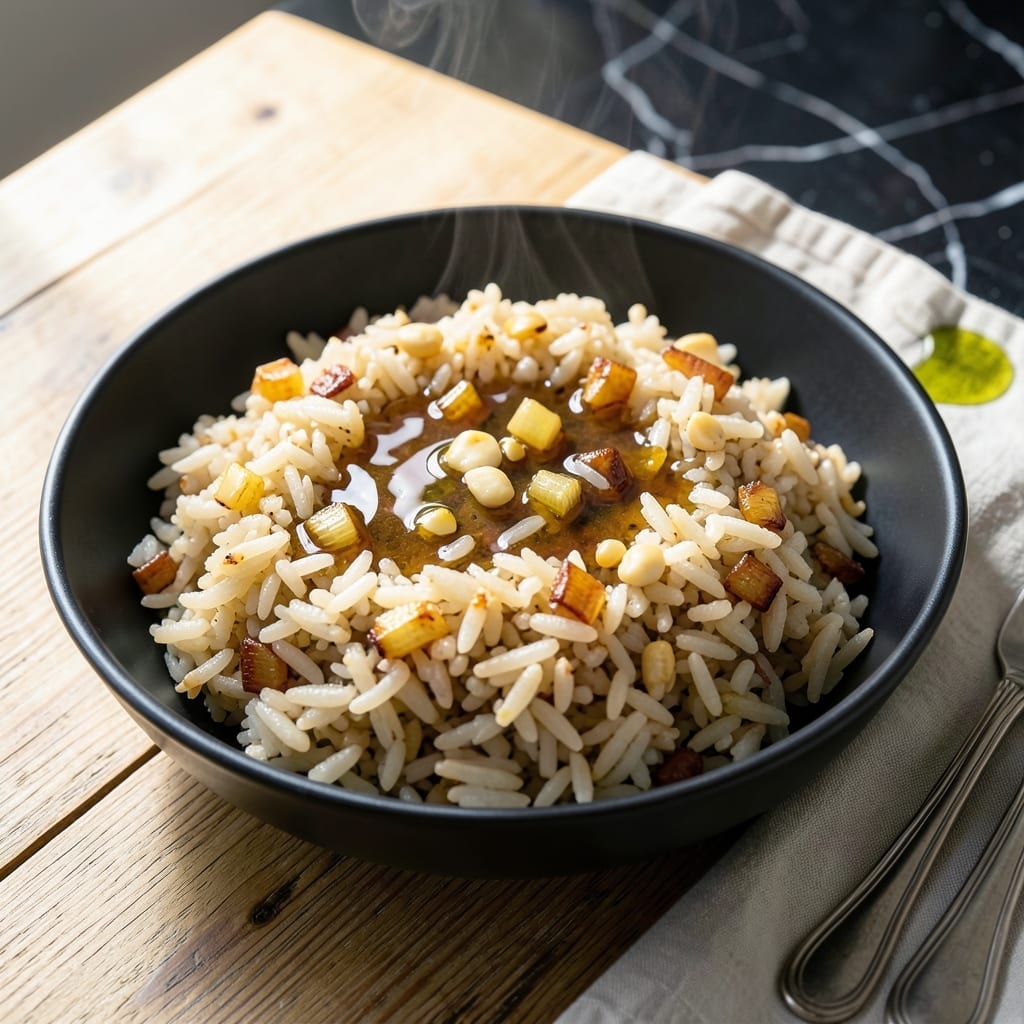
This mixed rice dish transforms simple grains into a flavorful, globally inspired meal. The combination of long-grain and short-grain rice creates the perfect texture.
With just a few ingredients and 30 minutes, you can create a versatile side that pairs beautifully with any protein or stands alone as a vegetarian main.
Ingredients for Mixed Rice
Long and short grains combine with vegetables and herbs for a globally inspired dish.
| Ingredient | Amount | Notes |
|---|---|---|
| Long-Grain White Rice 🍚 | 1 cup | Rinsed until water runs clear |
| Short-Grain White Rice 🍚 | 1 cup | Rinsed until water runs clear |
| Vegetable Broth 🥕 | 2 ½ cups | Low-sodium preferred for control |
| Unsalted Butter 🧈 | 2 tbsp | Melted for toasting rice |
| Yellow Onion 🧅 | 1 whole | Finely diced for even distribution |
| Garlic Cloves 🧄 | 3 cloves | Minced for aromatic base |
| Carrots 🥕 | 2 whole | Peeled and finely diced |
| Green Peas 🌱 | ¾ cup | Fresh or frozen, thawed |
| Dried Thyme 🌿 | ½ tsp | Rubbed between fingers to release oils |
| Bay Leaf 🍃 | 1 whole | Removed before serving |
| Salt 🧂 | 1 tsp | Diamond Crystal kosher preferred |
| Black Pepper 🌶️ | ½ tsp | Freshly ground for best flavor |
| Fresh Parsley 🌿 | 2 tbsp | Chopped for garnish |
The rice quality matters here. Jasmine or basmati for long-grain, arborio or sushi rice for short-grain—both should be uncooked and unseasoned. Rinsing removes excess starch, preventing gummy texture. Whole Foods or Trader Joe’s carry excellent options. The vegetable broth should be low-sodium so you control the seasoning.
No short-grain rice? Substitute additional long-grain—texture will differ slightly but still works. Missing fresh parsley? Dried parsley at half the amount or fresh cilantro adds similar brightness. Frozen peas work perfectly (no need to thaw first). The bay leaf can be omitted, but it adds subtle depth—don’t skip the thyme.
Cooked rice keeps 4-5 days refrigerated in airtight containers. Freeze for up to 3 months—portion before freezing for easy reheating. The dish reheats well, though you may need a splash of water to restore moisture.
Why You’ll Love This Recipe
- One Pot Wonder: I just dump both rice types in with the broth, butter, and onion—no extra pans, no fuss.
- Rich and Toasty: The butter and onion turn the broth into this deep, savory base that makes every bite taste intentional.
- Meal Prep Hero: I make a big batch on Sunday and it reheats beautifully all week for lunches or quick dinners.
- Stretches Far: Honestly, two kinds of rice bulk it up so much that it feeds my family for days, all on a handful of cheap ingredients.
Step-by-Step Instructions for Mixed Rice
Master this technique for perfectly cooked grains with vibrant flavor and ideal texture every time.
Step 1: Toast the Rice in Melted Butter
Melt the 2 tbsp Unsalted Butter in a large pot over medium heat. Add the 1 cup Long-Grain White Rice and 1 cup Short-Grain White Rice, stirring constantly for 2-3 minutes until the grains turn translucent at the edges and emit a nutty aroma.
This toasting step enhances the rice’s natural flavor and prevents it from becoming mushy. Watch closely to avoid burning—the butter should foam but not brown. The rice is ready when you hear a subtle popping sound and the grains look slightly opaque.
Step 2: Sauté the Aromatic Base
Add the finely diced Yellow Onion and peeled, finely diced Carrots to the pot. Cook for 5-6 minutes, stirring occasionally, until the onion becomes translucent and the carrots begin to soften.
Stir in the minced Garlic Cloves, 0.5 tsp Dried Thyme, 1 whole Bay Leaf, 1 tsp Salt, and 0.5 tsp Black Pepper. Cook for 1 additional minute until the garlic releases its fragrance—this builds the flavor foundation for the dish.
Step 3: Simmer with Vegetable Broth and Peas
Pour in the 2.5 cups Vegetable Broth and 0.75 cup Green Peas, stirring to combine. Bring the mixture to a boil, then reduce the heat to low, cover with a tight-fitting lid, and simmer for 18-20 minutes.
Resist the urge to lift the lid during cooking—steam is crucial for even cooking. The rice is done when all the liquid has been absorbed and the grains are tender but still distinct. If any liquid remains after 20 minutes, cook uncovered for 2-3 additional minutes.
Step 4: Rest and Garnish Before Serving
Remove the pot from heat and let it sit, covered, for 10 minutes. This resting period allows the grains to steam and absorb any remaining moisture, ensuring a fluffy texture. Discard the Bay Leaf before serving.
Fluff the rice gently with a fork and transfer to a serving dish. Sprinkle with the 2 tbsp Fresh Parsley for a pop of color and freshness. The final dish should have a harmonious blend of textures, with the long-grain and short-grain rice complementing each other beautifully.
Pro Tips For Making Mixed Rice
- Toast the Rice: Cook the mixed rice in butter for 2-3 minutes before adding liquid—this deepens the nutty flavor and prevents mushiness, especially with the short-grain.
- Use Warm Broth: Heat the vegetable broth before adding it to the rice; cold broth slows cooking and can leave the grains unevenly tender.
- Skip the Rinse: I learned this the hard way—don’t rinse the rice for this dish, as the starch from both grain types actually helps create a creamier texture.
- Sauté Onions Low: Cook the yellow onion on medium-low until translucent, about 8-10 minutes; high heat burns the edges and gives the rice a bitter taste.
Health Benefits of mixed rice
Rich in Fiber
The combination of long-grain and short-grain rice provides a good balance of soluble and insoluble fiber. One serving contributes about 2-3 grams of fiber, aiding digestion and promoting gut health. The vegetables add even more fiber to this dish. 💪
Packed with Vitamins
Carrots bring a hefty dose of vitamin A (about 100% of your daily needs per serving), while peas add vitamin C and vitamin K. Onions and garlic contribute small amounts of B vitamins and antioxidants, making this a nutrient-dense side.
Low in Fat
This recipe uses just 2 tbsp of butter for the entire dish, keeping the fat content modest at about 6-8 grams per serving. Most of it comes from the heart-healthy fats in the butter, making it a lighter option compared to many creamy sides.
Plant-Based Protein
Peas and rice together create a complete protein, providing all nine essential amino acids. One serving offers roughly 6-8 grams of protein, which is impressive for a plant-based dish. It’s an excellent choice for vegetarians and vegans.
Low Sodium Option
By using low-sodium vegetable broth and controlling the added salt, you can keep the sodium content as low as 300-400mg per serving. This makes it a heart-healthy side that fits into a balanced diet.
Energy Boost
The complex carbohydrates in rice provide a steady release of energy, while the vegetables add vitamins and minerals to keep you feeling full and energized. I love how this dish fuels me without feeling heavy. ✨
Nutrition Facts
Frequently Asked Questions
Can I use brown rice instead of white?
Yes, but adjust the cooking time. Brown rice needs 40-45 minutes and more liquid (3-3.5 cups broth). The texture will be chewier, but the flavor remains excellent.
How do I prevent the rice from turning mushy?
Rinse both rice types thoroughly before cooking and avoid stirring after adding the broth. The toasting step in melted butter also helps maintain distinct grains.
Can I make this ahead of time?
Cooked rice stays fresh for 4-5 days refrigerated in an airtight container. Reheat with a splash of water to restore moisture.
What can I substitute for peas?
Try corn, diced bell peppers, or green beans for similar texture. For extra protein, add 1/2 cup cooked chickpeas or edamame.

- Mujadara Rice and Lentils Recipe: Earthy Spiced Lentils With Caramelized Onions - November 1, 2026
- Naija Fried Rice Recipe: Street-Style Spice With Veggie Crunch - November 1, 2026
- Mushy Rice Recipe: Fluffy Grains Transformed in Minutes - November 1, 2026