
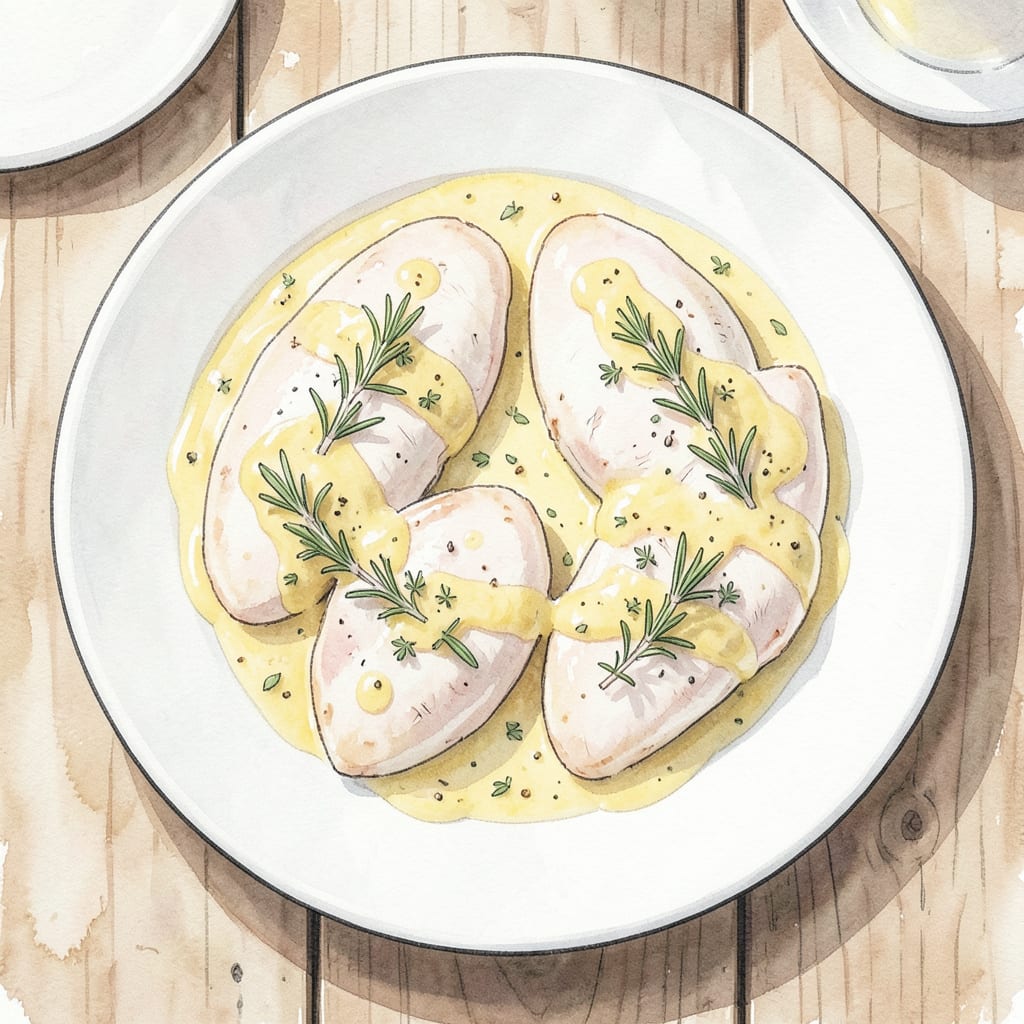
I’ve perfected the airline chicken breast recipe, achieving tender and juicy results every time. This dish, reminiscent of those served on flights, features a marinated chicken breast cooked to perfection.
The secret lies in precise temperature control and a special marinating technique that ensures the chicken stays moist and flavorful. With this recipe, you’ll be able to recreate the airline experience at home, enjoying a deliciously cooked chicken breast that’s sure to impress.
Ingredients for Airline Chicken Breast
Essential ingredients for tender airline chicken breasts, featuring precise measurements and quality tips.
| Ingredient | Amount | Notes |
|---|---|---|
| Boneless Chicken Breasts 🍗 | 4 whole | Pounded to even thickness |
| Olive Oil 🫒 | 2 tbsp | For marinating and cooking |
| Garlic Cloves 🧄 | 4 cloves | Minced for marinade |
| Fresh Rosemary 🌿 | 2 tbsp | Chopped, fresh preferred |
| Fresh Thyme 🌿 | 1 tbsp | Chopped, fresh preferred |
| Lemon Juice 🍋 | 2 tbsp | Freshly squeezed |
| Salt 🧂 | 1 tsp | Kosher salt preferred |
| Black Pepper 🌶️ | ½ tsp | Freshly ground preferred |
| Chicken Broth 🍜 | 1 cup | Low-sodium broth |
| Unsalted Butter 🧈 | 2 tbsp | For finishing sauce |
| All-Purpose Flour 🌾 | 1 tbsp | For thickening sauce |
| White Wine 🍷 | ¼ cup | Dry white wine |
For the best results, use high-quality chicken breasts from trusted sources like ButcherBox or Whole Foods. Fresh herbs make a difference—grab a bunch of rosemary and thyme when you see them. The garlic should be fresh, not pre-minced. Look for low-sodium chicken broth to control salt levels.
No white wine? Additional chicken broth works as a substitute. Fresh herbs can be replaced with dried at one-third the amount. For a dairy-free version, swap butter for vegan butter or olive oil. The lemon juice is non-negotiable—freshly squeezed is best.
Marinated chicken keeps for up to 2 days in the fridge. Cooked chicken reheats beautifully and stays moist for 3-4 days. The sauce freezes well for 3 months—just thaw and re-whisk before serving.
Step-by-Step Instructions for Airline Chicken Breast
Here’s the method that guarantees tender and juicy results every time.
Step 1: Prepare the Chicken and Marinade
Start by pounding the 4 whole Boneless Chicken Breasts to an even thickness. This ensures uniform cooking and prevents the chicken from becoming too thick in some areas. In a bowl, whisk together 2 tbsp Olive Oil, 4 cloves minced Garlic Cloves, 2 tbsp chopped Fresh Rosemary, 1 tbsp chopped Fresh Thyme, 2 tbsp Lemon Juice, 1 tsp Salt, and 0.5 tsp Black Pepper to create the marinade.
Place the pounded chicken breasts in a large zip-top bag or a shallow dish. Pour the marinade over the chicken, turning to coat evenly. Seal the bag or cover the dish, then refrigerate for at least 2 hours or overnight for maximum flavor.
Step 2: Sear the Chicken Breasts
Remove the chicken from the marinade, letting any excess liquid drip off. Heat a large skillet over medium-high heat. Add 1 tbsp Olive Oil to the pan and swirl to coat. Sear the chicken breasts for 3-4 minutes per side until they develop a golden brown crust. Transfer the chicken to a plate and set aside.
The chicken won’t be fully cooked at this point, but searing locks in the juices and creates that desirable crust. If the pan gets too crowded, cook the chicken in batches to prevent steaming instead of browning.
Step 3: Finish Cooking the Chicken and Make the Sauce
In the same skillet, reduce the heat to medium and add 2 tbsp Unsalted Butter. Once melted, sprinkle in 1 tbsp All-Purpose Flour and whisk to form a roux, cooking for 1 minute. Gradually pour in 1 cup Chicken Broth and 0.25 cup White Wine, whisking constantly to avoid lumps.
Bring the mixture to a simmer and cook until it thickens to your liking, about 2-3 minutes. Return the chicken to the skillet, spooning some of the sauce over the top of each breast. Continue cooking until the chicken reaches an internal temperature of 165°F, about 5-7 minutes more, depending on thickness.
Step 4: Rest and Serve
Once the chicken is cooked through, transfer it to a clean plate and tent loosely with foil. Let it rest for 5 minutes before slicing. This resting period allows the juices to redistribute, ensuring the chicken remains juicy and tender.
Slice the chicken against the grain and serve with the sauce spooned over the top. The result should be tender, juicy chicken with a flavorful herb-infused sauce.
Troubleshooting This Dish
Common Cooking Mistakes
One of the most frequent issues with airline chicken breast is overcooking. This happens when the chicken is cooked beyond 165°F internal temperature, making it dry and tough. To avoid this, use a reliable meat thermometer to check the temperature accurately. Another mistake is not letting the chicken rest after cooking, which causes the juices to run out when sliced.
Marinade Challenges
Some cooks struggle with getting the marinade to penetrate evenly. To fix this,
Searing Issues
A common problem during searing is the pan getting too crowded, which leads to steaming instead of browning. To prevent this, cook the chicken breasts in batches if necessary, ensuring they have enough room in the pan. Also, make sure the pan is hot enough before adding the chicken—medium-high heat is ideal for achieving that perfect golden-brown crust.
Sauce Problems
If your sauce turns out too thin, it might be because you didn’t cook the roux long enough or didn’t use enough flour. To thicken it, simply cook the roux for an additional 30 seconds to 1 minute or add a bit more flour. Conversely, if the sauce is too thick, you can thin it out with a little more chicken broth or white wine.
Temperature Control
Maintaining the right temperature is crucial. If your skillet is too hot, the outside will burn before the inside is fully cooked. Use medium heat when finishing the chicken in the sauce to ensure even cooking. This helps the chicken reach the desired 165°F internal temperature without overcooking the exterior.
Resting Importance
Skipping the resting period can result in loss of juices when the chicken is sliced. To retain the juiciness, always let the chicken rest for at least 5 minutes before slicing. Tenting it loosely with foil during this time keeps it warm without trapping too much moisture.
Nutrition Facts
Frequently Asked Questions
What’s the best way to ensure my airline chicken breast stays juicy?
The key is to not overcook it. Use a meat thermometer to check for an internal temperature of 165°F. Letting it rest for 5 minutes before slicing also helps retain juices.
Can I make this recipe without white wine?
Yes, you can substitute white wine with additional chicken broth or omit it altogether. The sauce will still be flavorful thanks to the herbs and chicken broth. For an extra rich flavor, you can add a splash of lemon juice.
How long can I store leftover airline chicken breast?
Cooked airline chicken breast can be stored in an airtight container in the refrigerator for up to 3-4 days. To reheat, gently warm it in a skillet over low heat or in the microwave until heated through.
Can I prepare the marinade in advance?
Absolutely! You can prepare the marinade up to 2 days in advance. Store it in an airtight container in the refrigerator until you’re ready to use it. This allows the flavors to meld together beautifully.

- Soupy Rice Recipe: Broth-Soaked Grains With Rustic Depth - September 25, 2026
- Rice Paper Pancakes Recipe: Crispy Vietnamese Breakfast Delight - September 25, 2026
- Rice A Roni Pork Fried Rice Recipe: Quick Wok-Style Meal with Savory Bites - September 25, 2026