
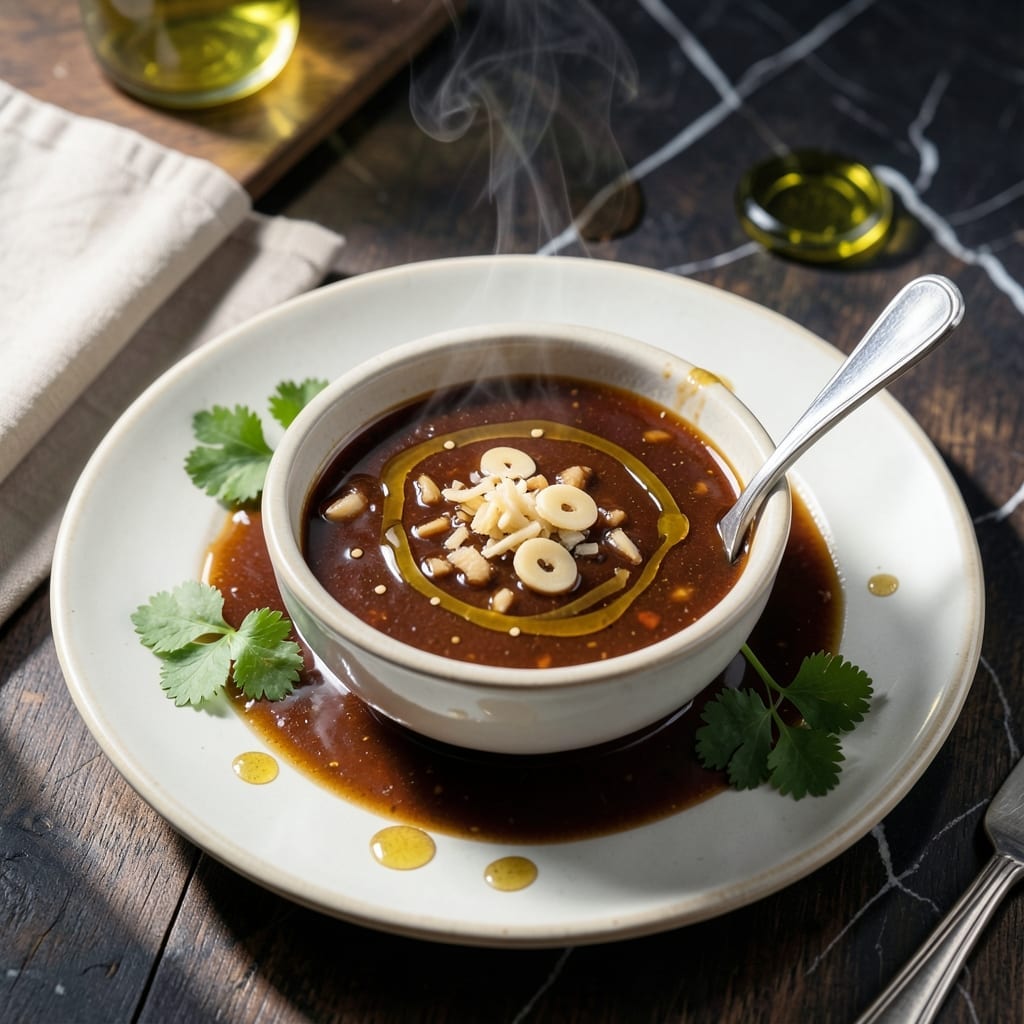
This versatile sauce transforms plain rice into a flavor-packed meal with minimal effort. A simple blend of soy sauce, sesame oil, and rice vinegar creates depth.
The umami-rich base pairs perfectly with stir-fries or as a drizzle over steamed vegetables. Ready in 5 minutes, it keeps well for a week refrigerated.
Ingredients for Asian Rice Sauce
A simple blend of soy sauce, sesame oil, and rice vinegar creates this depth-charged sauce.
| Ingredient | Amount | Notes |
|---|---|---|
| Soy Sauce 🫒 | ½ cup | Low-sodium or regular variety |
| Sesame Oil 🫒 | 2 tbsp | Toasted for best flavor |
| Rice Vinegar 🍚 | 3 tbsp | Unseasoned preferred |
| Honey 🍯 | 2 tbsp | Or agave for vegan option |
| Fresh Ginger 🌿 | 1 tbsp | Finely grated or minced |
| Garlic Cloves 🧄 | 3 cloves | Minced or pressed |
| Green Onions 🧅 | 3 whole | Thinly sliced for garnish |
| Red Pepper Flakes 🌶️ | ½ tsp | Adjust to taste preference |
The soy sauce is the foundation here. Kikkoman or San-J brands deliver consistent quality, but any standard soy sauce works. Toasted sesame oil is non-negotiable—it provides the nutty depth that makes this sauce sing. Look for it in the Asian aisle at Whole Foods or any well-stocked supermarket. Fresh ginger is worth the effort; the bottled stuff lacks the bright, sharp punch.
No honey? Agave nectar or maple syrup at a 1:1 ratio keeps the sweetness balanced. Out of rice vinegar? Apple cider vinegar at half the amount works in a pinch. Fresh ginger can be swapped for ground ginger at one-quarter the amount. If you’re missing green onions, a pinch of onion powder in the sauce itself adds a subtle allium note.
This keeps beautifully in the fridge for up to 1 week. The flavors actually deepen over 24 hours. Store in a glass jar with a tight lid, and give it a quick shake before using. Freezing isn’t recommended—it can separate and lose texture.
Why You’ll Love This Recipe
- 5-Minute Magic: I just whisk the soy sauce, honey, and ginger together—no cooking required.
- Sweet-Savory Balance: The honey and rice vinegar hit that perfect tangy-sweet spot with the umami of soy.
- Drizzle on Everything: I use it on rice bowls, grilled chicken, even roasted veggies. Honestly, it’s my catch-all sauce.
- Pantry Staples Only: Between us, I always have these ingredients on hand, so it’s a last-minute flavor saver.
Step-by-Step Instructions for Asian Rice Sauce
Master this simple technique to create a balanced, restaurant-quality sauce with layered flavors.
Step 1: Infuse the Aromatics in Sesame Oil
Heat the 2 tbsp Sesame Oil in a small saucepan over medium-low heat. Add the 1 tbsp Fresh Ginger and 3 cloves Garlic Cloves, stirring constantly for 45-60 seconds until fragrant but not browned.
This gentle heating releases the volatile oils in the ginger and garlic, creating a flavor base that’s aromatic without being bitter. Watch closely—the garlic can burn quickly. You’ll know it’s ready when the mixture becomes golden and the aroma fills your kitchen.
Step 2: Build the Sauce Base with Soy and Vinegar
Pour in the 0.5 cup Soy Sauce and 3 tbsp Rice Vinegar, stirring to combine with the aromatics. Increase the heat to medium and let the mixture come to a gentle simmer. This step melds the salty depth of soy with the bright acidity of vinegar.
The liquid should reduce slightly, becoming more concentrated. The simmering process also mellows the sharpness of the vinegar, ensuring the final sauce is balanced rather than harsh. This takes about 3-4 minutes.
Step 3: Sweeten and Season the Sauce
Reduce the heat to low and stir in the 2 tbsp Honey. Continue to cook for 1-2 minutes, stirring until the honey fully dissolves into the sauce. The heat helps the honey incorporate smoothly without crystallizing.
Next, add the 0.5 tsp Red Pepper Flakes, stirring to distribute evenly. Taste and adjust the heat level if desired—this is your moment to fine-tune the spice to your preference. The sauce should have a subtle sweetness with a gentle kick.
Step 4: Finish and Garnish
Remove the sauce from heat and let it cool for 2-3 minutes. The flavors will deepen as it sits. Thinly slice the 3 whole Green Onions and sprinkle them over the sauce just before serving. The green onions add a fresh, crisp contrast to the rich, savory base.
This sauce is best served warm or at room temperature. It will thicken slightly as it cools, but a quick reheat will restore its silky consistency. Use it immediately or store in an airtight container for up to 1 week in the refrigerator.
Pro Tips For Making Asian Rice Sauce
- Bloom the Ginger: Sauté the fresh ginger in sesame oil for 30 seconds before adding liquids to wake up its flavor—I learned this the hard way after my first few batches tasted flat.
- Balance the Honey: Use a 1:1 ratio of honey to rice vinegar to keep the sauce from being cloyingly sweet; after burning one batch, I finally figured out the vinegar cuts through perfectly.
- Skip the Boil: Never let the sauce reach a rolling boil or the soy sauce will turn bitter and the honey can caramelize unevenly.
- Rest Before Serving: Let the finished sauce sit for 5-10 minutes off heat so the flavors meld—sounds weird, but it works.
Creative Variations of This Recipe
Sweet and Spicy
Increase Honey to 3 tbsp and add 1 tbsp sriracha for a sweet-spicy kick. This variation pairs wonderfully with grilled meats or roasted vegetables. The heat builds gradually, so taste as you go. 🌶️
Nutty Twist
Replace Sesame Oil with 2 tbsp peanut oil and add 1 tbsp creamy peanut butter for a rich, nutty depth. Thin with 1 tsp warm water if needed. I love this with satay or noodle bowls.
Citrus Infusion
Add 1 tbsp orange juice and 1 tsp zest for a bright, citrusy lift. This works beautifully with seafood or chicken. Use fresh orange for the best flavor impact.
Garlic Lover’s
Double the Garlic Cloves to 6 cloves and add 1 tsp garlic powder for an intense garlic punch. This version is bold and aromatic, perfect for garlic shrimp or beef stir-fry.
Herb-Forward
Stir in 2 tbsp chopped cilantro and 1 tbsp mint at the end for a fresh, herbaceous finish. This pairs especially well with grilled fish or tofu. 💡
Umami Bomb
Add 1 tbsp fish sauce and 1 tsp soy paste for extra depth. This variation is salty and complex, ideal for hearty dishes like braised pork or mushrooms.
Nutrition Facts
Frequently Asked Questions
Can I make this ahead of time?
Yes! The flavors actually deepen after 24 hours in the fridge. Store in a glass jar with a tight lid for up to 1 week. Shake well before using.
What if I don’t have rice vinegar?
Use apple cider vinegar at half the amount, or substitute lemon juice for a slightly different tang. Avoid balsamic—it’s too strong.
How can I make it gluten-free?
Swap regular soy sauce for tamari or a certified gluten-free soy sauce. Check labels to ensure no cross-contamination.
My sauce separated—how do I fix it?
Whisk vigorously or blend briefly to re-emulsify. If stubborn, warm gently over low heat while stirring.

- Jollof Rice Sauce Recipe: West African Tomato and Spice Infusion - September 25, 2026
- Japanese Rice Soup Recipe: Umami-Rich Comfort in a Bowl - September 25, 2026
- Homemade Cream Of Rice Recipe: Silk-Smooth Breakfast in Minutes - September 25, 2026