
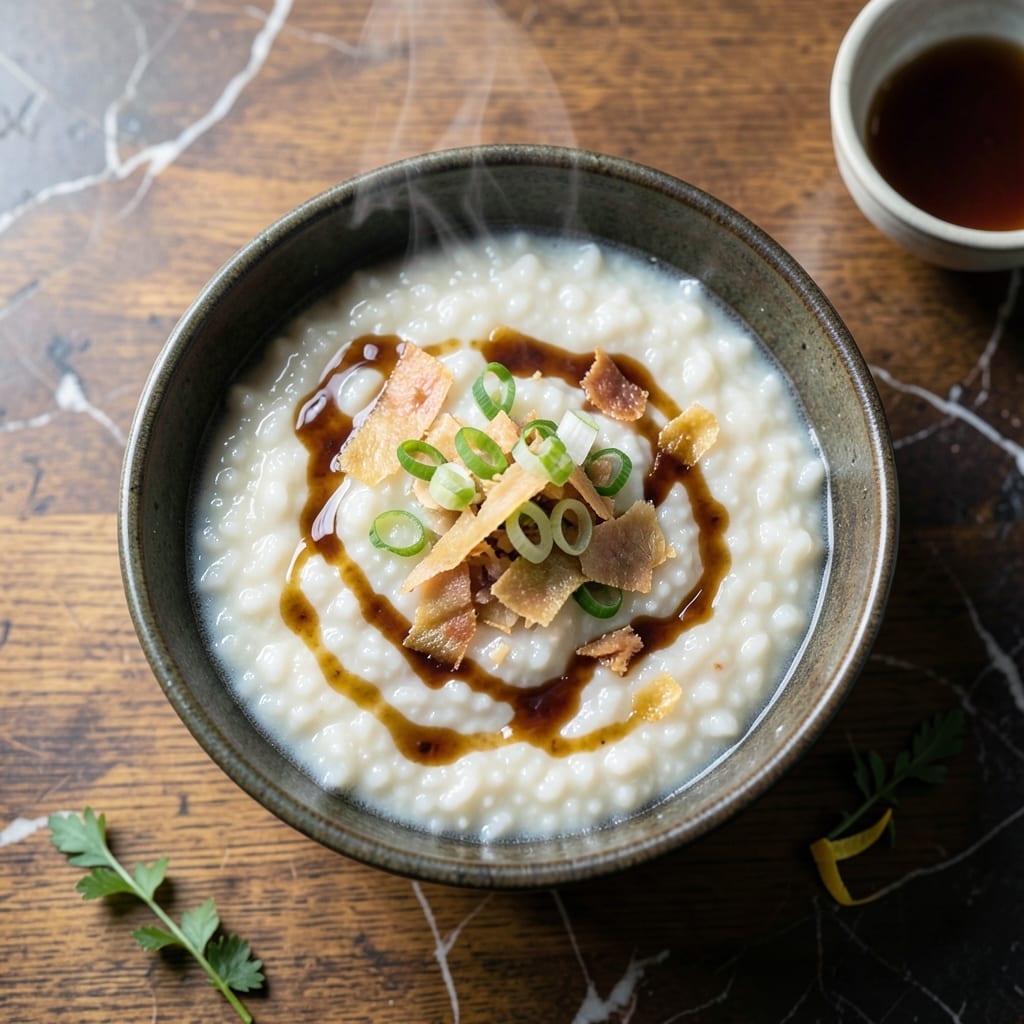
This traditional Japanese rice soup offers comfort in its simplest, most nourishing form. A staple remedy for colds and chilly days, it transforms basic ingredients into something deeply soothing.
I’ve refined this method to balance soft, porridge-like rice with a delicate broth. The key is using short-grain rice, which breaks down beautifully while absorbing the savory dashi and soy flavors.
The result is a warm, velvety bowl that’s gentle on the stomach yet rich in umami. It’s the kind of dish that feels like a hug from the inside out.
Perfect for quiet evenings or when you need a light yet satisfying meal. Here’s how to make it at home.
Ingredients for Japanese Rice Soup
Simple ingredients create a deeply comforting bowl of traditional Japanese rice soup.
| Ingredient | Amount | Notes |
|---|---|---|
| Short-Grain White Rice 🍚 | 1 cup | Japanese variety preferred |
| Dashi Stock 🍜 | 6 cups | Homemade or instant granules |
| Soy Sauce 🫒 | 3 tbsp | Low-sodium preferred |
| Mirin 🍶 | 2 tbsp | Sweet cooking rice wine |
| Bonito Flakes 🐟 | ¼ cup | For authentic dashi flavor |
| Green Onions 🧅 | 3 whole | Thinly sliced for garnish |
| Fresh Ginger 🌿 | 1 tbsp | Finely grated |
| Garlic Cloves 🧄 | 2 cloves | Minced for depth |
| Sesame Oil 🫒 | 1 tsp | Toasted for aroma |
| Miso Paste 🥣 | 1 tbsp | White or red variety |
| Shiitake Mushrooms 🍄 | 4 pieces | Fresh or dried, sliced |
| Carrot 🥕 | 1 whole | Julienned for texture |
The short-grain rice is non-negotiable for that perfect porridge-like texture. Japanese markets carry premium varieties like Koshihikari or Nishiki, but any short-grain white rice from your regular grocery store works well. For dashi, instant granules are convenient and reliable—look for brands like Hondashi at Asian food stores or online.
No mirin? Substitute 1 tbsp sugar mixed with 1 tbsp rice vinegar. Dried shiitake mushrooms work in a pinch (soak and slice). If bonito flakes are unavailable, kombu (dried kelp) provides a vegetarian alternative for the dashi base. The soy sauce should be Japanese-style—lighter and less salty than Chinese varieties.
This soup tastes even better the next day as flavors meld. Store in the fridge for up to 3 days or freeze for 1 month. Reheat gently to preserve the velvety rice texture.
Why You’ll Love This Recipe
- I’ll be real: it tastes even better the next day, and it freezes like a dream for lazy nights.
- One Pot Wonder: Simply dump rice, dashi, and seasonings in a pot—no fancy techniques, just hearty soup in one go.
- Umami Bomb: The bonito flakes and soy sauce create this deep, savory richness that’s honestly impossible to resist.
- Meals for Days: I’ll be real: it tastes even better the next day, and it freezes like a dream for lazy nights.
Step-by-Step Instructions for Japanese Rice Soup
This method ensures a comforting bowl with layers of umami depth and perfect texture.
Step 1: Prepare the Aromatics and Vegetables
Finely grate the 1 tbsp Fresh Ginger and mince the 2 cloves Garlic Cloves until both are reduced to a fine, uniform paste. This creates a flavor base that infuses the broth completely. Thinly slice the 3 whole Green Onions, separating the white and green portions.
Julienne the 1 whole Carrot into matchstick-sized pieces and slice the 4 pieces Shiitake Mushrooms into thin strips. The uniform size ensures even cooking and a consistent texture in every spoonful. Keep all prepped ingredients together for easy access during cooking.
Step 2: Toast the Rice and Bonito Flakes
In a large pot, heat the 1 tsp Sesame Oil over medium heat until it shimmers. Add the 1 cup Short-Grain White Rice and toast for 2-3 minutes, stirring constantly, until the grains turn slightly translucent and release a nutty aroma.
Add the 0.25 cup Bonito Flakes and continue toasting for another 1 minute. The bonito should become fragrant and start to curl at the edges. This step deepens the umami foundation of the soup, creating a rich base before the liquid is added.
Step 3: Build the Broth and Simmer
Pour in the 6 cups Dashi Stock and stir to combine, scraping up any browned bits from the bottom of the pot. Add the grated ginger, minced garlic, julienned carrot, and sliced shiitake mushrooms. Increase the heat to high and bring to a boil.
Once boiling, reduce the heat to medium-low and add the 3 tbsp Soy Sauce, 2 tbsp Mirin, and 1 tbsp Miso Paste. Stir until the miso paste is fully dissolved and evenly distributed. Simmer uncovered for 20-25 minutes until the rice is tender and the soup has thickened slightly.
Step 4: Adjust Seasoning and Finish
Taste the soup and adjust the seasoning if needed. The flavors should be balanced—savory from the soy sauce and miso, with a subtle sweetness from the mirin. If the soup is too thick, add a splash of hot water to reach your desired consistency.
Remove from heat and let the soup rest for 5 minutes. This allows the flavors to meld together. Just before serving, stir in the white portions of the green onions. Ladle the soup into bowls and garnish with the remaining green onion tops for a fresh, vibrant finish.
Pro Tips For Making Japanese Rice Soup
- Rinse the Rice: Wash the short-grain rice until the water runs clear to remove excess starch—this keeps the soup creamy, not gummy. I learned this the hard way after a few gluey batches.
- Simmer, Don’t Boil: Keep the dashi at a gentle simmer once the rice goes in; a rolling boil turns the grains mushy. Sounds obvious, but it’s easy to get distracted and crank the heat too high.
- Toast the Bonito: Lightly toast the bonito flakes in a dry pan for 30 seconds before adding them to the stock—it deepens their smoky flavor without overpowering the soup.
- Add Mirin Last: Stir in the mirin at the end of cooking; adding it too early can make the rice too soft. My grandmother swore by this, and she was right.
Health Benefits of These Flavors
Digestive Ease
This gentle soup is a traditional remedy for upset stomachs in Japan. The soft, broken-down rice is easy to digest, while the warm broth helps soothe the digestive tract. I always reach for it when I need something light yet nourishing. 💪
Hydration Boost
The liquid base provides essential hydration, especially valuable during illness or recovery. A 1-cup serving delivers significant fluids without overwhelming your system. The mild flavors encourage sipping, even when appetite is low.
Probiotic Benefits
Fermented ingredients like miso paste introduce beneficial probiotics to your gut. These live cultures support digestive health and may boost your immune system. Traditional Japanese diets credit miso for many of their longevity benefits.
Low-Fat Nutrition
At under 200 calories per serving, this soup offers satisfying warmth without excess fat. The plant-based broth and vegetables provide fiber and vitamins while keeping the dish light. It’s a comforting choice that won’t weigh you down.
I love that it fills you up without that heavy, sluggish feeling afterward.
Rich in Antioxidants
Ingredients like shiitake mushrooms and ginger are packed with antioxidants. These compounds help combat oxidative stress and inflammation in the body. The dashi base also contains amino acids that support overall health. ✨
Nutrition Facts
Frequently Asked Questions
Can I use long-grain rice instead?
No, short-grain rice is essential for the creamy texture. Long-grain won’t break down the same way. Stick with Japanese varieties like Koshihikari for authentic results.
How do I make this vegetarian?
Replace dashi with kombu (dried kelp) broth. Skip bonito flakes and add extra shiitake mushrooms for depth. The umami will still shine through.
How long can I store leftovers?
Keep in an airtight container in the fridge for up to 3 days. Reheat gently with a splash of water to restore the creamy consistency.
Why is my soup too thin?
Simmer uncovered for the full 20-25 minutes to let the rice absorb liquid. If still thin, cook longer or mash some rice grains to thicken it.

- Jollof Rice Sauce Recipe: West African Tomato and Spice Infusion - September 25, 2026
- Japanese Rice Soup Recipe: Umami-Rich Comfort in a Bowl - September 25, 2026
- Homemade Cream Of Rice Recipe: Silk-Smooth Breakfast in Minutes - September 25, 2026