
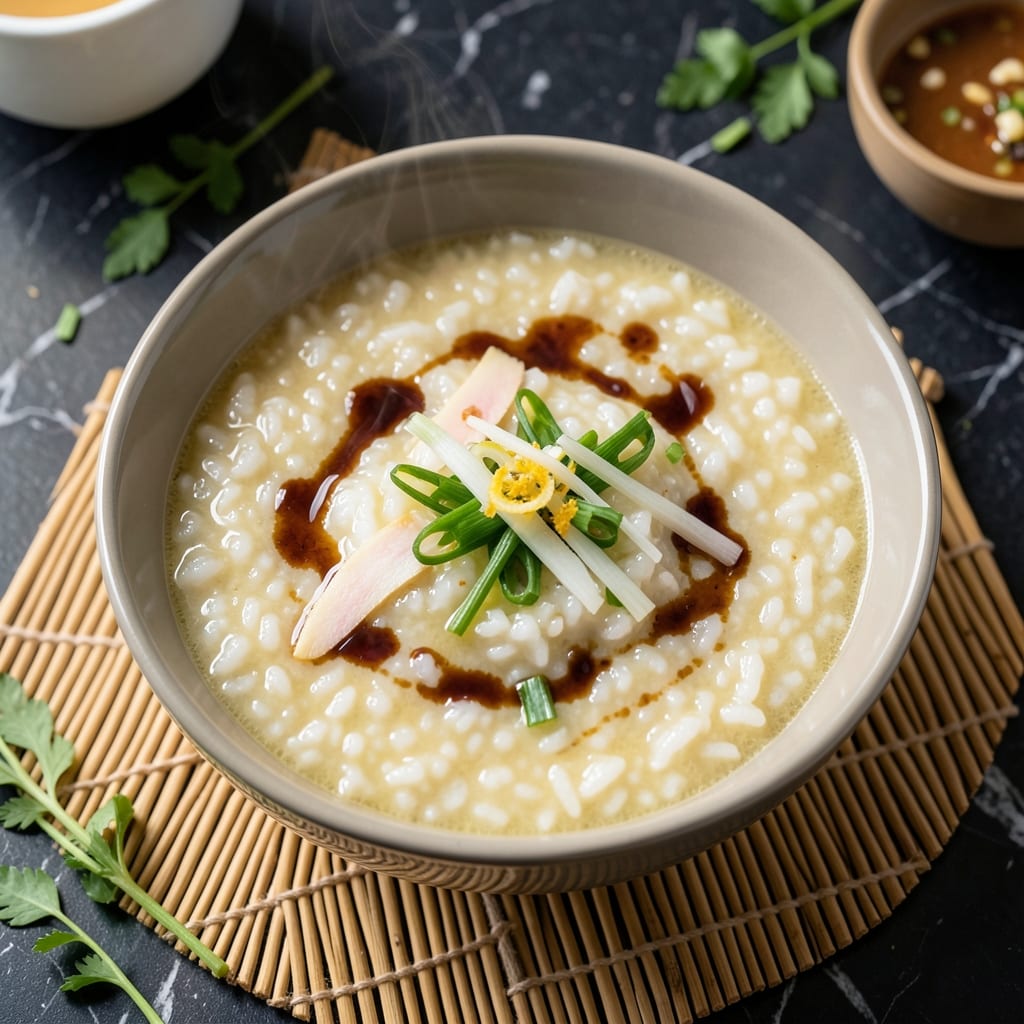
This comforting soup transforms simple ingredients into a bowl of fragrant, healing warmth. The combination of ginger and scallions creates an aromatic broth that’s both soothing and deeply flavorful.
Perfect for chilly days or when you need a light yet nourishing meal, this dish delivers restaurant-quality results with minimal effort. The rice thickens the broth naturally, making every spoonful satisfying.
Ingredients for Asian Rice Soup
Simple ingredients transform into a fragrant, restaurant-quality bowl of warmth with every spoonful.
| Ingredient | Amount | Notes |
|---|---|---|
| Jasmine Rice 🍚 | ¾ cup | Uncooked, rinsed thoroughly |
| Fresh Ginger 🌿 | 2 tbsp | Peeled and minced finely |
| Scallions 🧅 | 6 whole | Thinly sliced, white and green parts separated |
| Garlic Cloves 🧄 | 4 cloves | Peeled and minced |
| Vegetable Broth 💧 | 6 cups | Low-sodium preferred |
| Soy Sauce 🫒 | 3 tbsp | Low-sodium for balance |
| Sesame Oil 🫒 | 1 tbsp | Toasted for depth |
| Neutral Oil 🫒 | 1 tbsp | Vegetable or canola oil |
| Mushrooms 🍄 | 1 cup | Shiitake or white, sliced |
| Carrots 🥕 | 1 whole | Peeled and julienned |
| Salt 🧂 | 1 tsp | Kosher or sea salt |
| White Pepper 🌶️ | ½ tsp | Ground, for subtle heat |
| Cilantro 🌿 | ¼ cup | Fresh, chopped for garnish |
| Lime 🍋 | 1 whole | Juiced, for brightness |
The ginger and scallions are non-negotiable for that signature aromatic base. Fresh ginger (not powdered) is essential—look for firm, smooth roots with a vibrant color. Most Asian markets carry superior-quality jasmine rice, but standard grocery store varieties work too. The rice should be rinsed until the water runs clear to remove excess starch and prevent a gummy texture.
No jasmine rice? Short-grain white rice works in a pinch, though the texture will differ slightly. For a gluten-free version, swap soy sauce for tamari. If you can’t find fresh ginger, one-third the amount of ground ginger can substitute, but the flavor won’t be as bright. The mushrooms can be omitted, but they add a delightful umami depth that’s hard to replicate.
This soup reheats beautifully and actually improves in flavor the next day. Store leftovers in an airtight container for up to 4 days in the refrigerator or freeze for 3 months. Reheat gently to preserve the delicate aromatics.
Why You’ll Love This Recipe
- One Pot Wonder: I toss everything in a single pot—jasmine rice, ginger, garlic—and let the broth do the work.
- Aromatic Comfort: The ginger and garlic infuse the broth with a warmth that’s both soothing and bold.
- Meal Prep Hero: I make a big batch on Sunday and it reheats beautifully for lunches all week.
- Budget Stretcher: Honestly, a handful of rice and a few veggies turn into a hearty meal for pennies per bowl.
Step-by-Step Instructions for Asian Rice Soup
Master the technique and you’ll create a deeply aromatic soup with perfectly tender rice every time.
Step 1: Sauté Aromatics and Vegetables
Heat the neutral oil in a large pot over medium heat until it shimmers. Add the minced fresh ginger and minced garlic cloves, stirring constantly for 30-45 seconds until fragrant but not browned. This prevents bitterness while releasing their essential oils.
Add the julienned carrots and sliced mushrooms, cooking for 4-5 minutes until the mushrooms release their moisture and the carrots begin to soften. The white parts of the scallions go in next—reserve the green parts for garnish. Cook for 1 minute until slightly translucent.
Step 2: Toast the Rice and Build Flavor Base
Stir in the 0.75 cup jasmine rice and cook for 1-2 minutes, allowing it to absorb the flavors of the aromatics and neutral oil. The grains should appear slightly translucent at the edges. This toasting step prevents a starchy soup and enhances the nutty depth of the rice.
Pour in the soy sauce and sesame oil, stirring to coat all ingredients evenly. The mixture will darken slightly as the soy sauce caramelizes. This creates a rich, umami foundation that will infuse the entire soup.
Step 3: Simmer with Broth Until Rice is Tender
Add the 6 cups vegetable broth and bring to a boil. Once boiling, reduce heat to low, cover, and simmer for 25-30 minutes. Check that the rice is tender with no chalky center and the broth has thickened slightly from the rice starch.
Season with the salt and white pepper during the last 5 minutes of cooking. The white pepper adds a subtle warmth without overpowering the delicate ginger and scallion notes. Taste and adjust seasoning if needed.
Step 4: Finish and Garnish
Remove from heat and stir in the juice of the lime for a bright, citrus finish. The acidity cuts through the richness and elevates all the flavors. Ladle the soup into bowls and garnish with the reserved scallion greens and 0.25 cup chopped cilantro.
The cilantro should be added fresh—its vibrant color and herbal notes provide a perfect contrast to the warm, comforting soup. Serve immediately while the aromatics are at their peak.
Pro Tips For Making Asian Rice Soup
- Toast the Rice: Sauté the jasmine rice in a little oil for 2-3 minutes before adding liquid—it deepens the flavor and prevents a mushy texture.
- Grate the Ginger: Use a microplane to grate fresh ginger instead of mincing; it releases more juice and blends seamlessly into the broth.
- Skip the Boil: Keep the soup at a gentle simmer, never a rolling boil, or the rice will break apart and turn the broth starchy.
- Finish with Scallions: Stir in thinly sliced scallions at the very end, right before serving, so they stay bright and crisp.
Dietary Considerations for asian rice soup
Gluten-Free Option
Swap the soy sauce for tamari—it’s naturally gluten-free and delivers the same rich umami flavor. I always keep a bottle of San-J Tamari in my pantry for gluten-sensitive friends. Just use the same 3 tbsp measurement. 💡
Vegetarian and Vegan
This recipe is naturally vegetarian. For vegans, simply confirm your vegetable broth is plant-based—Imagine Foods or Pacific Foods brands are reliable choices. No other modifications are needed.
Low-Sodium Adjustments
Use low-sodium vegetable broth and reduce the soy sauce to 2 tbsp. You can boost flavor with extra fresh ginger or a splash of rice vinegar instead. I often add 1 tsp mushroom powder for depth without salt.
Nut Allergy Note
While this dish is nut-free, always check your sesame oil label for cross-contamination warnings. Some brands process sesame in facilities with tree nuts. Kadoya is a safe brand I trust.
Rice Variations
For a lower-carb version, use cauliflower rice instead of jasmine. Add it during the last 10 minutes of cooking. The texture will be different but still delicious. Short-grain rice works too, though it may thicken the broth more.
Protein Add-Ins
For extra protein, stir in cubed tofu or shredded chicken during the last 5 minutes of simmering. I love adding 1 cup cooked shrimp for a seafood twist—just heat through before serving. 🌟
Nutrition Facts
Frequently Asked Questions
Can I use brown rice instead of jasmine?
Yes, but increase simmer time to 45-50 minutes and add 1 extra cup of broth. Brown rice stays firmer and gives a nuttier flavor.
Why does my soup turn out too thick?
Rice releases starch as it cooks. For thinner soup, add 1-2 cups hot water or broth at the end. Stir well and heat through.
How do I make it spicier?
Add 1 tsp chili oil or 0.5 tsp red pepper flakes with the aromatics. For heat without changing color, use sriracha at serving.
Can I make this in a slow cooker?
Combine all ingredients except lime and cilantro. Cook on low for 4-5 hours. Add garnishes fresh before serving.

- Authentic Greek Lemon Rice Soup Recipe: Bright Citrus and Silky Texture - September 26, 2026
- Beef Tomato Rice Chinese Recipe: Wok-Seared Savory Delight with Fragrant Aromatics - September 26, 2026
- Mango Sticky Rice Sauce Recipe: Sweet Coconut Infusion for Dessert - September 26, 2026