
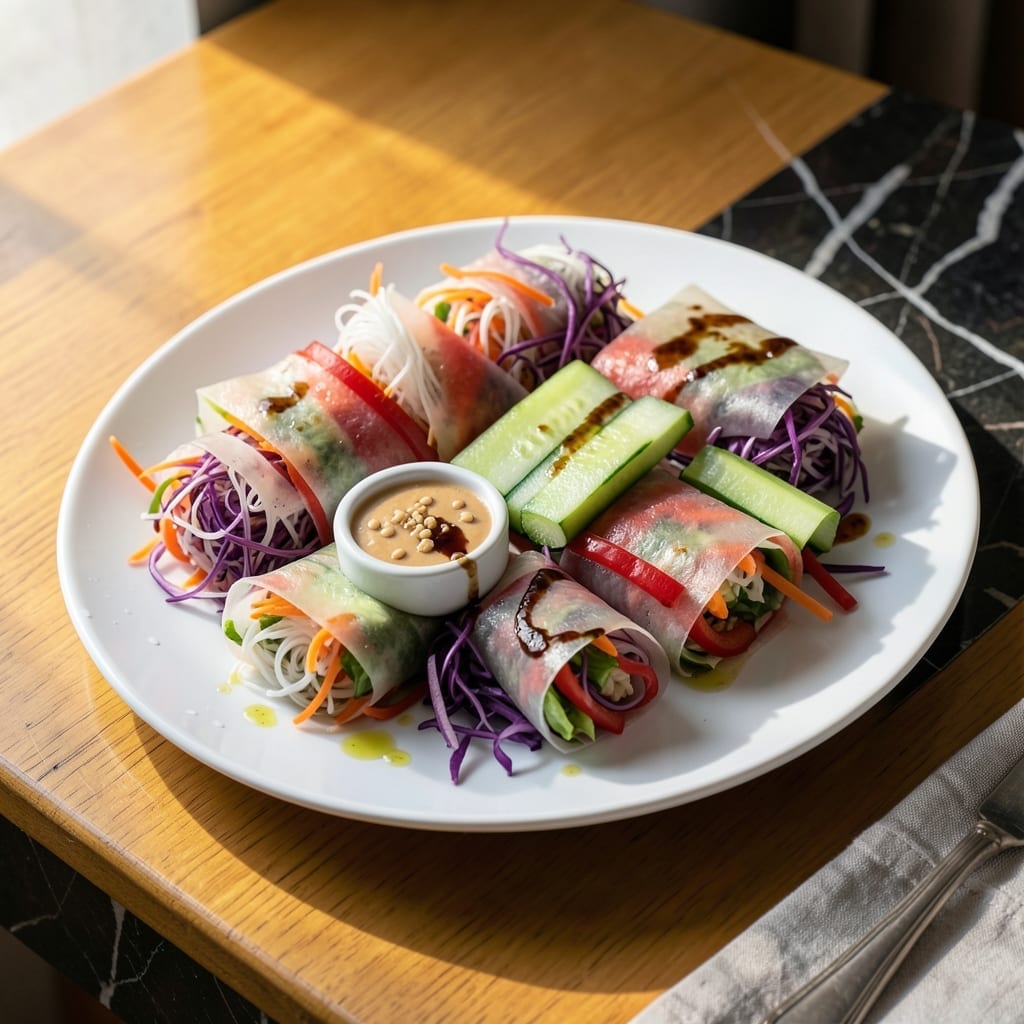
I discovered the beauty of rice paper while searching for a light yet satisfying dish that didn’t compromise on flavor. These spring rolls deliver crisp vegetables and fresh herbs wrapped in delicate sheets, creating a texture that’s both tender and satisfying.
The peanut dipping sauce is the star here—creamy, tangy, and just sweet enough to balance the roll’s natural freshness. Soaking the rice paper briefly is key; too long and it tears, too short and it cracks. Practice makes perfect.
Each bite offers a mix of crunchy veggies, soft noodles, and aromatic herbs, all complemented by the rich, nutty sauce. It’s a dish that feels as nourishing as it is delicious, with no heavy aftertaste.
Serve these as an appetizer or a light main course. They’re versatile, vegan-friendly, and always impressive.
Ingredients for Recipe Using Rice Paper
Everything you need for crisp, fresh spring rolls and that famous peanut sauce.
| Ingredient | Amount | Notes |
|---|---|---|
| Rice Paper Wrappers 🍚 | 12 sheets | 8-inch diameter, round |
| Rice Vermicelli Noodles 🍜 | 4 oz | Dry, thin rice noodles |
| Carrots 🥕 | 2 whole | Julienned or matchstick cut |
| Red Bell Pepper 🌶️ | 1 whole | Thinly sliced into strips |
| English Cucumber 🥒 | 1 whole | Julienned, seeds removed |
| Purple Cabbage 🥬 | 1 cup | Thinly shredded |
| Fresh Cilantro 🌿 | ½ cup | Leaves only, stems discarded |
| Fresh Mint Leaves 🌿 | ½ cup | Whole leaves, torn if large |
| Green Onions 🧅 | 4 whole | Thinly sliced on diagonal |
| Creamy Peanut Butter 🥜 | ½ cup | Unsweetened, natural style |
| Lime Juice 🍈 | 3 tbsp | Freshly squeezed preferred |
| Soy Sauce 🫒 | 2 tbsp | Low-sodium or tamari for gluten-free |
| Rice Vinegar 🍚 | 1 tbsp | Or apple cider vinegar |
| Maple Syrup 🍁 | 2 tbsp | Or agave nectar for vegan |
| Garlic Cloves 🧄 | 2 cloves | Minced finely |
Rice paper is the foundation, so look for good-quality sheets at Asian markets or the international aisle. The Three Ladies Brand is a solid choice—consistent thickness, fewer cracks. For the noodles, vermicelli rice sticks are ideal (not wheat noodles). Fresh herbs are non-negotiable here; Vietnamese cilantro if you can find it, but regular cilantro works too. The veggies should be crisp and colorful—organic if possible.
No rice paper? Lettuce leaves make a decent wrap in a pinch, though the texture won’t be the same. For the peanut sauce, almond butter or sunflower seed butter works if you’re nut-free. Missing maple syrup? Agave or coconut sugar dissolved in warm water gets you close. The lime juice can be bottled (in emergencies), but fresh is always better. Rice vinegar not on hand? Lemon juice at half the amount works.
Store rice paper in a cool, dry place (it keeps for 1-2 years). Once opened, seal tightly to prevent drying out. The veggies can be prepped 1 day ahead—store in water to maintain crispness. Peanut sauce keeps in the fridge for 5 days in an airtight container. Don’t assemble rolls until ready to serve.
Why You’ll Love This Recipe
- No Cook Needed: So easy. Just soak the rice paper, toss in the crunchy veggies and noodles, and roll—no oven or stove required.
- Fresh Crunch: That snap of cucumber and bell pepper against the soft rice paper? Honestly, it’s the best texture combo.
- Picnic Ready: I pack these for lunches or potlucks—they travel like a dream and everyone loves the colorful fillings.
- Budget Stretcher: A pack of rice paper and a few veggies make a ton of rolls. I’ll be real: it’s my wallet’s favorite meal.
Step-by-Step Instructions for Fresh Spring Rolls with Peanut Dipping Sauce
Here’s the method I use to create vibrant, restaurant-quality rolls with a luscious peanut sauce.
Step 1: Prepare the Filling Ingredients
Soak the 4 oz Rice Vermicelli Noodles in hot water for 8-10 minutes until soft but still slightly al dente. Drain and rinse under cold water to stop the cooking process. I like to snip them into shorter lengths with kitchen shears for easier rolling.
While the noodles soak, arrange your vegetables: 2 whole Carrots julienned, 1 whole Red Bell Pepper sliced into thin strips, 1 whole English Cucumber julienned with seeds removed, 1 cup Purple Cabbage shredded, 0.5 cup Fresh Cilantro leaves, and 0.5 cup Fresh Mint Leaves. Thinly slice the 4 whole Green Onions on the diagonal for a pretty presentation.
Step 2: Soften the Rice Paper Wrappers
Fill a shallow, wide dish with warm water. Submerge one Rice Paper Wrapper at a time for 10-15 seconds until pliable but still slightly firm. Over-soaking makes them too delicate to work with. I use a dinner plate as my work surface—it’s the perfect size.
Lay the softened wrapper flat and immediately begin filling. The key is to work quickly but not frantically. You’ll develop a rhythm after the first few rolls. If a wrapper tears, don’t panic—just patch it with a small piece of dry wrapper and continue.
Step 3: Assemble the Spring Rolls
Place a small amount of noodles near the bottom third of the wrapper, then top with a colorful assortment of vegetables. I aim for about ¼ cup of filling per roll—enough to be substantial but not so much that it bursts through the wrapper. Include a mix of textures: the crunch of raw vegetables with the soft noodles.
Fold the bottom edge up over the filling, then fold in the sides like you’re wrapping a burrito. Roll tightly but gently away from you, keeping the filling snug. The rice paper will stick to itself as it dries slightly. Place each finished roll seam-side down on a plate lined with parchment paper to prevent sticking.
Step 4: Make the Peanut Dipping Sauce
In a bowl, whisk together the 0.5 cup Creamy Peanut Butter, 3 tbsp Lime Juice, 2 tbsp Soy Sauce, 1 tbsp Rice Vinegar, and 2 tbsp Maple Syrup. The mixture will be thick at first. Add 2 cloves Garlic Cloves minced finely and whisk vigorously.
Thin the sauce with warm water, 1 tablespoon at a time, until it reaches your desired consistency—I prefer it thick enough to cling to the rolls but still pourable. Taste and adjust seasoning: more lime for tang, more maple syrup for sweetness, or more soy sauce for saltiness. The flavors should be balanced and vibrant.
Let the sauce rest for 10 minutes before serving to allow the flavors to meld together beautifully.
Pro Tips For Making Recipe Using Rice Paper
- Soak Briefly: Dip rice paper in warm water for 5-7 seconds only—I learned this the hard way after ending up with gummy, torn wrappers. They’ll soften fully as you fill them.
- Slice Thin: Julienne carrots and bell pepper into matchstick-sized pieces, about 2-3 inches long. Sounds fussy, but it makes a real difference in getting even bites in every roll.
- Skip Overfilling: Resist the urge to stuff wraps with too much filling—more than 3-4 noodle strands plus veggies leads to bursting. My first few always looked like overpacked suitcases.
- Use a Damp Towel: Cover unused rice paper with a damp kitchen towel to prevent drying out. I was skeptical until I tried it; now I never lose a wrapper to cracking halfway through.
Troubleshooting This Recipe
Wrapper Tears
If your rice paper tears while rolling, don’t stress. Patch it with a small piece of dry wrapper—it blends right in. I keep a few extra sheets nearby for this very reason. Prevent tears by not overfilling or over-soaking. 💪
Sticky Situation
Rolls sticking to the plate? Use parchment paper or a silicone mat. Lightly dampen the surface with water to help release them. Store finished rolls under a damp towel to prevent drying out while working.
Sauce Too Thick
If your peanut sauce is too thick, thin it with warm water, 1 tbsp at a time. For a thinner, drizzle-ready consistency, aim for about ¼ cup total liquid. Stir well between additions to avoid clumping.
Sauce Too Thin
If you’ve added too much water, whisk in more peanut butter or let it sit for 10 minutes—it will thicken slightly as it rests. A pinch of cornstarch mixed with cold water can also help bind it.
Filling Falls Out
If your filling escapes, you’re likely overstuffing. Stick to ¼ cup filling per roll max. Distribute it evenly and roll tightly. Practice your burrito-folding technique—it’s the same principle!
Rice Paper Too Stiff
If your wrappers feel stiff after soaking, your water may be too cool. Use warm water (about 100°F) and soak for the full 15 seconds. They should feel pliable, not brittle. 💡
Nutrition Facts
Frequently Asked Questions
Can I use other vegetables in the rolls?
Try adding shredded lettuce, bean sprouts, or avocado for extra creaminess. Just keep them thinly sliced for easy rolling.
How do I store leftover spring rolls?
Place them in an airtight container with parchment between layers. They’ll keep in the fridge for 2 days, though the wrapper may soften slightly. Serve cold or at room temperature.
Can I make these ahead of time?
Prep all ingredients and sauce 1 day ahead, but assemble rolls no more than 2 hours before serving. Cover with a damp towel to prevent drying.
What if my sauce is too salty?
Balance it with more lime juice or a touch of maple syrup. Add 1 tsp at a time and taste as you go.

- Authentic Greek Lemon Rice Soup Recipe: Bright Citrus and Silky Texture - September 26, 2026
- Beef Tomato Rice Chinese Recipe: Wok-Seared Savory Delight with Fragrant Aromatics - September 26, 2026
- Mango Sticky Rice Sauce Recipe: Sweet Coconut Infusion for Dessert - September 26, 2026