
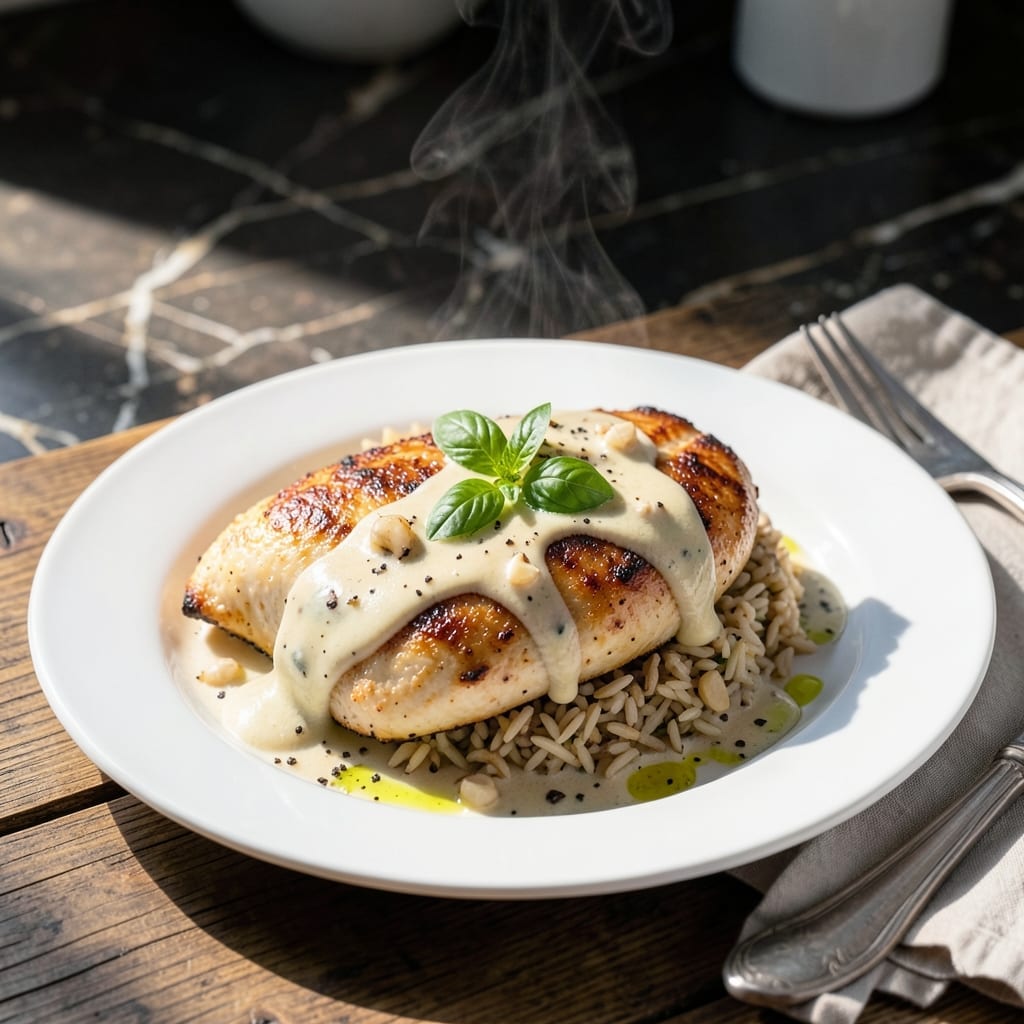
This dish transforms simple ingredients into restaurant-quality results with minimal effort. The basil cream sauce creates a velvety texture that clings perfectly to tender chicken.
I developed this method during my Charleston apprenticeship, learning how to balance fresh herbs with creamy richness. The key is infusing the cream with basil before combining with pan juices.
You’ll achieve tender chicken with a sauce that’s both rich and bright. The fresh basil adds an aromatic quality that dried herbs simply can’t match.
Ready in under 30 minutes, this becomes a go-to for impressive weeknight dinners. The technique ensures consistent results every time.
Ingredients for Basil Cream Chicken
Restaurant-quality results start with these carefully selected ingredients for velvety basil cream chicken.
| Ingredient | Amount | Notes |
|---|---|---|
| Boneless Skinless Chicken Breasts 🍗 | 1 ½ lb | Pounded to even thickness |
| Fresh Basil Leaves 🌿 | 1 cup | Packed, stems removed |
| Heavy Cream 🥛 | 1 ½ cups | Full-fat for richness |
| Unsalted Butter 🧈 | 3 tbsp | Divided for cooking and sauce |
| Garlic Cloves 🧄 | 3 cloves | Minced finely |
| Shallot 🧅 | 1 whole | Finely diced |
| Dry White Wine 🍷 | ½ cup | Sauvignon Blanc preferred |
| Chicken Stock 🍲 | ½ cup | Low-sodium recommended |
| All-Purpose Flour 🌾 | 2 tbsp | For thickening sauce |
| Lemon Juice 🍋 | 1 tbsp | Freshly squeezed |
| Kosher Salt 🧂 | 1 tsp | Diamond Crystal preferred |
| Freshly Ground Black Pepper 🌶️ | ½ tsp | To taste |
| Olive Oil 🫒 | 1 tbsp | For searing chicken |
The chicken quality is paramount. Boneless, skinless breasts from a trusted butcher or Whole Foods ensure tenderness. For the basil, organic bunches from a farmers market provide superior aroma. The cream should be full-fat—reduced-fat versions separate when heated. Imported Parmigiano-Reggiano rind can be added while infusing for depth (remove before serving).
No wine? Substitute with additional chicken stock and 1 tsp lemon juice. Shallots can be replaced with half a small yellow onion. For a lighter version, half-and-half works at a 1:1 ratio though the sauce will be less luxurious. Fresh basil is non-negotiable—dried loses the essential aromatic quality. The flour can be swapped for cornstarch at half the amount.
The sauce keeps 3-4 days refrigerated in an airtight container. Chicken is best served immediately but can be stored separately for up to 3 days. Reheat gently to prevent cream from curdling. Do not freeze as the sauce will separate upon thawing.
Why You’ll Love This Recipe
- One Pan Wonder: I love that everything cooks in a single skillet—chicken, garlic, basil, and cream come together without a sink full of dishes.
- That Creamy Bite: The heavy cream and butter create this velvety sauce that clings to the chicken, and fresh basil cuts through it with just the right brightness.
- Weeknight Hero: Honestly, it’s my go-to for busy evenings—fancy enough for company but unfussy enough for a Tuesday.
- Leftovers? Yes Please: The flavors deepen overnight, so I always make extra. Cold or reheated, it’s just as good the next day.
Step-by-Step Instructions for Basil Cream Chicken
Master the technique and you’ll deliver restaurant-quality chicken with a luscious herb-infused sauce every time.
Step 1: Prepare and Sear the Chicken
Begin by pounding the 1.5 lb boneless skinless chicken breasts to an even ½-inch thickness. This ensures uniform cooking. Season both sides with 1 tsp kosher salt and 0.5 tsp freshly ground black pepper. The salt should adhere well to the surface.
Heat 1 tbsp olive oil in a large skillet over medium-high heat until shimmering. Add the chicken and sear for 4-5 minutes per side until golden brown and cooked through. The chicken should release easily from the pan when ready to flip. Transfer to a plate and tent with foil to keep warm.
Step 2: Sauté Aromatics for the Sauce
In the same skillet, reduce heat to medium and melt 2 tbsp unsalted butter. Add the finely diced shallot and cook for 2-3 minutes until translucent. The shallot should soften without browning.
Add the 3 minced garlic cloves and cook for 30 seconds until fragrant. Stir in the 2 tbsp all-purpose flour to create a roux. Cook for 1 minute to eliminate the raw flour taste, stirring constantly to prevent browning.
Step 3: Deglaze and Build the Cream Sauce
Pour in the 0.5 cup dry white wine and scrape the browned bits from the bottom of the pan with a wooden spoon. Let the wine reduce by half, about 2-3 minutes. The liquid should become slightly syrupy.
Add the 0.5 cup chicken stock and 1.5 cups heavy cream. Bring to a gentle simmer and cook for 3-4 minutes until the sauce begins to thicken. Stir in the 1 tbsp lemon juice and the remaining 1 tbsp unsalted butter.
Step 4: Finish with Fresh Basil
Reduce heat to low and stir in the 1 cup fresh basil leaves. Cook for 1-2 minutes until the basil wilts and infuses the sauce with its aroma. The sauce should coat the back of a spoon with a velvety texture.
Return the chicken to the skillet and spoon the sauce over it. Let it warm through for 2-3 minutes. The chicken should be fully coated and the sauce should have a vibrant green speckled appearance from the basil.
Pro Tips For Making Basil Cream Chicken
- Pound the Breasts: I learned this the hard way—uneven chicken breasts cook unevenly. Use a rolling pin or heavy pan to pound them to an even ½-inch thickness so they finish at the same time.
- Bloom the Garlic: After burning three batches, I finally figured out that garlic needs just 30 seconds in hot butter before adding the cream—any longer and it turns bitter.
- Skip Pre-Chopped Basil: My grandmother swore by this, and she was right: fresh basil loses its punch fast, so tear the leaves just before adding them at the end.
- Reduce the Cream: Sounds weird, but it works: let the cream simmer for 2-3 minutes before adding the basil to thicken it slightly—otherwise the sauce stays thin and watery.
Perfect Pairings for This basil cream chicken
Wine Pairings
A crisp Sauvignon Blanc from New Zealand mirrors the lemon notes in the sauce. I love Kim Crawford for its bright acidity that cuts through the cream. The citrus and herbal notes complement the fresh basil beautifully. 🍷
Pasta Partners
Serve over fettuccine or pappardelle to soak up every drop of sauce. I use De Cecco for its perfect al dente texture. Toss the cooked pasta directly in the skillet with the chicken and sauce.
Vegetable Sides
Steamed asparagus with a squeeze of lemon balances the richness. Or try roasted cherry tomatoes at 400°F for 15 minutes—their sweetness contrasts the creamy sauce. Both add freshness to the plate.
Bread Options
A crusty baguette from a local bakery is perfect for mopping up sauce. Toast slices with garlic butter for extra flavor. I always keep some ciabatta on hand for impromptu sauce soaking.
Light Salad
A simple arugula salad with shaved Parmigiano-Reggiano and balsamic glaze adds peppery contrast. The bitterness cuts through the cream while the cheese echoes the sauce’s richness. 🥗
Nutrition Facts
Frequently Asked Questions
Can I use dried basil instead of fresh?
No, fresh basil is essential for the best flavor. Dried loses the aromatic quality that makes this dish special.
What if my sauce is too thin?
Simmer uncovered for 2-3 minutes longer. If still thin, mix 1 tsp cornstarch with water and stir in. It will thicken as it cooks.
Can I make this ahead?
The sauce keeps 3-4 days refrigerated. Reheat gently to prevent curdling. Chicken is best served fresh.
What’s a good wine substitute?
Use additional chicken stock and 1 tsp lemon juice. The acidity mimics wine’s role in balancing the cream.

- Soupy Rice Recipe: Broth-Soaked Grains With Rustic Depth - September 25, 2026
- Rice Paper Pancakes Recipe: Crispy Vietnamese Breakfast Delight - September 25, 2026
- Rice A Roni Pork Fried Rice Recipe: Quick Wok-Style Meal with Savory Bites - September 25, 2026