
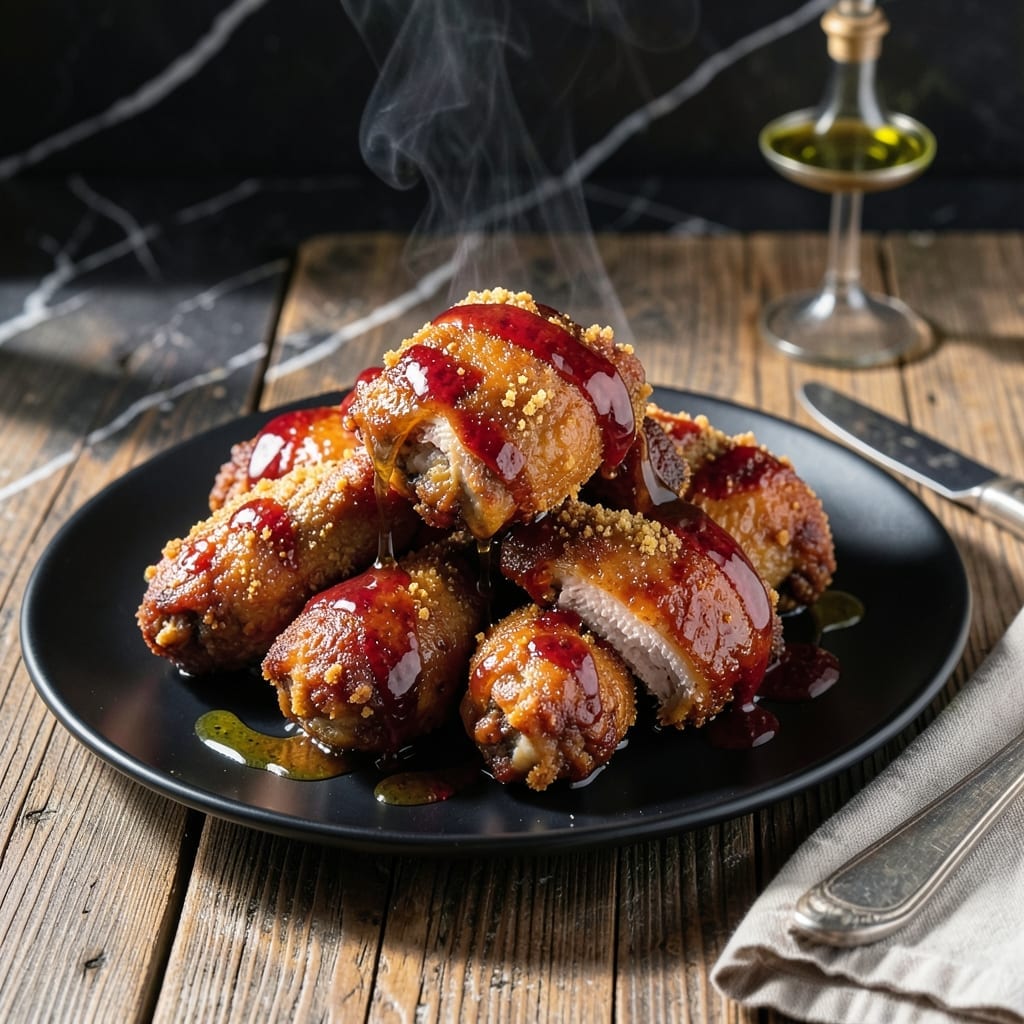
This Korean fried chicken delivers an explosion of sweet-spicy flavor in every crispy bite. The double-frying technique creates a shatteringly thin crust that stays crunchy even after being coated in the bold sauce.
The magic happens in the sauce—a perfect balance of gochujang, honey, and garlic that clings to every piece. I’ve refined this method to ensure maximum flavor penetration while maintaining the chicken’s juicy interior.
You’ll end up with pieces that are golden and glistening, with a sauce so addictive you’ll want to lick the plate. The contrast between the crisp exterior and tender meat makes this dish irresistible.
Serve immediately with pickled radishes to cut through the richness. This recipe transforms ordinary chicken into something extraordinary.
Ingredients for Boom Chicken
Crispy, saucy, and packed with Korean flavors. Every ingredient here builds that signature boom.
| Ingredient | Amount | Notes |
|---|---|---|
| Chicken Thighs 🍗 | 2 lb | Boneless, skin-on preferred |
| Cornstarch 🌾 | ¾ cup | For ultra-crispy coating |
| All-Purpose Flour 🌾 | ½ cup | Balances the cornstarch |
| Baking Powder 🧂 | 1 tsp | Enhances crispiness |
| Gochujang 🌶️ | ½ cup | Korean red pepper paste |
| Honey 🍯 | ⅓ cup | Balances the heat |
| Soy Sauce 🫒 | 3 tbsp | Low-sodium preferred |
| Rice Vinegar 💧 | 2 tbsp | Adds tangy brightness |
| Garlic Cloves 🧄 | 6 cloves | Minced for maximum flavor |
| Fresh Ginger 🌿 | 1 tbsp | Grated, for depth |
| Sesame Oil 🫒 | 1 tbsp | Toasted for aroma |
| Vegetable Oil 🫒 | 4 cups | For deep frying |
| Green Onions 🧅 | 4 pieces | Thinly sliced for garnish |
| Sesame Seeds 🌾 | 2 tbsp | Toasted for garnish |
| Pickled Radishes 🥬 | 1 cup | For serving, optional |
The chicken is everything here. Thighs stay juicier than breasts during double-frying—look for skin-on at Whole Foods or your local Asian market for best results. The cornstarch is non-negotiable; it creates that shatteringly crisp crust. Bob’s Red Mill or any Asian brand works. For gochujang, Sempio or Chung Jung One are top-tier and widely available at H Mart.
No gochujang? Sriracha plus a bit of miso paste gets you close (not identical, but workable). Honey can be swapped for brown sugar or maple syrup—just adjust sweetness to taste. The soy sauce should be low-sodium to avoid over-salting. Out of rice vinegar? Apple cider vinegar at half the amount works in a pinch. For extra heat, add 1 tsp of gochugaru (Korean red pepper flakes).
Fry in batches to avoid crowding—this keeps the oil temp steady and the chicken crisp. Leftovers? Re-crisp in the oven at 400°F for 5-7 minutes. The sauce thickens as it cools, so thin with a splash of water if needed. Best eaten fresh, but stores 2-3 days in the fridge.
Why You’ll Love This Recipe
- Minimal Effort: I just toss the chicken thighs in cornstarch and flour, then bake—no fancy steps, no stress.
- Spicy-Sweet Kick: The gochujang gives it that bold, tangy heat I crave every time.
- Feeds the Gang: One batch makes enough for dinner and leftovers, and it’s always a hit with my picky nephew.
- Budget Winner: Chicken thighs are cheap, and a little gochujang goes a long way for maximum flavor.
Step-by-Step Instructions for Spicy Korean Fried Chicken
Master these techniques for irresistibly crispy, saucy chicken with authentic Korean flavors.
Step 1: Prepare the Chicken and Coating
Pat the 2 lb Chicken Thighs thoroughly dry with paper towels. This critical step ensures maximum crispiness by preventing steam from forming between the meat and coating. Cut the thighs into 1-inch pieces for even cooking and optimal sauce coverage.
In a large bowl, whisk together the 0.75 cup Cornstarch, 0.5 cup All-Purpose Flour, and 1 tsp Baking Powder. The baking powder creates tiny air pockets in the coating, resulting in an ultra-crispy texture that stays crunchy even after being tossed in sauce.
Step 2: Double-Fry for Maximum Crispiness
Heat the 4 cups Vegetable Oil in a heavy pot to 325°F. Working in batches to avoid crowding, fry the coated chicken pieces for 6-7 minutes until lightly golden. This initial fry cooks the meat through without over-browning the exterior.
Remove the chicken and let it rest for 5 minutes. Increase the oil temperature to 375°F and fry again for 2-3 minutes until deep golden brown and supremely crispy. This double-frying technique, essential for Korean fried chicken, creates a shatteringly crisp exterior that holds up to the sauce.
Step 3: Create the Gochujang Glaze
In a saucepan, combine the 0.5 cup Gochujang, 0.33 cup Honey, 3 tbsp Soy Sauce, 2 tbsp Rice Vinegar, minced 6 cloves Garlic Cloves, and 1 tbsp Fresh Ginger. Cook over medium heat for 3-4 minutes, stirring constantly.
The sauce should thicken slightly and become glossy. Remove from heat and stir in the 1 tbsp Sesame Oil. This adds a nutty depth that complements the spicy-sweet profile. Taste and adjust the balance if needed—more honey for sweetness or vinegar for tang.
Step 4: Toss and Garnish
Place the fried chicken in a large bowl and pour the warm sauce over it. Toss gently but thoroughly with a spatula until every piece is evenly coated. The sauce should cling to the crispy exterior, creating that signature sticky, glossy finish.
Transfer to a serving platter and immediately sprinkle with the 2 tbsp Sesame Seeds and sliced 4 pieces Green Onions. Serve with 1 cup Pickled Radishes on the side for a refreshing contrast to the rich, spicy chicken. The pickled radishes cut through the heat beautifully.
Pro Tips For Making Boom Chicken
- Dry the Thighs: Pat those chicken thighs bone-dry with paper towels before dredging—any moisture left means the cornstarch won’t stick properly, and you’ll end up with sad, soggy spots instead of that shatteringly crisp crust.
- Chill the Coating: After dusting the thighs in the flour-cornstarch-baking powder mix, let them rest in the fridge for 15 minutes; the coating sets up and clings better when it hits the hot oil, so you get even browning and fewer bare patches.
- Skip the Overcrowding: Fry in small batches—three or four thighs at a time—so the oil temperature doesn’t plummet; I learned this the hard way after pulling out pale, greasy pieces that refused to crisp.
- Double-Dip Gochujang: Toss the fried thighs in half the gochujang sauce first, let it cling for a minute, then add the rest; this builds layers of sticky, spicy glaze instead of one thin coat that slides right off.
Health Benefits of These Flavors
Protein Powerhouse
This dish delivers high-quality protein from 2 lb Chicken Thighs, providing about 50 grams per serving. Protein is essential for muscle repair and immune function, making this a satisfying meal that keeps you full for hours.
Metabolism Boost
The gochujang in the sauce contains capsaicin, which may slightly boost metabolism. Combined with fresh ginger and garlic, these ingredients support digestion and may aid in calorie burning. 💪
Rich in B Vitamins
Chicken thighs are packed with B vitamins, including B6 and B12, which are vital for energy production and brain health. The soy sauce adds a small but meaningful amount of iron to the dish.
Antioxidant Benefits
Sesame oil and sesame seeds provide antioxidants like sesamol, which help combat oxidative stress. The green onions add a dose of vitamin K, supporting bone health.
Balanced Energy Source
The combination of protein, healthy fats from the oil, and natural sugars in honey offers a balanced energy release. This helps avoid blood sugar spikes, keeping energy levels steady. 🍯
Low-Carb Friendly
With cornstarch as the primary carb source, this dish remains relatively low in carbohydrates compared to many fried foods. The protein-to-carb ratio makes it a smarter indulgence.
Nutrition Facts
Frequently Asked Questions
Why use both cornstarch and flour in the coating?
The cornstarch creates an ultra-crispy texture, while all-purpose flour adds structure. Together they form a shatteringly thin crust that stays crunchy even after saucing.
Can I use chicken breast instead of thighs?
You can, but thighs stay juicier during double-frying. If using breast, reduce the second fry to 1-2 minutes to prevent dryness. Always cut into 1-inch pieces for even cooking.
How spicy is this dish?
The gochujang gives a medium heat level. For milder flavor, reduce it to 1/3 cup and add 1 tbsp sugar. For extra heat, add 1 tsp gochugaru to the sauce.
Can I bake instead of frying?
For a lighter version, bake at 400°F for 20-25 minutes, flipping halfway. Toss in sauce after baking. Note that the texture won’t be as crispy as deep-frying.

- Mandhi Rice Recipe: Yemeni Spiced Lamb and Rice Feast - September 25, 2026
- Chuy’s Green Chili Rice Copycat Recipe: Spicy Southwest Flavor in Every Bite - September 25, 2026
- Beaten Rice Recipe: Fluffy Grains With Nutty Depth - September 25, 2026