
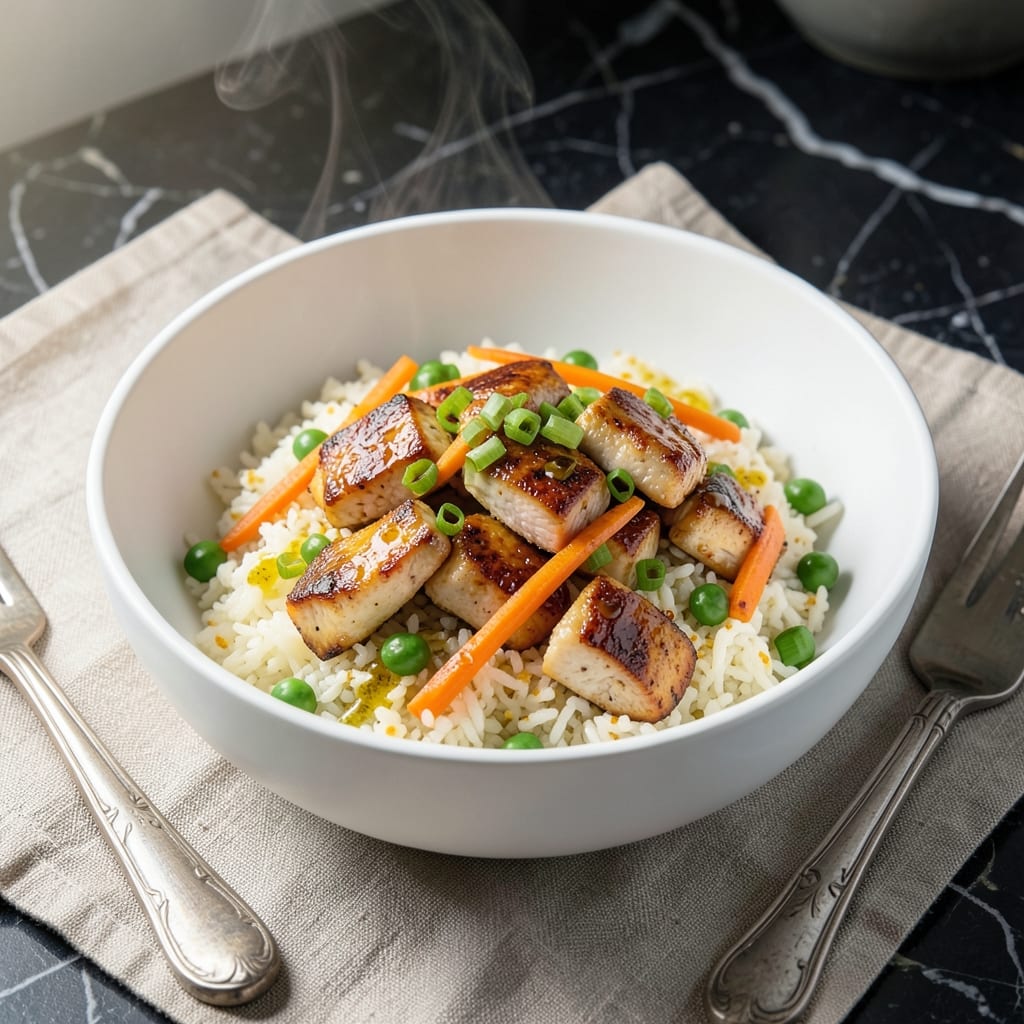
This low-carb twist on fried rice delivers all the flavor with a fraction of the carbs. I’ve perfected the technique for achieving that classic wok-tossed texture using cauliflower rice.
The chicken stays tender while the vegetables maintain their crispness. Every bite offers the familiar comfort of fried rice without the guilt, making it ideal for health-conscious cooks.
Ingredients for Cauliflower Chicken Fried Rice
A low-carb reimagining of classic fried rice with tender chicken and crisp vegetables.
| Ingredient | Amount | Notes |
|---|---|---|
| Cauliflower Rice 🥬 | 5 cups | Fresh or frozen, thawed |
| Boneless Skinless Chicken Breast 🍗 | 1 lb | Diced into small pieces |
| Large Eggs 🥚 | 2 whole | Lightly beaten |
| Carrots 🥕 | ½ cup | Finely diced |
| Green Onions 🧅 | ½ cup | Thinly sliced, white and green parts separated |
| Frozen Peas 🌱 | ½ cup | Thawed |
| Garlic Cloves 🧄 | 3 cloves | Minced finely |
| Fresh Ginger Root 🌿 | 1 tbsp | Peeled and grated |
| Soy Sauce 🫒 | 3 tbsp | Low-sodium preferred |
| Sesame Oil 🫒 | 1 tbsp | Toasted for best flavor |
| Vegetable Oil 🫒 | 2 tbsp | Divided for cooking |
| Diamond Crystal Kosher Salt 🧂 | ½ tsp | Or to taste |
| Ground Black Pepper 🌶️ | ¼ tsp | Freshly ground preferred |
| Granulated Sugar 🍚 | ½ tsp | Balances sodium |
The cauliflower rice is the foundation here. Fresh cauliflower rice from Trader Joe’s or Costco works well, but frozen is perfectly fine (just thaw and drain it first). For the chicken, boneless, skinless breasts stay tender when diced small. Look for vibrant orange carrots and crisp green onions—these add color and texture that mimic traditional fried rice beautifully.
No cauliflower rice? Broccoli rice works in a pinch. Chicken thighs can replace breasts for more richness. Tamari or coconut aminos stand in for soy sauce if you’re gluten-free. The ginger and garlic are non-negotiable for authentic flavor, but ginger paste at half the amount saves time. For extra depth, a dash of fish sauce (optional) enhances umami without overpowering.
Leftovers keep 4-5 days in the fridge and reheat well in a skillet or microwave. For meal prep, store components separately and combine when reheating. Freezes for up to 3 months—just thaw overnight before reheating to maintain texture.
Why You’ll Love This Recipe
- One Pan Wonder: I toss in the cauliflower rice, chicken, and veggies, and it all cooks together in one skillet. Honestly, cleanup is a breeze.
- Crave-Worthy Bites: The soy-ginger sauce soaks into every grain of cauliflower rice, and the chicken gets this perfect caramelized edge.
- Meal Prep Hero: I make a big batch on Sunday—it reheats beautifully and tastes just as good for lunch the next day.
- Budget Stretcher: A single chicken breast and a bag of frozen cauliflower rice feed my family of four. Between us, it’s way cheaper than takeout.
Step-by-Step Instructions for Cauliflower Chicken Fried Rice
Master this technique for perfectly textured low-carb fried rice with vibrant flavor.
Step 1: Prep and Par-Cook the Chicken
Heat 1 tablespoon vegetable oil in a large wok or skillet over medium-high heat until shimmering. Add the 1 lb boneless skinless chicken breast and cook for 3-4 minutes, breaking it up with a spatula, until the pieces are lightly browned but not fully cooked through.
I remove the chicken at this stage to prevent overcooking when we add it back later. Season with 0.25 tsp ground black pepper and 0.5 tsp Diamond Crystal kosher salt while cooking. The chicken should be just opaque in the center when transferred to a plate.
Step 2: Scramble the Eggs and Sauté Aromatics
In the same wok, add the remaining 1 tablespoon vegetable oil. Pour in the 2 whole large eggs and scramble quickly with a spatula for 30-45 seconds until just set but still slightly runny. Remove and set aside with the chicken.
Add the 3 cloves garlic cloves and 1 tbsp fresh ginger root to the wok. Sauté for 20-30 seconds until fragrant—this builds the aromatic foundation. Immediately add the 0.5 cup carrots and cook for 2 minutes until slightly softened.
Step 3: Combine and Cook the Rice Mixture
Increase heat to high and add the 5 cups cauliflower rice, 0.5 cup frozen peas, and 0.5 cup green onions (white parts). Stir-fry aggressively for 4-5 minutes until the cauliflower rice is tender-crisp and any moisture has evaporated.
The wok should be hot enough that the rice makes a sizzling sound when stirring. If it starts to stick, add a splash of water and continue cooking. This step is crucial for replicating the texture of traditional fried rice.
Step 4: Finish with Sauce and Final Touches
Return the chicken and eggs to the wok. Drizzle with 3 tbsp soy sauce, 1 tbsp sesame oil, and 0.5 tsp granulated sugar. Toss everything together for 1-2 minutes until heated through and the flavors meld.
Taste and adjust seasoning if needed. The sauce should coat the rice evenly without pooling at the bottom. Stir in the green onion tops just before serving for a fresh, vibrant finish. The final dish should have a glossy sheen and each bite should deliver balanced savory-sweet flavor.
Pro Tips For Making Cauliflower Chicken Fried Rice
- Pre-cook the Chicken: Sear the chicken breast first in a hot pan, then set aside—I learned this the hard way after ending up with rubbery chicken mixed into undercooked rice.
- Dry the Cauliflower: Squeeze out excess moisture from the cauliflower rice before cooking, or you’ll get a soggy mess instead of that nice fried texture.
- Scramble Eggs First: Push cooked eggs to one side of the pan before adding veggies, so they stay soft and distinct instead of disappearing into the dish.
- Use Day-Old Rice: If using cauliflower rice, spread it on a tray for 10 minutes to dry out—sounds weird, but it works for that classic fried rice texture.
Flavor Customization for These Flavors
Spice It Up
For heat lovers, add ½ tsp red pepper flakes with the garlic and ginger. I sometimes toss in 1 finely diced jalapeño for fresh heat. A drizzle of sriracha at serving adds another layer of spicy complexity.
Sweet and Tangy
Balance the savory with 1 tbsp pineapple tidbits during the final toss. The sweetness pairs perfectly with the umami. I also love adding 1 tsp rice vinegar for a bright, tangy finish that cuts through the richness. 🌟
Umami Boost
Enhance depth with 1 tbsp fish sauce or 1 tsp mushroom powder mixed into the soy sauce. A sprinkle of toasted sesame seeds before serving adds nutty crunch. These small additions make a noticeable difference.
Herb Freshness
Stir in ¼ cup chopped cilantro or Thai basil at the end for vibrant herbal notes. I prefer cilantro for its citrusy kick. Fresh herbs brighten the dish and add a restaurant-quality touch.
Extra Veggies
Add ½ cup diced bell peppers or zucchini with the carrots for more texture and color. I often include mushrooms for earthy depth. Just ensure all veggies are finely diced for even cooking.
Protein Variations
Swap chicken for shrimp or tofu for variety. For shrimp, cook ½ lb peeled shrimp just until pink (2-3 minutes). For tofu, press and cube 14 oz firm tofu before stir-frying. 💪
Nutrition Facts
Frequently Asked Questions
Can I use frozen cauliflower rice?
Yes, but thaw and drain it thoroughly first to prevent excess moisture. Pat it dry with a towel for best texture and to avoid a soggy result.
How do I keep the chicken tender?
Dice the chicken into small, even pieces and cook just until opaque (3-4 minutes). Remove it early and finish cooking when combined with the rice.
Can I make this dish ahead?
Store components separately in the fridge for up to 4-5 days. Reheat in a skillet with a splash of water to restore texture.
What can I use instead of soy sauce?
Try tamari or coconut aminos for gluten-free options. Both provide similar umami depth without altering the dish’s character.

- Rice A Roni Pork Fried Rice Recipe: Quick Wok-Style Meal with Savory Bites - September 25, 2026
- Mandhi Rice Recipe: Yemeni Spiced Lamb and Rice Feast - September 25, 2026
- Chuy’s Green Chili Rice Copycat Recipe: Spicy Southwest Flavor in Every Bite - September 25, 2026