
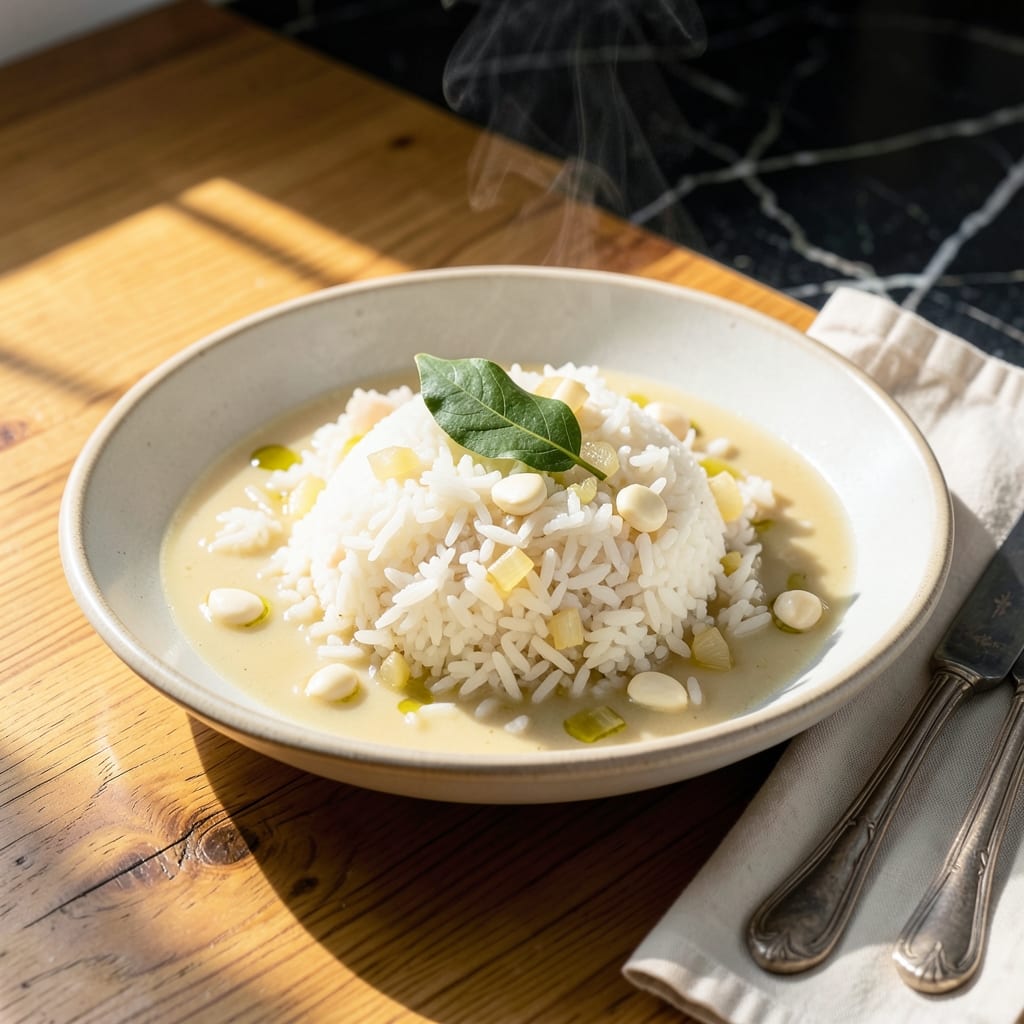
This chicken broth rice delivers silky grains with deep, savory flavor in every bite. The broth infuses each kernel with rich, comforting taste that elevates simple rice to something special.
With just a few ingredients and 20 minutes, you’ll have a side dish that’s both foolproof and packed with restaurant-quality depth. The technique is simple, but the results are anything but ordinary.
Ingredients for Chicken Broth Rice
Transform humble rice with rich broth and aromatic vegetables for restaurant-quality results.
| Ingredient | Amount | Notes |
|---|---|---|
| Long-Grain White Rice 🍚 | 1 ½ cups | Rinsed until water runs clear |
| Low-Sodium Chicken Broth 🍲 | 3 cups | Homemade or high-quality store-bought |
| Unsalted Butter 🧈 | 2 tbsp | Divided for toasting and finishing |
| Yellow Onion 🧅 | ½ whole | Finely diced for even distribution |
| Garlic Cloves 🧄 | 3 cloves | Minced for aromatic base |
| Bay Leaf 🍃 | 1 whole | Removed before serving |
| Fresh Thyme Sprigs 🌿 | 2 whole | Optional for enhanced depth |
| Kosher Salt 🧂 | ½ tsp | Adjust to taste at end |
| Freshly Ground Black Pepper 🌶️ | ¼ tsp | For finishing touch |
| Fresh Parsley 🌿 | 2 tbsp | Chopped for garnish |
| Lemon Zest 🍋 | 1 tsp | Optional for brightness |
The broth quality is paramount. Homemade chicken broth yields the most depth, but Better Than Bouillon or Swanson low-sodium varieties work well. Select long-grain rice like jasmine or basmati for the silkiest texture. Avoid instant rice—it lacks the structure needed for this method. The onion should be fresh and firm, not soft or sprouting, for optimal flavor development.
No chicken broth? Vegetable broth with a bouillon cube provides a suitable substitute. For a richer result, use half broth and half water. Fresh herbs can be replaced with dried at one-third the quantity. Unsalted butter can be swapped with olive oil for a different but still delicious profile. The bay leaf is optional but recommended for its subtle aromatic contribution.
Cooked rice absorbs flavors as it rests. Let it sit 5 minutes off heat before serving. Store leftovers in an airtight container for up to 4 days. Reheat with a splash of broth to restore moisture and prevent drying. Fresh parsley is best added just before serving for vibrant color and flavor.
Why You’ll Love This Recipe
- One-Pot Wonder: I just dump everything in, let it simmer, and the rice soaks up all that garlicky, buttery broth flavor.
- Garlic Butter Bliss: The onion and garlic cook right into the broth, making every bite taste like it came from a fancy kitchen.
- Meal Prep Hero: I make a big batch on Sunday and it reheats beautifully for lunches all week.
- Pennies Per Serving: Between us, a bag of rice and some broth stretch further than takeout ever could.
Step-by-Step Instructions for Chicken Broth Rice
This method ensures perfectly cooked grains with rich, savory depth in every bite.
Step 1: Sauté Aromatics for Flavor Foundation
Melt 1 tablespoon Unsalted Butter in a medium saucepan over medium heat. Add the finely diced 0.5 whole Yellow Onion and cook for 4-5 minutes until translucent and soft, stirring occasionally.
Add the minced 3 cloves Garlic Cloves and cook for 30 seconds until fragrant but not browned. This builds the aromatic base that infuses the rice with depth. Watch closely to prevent burning, as garlic can scorch quickly.
Step 2: Toast the Rice for Nutty Depth
Stir in the 1.5 cups Long-Grain White Rice and remaining 1 tablespoon Unsalted Butter. Cook for 2-3 minutes, stirring constantly, until the rice turns slightly opaque and begins to smell nutty. This step enhances the grain’s natural flavor.
Toasting the rice also helps it absorb the broth more evenly, preventing a mushy texture. The grains should glisten but not brown. If they start to stick, reduce the heat slightly.
Step 3: Simmer with Broth and Herbs
Pour in the 3 cups Low-Sodium Chicken Broth, then add the 1 whole Bay Leaf and 2 whole Fresh Thyme Sprigs. Stir once to distribute the rice evenly, then bring to a gentle boil over medium-high heat.
Once boiling, reduce heat to low, cover the pot, and simmer for 18-20 minutes. Do not lift the lid during cooking—steam is crucial for even cooking. The liquid should be fully absorbed, and the rice tender with a slight bite.
Step 4: Rest and Finish with Fresh Elements
Remove the pot from heat and let it sit, covered, for 10 minutes. This resting period allows the rice to steam and become fluffier. Discard the Bay Leaf and Thyme Sprigs before serving.
Gently fluff the rice with a fork, then season with 0.5 tsp Kosher Salt and 0.25 tsp Freshly Ground Black Pepper. Stir in the 2 tbsp Fresh Parsley and 1 tsp Lemon Zest for brightness. Serve immediately while warm.
Pro Tips For Making Chicken Broth Rice
- Toast the Rice: Cook the rice in the butter for 2-3 minutes before adding liquid—this brings out a nutty depth that plain broth can’t. I learned this the hard way after years of bland, one-note rice.
- Sauté Onions Low: Let the yellow onions sweat gently in butter for at least 8 minutes until translucent; rushing this step leaves a harsh raw bite that ruins the dish.
- Skip the Rinse: Don’t rinse the long-grain rice—you want the starch to thicken the broth slightly into a creamy consistency, like a simple risotto.
- Warm the Broth: Heat the low-sodium chicken broth before adding it to the pot; cold broth stalls the cooking and can leave the rice unevenly done.
Common Mistakes When Making chicken broth rice
Overcooking the Rice
The most common mistake is lifting the lid during cooking. Every time you peek, you release precious steam, which can lead to uneven cooking. Trust the process and keep the lid on for the full 18-20 minutes. 💡
Skipping the Toasting Step
Toasting the rice in butter for 2-3 minutes builds a nutty depth that transforms the flavor. Skipping this step results in bland grains. I always wait until the rice turns slightly opaque before adding the broth.
Using the Wrong Ratio
The perfect ratio is 2 cups liquid to 1 cup rice. Using too much broth makes the rice mushy, while too little leaves it undercooked. For this recipe, 3 cups broth to 1.5 cups rice is ideal.
Choosing Instant Rice
Instant rice lacks the structure needed for this method and often turns to mush. Stick with long-grain white rice like jasmine or basmati for the best texture. I’ve tried shortcuts, and they never deliver the same silky result.
Forgetting to Rest
Resting the rice off heat for 10 minutes is crucial. It allows the grains to steam and become fluffier. Skipping this step often results in dense, sticky rice. 🔥
Neglecting to Rinse
Always rinse the rice until the water runs clear. This removes excess starch that can make the final dish gummy. I use a fine-mesh strainer for this step—it takes 30 seconds and makes a big difference.
Nutrition Facts
Frequently Asked Questions
Can I use vegetable broth instead?
Yes, swap it 1:1 for a vegetarian version. The flavor will be lighter, so add an extra bouillon cube for depth.
What if my rice is undercooked?
Add 2-3 tablespoons more broth, cover, and cook for 5 more minutes on low. Never stir—just let it steam.
How do I make it crispier?
After cooking, spread on a baking sheet and broil for 3-4 minutes. Watch closely to avoid burning.
Can I add chicken to this?
Stir in 1.5 cups cooked shredded chicken after fluffing the rice. Warm through before serving.

- Jollof Rice Sauce Recipe: West African Tomato and Spice Infusion - September 25, 2026
- Japanese Rice Soup Recipe: Umami-Rich Comfort in a Bowl - September 25, 2026
- Homemade Cream Of Rice Recipe: Silk-Smooth Breakfast in Minutes - September 25, 2026