
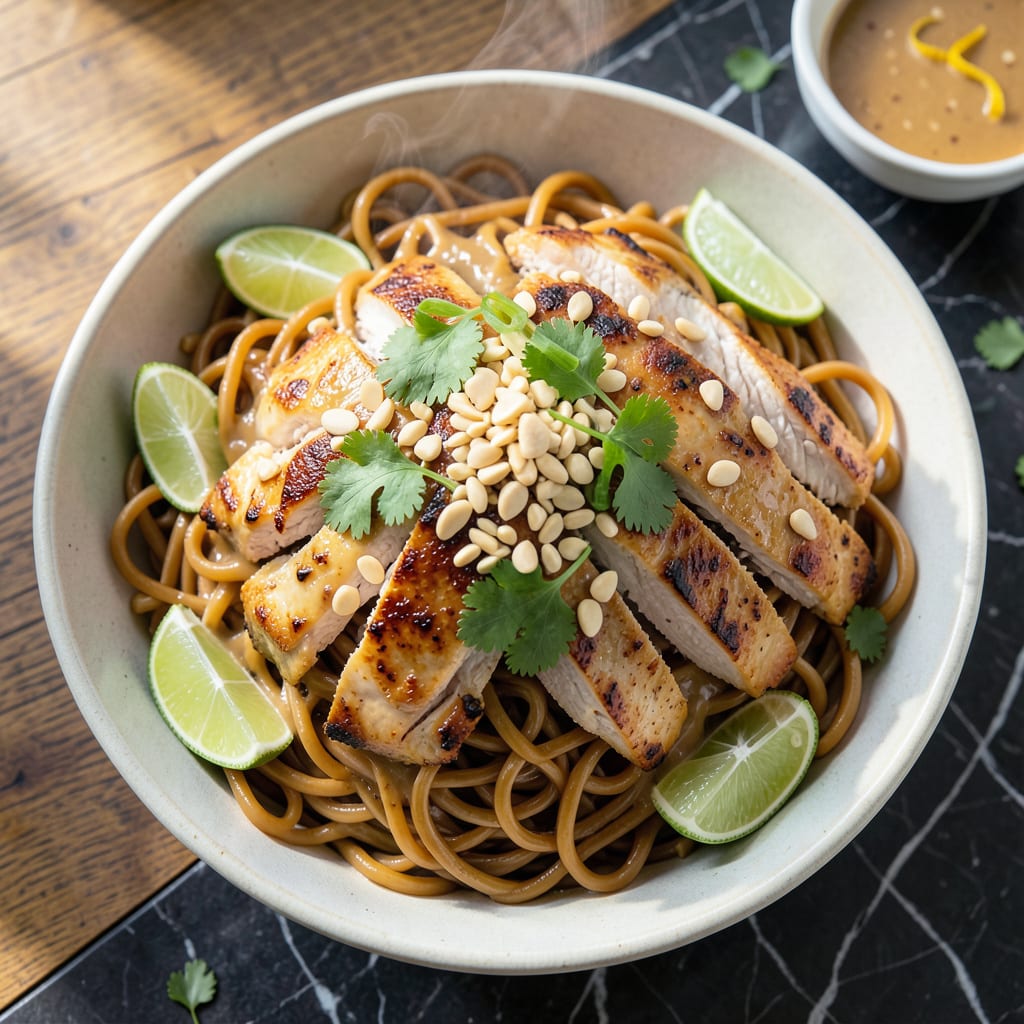
This recipe captures the true taste of Thai street food with its perfect balance of sweet, tangy, and nutty flavors. The peanut sauce ties everything together beautifully.
You’ll get tender chicken, rice noodles, and fresh vegetables all coated in a rich, authentic sauce. It’s a dish that brings restaurant quality to your home kitchen.
Ingredients for Chicken Pad Thai Peanut Sauce
Flat noodles, tender chicken, and a sauce so good you’ll lick the bowl clean.
| Ingredient | Amount | Notes |
|---|---|---|
| Rice Noodles 🍜 | 8 oz | Flat pad thai noodles |
| Boneless Skinless Chicken Breast 🍗 | 1 lb | Thinly sliced for even cooking |
| Peanut Butter 🥜 | ½ cup | Creamy, unsweetened variety |
| Soy Sauce 🫕 | 3 tbsp | Low-sodium preferred for balance |
| Rice Vinegar 🍶 | 2 tbsp | Adds essential tangy brightness |
| Lime Juice 🍈 | 2 tbsp | Freshly squeezed for best flavor |
| Brown Sugar 🍚 | 2 tbsp | Packed, adjust to taste preference |
| Garlic Cloves 🧄 | 3 cloves | Minced for maximum flavor release |
| Fresh Ginger 🌿 | 1 tbsp | Peeled and finely grated |
| Bean Sprouts 🌱 | 1 cup | Fresh for crunchy texture |
| Green Onions 🧅 | ½ cup | Thinly sliced for garnish |
| Crushed Peanuts 🥜 | ½ cup | Unsalted, for topping and sauce |
| Red Pepper Flakes 🌶️ | ½ tsp | Adjust for desired heat level |
| Vegetable Oil 🫒 | 2 tbsp | For stir-frying chicken and noodles |
| Large Eggs 🥚 | 2 whole | Lightly beaten for scrambling |
[recipeingredientscaler]
The peanut butter needs to be unsweetened—sweetened versions throw off the balance. Trader Joe’s and Whole Foods both carry good natural options. For the rice noodles, look for pad thai-specific (about 1/8-inch wide). Asian markets will have the best selection, but most supermarkets stock them in the international aisle. Fresh ginger and garlic are non-negotiable for authentic flavor (those jarred shortcuts just don’t cut it).
No peanut butter? Almond butter or cashew butter work in a pinch, though the flavor shifts slightly. Vegetarian? Swap chicken for extra-firm tofu (press it first). Want it spicier? Sriracha or chili garlic sauce can boost the heat. The soy sauce can be tamari for gluten-free, but taste before adding salt—it’s often saltier. Fresh lime is ideal, but bottled works (just use a little less).
The sauce keeps 5 days in the fridge, but the noodles are best fresh. Leftovers? Store sauce and noodles separately to prevent sogginess. Reheat gently with a splash of water. Peanuts stay crispy stored at room temp in an airtight container for 2 weeks.
Why You’ll Love This Recipe
- One Pot Wonder: I love that I can cook the chicken, noodles, and sauce all in a single pan—minimal cleanup.
- Crave-Worthy Combination: The creamy peanut butter with tangy rice vinegar and soy sauce hits that perfect sweet-savory balance.
- Meal Prep Winner: This keeps beautifully for lunch the next day, and the flavors actually deepen overnight.
- Budget Friendly: Chicken breast and pantry staples like peanut butter stretch far without sacrificing taste.
Step-by-Step Instructions for Chicken Pad Thai Peanut Sauce
This authentic method delivers street food flavor with every bite—no shortcuts, just perfect technique.
Step 1: Prepare the Noodles and Chicken
Soak the 8 oz rice noodles in warm water for 15-20 minutes until pliable but still slightly firm. Drain and set aside. Meanwhile, slice the 1 lb boneless skinless chicken breast into thin strips—about ¼-inch thick—so it cooks quickly and evenly without drying out.
I always prep everything before cooking (mise en place) because pad thai comes together fast. Have your 2 whole large eggs lightly beaten in a bowl, and all other ingredients measured and within reach. This prevents burning and ensures smooth, stress-free stir-frying.
Step 2: Make the Peanut Sauce
In a small bowl, whisk together the 0.5 cup peanut butter, 3 tbsp soy sauce, 2 tbsp rice vinegar, 2 tbsp lime juice, 2 tbsp brown sugar, 3 cloves minced garlic cloves, and 1 tbsp grated fresh ginger until smooth. The sauce should be thick but pourable.
Taste and adjust seasoning—add a pinch more brown sugar if you prefer it sweeter, or a splash of lime juice for more tang. Set the sauce aside. Real talk: this sauce is the soul of the dish, so take your time getting it right.
Step 3: Stir-Fry the Chicken and Eggs
Heat 1 tbsp vegetable oil in a large skillet or wok over medium-high heat until shimmering. Add the chicken strips and stir-fry for 4-5 minutes until just cooked through and no longer pink. Remove the chicken from the skillet and set aside.
In the same skillet, add the remaining 1 tbsp vegetable oil and pour in the beaten large eggs. Scramble quickly until just set—you want soft, slightly runny curds. Remove from heat and transfer to the plate with the chicken.
Step 4: Combine Noodles and Sauce
Increase heat to high and add the drained rice noodles to the skillet. Pour the peanut sauce over the noodles and toss everything together for 2-3 minutes until the noodles are tender and fully coated. The sauce should cling to the noodles without pooling at the bottom.
If the mixture seems dry, add a splash of water to loosen it. Return the chicken and eggs to the skillet and toss to combine. Cook for an additional 1-2 minutes until everything is heated through.
Step 5: Finish with Toppings and Serve
Remove from heat and stir in 1 cup bean sprouts, 0.5 cup crushed peanuts, and 0.5 tsp red pepper flakes. The bean sprouts should stay slightly crisp for texture contrast. Garnish with 0.5 cup green onions and extra crushed peanuts if desired.
Serve immediately while hot. The noodles should be tender with a slight chew, the chicken juicy, and the sauce rich with a perfect balance of sweet, tangy, and nutty flavors. This is street food at its finest.
Pro Tips For Making Chicken Pad Thai Peanut Sauce
- Soak Noodles First: Cover rice noodles with warm water for 10-12 minutes before cooking—any longer and they turn to mush, any shorter and you’ll fight chewy bites in your pad thai.
- Slice Chicken Thin: Cut the breast into ¼-inch strips against the grain. I learned this the hard way after chewing through rubbery chunks that refused to cook through.
- Thin the Peanut Sauce: Whisk in 1-2 tablespoons of hot noodle water into the peanut butter mixture. Sounds weird, but it works: it smooths out the sauce so it clings to everything instead of sitting in a thick glob.
- High Heat, Fast Cook: Crank the heat to medium-high when stir-frying. After burning three batches, I finally figured out that low heat just steams the chicken and noodles into a sad, soggy pile.
Perfect Pairings for chicken pad thai peanut sauce
Side Dish Ideas
Fresh Thai cucumber salad with rice vinegar and a pinch of sugar makes a refreshing contrast to the richness. I toss 2 cups thinly sliced cucumber with 1 tbsp rice vinegar and ½ tsp sugar. 🥗
Wine Pairings
Off-dry Riesling from Germany or Washington state balances the sweet and savory flavors beautifully. Gewürztraminer also works well with its lychee and spice notes. Both have enough acidity to cut through the peanut sauce.
Beer Options
A crisp Thai lager like Singha or Chang complements the dish’s origins perfectly. For craft options, a Belgian witbier with citrus notes provides a nice contrast to the nutty sauce. 🍺
Fresh Garnishes
Add extra lime wedges for serving—the acid brightens each bite. Fresh cilantro leaves add a herbaceous note. I also love Thai basil for its anise-like flavor that pairs beautifully with peanut.
Spice Balance
Serve with sriracha on the side for those who want extra heat. A small bowl of chopped jalapeños lets guests customize their spice level. The peanut sauce already has warmth from ginger and garlic.
Texture Contrast
Add crushed roasted peanuts at the table for crunch. Fried shallots from Asian markets add another layer of texture. These toppings keep the dish exciting with every forkful. ✨
Nutrition Facts
Frequently Asked Questions
Can I use crunchy peanut butter instead?
Stick to creamy for smooth sauce. Crunchy works in a pinch but may leave chunky texture.
How do I prevent noodles from sticking?
Rinse soaked noodles with cold water before cooking. Stir constantly over high heat with sauce.
What if my sauce is too thick?
Thin with 1-2 tbsp warm water or lime juice. Adjust sweetness as needed.
Can I make this ahead?
Prep sauce 1 day ahead. Cook noodles fresh—reheated ones get mushy.

- Chuy’s Green Chili Rice Copycat Recipe: Spicy Southwest Flavor in Every Bite - September 25, 2026
- Beaten Rice Recipe: Fluffy Grains With Nutty Depth - September 25, 2026
- Machboos Rice Recipe: Bahraini Spiced One-Pot Tradition - September 25, 2026