
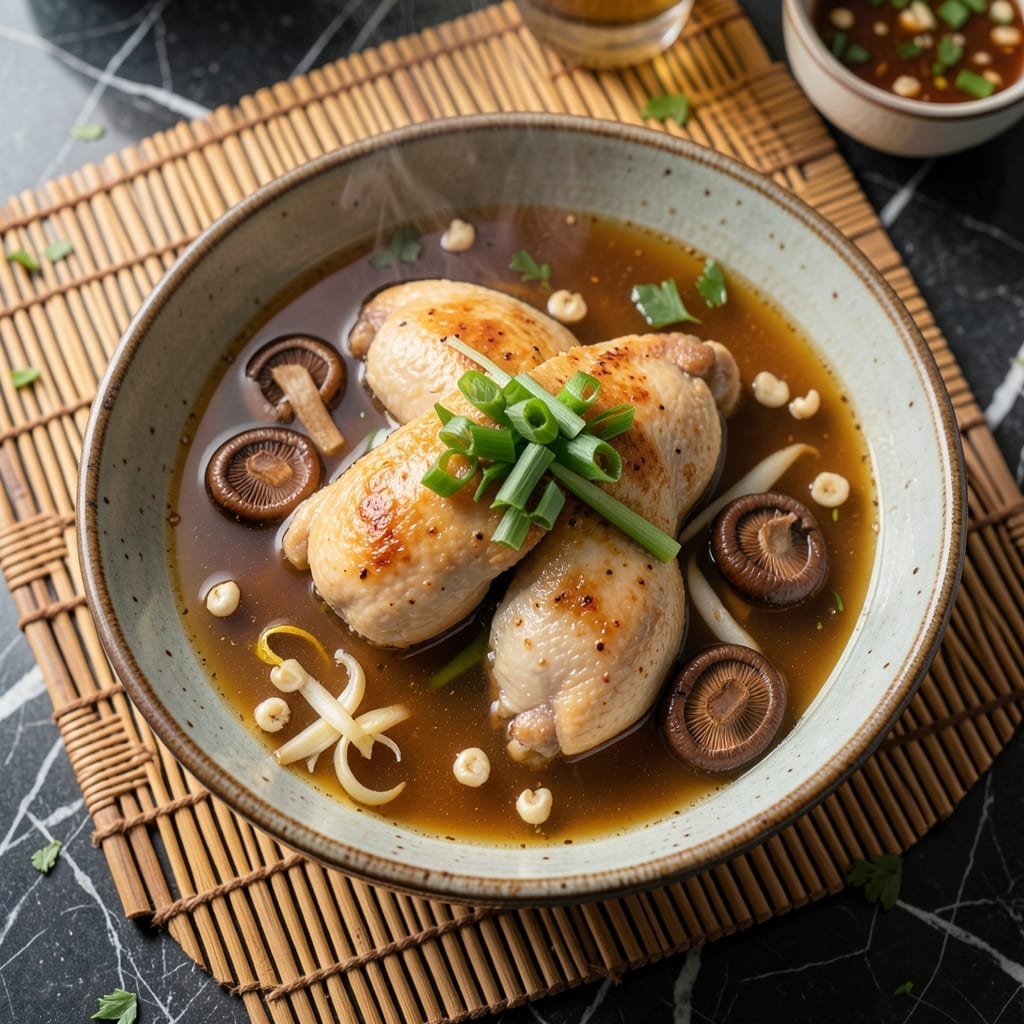
This traditional soup delivers silky chicken in a fragrant broth that warms the soul. The secret lies in the rice wine, which tenderizes the meat while adding depth.
I’ve perfected this method to ensure every spoonful is rich and comforting. The gentle simmering process coaxes out maximum flavor from the ingredients.
Ingredients for Chinese Rice Wine Chicken Soup
A fragrant broth and silky chicken come together with aromatic ingredients for comfort in every bowl.
| Ingredient | Amount | Notes |
|---|---|---|
| Chicken Thighs 🍗 | 1 ½ lb | Boneless, skinless, cut into bite-sized pieces |
| Chinese Rice Wine 🍶 | ½ cup | Shaoxing wine preferred for depth |
| Fresh Ginger 🌿 | 2 whole | Peeled, sliced into thick rounds |
| Garlic Cloves 🧄 | 6 cloves | Lightly smashed, peel left on |
| Scallions 🧅 | 4 whole | White and green parts separated |
| Dried Shitake Mushrooms 🍄 | ½ oz | Rehydrated, stems removed |
| Chicken Broth 🥣 | 6 cups | Low-sodium preferred for control |
| Soy Sauce 🫒 | 2 tbsp | Light soy sauce for seasoning |
| Sesame Oil 🫒 | 1 tsp | Toasted variety for aroma |
| White Pepper 🧂 | ½ tsp | Freshly ground for best flavor |
| Sea Salt 🧂 | 1 tsp | Adjust to taste after simmering |
| Dried Red Dates 🍈 | 4 pieces | Pitted, optional for sweetness |
| Cilantro 🌿 | ¼ cup | Fresh, chopped for garnish |
The chicken thighs are essential for that silky texture—boneless, skinless ensures tender bites without chewiness. Shaoxing wine is the gold standard for rice wine here, but dry sherry works in a pinch. Both are available at Asian markets or well-stocked grocery stores. Fresh ginger and garlic should be firm and fragrant; avoid any with soft spots or sprouting.
No Shaoxing wine? Dry sherry at equal amounts is the closest substitute. For a non-alcoholic option, rice vinegar with a pinch of sugar mimics the tang. Dried shitake mushrooms can be swapped for fresh, but rehydrate them first. If you can’t find red dates, a teaspoon of sugar added toward the end will provide similar sweetness.
This soup tastes even better the next day once the flavors meld. Store in an airtight container in the fridge for up to 3 days. Freeze without garnishes for up to 3 months—reheat gently to preserve the chicken’s tender texture.
Why You’ll Love This Recipe
- One Pot Wonder: I toss everything in and let it simmer—no fancy techniques, just chicken thighs, rice wine, and aromatics doing their thing.
- Ginger-Garlic Magic: The fresh ginger and garlic with the rice wine create this warm, savory depth that makes every spoonful irresistible.
- Weeknight Savior: Honestly, it’s my go-to when I need something hearty but hands-off for busy evenings.
- Leftovers Gold: Here’s what sold me—the flavors deepen overnight, so tomorrow’s lunch tastes even better than dinner.
Step-by-Step Instructions for Chinese Rice Wine Chicken Soup
Master the technique for a fragrant broth and tender chicken that absorbs every aromatic note.
Step 1: Bloom Aromatics in Hot Oil
Heat a large pot over medium-high heat until a drop of water sizzles. Add the 1 tsp Sesame Oil and swirl to coat. Immediately add the 2 whole Fresh Ginger slices and 6 cloves Garlic Cloves, stirring constantly for 30-45 seconds until the garlic turns pale gold at the edges.
Add the white parts of the 4 whole Scallions and cook for another 1 minute. This base layer releases essential oils that form the soup’s aromatic foundation. Be careful not to let the garlic burn—it should smell fragrant, not bitter.
Step 2: Build the Broth Foundation
Pour in the 6 cups Chicken Broth and 0.5 cup Chinese Rice Wine. Add the 0.5 oz Dried Shitake Mushrooms, 4 pieces Dried Red Dates, 2 tbsp Soy Sauce, 0.5 tsp White Pepper, and 1 tsp Sea Salt.
Bring to a boil over high heat, then reduce to a gentle simmer. Partially cover and let it cook for 15 minutes to allow the flavors to meld. The broth should develop a deep, umami-rich aroma with a faint sweetness from the dates.
Step 3: Poach the Chicken to Silky Perfection
Add the 1.5 lb Chicken Thighs to the simmering broth. Ensure they are fully submerged—this guarantees even cooking. Poach the chicken at a gentle simmer for 18-20 minutes until the pieces are opaque throughout and register 165°F internally.
Maintain the simmer—don’t let it boil vigorously, or the chicken will toughen. The meat should be so tender it nearly falls apart when pierced with a fork, having absorbed the wine and broth flavors.
Step 4: Finish and Garnish
Remove the pot from heat. Use a slotted spoon to transfer the chicken to serving bowls. Ladle the hot broth over the chicken, ensuring each serving gets mushrooms and dates. Discard the ginger slices and scallion whites if desired, though they add depth to the broth.
Garnish each bowl with the green parts of the 4 whole Scallions and 0.25 cup Cilantro. The scallions add a fresh, sharp contrast while the cilantro brings a bright, herbal note that complements the rich broth perfectly. Serve immediately while steaming hot.
Pro Tips For Making Chinese Rice Wine Chicken Soup
- Simmer Low and Slow: Keep the heat at a gentle simmer—boiling will toughen the chicken thighs and mute the rice wine’s depth. I learned this the hard way after my first batch turned chewy and bland.
- Bruise the Ginger: Smash the fresh ginger with the side of your knife before slicing—this releases way more flavor into the broth. Sounds weird, but it works.
- Skip the Skin: Use boneless, skinless thighs to avoid a greasy soup surface. The fat from the skin doesn’t render well in this liquid-heavy dish.
- Toast the Aromatics: Sauté the garlic and scallions for 30 seconds before adding liquid—just enough to wake up their flavors without burning them. My grandmother swore by this, and she was right.
Best Sauces and Condiments for This Dish
Chili Oil Drizzle
A spicy, aromatic chili oil adds heat and depth. I love Lao Gan Ma brand for its rich, nutty flavor. Drizzle 1-2 tsp per bowl just before serving to preserve its bold, fragrant punch. 🌶️
Soy-Ginger Dipping Sauce
Combine 2 tbsp light soy sauce with 1 tsp grated ginger, 1 tsp rice vinegar, and ½ tsp sesame oil for a tangy dip. Perfect for soaking up extra chicken or pairing with the mushrooms.
Sweet Chili Glaze
Stir 2 tbsp sweet chili sauce with 1 tsp lime juice for a sticky, sweet-spicy glaze. Brush lightly over the chicken pieces before serving, or serve on the side for dipping. It balances the broth’s savory notes beautifully.
Garlic Black Vinegar
Chinkiang vinegar with minced garlic adds a deep, malty tang. Mix 1 tbsp vinegar with 1 minced garlic clove and a few drops of sesame oil for a complex, umami-rich condiment.
Fresh Herbs and Citrus
Enhance brightness with extra cilantro and a squeeze of lime. The acidity cuts through the richness, while the herbs add freshness. I always keep a lime wedge on the side for an extra zing. 💛
Nutrition Facts
Frequently Asked Questions
Can I use a different type of chicken?
Yes, but thighs stay juiciest. Breasts work if poached for just 12-15 minutes to prevent dryness. Avoid bone-in pieces as they need longer cooking and may dilute the broth.
What if I don’t have Shaoxing wine?
Dry sherry is the best substitute in equal amounts. For non-alcoholic, use 1/4 cup rice vinegar plus 1 tsp sugar to mimic the tang and sweetness.
How do I store leftovers?
Cool completely, then refrigerate in an airtight container for up to 3 days. Freeze without garnishes for up to 3 months. Reheat gently to keep chicken tender.
Why did my broth turn cloudy?
This happens if the soup boils too vigorously. Maintain a gentle simmer and skim off any foam that rises to the surface for a clearer, cleaner broth.

- Jollof Rice Sauce Recipe: West African Tomato and Spice Infusion - September 25, 2026
- Japanese Rice Soup Recipe: Umami-Rich Comfort in a Bowl - September 25, 2026
- Homemade Cream Of Rice Recipe: Silk-Smooth Breakfast in Minutes - September 25, 2026