
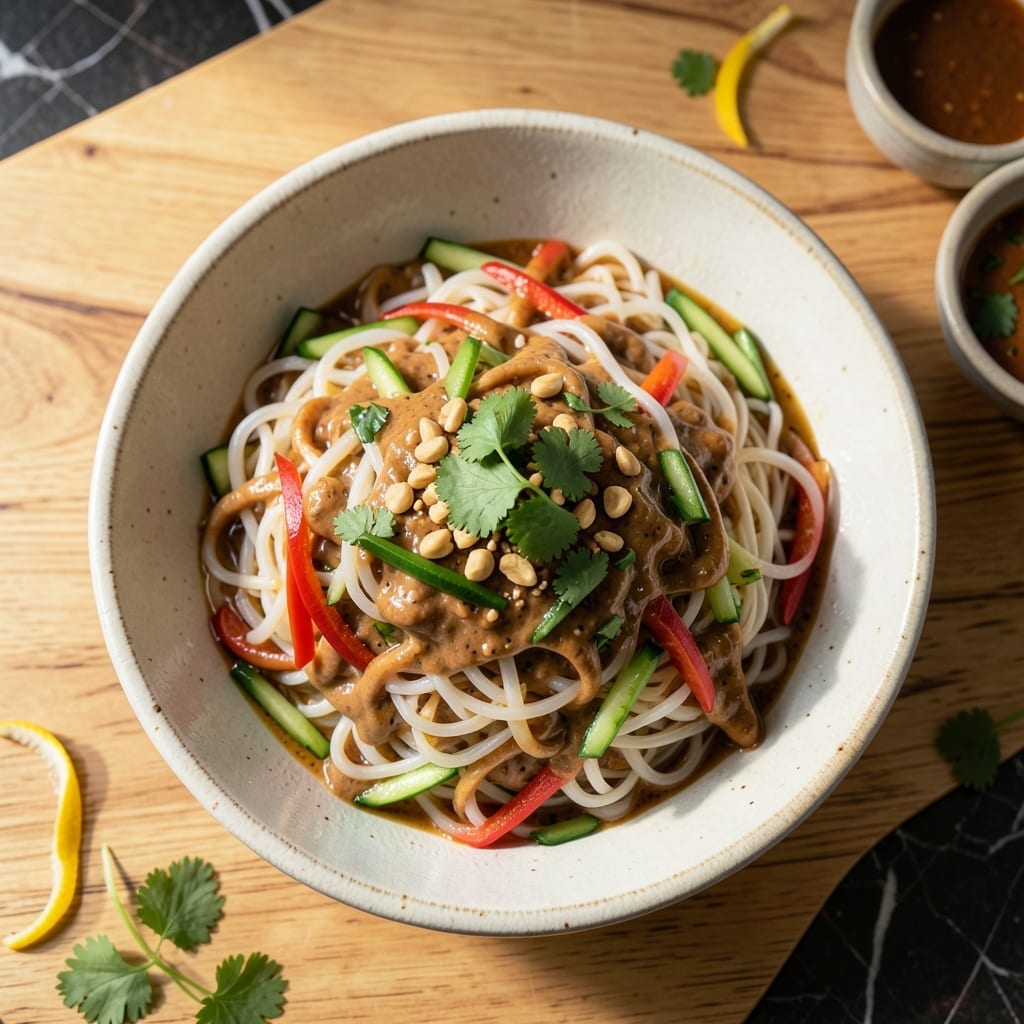
This refreshing salad combines rice noodles with a vibrant peanut-lime dressing for a dish that’s as satisfying as it is light. The cool, tangy flavors make it perfect for warm days or as a refreshing side.
With simple ingredients and a no-cook method after soaking the noodles, this recipe delivers bold Thai-inspired taste without the fuss. The creamy peanut sauce and crisp vegetables create a texture that’s both crunchy and silky.
Ingredients for Cold Thai Rice Noodle Salad
A vibrant mix of rice noodles and crisp vegetables with a bold peanut-lime dressing.
| Ingredient | Amount | Notes |
|---|---|---|
| Rice Noodles 🍜 | 8 oz | Flat rice stick variety |
| Creamy Peanut Butter 🥜 | ½ cup | Unsweetened, natural style |
| Fresh Lime Juice 🍈 | ¼ cup | About 3-4 limes |
| Soy Sauce 🫒 | 3 tbsp | Or tamari for gluten-free |
| Maple Syrup 🍁 | 2 tbsp | Or agave nectar |
| Sesame Oil 🫒 | 1 tbsp | Toasted variety preferred |
| Garlic Cloves 🧄 | 2 cloves | Minced finely |
| Fresh Ginger 🌿 | 1 tbsp | Grated or minced |
| Red Bell Pepper 🌶️ | 1 whole | Thinly sliced |
| Carrots 🥕 | 2 whole | Julienned or shredded |
| English Cucumber 🥒 | 1 whole | Thinly sliced |
| Green Onions 🧅 | ½ cup | Thinly sliced |
| Fresh Cilantro 🌿 | ½ cup | Chopped, packed |
| Crushed Red Pepper Flakes 🌶️ | ½ tsp | Adjust to taste |
| Roasted Peanuts 🥜 | ½ cup | Chopped, unsalted |
The rice noodles are non-negotiable—look for flat rice sticks, about 1/8-inch wide, at any Asian market or the international aisle. Thai Kitchen or Annie Chun’s brands are reliable. The peanut butter must be natural and unsweetened; Smucker’s Natural works well. Fresh lime juice is key (bottled lacks the zing), and organic limes often yield more juice. For soy sauce, Kikkoman is a safe bet unless gluten-free is needed.
No peanut butter? Almond or cashew butter at a 1:1 swap works, though the flavor shifts slightly. Tamari replaces soy sauce at the same ratio. If maple syrup is unavailable, agave or coconut sugar can stand in. The vegetables are flexible—try shredded cabbage or bean sprouts instead of carrots. For extra crunch, add toasted sesame seeds or slivered almonds.
Store rice noodles in a cool, dry place for up to 1 year. The dressing keeps in the fridge for 5 days (stir before using). Chopped peanuts stay fresh at room temperature for 1 month. Assemble the salad just before serving to keep the noodles from absorbing too much dressing.
Why You’ll Love This Recipe
- No-Cook Noodles: I just soak the rice noodles in hot water—no boiling, no fuss, and they’re ready in minutes.
- Peanut-Lime Magic: The creamy peanut butter and fresh lime juice create this tangy, nutty dressing that clings to every noodle.
- Meal Prep Hero: I make a big batch on Sunday and it stays fresh in the fridge for days. Honestly, it tastes even better the next day.
- Budget Stretcher: Rice noodles and peanut butter are cheap, and a little goes a long way. I’ll be real: it feeds my family for pennies per serving.
Step-by-Step Instructions for Cold Thai Rice Noodle Salad
Master the technique for perfectly balanced flavors and textures in this chilled noodle preparation.
Step 1: Soften the Rice Noodles to Ideal Texture
Place the 8 oz Rice Noodles in a large bowl and cover with boiling water. Let them soak for 8-10 minutes until pliable but still slightly firm to the bite. I check for doneness by pressing a noodle between my fingers—it should yield slightly but retain a springy resistance.
Drain immediately and rinse under cold water to halt the cooking process. This prevents the noodles from becoming mushy when dressed. Transfer to a clean kitchen towel and pat thoroughly dry—excess moisture will dilute the dressing and mute the flavors.
Step 2: Craft the Peanut-Lime Dressing
In a medium bowl, whisk together the 0.5 cup Creamy Peanut Butter, 0.25 cup Fresh Lime Juice, 3 tbsp Soy Sauce, 2 tbsp Maple Syrup, and 1 tbsp Sesame Oil until smooth. The mixture will initially resist blending—persist until it emulsifies into a glossy, pourable consistency.
Add the 2 cloves Garlic Cloves (minced finely) and 1 tbsp Fresh Ginger (grated), then whisk again. The aromatic compounds in these ingredients bloom when combined with the acidity of the lime, creating a vibrant base. Taste and adjust the balance—you want a harmonious interplay of salty, sweet, tangy, and nutty notes.
Step 3: Prepare and Combine All Vegetables
Thinly slice the 1 whole Red Bell Pepper into uniform strips. Juliennne the 2 whole Carrots or use a peeler to create thin ribbons. Slice the 1 whole English Cucumber into half-moons, and thinly slice the 0.5 cup Green Onions. Chop the 0.5 cup Fresh Cilantro coarsely, stems and all—they pack intense flavor.
In a large serving bowl, combine the prepared noodles, all sliced vegetables, and half of the chopped 0.5 cup Roasted Peanuts. Pour the dressing over and toss gently but thoroughly, ensuring every noodle is coated. The vegetables should glisten with dressing but not be swimming in it.
Step 4: Finish and Rest for Optimal Flavor
Sprinkle the remaining 0.5 cup Roasted Peanuts over the top, along with the 0.5 tsp Crushed Red Pepper Flakes. The heat from the flakes will intensify as the salad rests, so add conservatively if you’re sensitive to spice.
Let the salad stand at room temperature for 15-20 minutes before serving. This resting period allows the rice noodles to absorb the dressing fully and the flavors to meld. The noodles will soften slightly but maintain their integrity, while the vegetables release their juices, creating a cohesive dish with every bite.
Pro Tips For Making Cold Thai Rice Noodle Salad
- Soak Noodles Fully: Cover rice noodles in hot water for 8-10 minutes—no peeking. I learned this the hard way after pulling them too early and ending up with a chewy mess.
- Warm the Peanut Butter: Microwave the peanut butter for 15-20 seconds before mixing, or you’ll spend forever stirring and still have lumps. Sounds weird, but it works.
- Lime Last: Add lime juice at the very end—its acidity thickens the peanut sauce if mixed too early, and nobody wants a gloppy dressing.
- Use Room Temp Noodles: Rinse the noodles under cold water after soaking, then let them sit for 5 minutes before dressing. Cold noodles soak up flavors better—my grandmother swore by this, and she was right.
Storing and Reheating This Recipe
Refrigerator Storage
Store leftovers in an airtight container in the fridge for up to 3 days. The noodles will continue absorbing dressing, so I add a splash of water before resealing to maintain ideal texture. Keep vegetables crisp by storing dressing separately if making ahead.
Freezer Considerations
This dish doesn’t freeze well due to the noodles’ delicate texture—they often turn mushy when thawed. However, the peanut-lime dressing freezes beautifully for 1 month in a sealed jar. Thaw overnight in the fridge and whisk before using.
Reviving Refrigerated Leftovers
Cold storage can dull flavors, so I recommend adding fresh lime juice (1 tbsp) and chopped cilantro when serving again. The acidity brightens the dish beautifully. Stir well to redistribute the dressing.
Room Temperature Serving
For best results, remove from the fridge 20 minutes before serving. This takes the chill off without warming the salad. The flavors come alive at room temperature, and the noodles regain their springy texture. 💡
Dressing Separation Fix
If the peanut dressing separates in storage, simply whisk in 1-2 tsp warm water to re-emulsify. Natural peanut butter can thicken when cold—I keep my container on the counter for 10 minutes before mixing.
Garnish Refresh
Always add fresh toppings like extra peanuts or green onions when serving leftovers. This restores the crunch and vibrant appearance. A final squeeze of lime ties everything together. 🌟
Nutrition Facts
Frequently Asked Questions
Can I make this ahead of time?
Yes, but keep the dressing separate until serving. Store prepped noodles and veggies in an airtight container for up to 1 day in the fridge. Toss with dressing just before serving to prevent sogginess.
What can I use instead of peanut butter?
Almond or cashew butter work well in a 1:1 swap. For a nut-free option, try tahini, though the flavor will be different. Always use unsweetened varieties.
Do I need to cook the rice noodles?
No cooking required! Simply soak in boiling water for 8-10 minutes until tender. Rinse with cold water to stop the process and keep them firm.
Why does my dressing taste too thick?
Natural peanut butter can thicken when cold. Whisk in 1-2 tsp warm water to thin it out. For best results, use room-temperature ingredients.

- Jollof Rice Sauce Recipe: West African Tomato and Spice Infusion - September 25, 2026
- Japanese Rice Soup Recipe: Umami-Rich Comfort in a Bowl - September 25, 2026
- Homemade Cream Of Rice Recipe: Silk-Smooth Breakfast in Minutes - September 25, 2026