
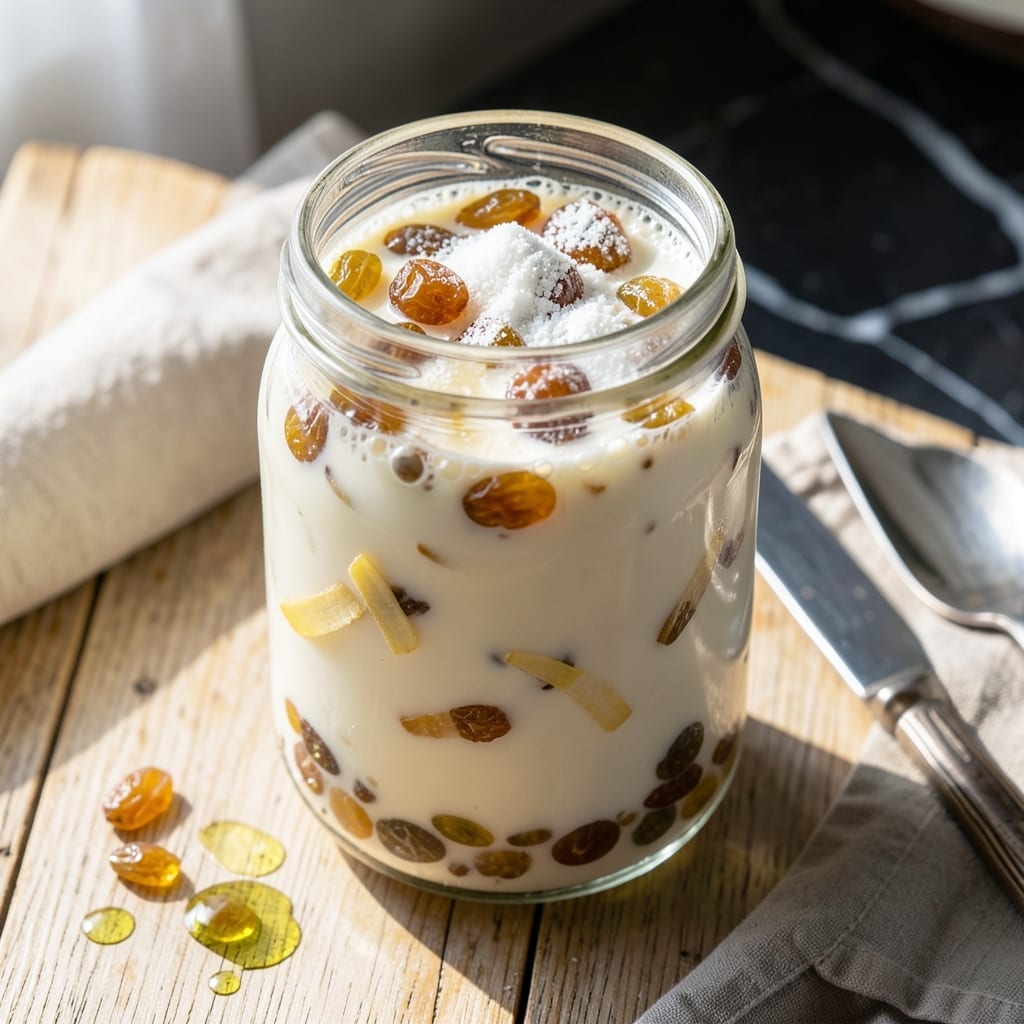
This traditional fermentation method transforms simple rice into a complex, aromatic beverage with deep cultural roots.
Using time-honored techniques, this recipe delivers authentic results with a smooth, slightly sweet profile that improves with age.
Ingredients for Fermented Rice Wine
Traditional fermentation transforms simple grains into a complex, aromatic beverage with cultural depth.
| Ingredient | Amount | Notes |
|---|---|---|
| Jasmine Rice 🍚 | 2 cups | Short-grain, rinsed thoroughly |
| Yeast Balls ⚪ | 4 whole | Chinese fermentation starter |
| Rock Sugar 🍬 | ½ cup | Crushed for even dissolution |
| Water 💧 | 4 cups | Filtered or distilled preferred |
| Raisins 🍇 | ¼ cup | Optional for added sweetness |
| Ginger 🌿 | 1 whole | Peeled and sliced thin |
| Star Anise ⭐ | 2 whole | For aromatic depth |
| Glutinous Rice 🍚 | ½ cup | Steamed, for texture variation |
| White Sugar 🍬 | ¼ cup | Balances fermentation flavors |
| Salt 🧂 | ¼ tsp | Kosher or sea salt |
| Dried Longan 🌰 | ¼ cup | Optional for traditional flavor |
| Pandan Leaves 🌿 | 2 whole | Tied in knots for aroma |
The rice quality is paramount for this traditional fermentation. Jasmine rice provides the ideal base, but short-grain glutinous rice adds body. Source these from Asian specialty markets like H Mart or 99 Ranch for authentic results. Yeast balls (jiuqu) are essential—look for vacuum-sealed packages to ensure freshness. The rock sugar should be clear and odorless for a clean fermentation profile.
Substitutions require caution to maintain authenticity. Brown sugar can replace rock sugar in a pinch, though it may darken the final product. If yeast balls are unavailable, wheat berries with yeast can work but expect a different flavor. Star anise can be swapped for cinnamon sticks, but the licorice note will be absent. Omit raisins or longan if unavailable—sweetness will still develop naturally.
Store rice in airtight containers to prevent moisture absorption. Fermented rice wine keeps improving with age—up to 1 year in a cool, dark place. Once opened, refrigerate and consume within 1 month. The ginger and pandan can be composted after fermentation completes.
Why You’ll Love This Recipe
- Set and Forget: I just mix jasmine rice, yeast balls, and water, then let time do the work.
- Sweet Surprise: The rock sugar and raisins give it this warm, caramel-like depth that’s honestly addictive.
- Party Ready: I bring a bottle to gatherings and it’s always the conversation starter.
Step-by-Step Instructions for Fermented Rice Wine
This traditional fermentation method yields a complex, aromatic rice wine with authentic character.
Step 1: Prepare and Steam the Rice Base
Rinse the 2 cups Jasmine Rice and 0.5 cup Glutinous Rice thoroughly under cold water until the water runs clear. This removes excess starch that could inhibit fermentation. Drain completely in a fine-mesh sieve for 10 minutes.
Transfer the rice to a steamer basket lined with cheesecloth. Steam over boiling water for 25-30 minutes until the grains are tender but still hold their shape. You want the rice slightly undercooked—it will continue to soften during fermentation. Spread the steamed rice on a clean tray to cool to room temperature.
Step 2: Activate the Fermentation Starter
Crush the 4 whole Yeast Balls into a fine powder using a mortar and pestle. In a small bowl, combine the crushed yeast with 0.25 cup White Sugar and 0.25 tsp Salt. The sugar provides immediate food for the yeast, jumpstarting the fermentation process.
Add ½ cup of the 4 cups Water (lukewarm, about 105°F) to the yeast mixture and stir until fully dissolved. Let this activation mixture sit for 15 minutes until it becomes slightly frothy—a sign the yeast is alive and active. The liquid should have a faintly sweet, yeasty aroma.
Step 3: Layer Ingredients for Fermentation
In a large, clean fermentation jar, begin layering the cooled rice with the remaining ingredients. Start with a layer of rice, then sprinkle the 0.5 cup Rock Sugar (crushed), 0.25 cup Raisins, 0.25 cup Dried Longan, thin slices of 1 whole Ginger, and 2 whole Star Anise. Add the 2 whole Pandan Leaves tied in knots for easy removal later.
Pour the activated yeast mixture over the rice, then add the remaining 3½ cups Water. The liquid should cover the rice by about 1 inch. Stir gently to distribute the ingredients evenly, ensuring no dry pockets remain. The mixture should have a slightly sweet, aromatic scent with visible yeast activity.
Step 4: Ferment and Monitor Daily
Cover the jar with a clean cloth or loose lid to allow airflow while keeping out debris. Store at room temperature (ideally 75-85°F) in a dark place. Within 24 hours, you should see bubbles forming on the surface—a clear sign fermentation has begun.
Stir the mixture daily for the first 3 days to prevent mold growth and ensure even fermentation. After that, stir every 2-3 days. The aroma will evolve from sweet to tangy to wine-like over 7-14 days. Taste test after 1 week—the wine should be slightly sweet with a mild alcoholic warmth.
Step 5: Strain and Bottle the Finished Wine
Once the wine reaches your desired sweetness and alcohol level (typically 10-14 days), strain it through a fine-mesh sieve lined with cheesecloth. Press gently on the solids to extract all liquid, but avoid squeezing, which can make the wine cloudy.
Transfer the strained wine to clean glass bottles, leaving 1 inch of headspace. Seal tightly and store in a cool, dark place. The wine will continue to develop complexity over time. For best results, let it age for at least 1 month before serving. The finished product should be clear with a golden hue and a balanced sweet-tangy flavor.
Pro Tips For Making Fermented Rice Wine
- Cool the Rice: After cooking, spread the jasmine rice on a tray to cool completely before mixing with yeast balls—I learned this the hard way when my first batch fermented unevenly because the heat killed the yeast.
- Use Filtered Water: Tap water can introduce chlorine or minerals that hinder fermentation, so I always use filtered or boiled-and-cooled water for the cleanest, most active yeast performance.
- Skip the Metal: Never use metal utensils or containers when handling the yeast balls or fermenting mixture, as the acidity can react and leave a metallic taste that ruins the wine’s flavor.
- Add Raisins Later: Toss in the raisins after the first 2-3 days of fermentation to prevent them from over-softening and turning mushy—this keeps their texture and sweetness intact in the final wine.
Storing and Reheating This Dish
Room Temperature Storage
Keep your fermented rice wine in a cool, dark pantry at 60-70°F for optimal aging. Use glass bottles with airtight lids to prevent oxidation. I store mine in the back of a cupboard away from light and heat sources. This method preserves the wine’s complexity for up to 1 year. 💡
Refrigeration After Opening
Once opened, transfer the wine to the refrigerator to slow fermentation. It will stay fresh for 1 month in a tightly sealed container. I recommend using a swing-top glass bottle for easy access. The cold temperature maintains the wine’s sweetness and prevents over-fermentation.
Freezing for Long-Term
For storage beyond 1 year, freezing is an option, though it may slightly alter texture. Use freezer-safe glass jars, leaving 1 inch of headspace for expansion. Thaw in the refrigerator for 24 hours before using. I find this works best for cooking applications rather than drinking.
Reheating for Cooking
When using your wine in hot dishes, add it directly to the pan—no reheating needed. For recipes requiring simmering, like braises, the alcohol will cook off naturally. If using in a sauce, add it during the last 10 minutes of cooking to preserve its aromatic qualities.
Reviving Flat Wine
If your wine loses its fizz, stir in 1 tsp of fresh yeast mixture and let it sit at room temperature for 2-3 hours. This can restore some carbonation. I’ve had success with this trick for wine stored too long in the fridge.
Signs of Spoilage
Discard your wine if you notice mold, an off smell, or a sour taste beyond the usual tang. Proper storage prevents these issues, but it’s important to check before use. Trust your senses—if it doesn’t smell right, it’s not worth the risk. ✨
Nutrition Facts
Frequently Asked Questions
How long does fermentation take?
Typically 7-14 days at 75-85°F. Stir daily for the first 3 days, then every 2-3 days after. Taste after 1 week for sweetness.
Can I use regular rice instead of jasmine?
Jasmine is ideal, but short-grain or glutinous rice works. Avoid long-grain as it lacks the right starch content. The texture may vary slightly.
What if bubbles don’t appear after 24 hours?
Check your yeast starter freshness and water temperature (105°F). If still inactive, add 1 tsp sugar to feed the yeast. Discard if no activity after 48 hours.
Is this wine alcoholic?
Yes, it typically reaches 10-15% ABV. Fermentation time and starter strength affect the final alcohol content. Store properly to maintain quality.

- Furikake Rice Seasoning Recipe: Umami-Packed Japanese Blend for Any Meal - October 7, 2026
- Knorr Vegetable Soup Mix Rice Recipe: Savory One-Pot Side Dish - October 7, 2026
- Lebanese Lentil and Rice Soup Recipe: Mujadara-Inspired Warmth in a Bowl - October 7, 2026