
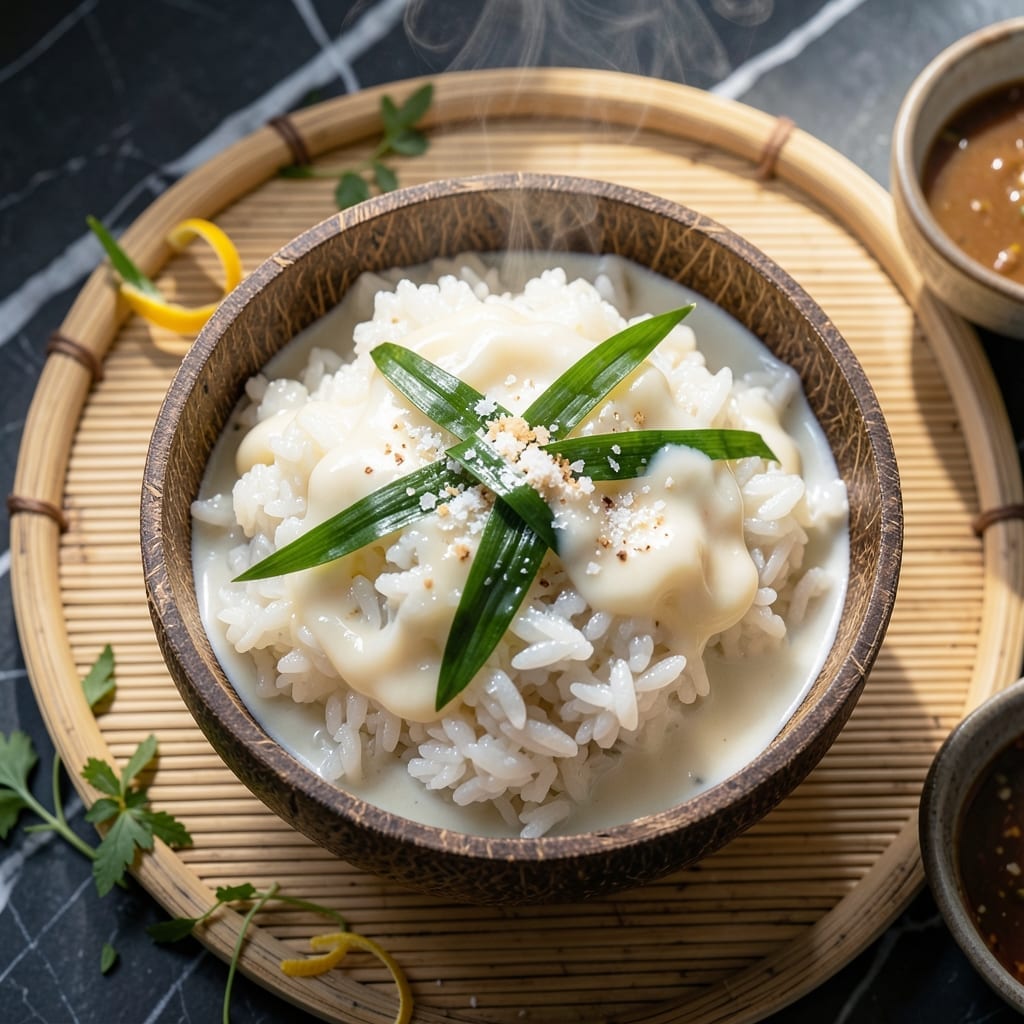
This recipe delivers perfectly sticky glutinous rice every time, ideal for both sweet and savory Asian dishes.
With a simple soaking step and precise steaming method, you’ll achieve tender, slightly chewy grains that hold together beautifully for dumplings, desserts, or pairing with bold flavors.
Ingredients for Glutinous Rice
These essential ingredients create perfectly sticky rice for Asian-inspired dishes both sweet and savory.
| Ingredient | Amount | Notes |
|---|---|---|
| Glutinous Rice 🍚 | 2 cups | Sweet or sticky variety |
| Water 💧 | 2 ½ cups | For soaking rice |
| Coconut Milk 🥥 | 1 cup | Full-fat for creaminess |
| Sugar 🍚 | ¼ cup | Adjust to taste preference |
| Salt 🧂 | ½ tsp | Sea salt preferred |
| Pandan Leaves 🌿 | 2 pieces | Optional for aroma |
| Mung Beans 🌱 | ¼ cup | Optional filling for savory |
| Scallions 🧅 | 3 whole | Thinly sliced for garnish |
| Sesame Seeds 🌰 | 1 tbsp | Toasted for garnish |
| Soy Sauce 🫕 | 2 tbsp | Low-sodium preferred |
| Rice Vinegar 🍶 | 1 tbsp | For balancing sweetness |
| Garlic Cloves 🧄 | 2 cloves | Minced for savory dishes |
The rice quality is crucial here. Look for Thai sticky rice or glutinous rice at Asian markets—Kroger and H Mart usually carry it. Avoid jasmine or basmati as they won’t achieve the same chewy texture. The coconut milk should be full-fat for richness, and Thai Kitchen or Chaokoh are reliable brands. Pandan leaves add authentic fragrance but can be omitted if unavailable.
No coconut milk? Almond milk with a tablespoon of coconut oil works in a pinch. For savory versions, vegetable broth replaces the sweet elements. Sugar can be swapped for maple syrup or agave. Mung beans can be replaced with red beans or lotus seeds. The scallions and sesame seeds are flexible—cilantro or crushed peanuts add great texture too.
Soaked rice keeps in the fridge for 24 hours before cooking. Cooked rice stays fresh for 3 days refrigerated or freezes for 1 month. Reheat by steaming or microwaving with a damp towel to preserve moisture (worth the extra minute).
Why You’ll Love This Recipe
- One Pot Wonder: I just dump rice, coconut milk, and a pinch of salt in a pot—no fancy steps, no stress.
- Sweet-Savory Magic: That creamy coconut milk soaks into the rice with just enough sugar to make it irresistibly rich.
- Feeds a Crowd: Honestly, I double the batch for potlucks and it’s always the first thing gone.
- Budget Stretch: A pound of glutinous rice costs pennies and turns into a meal that fills us up for days.
Step-by-Step Instructions for Glutinous Rice
Master this technique and you’ll achieve consistently perfect sticky rice with ideal texture and flavor.
Step 1: Soak the Rice for Optimal Texture
Place the 2 cups Glutinous Rice in a large bowl and cover with the 2.5 cups Water. Add the 2 pieces Pandan Leaves if using—they infuse a delicate floral aroma that complements the rice beautifully. Let it soak at room temperature for 4-6 hours, or overnight for best results.
This soaking step is non-negotiable for glutinous rice. It softens the grains, reduces cooking time, and ensures even hydration. You’ll notice the water turns cloudy as the rice absorbs moisture. Drain the rice thoroughly in a fine-mesh strainer before cooking—excess water will dilute the flavors.
Step 2: Steam the Rice to Perfection
Line a steamer basket with cheesecloth or a clean kitchen towel to prevent the rice from sticking. Spread the soaked and drained rice in an even layer, about 1 inch thick. This allows steam to circulate evenly through the grains.
Bring water to a rolling boil in your steamer pot, then place the basket over it. Cover tightly and steam for 25-30 minutes. Check the rice at 20 minutes—it’s done when the grains are translucent and tender with a slight chew. The rice should clump together when pressed but not be mushy.
Step 3: Infuse with Coconut Sweetness
While the rice steams, combine the 1 cup Coconut Milk, 0.25 cup Sugar, and 0.5 tsp Salt in a small saucepan. Heat over medium-low heat until the sugar and salt dissolve completely, about 3-4 minutes. Don’t let it boil—you want to preserve the coconut milk’s creamy texture.
Once the rice is cooked, transfer it to a heatproof bowl. Pour the warm coconut mixture over the hot rice and fold gently with a wooden spoon or rice paddle. This distributes the sweetness evenly without breaking the grains. Cover and let it rest for 10 minutes to absorb the flavors fully.
Step 4: Prepare Savory Garnishes
For a savory variation, quickly sauté the 0.25 cup Mung Beans in a dry pan until lightly toasted, about 2-3 minutes. Add the 2 cloves Garlic Cloves (minced) and cook for 30 seconds until fragrant. Stir in the 2 tbsp Soy Sauce and 1 tbsp Rice Vinegar, then remove from heat.
Fold this mixture into the rice if serving as a savory dish, or keep it separate as a topping. For presentation, sprinkle with the 3 whole Scallions (thinly sliced) and 1 tbsp Sesame Seeds (toasted). The contrast of sweet rice with savory, umami-rich topping creates a balanced bite every time.
Pro Tips For Making Glutinous Rice
- Soak the Rice: Give the glutinous rice at least 4 hours in cold water—overnight if you can swing it. I learned this the hard way after ending up with a pot of crunchy, undercooked grains that refused to absorb the coconut milk properly.
- Use Full-Fat Coconut Milk: Skip the light stuff; full-fat coconut milk is non-negotiable for that rich, creamy texture. The first time I tried the low-fat version, the rice turned out dry and bland, like it was missing its soul.
- Low and Slow Heat: Keep the heat at a gentle simmer once the liquid is in—boiling it hard turns the coconut milk into a greasy mess. After burning two batches, I finally figured out that patience actually changes the outcome.
- Salt Last: Add the salt at the very end of cooking, right before serving. Sounds weird, but it works: salting early can make the rice tough, and nobody wants chewy glutinous rice when it’s supposed to be tender and sticky.
Common Mistakes When Making glutinous rice
Skipping the Soak
Never skip soaking glutinous rice for at least 4-6 hours. Without this, grains stay hard and cook unevenly. I learned this the hard way with a batch that stayed crunchy in the center. Overnight soaking yields the best texture. 💡
Overcrowding the Steamer
Spread rice in an even layer no thicker than 1 inch. Piling it up creates dense, gummy spots. Use a 10-inch steamer basket for 2 cups rice to ensure proper steam circulation.
Using Wrong Water Ratios
Use exactly 2.5 cups water for soaking 2 cups rice. Too much water dilutes flavors, while too little prevents proper hydration. The rice should be fully submerged but not swimming.
Peeking While Steaming
Resist opening the lid during the 25-30 minute steaming. Each peek releases critical steam, extending cook time by 5-10 minutes. Trust the process and check only at the 20-minute mark.
Overmixing After Cooking
Fold the coconut mixture gently with a wooden spoon to avoid breaking the delicate grains. Vigorous stirring turns your rice into a mushy paste. Preserve those beautiful individual grains.
Rinsing After Soaking
Drain thoroughly but don’t rinse after soaking. You’ll wash away the starch that creates that signature sticky texture. Just shake off excess water in a fine-mesh strainer. ⚡
Nutrition Facts
Frequently Asked Questions
What can I use instead of coconut milk?
Almond milk with 1 tablespoon coconut oil works in a pinch. For savory versions, vegetable broth replaces the sweet elements without altering texture.
How long does cooked rice stay fresh?
Store in an airtight container for 3 days refrigerated or freeze for 1 month. Reheat with a damp towel to preserve moisture.
Can I make this without a steamer?
Yes! Use a rice cooker with a 1:1 rice-to-water ratio. Add pandan leaves to the water for aroma. Cook on the standard setting.
Why did my rice turn out mushy?
Overmixing or overcrowding the steamer causes this. Spread rice thinly and fold gently after cooking to keep grains intact.

- Jollof Rice Sauce Recipe: West African Tomato and Spice Infusion - September 25, 2026
- Japanese Rice Soup Recipe: Umami-Rich Comfort in a Bowl - September 25, 2026
- Homemade Cream Of Rice Recipe: Silk-Smooth Breakfast in Minutes - September 25, 2026