
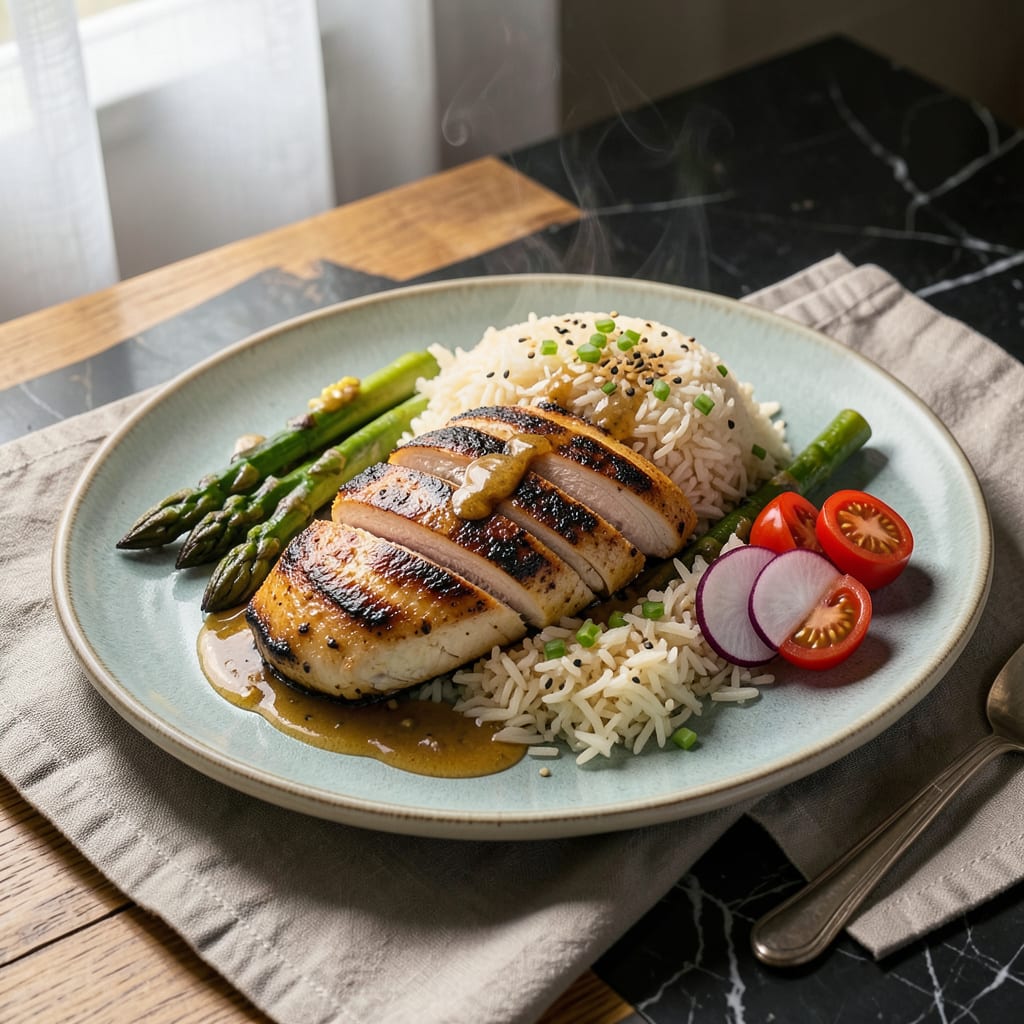
A balanced portion is typically 3-4 ounces of cooked chicken (about the size of a deck of cards) and ½-1 cup of cooked rice (about the size of a tennis ball). Adjust based on activity level, weight goals, and caloric needs.
This portion size works well because it balances lean protein with complex carbs for sustained energy. 🔥 I find that active individuals or those building muscle might lean toward the higher end, while sedentary people or those cutting calories often do better with smaller servings. The visual comparisons (deck of cards, tennis ball) make it easy to eyeball portions when you don’t have a scale handy.
What’s interesting is how flexible this combo is—you can tweak the ratio based on your needs. For example, endurance athletes might increase rice for extra fuel, while someone focusing on fat loss could reduce rice slightly and add more veggies. It’s all about listening to your body’s hunger and energy signals. ✨
💡 In This Article
- Calculating Chicken and Rice Portions for Your Goals
- Meal Prep Tips for Perfect Chicken and Rice Portions
Calculating Chicken and Rice Portions for Your Goals
The ideal portion isn’t one-size-fits-all because your body’s needs depend on muscle mass, activity level, and metabolic rate. For protein, the general guideline is 0.7-1 gram per pound of body weight—so a 150-pound person would aim for 105-150g of protein daily.
A 3-ounce chicken breast provides about 26g of protein, covering roughly 17-25% of that daily target in one meal. This balance supports muscle repair without overloading your system. 💪
Carbohydrates from rice fuel your brain and muscles, but the right amount varies. Sedentary individuals might thrive on ½ cup cooked rice (15g net carbs), while endurance athletes could need 1 cup (30g net carbs) or more to replenish glycogen stores.
The glycemic index of white rice (73) means it digests quickly—great for post-workout recovery but less ideal for prolonged energy. Brown rice (GI 50) offers slower digestion and more fiber, making it better for steady blood sugar. ⚡
Macronutrient ratios change everything. A standard 40/30/30 (carbs/protein/fat) balance works for maintenance, but weight loss often shifts to 30/40/30 to prioritize protein’s satiety effects. For muscle gain, some bump carbs to 50% to fuel intense workouts.
Here’s the kicker: a 4-ounce chicken breast with 1 cup rice hits about 450-500 calories—perfect for a meal in a 2,000-calorie diet, but adjust if your needs are higher or lower. 🔥
Real-world example: A 180-pound male lifting weights 5x/week might eat 4 ounces chicken + 1.5 cups rice post-workout for recovery, while a 130-pound female with light activity could opt for 3 ounces chicken + ½ cup rice to stay in a calorie deficit. The difference?
Nearly 400 calories and 30g of carbs—enough to shift weight loss or gain over time. 💫
Pro tip: Weigh your cooked chicken and rice separately the first few times. You’ll notice that 3 ounces of chicken is surprisingly small (about the size of an iPhone 12), while 1 cup of cooked rice is deceptively large (fills a standard coffee mug).
This visual calibration helps you eyeball portions accurately when eating out or in a rush. ✨
Don’t forget the extras! Adding 1 cup steamed veggies adds volume and fiber for just 25-50 calories, while 1 tablespoon of olive oil contributes healthy fats (120 calories) that aid nutrient absorption. These small tweaks let you customize the meal without drastically altering the core chicken-and-rice balance. 🌟
Hydration matters too—your body processes protein and carbs more efficiently when well-hydrated. Aim for 16-20 ounces of water with this meal to support digestion and metabolism. The sodium in seasoned chicken can increase fluid needs, so listen to your thirst cues. 💛

- Jollof Rice Sauce Recipe: West African Tomato and Spice Infusion - September 25, 2026
- Japanese Rice Soup Recipe: Umami-Rich Comfort in a Bowl - September 25, 2026
- Homemade Cream Of Rice Recipe: Silk-Smooth Breakfast in Minutes - September 25, 2026