
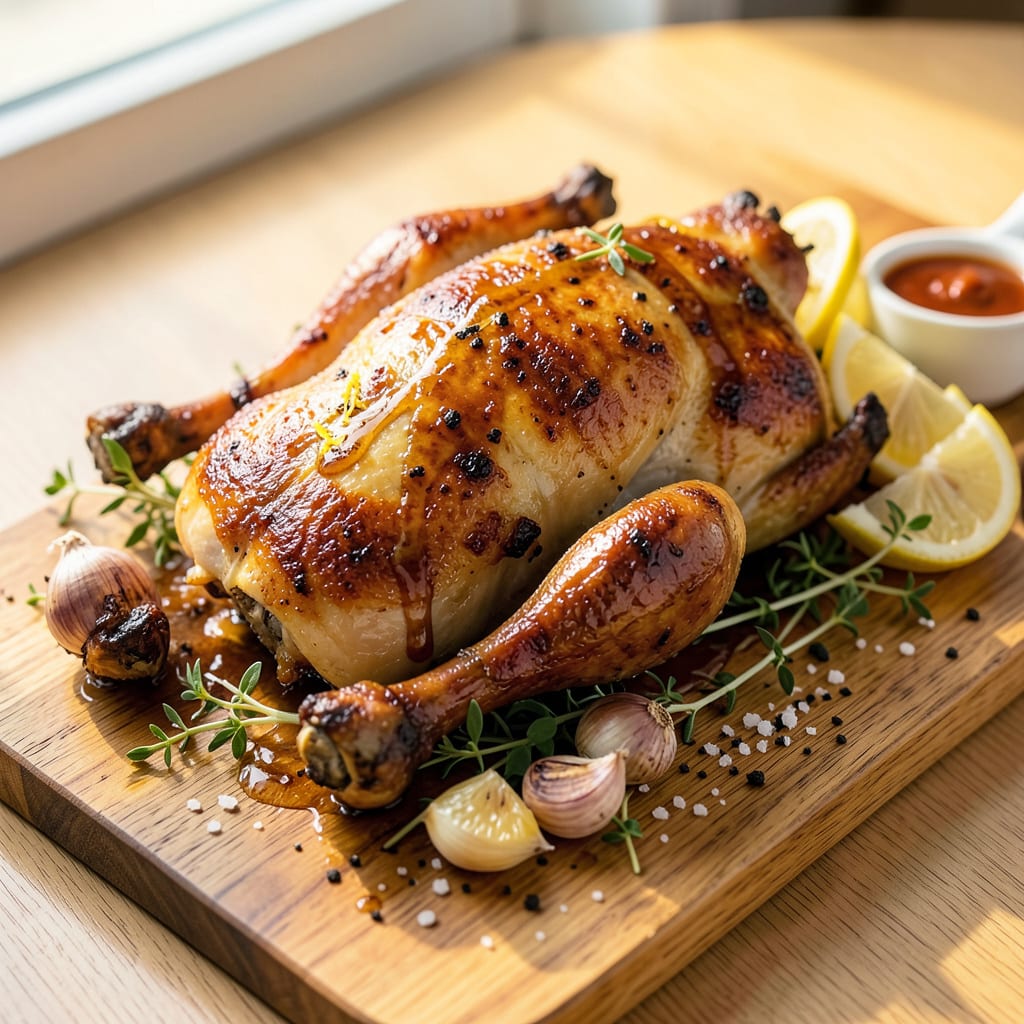
For best results, reheat rotisserie chicken in the oven at 350°F for 15-20 minutes until the internal temperature reaches 165°F. Microwave works for quick reheating (1-2 minutes on medium power), but may dry out the meat.
The oven method wins for texture because it gently warms the meat without stripping moisture. 🔥 I always recommend using a meat thermometer to check doneness—this prevents overcooking while ensuring food safety. For microwave reheating, try placing a damp paper towel over the chicken to help retain some juiciness, though the results won’t match oven quality.
What most people overlook is how reheating affects the skin’s crispiness. The oven can actually help restore some of that original rotisserie texture, while microwaves inevitably turn it rubbery. This makes the oven approach ideal when you want leftovers to taste nearly as good as fresh. ✨
💡 In This Article
- Why Oven Reheating Preserves Rotisserie Chicken Quality
- Step-by-Step Guide to Reheating Rotisserie Chicken Safely
Why Oven Reheating Preserves Rotisserie Chicken Quality
The oven creates an ideal reheating environment through convection heat—hot air circulates evenly around the chicken, warming it gradually from all sides. This prevents the rapid moisture loss that happens in microwaves, where intense waves target water molecules directly.
At 350°F, the chicken’s proteins gently relax without tightening up and squeezing out juices, which happens at higher temps. 🔥
Temperature control is everything. The 15-20 minute window allows heat to penetrate evenly to the bone while keeping the surface from drying out. Compare this to microwaving, where 1-2 minutes of uneven energy creates hot spots and cold zones.
The oven’s dry heat also helps restore some crispness to the skin by evaporating surface moisture, unlike microwaves that turn skin rubbery through steam. ✨
Here’s what’s actually happening at the molecular level: The collagen in chicken begins to break down around 160°F, converting to gelatin that lubricates the muscle fibers. In the oven, this process happens gradually, maintaining that tender, juicy texture.
Microwaves blast through this temperature range too quickly, causing proteins to seize up before collagen can properly transform. 💫
The oven method also gives you control over browning. Placing chicken on a wire rack allows air to circulate underneath, preventing soggy bottoms. For extra crispiness, I’ll sometimes broil for 1-2 minutes at the end—this caramelizes the skin’s sugars without overcooking the meat underneath. This level of precision is impossible in a microwave. ⚡
What most people don’t realize is that oven reheating can actually improve leftovers. The gentle heat redistributes the chicken’s natural fats, which often pool during refrigeration. This creates a more uniform, moist texture throughout. The microwave can’t replicate this because it heats fats and water at different rates, leading to greasy spots and dry patches.
🌟
For best results, use a meat thermometer to verify the 165°F internal temp at the thickest part. This ensures food safety while preventing overcooking. The oven’s even heat means you’ll hit this target temperature without the guesswork that comes with microwave reheating.
The difference in texture and flavor is noticeable enough that I’ll often plan extra time just to use the oven method. 💛

- Jollof Rice Sauce Recipe: West African Tomato and Spice Infusion - September 25, 2026
- Japanese Rice Soup Recipe: Umami-Rich Comfort in a Bowl - September 25, 2026
- Homemade Cream Of Rice Recipe: Silk-Smooth Breakfast in Minutes - September 25, 2026