
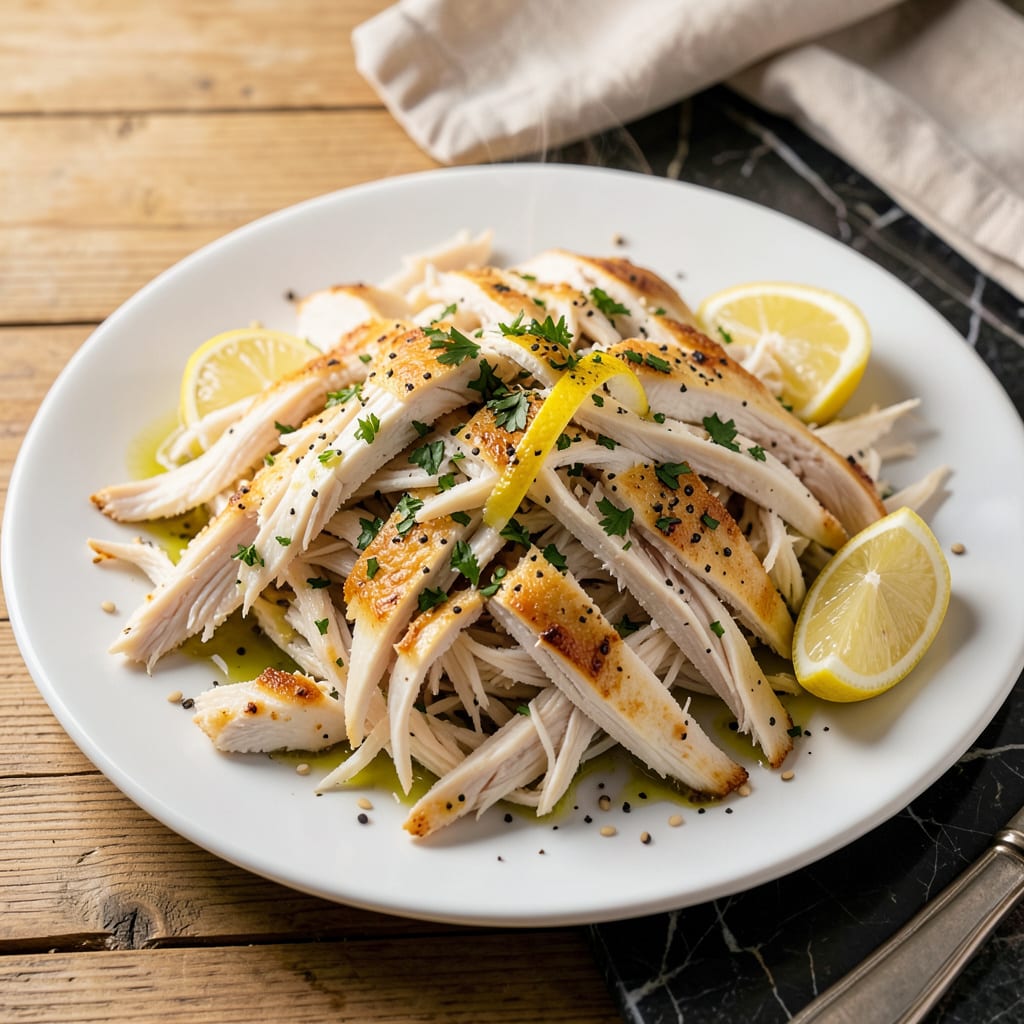
Yes, baked chicken can be shredded easily when cooked to 165°F internally. The key is letting it rest 5-10 minutes after baking to retain moisture before shredding with forks, a hand mixer, or stand mixer for perfect texture.
Baking creates the ideal texture for shredding because it gently breaks down collagen while keeping muscle fibers intact. 🔥 Unlike boiling—which can make chicken stringy—or frying—which dries it out—baking at 350°F-375°F produces juicy, tender meat that separates effortlessly. I’ve found that boneless, skinless breasts work best, though thighs add richer flavor if you prefer darker meat.
The resting period isn’t just about moisture—it lets proteins relax so they don’t squeeze out juices when shredded. ✨ For large batches, a stand mixer with a paddle attachment cuts prep time in half, while two forks give you more control for finer textures. Always shred against the grain for the most tender results.
💡 In This Article
- Why Baked Chicken Shreds Better Than Other Cooking Methods
- Pro Tools and Techniques for Shredding Baked Chicken
Why Baked Chicken Shreds Better Than Other Cooking Methods
The secret lies in how baking affects the protein structure. When chicken reaches 165°F-175°F in the oven, collagen breaks down into gelatin while muscle fibers remain intact—unlike boiling, which can over-denature proteins and create a stringy texture.
The dry heat of baking at 350°F-375°F creates a gentle environment where moisture is retained within the fibers rather than being lost to the cooking liquid. 🔥
Compare this to frying, where high heat (typically 375°F+) causes rapid moisture loss and protein tightening. Baked chicken maintains about 75% of its original moisture content when cooked properly, while fried chicken can lose up to 30% more moisture through evaporation.
The even heat distribution in an oven also prevents the uneven cooking that can make some parts too tough to shred while others fall apart prematurely.
Resting for 5-10 minutes after baking isn’t just about juice redistribution—it allows the muscle fibers to reabsorb about 10-15% of lost moisture through osmosis. During this time, the proteins relax from their contracted cooking state, making them more pliable for shredding.
Skipping this step can result in up to 25% more moisture loss during shredding, leaving you with drier, less tender results. ✨
The ideal shredding temperature window (165°F-175°F) represents the sweet spot where collagen has fully converted to gelatin but the muscle fibers haven’t begun to squeeze out their moisture. This is why undercooked chicken (below 160°F) resists shredding while overcooked chicken (above 180°F) becomes crumbly rather than forming nice, uniform shreds.
Baking also preserves the natural fat distribution better than other methods. In chicken breasts, this means the 3-5% intramuscular fat remains evenly dispersed rather than rendering out (as in frying) or dissolving into cooking liquid (as in boiling).
This fat acts as a natural lubricant during shredding, reducing friction between fibers and helping them separate cleanly. 💫
For dark meat like thighs, baking at slightly lower temps (325°F-350°F) for longer periods gives collagen more time to break down while keeping the higher fat content (about 10-12%) intact.
This is why baked chicken thighs often shred more easily than breasts—they have both more connective tissue to soften and more fat to keep the meat moist during the process.
The oven’s dry heat creates a subtle crust on the exterior that actually helps with shredding. This thin layer of coagulated proteins on the surface provides just enough resistance to help forks or mixer paddles grip the meat without tearing it unevenly.
It’s why baked chicken often shreds into more uniform pieces compared to poached or steamed chicken, which can shred into uneven, stringy bits. ⚡

- Jollof Rice Sauce Recipe: West African Tomato and Spice Infusion - September 25, 2026
- Japanese Rice Soup Recipe: Umami-Rich Comfort in a Bowl - September 25, 2026
- Homemade Cream Of Rice Recipe: Silk-Smooth Breakfast in Minutes - September 25, 2026