
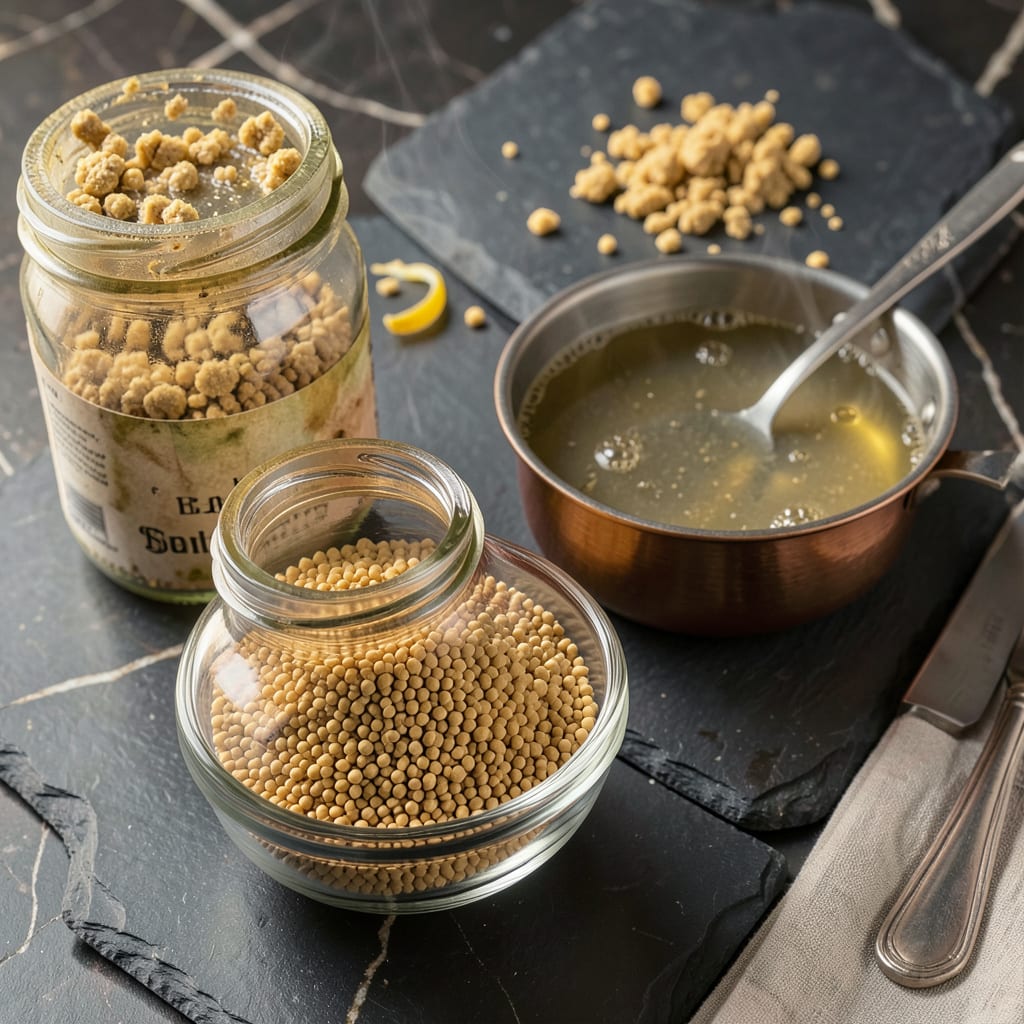
Yes, chicken bouillon can go bad over time. Unopened cubes or granules last 1-2 years past the best-by date, while opened packages stay fresh for 6-12 months if stored properly in a cool, dry place. Liquid bouillon spoils faster and requires refrigeration after opening.
Understanding bouillon’s shelf life comes down to its form and exposure. 🔥 The dry versions (cubes or granules) rely on low moisture to prevent bacterial growth, which is why humidity is their biggest enemy. Once opened, they absorb ambient moisture faster, accelerating degradation. Liquid bouillon, however, contains more organic compounds that oxidize and support microbial activity—this is why it demands refrigeration and typically lasts only 3-6 months after opening. I always recommend checking for clumping in dry bouillon or off-odors in liquid as early warning signs.
💡 In This Article
- How Chicken Bouillon Spoils Over Time
- Proper Storage and Shelf Life Guidelines for Chicken Bouillon
How Chicken Bouillon Spoils Over Time
Dry bouillon cubes and granules degrade primarily through moisture absorption—a process called hygroscopy. When exposed to humid air, these products pull water molecules from the environment, causing clumping and creating a breeding ground for mold.
The salt content (typically 50-60% of the product) initially acts as a preservative, but once moisture exceeds 10-12%, microbial activity becomes possible. This is why unopened packages last significantly longer—they’re sealed with desiccant packets that maintain that critical low-moisture environment. ✨
Liquid bouillon spoils through two simultaneous processes: fat oxidation and microbial growth. The chicken fat in liquid versions begins breaking down when exposed to oxygen, creating rancid off-flavors within 3-4 months even when refrigerated. Meanwhile, the protein-rich broth supports bacterial colonies like Lactobacillus that thrive at fridge temperatures.
Commercial liquid bouillons contain preservatives like sodium benzoate, but these only extend shelf life to about 6 months after opening—a far cry from dry versions. 🔥
The preservative system in bouillon is surprisingly sophisticated. Dry versions rely on salt concentration (often 2,000-3,000mg sodium per serving) and dehydration to create an inhospitable environment for microbes. Liquid varieties add chemical preservatives, but their water activity level (typically 0.95-0.98) means they’re always vulnerable to spoilage.
This explains why you’ll see dry bouillon last 2 years unopened versus liquid’s 1 year—the fundamental chemistry is working against the liquid form from day one. ⚡
Temperature fluctuations accelerate degradation dramatically. Each 10°C (18°F) increase in storage temperature can double the rate of chemical reactions in bouillon. This is why pantry storage works for dry bouillon (stable at room temp) but fails for liquid—once opened, the liquid’s proteins and fats begin breaking down immediately at room temperature.
The USDA found that liquid bouillon left unrefrigerated for just 2 hours can develop enough bacterial growth to cause foodborne illness. 💫
Oxygen exposure plays a particularly destructive role with liquid bouillon. Every time you open the container, you introduce fresh oxygen that reacts with the fat molecules through a process called autoxidation. This creates volatile compounds like hexanal that give spoiled bouillon its characteristic “cardboard” or “paint-like” odor.
Dry bouillon avoids this because its powdered state has minimal surface area exposed to oxygen—another reason it maintains quality so much longer. 🌟
Here’s what most people overlook: the packaging material dramatically affects shelf life. Dry bouillon in foil packets lasts longer than paper-wrapped cubes because foil provides a true oxygen barrier. Liquid bouillon in glass jars spoils faster than tetrapak containers because glass allows more light penetration, which accelerates both oxidation and vitamin degradation.
The best commercial products use nitrogen flushing in their packaging to displace oxygen—this single technique can extend shelf life by 20-30%. 💛
The spoilage timeline changes completely once you prepare bouillon into broth. A reconstituted bouillon solution has the same spoilage risks as homemade chicken stock—it will develop off-flavors within 3-4 days in the fridge as proteins break down and fats separate.
This transformation happens because you’ve essentially created an ideal microbial growth medium: warm, moist, and nutrient-rich. Freezing can extend this to 4-6 months, but the texture often becomes grainy as ice crystals damage the emulsified fats. 💫

- Jollof Rice Sauce Recipe: West African Tomato and Spice Infusion - September 25, 2026
- Japanese Rice Soup Recipe: Umami-Rich Comfort in a Bowl - September 25, 2026
- Homemade Cream Of Rice Recipe: Silk-Smooth Breakfast in Minutes - September 25, 2026