
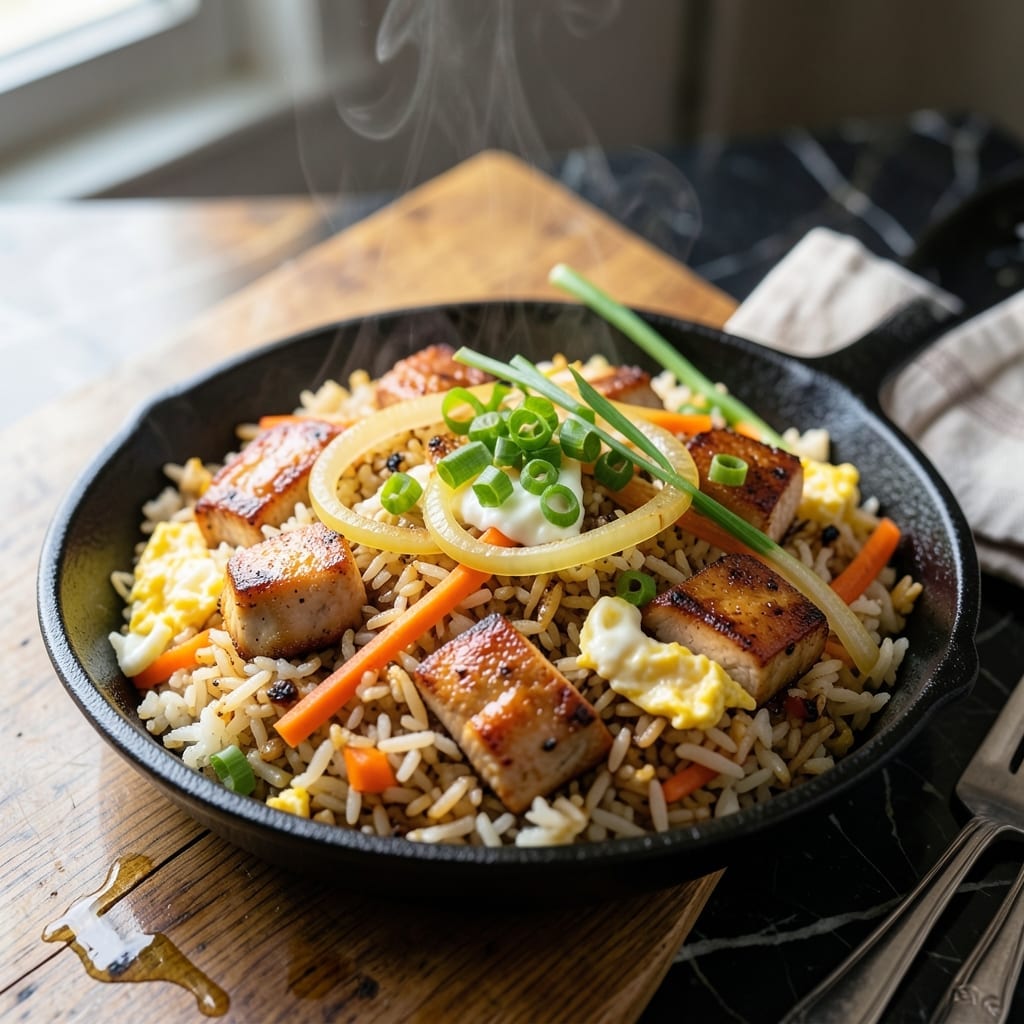
I’ve spent years perfecting this wok-tossed fried rice to capture that signature hibachi flavor—smoky, umami-rich, and packed with texture. The key lies in high heat and the right balance of soy, sesame, and a touch of sweetness.
This isn’t just leftover rice reheated. Fresh ingredients and a hot wok create those charred bits and caramelized edges that make hibachi-style rice so addictive. Every grain stays separate, never mushy.
You’ll get restaurant-quality results with simple ingredients and 15 minutes of active cooking. The aroma alone will transport you to a teppanyaki table.
Serve as a side or make it a meal with added protein. The technique is foolproof once you master the rhythm of the wok.
Ingredients for Fried Rice Recipe Like Hibachi
Cold rice, fresh veggies, and a few pantry staples bring that hibachi magic home.
| Ingredient | Amount | Notes |
|---|---|---|
| Day-Old Cooked White Rice 🍚 | 4 cups | Cold, preferably refrigerated overnight |
| Boneless Chicken Thighs 🍗 | ¾ lb | Cut into small, even pieces |
| Large Eggs 🥚 | 2 whole | Lightly beaten |
| Yellow Onion 🧅 | 1 whole | Finely diced |
| Carrots 🥕 | 2 whole | Peeled, finely diced |
| Green Onions 🧅 | 3 whole | Thinly sliced, white and green parts separated |
| Garlic Cloves 🧄 | 3 cloves | Minced |
| Peas 🌱 | ½ cup | Fresh or frozen, thawed |
| Soy Sauce 💧 | 3 tbsp | Low-sodium recommended |
| Sesame Oil 🫒 | 1 tbsp | Toasted sesame oil preferred |
| Vegetable Oil 🫒 | 2 tbsp | High smoke point oil |
| Granulated Sugar 🧂 | 1 tsp | Balances the saltiness |
| Salt 🧂 | ½ tsp | Kosher or sea salt |
| Black Pepper 🌶️ | ½ tsp | Freshly ground preferred |
The rice is non-negotiable—day-old, refrigerated rice is what gives you those separate, non-mushy grains. I grab mine from Trader Joe’s if I’m in a rush, but any leftover rice works (just spread it out to cool quickly). For the chicken, thighs stay juicier than breasts in the high heat of the wok. If you’re vegetarian, swap in extra-firm tofu. Look for thighs with good marbling at your butcher counter.
No chicken? Shrimp or pork work great—just adjust cook time. Out of peas? Frozen corn or diced bell peppers add color and crunch. The soy sauce can be tamari for gluten-free. If you’re missing sesame oil, a drizzle of oyster sauce adds depth (though it’s not the same). Don’t skip the sugar—it’s what makes the caramelization happen. For extra umami, a dash of fish sauce (or vegan alternative) deepens the flavor.
Leftovers keep 3-4 days in the fridge, but honestly, they’re best fresh. Freeze for up to 3 months if you must. Reheat in a wok or skillet with a splash of water to revive the texture. Always cook on high heat—that’s the secret to the smoky flavor.
Why You’ll Love This Recipe
- 20-Minute Meal: I can get this on the table faster than takeout arrives. Day-old rice and a single pan make it stupid simple.
- Umami Bomb: The chicken thighs and soy sauce create that addictive hibachi flavor. Honestly, the crispy rice bits are my favorite part.
- Weeknight Hero: Between us, this works for lunchboxes, late dinners, or when the kids demand “that restaurant rice.” It’s my reliable fallback.
- Budget Stretcher: One pound of thighs and a handful of veggies feed four. I’ll be real: it tastes way better than the price suggests.
Step-by-Step Instructions for Wok-Tossed Hibachi-Style Fried Rice
Here’s the method I use to get that smoky, savory restaurant flavor at home.
Step 1: Prep and Season the Chicken and Vegetables
Cut the 0.75 lb boneless chicken thighs into small, even pieces—about ½-inch cubes. I keep my knife sharp for this; it makes clean cuts that cook evenly. Toss the chicken with ½ tsp salt and ½ tsp black pepper to season.
Finely dice the yellow onion and 2 carrots, then mince the 3 cloves garlic cloves. Thinly slice the 3 green onions, keeping the white and green parts separate. This prep work ensures everything cooks quickly and uniformly in the hot wok.
Step 2: Cook the Chicken and Vegetables in Batches
Heat 1 tbsp vegetable oil in a large wok or skillet over high heat until it shimmers. Add the chicken and cook for 3-4 minutes, stirring occasionally, until it’s lightly browned and cooked through. Remove it to a plate and set aside.
In the same wok, add the remaining 1 tbsp vegetable oil. Sauté the diced onion, carrots, and peas for 3-4 minutes until the vegetables start to soften. Add the minced garlic and cook for 30 seconds until fragrant—don’t let it burn.
Step 3: Scramble the Eggs and Combine Everything
Push the vegetables to one side of the wok and pour the 2 lightly beaten large eggs into the other side. Scramble them quickly with a spatula until just set—about 1 minute. Then, add the cooked chicken back to the wok along with the 4 cups day-old cooked white rice, breaking up any clumps.
Stir-fry everything together for 2-3 minutes until the rice is heated through. The cold rice will absorb flavors better and prevent mushiness.
Step 4: Add Sauces and Finish with Green Onions
Drizzle the 3 tbsp soy sauce, 1 tbsp sesame oil, and 1 tsp granulated sugar over the rice mixture. Stir-fry for another 1-2 minutes until everything is evenly coated and the flavors meld. Taste and adjust seasoning if needed.
Remove from heat and stir in the sliced green onions. The residual heat will soften them slightly while keeping their fresh, crisp texture. Serve immediately while hot, with extra green onions on top if desired.
Pro Tips For Making Fried Rice Recipe Like Hibachi
- Blast the Heat: Crank your pan to high and keep it there—hibachi-style fried rice needs that fierce heat to get the rice slightly crispy and the chicken seared fast. I learned this the hard way after too many soggy batches.
- Dry the Rice: Spread your day-old rice on a tray and let it sit uncovered for 10 minutes before cooking. Sounds weird, but it works: dry rice fries up fluffy instead of mushy.
- Skip the Overcrowding: Cook the chicken in a single layer and do it in batches if needed—steaming from too much food in the pan turns your stir-fry into a sad, wet mess.
- Salt the Eggs: Beat your eggs with a pinch of salt and a splash of soy sauce before scrambling. After burning three batches, I finally figured out this simple step adds depth and prevents blandness.
Pro Cooking Tips for fried rice recipe like hibachi
Wok Heat Control
Your wok needs to be screaming hot before adding oil—heat it until a drop of water sizzles and evaporates instantly. I use high heat throughout, which creates those signature charred bits. A carbon steel wok is my go-to for even heat distribution. 🌡️
Rice Prep Secret
Spread leftover rice on a baking sheet and refrigerate uncovered for 1 hour to dry it out. This prevents steaming in the wok. For best results, use rice that’s been refrigerated overnight—it absorbs flavors better and stays separate.
Protein Timing
Cook proteins first and set aside. This prevents overcooking when you add them back with the rice. For chicken, 3-4 minutes on high heat gives perfect browning without drying it out. Shrimp only needs 1-2 minutes per side in this heat.
Egg Technique
Push veggies to one side before adding beaten eggs to create a clean surface. Scramble quickly with a spatula in 30-second intervals until just set. This keeps them fluffy rather than rubbery. I use a wok spatula for easy tossing.
Sauce Layering
Add soy sauce and sesame oil at the end to prevent burning. The sugar caramelizes in the final 1-2 minutes of cooking, creating that glossy hibachi sheen. Toss continuously to coat every grain evenly.
Finishing Touch
Green onions go in last—their fresh crunch contrasts the smoky rice. Let them wilt slightly from residual heat but stay bright. This final step takes 10 seconds and makes all the difference. 💡
Nutrition Facts
Frequently Asked Questions
Can I use fresh rice instead of day-old?
No, fresh rice contains too much moisture and will turn mushy. Spread newly cooked rice on a tray and refrigerate for 1 hour to dry it out if you’re in a pinch.
Why cook the egg separately from the rice?
Scrambling eggs first creates soft, distinct curds. Adding them directly to the rice often results in hard, rubbery bits. The separate cook also lets you control doneness perfectly.
What if I don’t have a wok?
A large skillet with high sides works fine. Use high heat and cook in batches to avoid steaming. The key is getting the pan very hot before adding ingredients.
How do I get that smoky flavor at home?
Crank the heat to maximum and let the wok get very hot between additions. The slight charring creates that signature taste. A carbon steel wok helps most.

- Fresh Turmeric Rice Recipe: Golden Grains with Earthy Warmth - October 7, 2026
- French Onion Brown Rice Recipe: Umami-Rich Grains With Caramelized Depth - October 7, 2026
- Rice Noodle Soup Recipe: Aromatic Broth with Silky Strands - October 7, 2026