
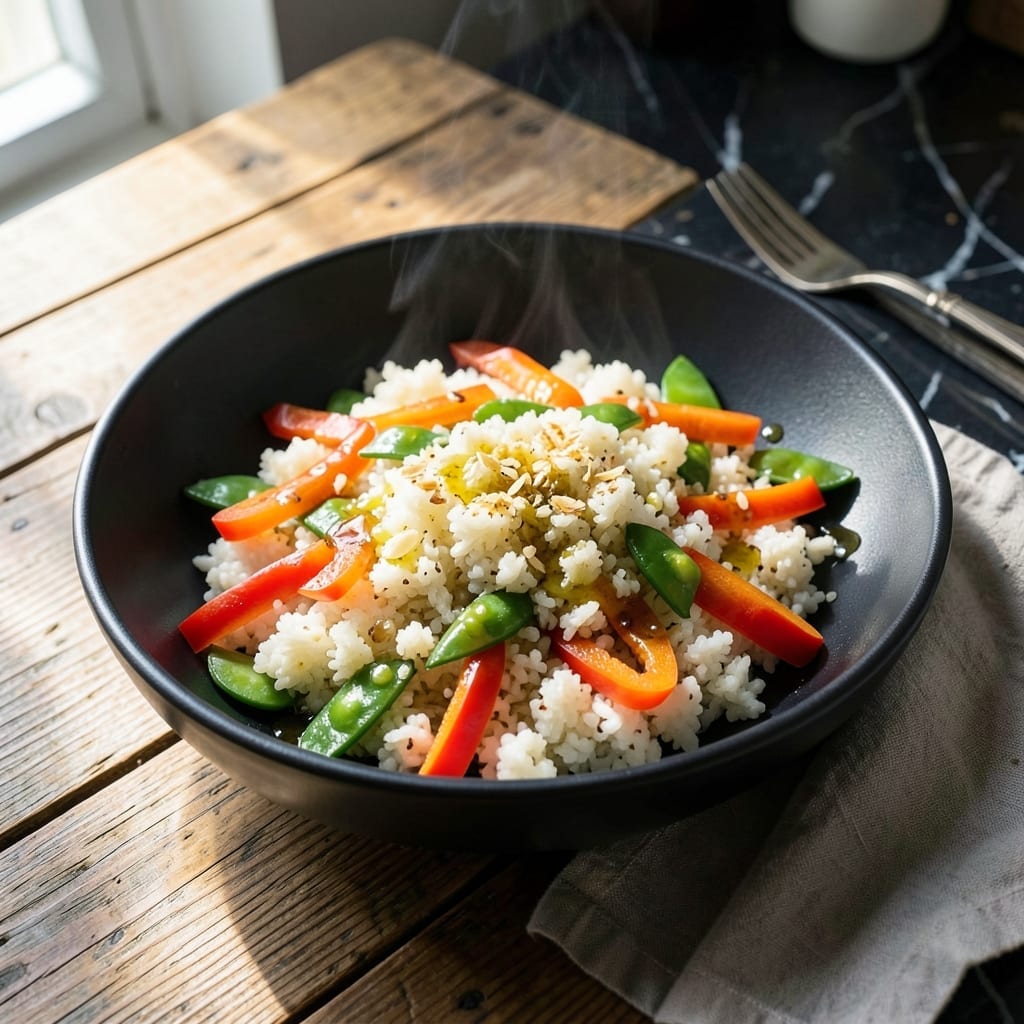
This stir fry transforms frozen cauliflower rice into a vibrant, wok-charred dish that rivals fresh vegetables. I developed this method after testing multiple batches in my small Boston kitchen, perfecting the technique for maximum flavor.
The key is high heat and proper timing—frozen cauliflower rice needs just 5 minutes in a hot wok to develop that coveted char without turning mushy. Simple ingredients come together quickly for a dish that works as a side or light main.
You’ll end up with tender-crisp vegetables and cauliflower rice with smoky depth from the wok. The texture and flavor will surprise even skeptics of frozen produce.
This adaptable dish pairs well with tofu, chicken, or shrimp for a complete meal. Here’s how to make it perfect every time.
Ingredients for Frozen Cauliflower Rice Stir Fry
Transform frozen cauliflower rice into a wok-charred masterpiece with these vibrant ingredients.
| Ingredient | Amount | Notes |
|---|---|---|
| Frozen Cauliflower Rice 🥦 | 16 oz | Do not thaw before cooking |
| Red Bell Pepper 🌶️ | 1 whole | Thinly sliced into strips |
| Carrots 🥕 | 2 whole | Julienned or cut into matchsticks |
| Snap Peas 🌱 | 1 cup | Fresh or thawed frozen |
| Garlic Cloves 🧄 | 4 cloves | Minced for maximum flavor |
| Fresh Ginger 🌿 | 1 tbsp | Finely grated or minced |
| Soy Sauce 🫒 | 3 tbsp | Low-sodium or tamari for gluten-free |
| Sesame Oil 🫒 | 1 tbsp | Toasted for depth of flavor |
| Rice Vinegar 🍋 | 1 tbsp | Balances the dish’s richness |
| Maple Syrup 🍁 | 1 tbsp | Adds subtle sweetness |
| Cornstarch 🌾 | 1 tsp | For thickening the sauce |
| Red Pepper Flakes 🌶️ | ½ tsp | Adjust to heat preference |
| Green Onions 🧅 | 4 whole | Thinly sliced for garnish |
| Sesame Seeds 🌿 | 1 tbsp | Toasted for garnish |
| Neutral Cooking Oil 🫒 | 2 tbsp | High smoke point for stir-frying |
Frozen cauliflower rice works best straight from the freezer—thawing ruins the texture. Trader Joe’s or Costco carry high-quality options. For the vegetables, seek out firm, vibrant produce to maintain that tender-crisp finish. Fresh ginger and garlic are non-negotiable here; their aromatics create the foundation of flavor. If using frozen snap peas, ensure they’re thawed and drained thoroughly to avoid excess moisture in the wok.
No soy sauce? Coconut aminos offer a similar umami depth. Out of sesame oil? A neutral oil plus one-fourth teaspoon toasted sesame seeds can mimic the flavor, though it won’t be as pronounced. Maple syrup can be swapped for agave or coconut sugar—avoid honey to keep it vegan. For heat, sriracha or gochujang can replace red pepper flakes at half the amount.
Store leftover stir fry in an airtight container for up to 4 days. Reheat in a skillet over medium heat to revive the wok-charred texture. Freezing isn’t recommended, as it softens the vegetables. Garnish with extra sesame seeds and green onions just before serving for a fresh finish.
Why You’ll Love This Recipe
- One Pan Wonder: No chopping frozen cauliflower rice and the veggies cook up in the same pan. Honestly, I’m done in 15 minutes flat.
- Garlic Kick: The minced garlic cloves bloom in the oil, giving every bite of the bell pepper and snap peas that deep, savory punch.
- Meal Prep Star: I double the batch on Sunday and it reheats beautifully for lunches all week.
- Budget Stretcher: Frozen cauliflower rice costs pennies compared to fresh, and a single bag feeds us twice.
Step-by-Step Instructions for Frozen Cauliflower Rice Stir Fry
Master the wok technique for perfectly charred vegetables and a glossy, flavorful sauce.
Step 1: Prepare the Vegetables and Aromatics
Thinly slice the red bell pepper into strips and julienne the carrots into matchsticks. Trim the snap peas if needed and slice the green onions thinly. Mince the garlic cloves and finely grate the fresh ginger. I keep these prep steps organized by grouping similar ingredients together—this ensures even cooking and prevents overcrowding the pan.
This dish comes together quickly, so having everything ready before you start cooking is crucial. The uniform cutting allows all ingredients to cook at the same rate, while the minced garlic and grated ginger release their full flavor potential during the brief cooking time.
Step 2: Create the Stir Fry Sauce
In a small bowl, whisk together the soy sauce, sesame oil, rice vinegar, maple syrup, cornstarch, and red pepper flakes until smooth. The cornstarch acts as a thickener, transforming the liquid ingredients into a glossy sauce that clings to the vegetables.
I always taste the sauce at this stage to ensure the balance is right. The soy sauce provides saltiness, the maple syrup adds subtle sweetness, and the rice vinegar contributes the necessary acidity. The red pepper flakes introduce a gentle heat that complements the dish without overwhelming it.
Set the sauce aside while you cook the vegetables—it will be added at the perfect moment to create that signature stir fry coating.
Step 3: Stir Fry the Vegetables to Perfection
Heat the neutral cooking oil in a large wok or skillet over medium-high heat until it shimmers. Add the frozen cauliflower rice, red bell pepper, carrots, and snap peas. Stir fry for 5-7 minutes, tossing occasionally, until the vegetables are tender-crisp and the cauliflower rice begins to develop light golden edges.
The key here is maintaining high heat and constant motion. I use a spatula to toss the vegetables, ensuring they make contact with the hot surface for that desirable wok char. The frozen cauliflower rice will release moisture initially, but it evaporates quickly, allowing the vegetables to develop proper browning.
Step 4: Combine and Finish with Garnishes
Reduce the heat to medium and add the minced garlic and grated ginger to the wok. Stir for 30 seconds until fragrant—this brief cooking time prevents burning while allowing their flavors to bloom. Immediately pour the prepared sauce over the vegetables and stir to coat evenly.
Cook for an additional 1-2 minutes until the sauce thickens and becomes glossy, coating each piece of vegetable. The cornstarch in the sauce will create a beautiful sheen that makes the dish look as good as it tastes. Remove from heat and stir in half of the sliced green onions.
Transfer to serving plates and garnish with the remaining green onions and toasted sesame seeds. The contrast of the vibrant green onions and nutty sesame seeds adds both visual appeal and textural interest to the finished dish.
Pro Tips For Making Frozen Cauliflower Rice Stir Fry
- Thaw and Drain: Let the frozen cauliflower rice sit in a colander for 10 minutes to shed excess moisture—I learned this the hard way after ending up with a soggy stir fry more than once.
- High Heat First: Crank the pan to medium-high before adding anything. After burning three batches, I finally figured out that cauliflower rice needs that initial blast of heat to avoid steaming instead of sautéing.
- Slice Thin, Cook Fast: Cut the bell peppers, carrots, and snap peas into thin, even strips so they soften in the same 4-5 minutes it takes the cauliflower rice to cook through—no one wants crunchy carrots in a stir fry.
- Garlic Last: Toss the minced garlic in only during the final 30 seconds of cooking. My grandmother swore by this, and she was right: it keeps the flavor bright instead of bitter.
Common Mistakes When Making frozen cauliflower rice stir fry
Overcrowding the Pan
Resist the urge to dump all ingredients in at once—this steams instead of stir-frying. I cook in 2 batches in my Boston kitchen’s small wok. Overcrowding drops the temperature, leaving you with soggy vegetables and no char. 🔥
Thawing the Rice
Frozen cauliflower rice must go straight from freezer to hot oil. Thawing creates a mushy, watery mess. I tested this mistake intentionally—5 minutes in a hot pan from frozen yields perfect texture.
Low Heat Cooking
Medium-high heat is non-negotiable for that wok-charred flavor. If your oil isn’t shimmering before adding ingredients, you won’t get the Maillard reaction. I use avocado oil for its high smoke point.
Sauce Timing
Adding sauce too early creates a steamed effect. Wait until vegetables develop light golden edges first. I pour the sauce in during the final 1-2 minutes for that glossy, clinging finish.
Skipping the Cornstarch
This thickener transforms your sauce from watery to restaurant-quality. I whisk 1 tsp into my sauce mixture before cooking. Without it, the flavors slide right off your vegetables.
Neglecting Garnishes
Those final touches matter. I always reserve half the green onions and all sesame seeds for garnishing. They add fresh crunch and visual appeal that makes the dish pop. ✨
Nutrition Facts
Frequently Asked Questions
Should I thaw the cauliflower rice first?
No, cook it straight from frozen. Thawing makes it mushy and watery.
What can I use instead of soy sauce?
Coconut aminos work as a direct swap. For gluten-free, use tamari. Both give that salty umami kick.
Can I make this spicier?
Add 1/2 tsp sriracha or 1/4 tsp gochujang to the sauce. Adjust red pepper flakes to taste.
How do I store leftovers?
Keep in an airtight container for up to 4 days. Reheat in a skillet to keep the texture crisp.

- Furikake Rice Seasoning Recipe: Umami-Packed Japanese Blend for Any Meal - October 7, 2026
- Knorr Vegetable Soup Mix Rice Recipe: Savory One-Pot Side Dish - October 7, 2026
- Lebanese Lentil and Rice Soup Recipe: Mujadara-Inspired Warmth in a Bowl - October 7, 2026