
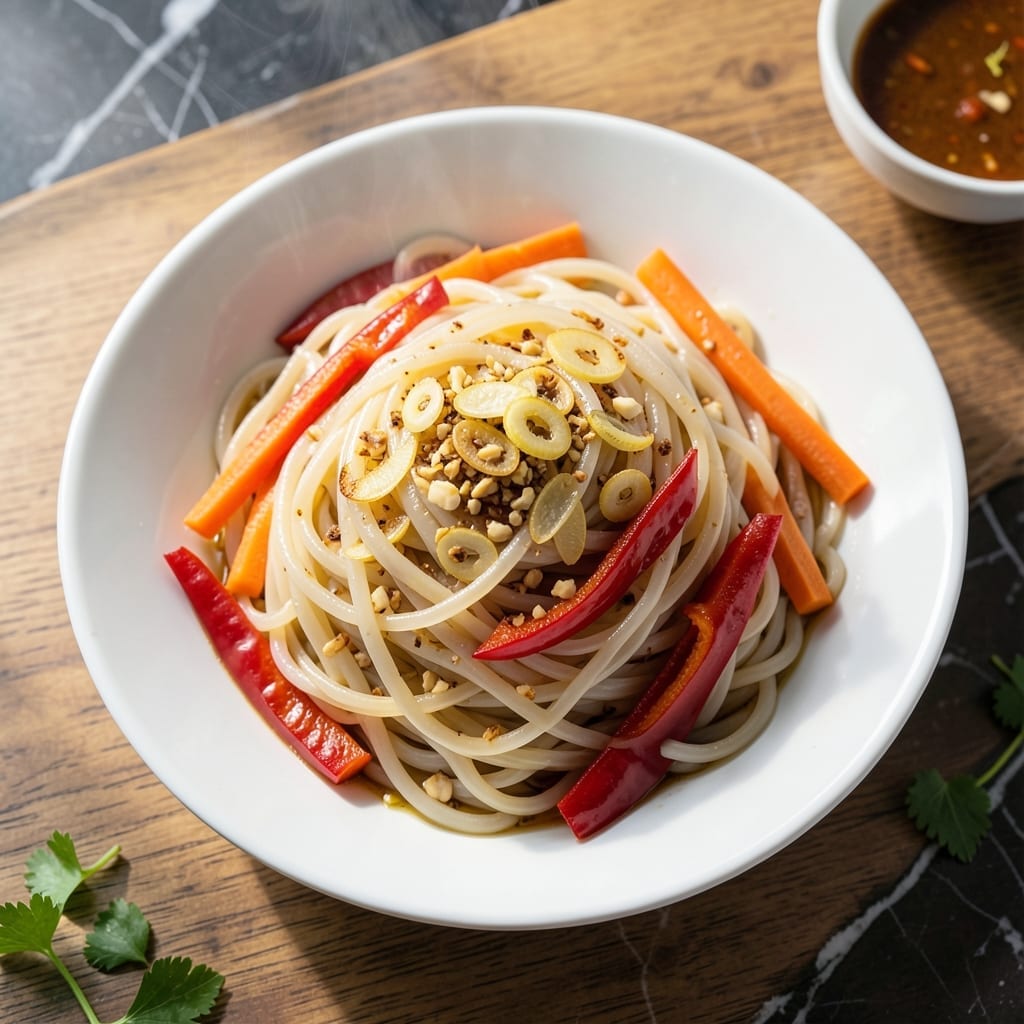
These translucent noodles deliver the authentic texture and wok char you’d find in a Bangkok street market. I’ve tested this method repeatedly to ensure it works in home kitchens, not just professional setups.
The key is proper soaking and high heat stir-frying to achieve that signature slightly chewy bite. Unlike other rice noodles, these maintain their delicate structure while absorbing bold flavors from sauces and aromatics.
What emerges are glistening strands with subtle smokiness from the wok, ready to pair with your favorite proteins and vegetables. The process is simpler than it appears, with results that taste anything but basic.
Serve immediately for the best texture, as they firm up quickly when cooled. This method never fails to impress.
Ingredients for Glass Rice Noodles
Grab these Asian market finds for authentic wok char at home.
| Ingredient | Amount | Notes |
|---|---|---|
| Rice Stick Noodles 🍜 | 8 oz | Glass noodles, 1/8 inch wide |
| Vegetable Oil 🫒 | 3 tbsp | High smoke point preferred |
| Garlic Cloves 🧄 | 4 cloves | Minced finely for maximum flavor |
| Shallot 🧅 | 1 whole | Thinly sliced for sweetness |
| Red Bell Pepper 🌶️ | 1 whole | Julienned for color and crunch |
| Carrot 🥕 | 1 whole | Julienned for texture contrast |
| Green Onions 🧅 | 4 whole | Cut into 2-inch pieces |
| Bean Sprouts 🌱 | 2 cups | Rinsed and drained well |
| Light Soy Sauce 💧 | 3 tbsp | For umami depth (check for vegan) |
| Dark Soy Sauce 💧 | 1 tbsp | For color and richness |
| Rice Vinegar 💧 | 1 tbsp | For bright acidity balance |
| Coconut Sugar 🥥 | 1 tbsp | Or brown sugar for sweetness |
| Fresh Cilantro 🌿 | ½ cup | Chopped for garnish |
| Crushed Peanuts 🥜 | ¼ cup | For crunchy topping |
| Lime 🍋 | 1 whole | Cut into wedges for serving |
The noodles are everything here. Look for rice stick noodles labeled 1/8 inch wide—they’re the glass noodles that deliver that Bangkok street market texture. Asian markets have the best selection, but Whole Foods or well-stocked supermarkets work too. Don’t confuse them with thicker rice noodles (those are for pad Thai). The soy sauces matter—check labels for fish-free versions to keep it vegan.
No shallots? Red onion at half the amount works, but the flavor’s sharper. Skip the bell pepper if you want—snap peas or cabbage add great crunch. For gluten-free, swap soy sauces for tamari (just as flavorful). The coconut sugar can be brown sugar or agave. Whatever you do, don’t skip the soaking step—unsoaked noodles turn to cement in the wok.
Once soaked, the noodles cook in minutes. Leftovers? They’ll firm up, but toss with a little oil and reheat in a dry pan to revive. Best eaten fresh though—keeps 2-3 days in the fridge. The peanuts and cilantro? Add those right before serving so they stay crunchy and bright.
Why You’ll Love This Recipe
- One Pot Wonder: I toss everything in a single pan—noodles, garlic, shallots, and bell peppers—so cleanup is a breeze.
- Garlic Kissed: The sizzling garlic and shallots in hot oil give these noodles a deep, savory aroma that’s irresistible.
- Weeknight Hero: Honestly, it’s my go-to for busy evenings when I need something fast, filling, and foolproof.
- Stretches Far: A pound of rice noodles feeds four generously, and leftovers taste even better the next day.
Step-by-Step Instructions for Glass Rice Noodles
Here’s the method I use to get that perfect wok char every single time.
Step 1: Soak and Prep the Rice Stick Noodles
Cover the 8 oz rice stick noodles with warm water in a large bowl. They need to soak for 15-20 minutes until pliable but still slightly firm—they shouldn’t be fully soft yet. I check by bending a strand; it should flex but not snap.
While they soak, prep your vegetables. Thinly slice the shallot, julienne the red bell pepper and carrot, and cut the green onions into 2-inch pieces. Rinse and drain the 2 cups bean sprouts well. Having everything ready before cooking is crucial for that authentic stir-fry timing.
Step 2: Stir-Fry Aromatics and Vegetables
Heat 2 tbsp vegetable oil in a wok or large skillet over high heat until it shimmers. Add the minced 4 cloves garlic cloves and sliced shallot, and stir-fry for 30 seconds until fragrant. The garlic should turn just light golden—not brown.
Add the julienned red bell pepper and carrot, and stir-fry for 2-3 minutes until they begin to soften but still retain some crunch. Push everything to one side of the wok and add the remaining 1 tbsp vegetable oil to the empty space.
Step 3: Cook the Noodles and Combine
Drain the soaked rice stick noodles and add them to the wok. Stir-fry for 2-3 minutes until the noodles turn translucent and begin to char slightly in spots. This is where that authentic wok hei flavor develops.
Add the 2 cups bean sprouts and green onions, and toss everything together. Pour the 3 tbsp light soy sauce, 1 tbsp dark soy sauce, 1 tbsp rice vinegar, and 1 tbsp coconut sugar over the noodles. Stir-fry for another 1-2 minutes until everything is evenly coated and the noodles are tender.
Step 4: Finish and Serve
Taste and adjust seasoning if needed. Transfer to serving plates and top with 0.5 cup fresh cilantro and 0.25 cup crushed peanuts. Serve immediately with lime wedges on the side for squeezing over the top.
The noodles should have a slight chew with those beautiful charred edges, and the vegetables should still have a bit of bite. The sauce should cling to the noodles without pooling at the bottom of the plate.
Pro Tips For Making Glass Rice Noodles
- Soak Noodles First: Cover rice stick noodles in warm water for 10-15 minutes before cooking—this prevents them from turning gummy when stir-fried.
- Slice Shallots Thin: Cut shallots paper-thin so they crisp up quickly in the oil without burning the garlic or peppers.
- High Heat Only: Crank the pan to medium-high and keep it there; glass noodles need aggressive heat to stay chewy, not mushy.
- Prep Everything First: Have garlic, shallot, and bell pepper chopped and ready—once the noodles hit the pan, there’s no time to catch up.
Common Mistakes When Making This Recipe
Over-Soaking Noodles
Soaking the 8 oz rice stick noodles too long turns them mushy before they even hit the wok. I learned this the hard way in my tiny Boston kitchen—15-20 minutes max in warm water keeps them pliable but still firm enough to develop that perfect wok char. 💪
Skipping the Prep
Stir-frying is fast—you’ll burn the garlic if your veggies aren’t ready. I always julienne the red bell pepper and carrot first, then slice the shallot and green onions. Having everything prepped means you can focus on the heat and timing.
Low Heat Cooking
These noodles need high heat to char slightly and absorb flavors quickly. If your pan isn’t hot enough, you’ll end up with soggy strands instead of that transluscent, slightly chewy texture. I crank my burner to max and let the wok get smoking hot before adding oil.
Overcrowding the Wok
Adding all the ingredients at once steams the noodles rather than stir-frying them. I cook in stages: aromatics first, then veggies, then noodles. This ensures each component gets the direct heat it needs. Trust me, patience here makes all the difference. 🔥
Under-Seasoning
The sauce needs balance—3 tbsp light soy sauce, 1 tbsp dark soy sauce, 1 tbsp rice vinegar, and 1 tbsp coconut sugar create that sweet-savory depth. I taste as I go and adjust, but don’t be shy with the soy sauces; they’re what give this dish its soul.
Delaying Service
These noodles firm up fast once off the heat. I plate immediately and top with 0.5 cup fresh cilantro and 0.25 cup crushed peanuts so every bite has that fresh crunch. Leftovers just aren’t the same—this dish is best straight from the wok.
Nutrition Facts
Frequently Asked Questions
Do I need a wok to make these noodles?
A wok is ideal for high heat distribution, but a large skillet works too. Just ensure it’s wide enough to spread the noodles in a single layer.
Can I use a different type of rice noodle?
Stick with 1/8-inch wide rice stick noodles for the right texture. Thicker varieties won’t achieve the same translucent, slightly chewy result.
How do I prevent the noodles from sticking?
Use high heat and don’t overcrowd the pan. Stir constantly and add oil in stages if needed.
Can I make this ahead of time?
The noodles firm up quickly, so they’re best served immediately. If storing, reheat in a dry pan with a splash of water.

- Fresh Turmeric Rice Recipe: Golden Grains with Earthy Warmth - October 7, 2026
- French Onion Brown Rice Recipe: Umami-Rich Grains With Caramelized Depth - October 7, 2026
- Rice Noodle Soup Recipe: Aromatic Broth with Silky Strands - October 7, 2026