
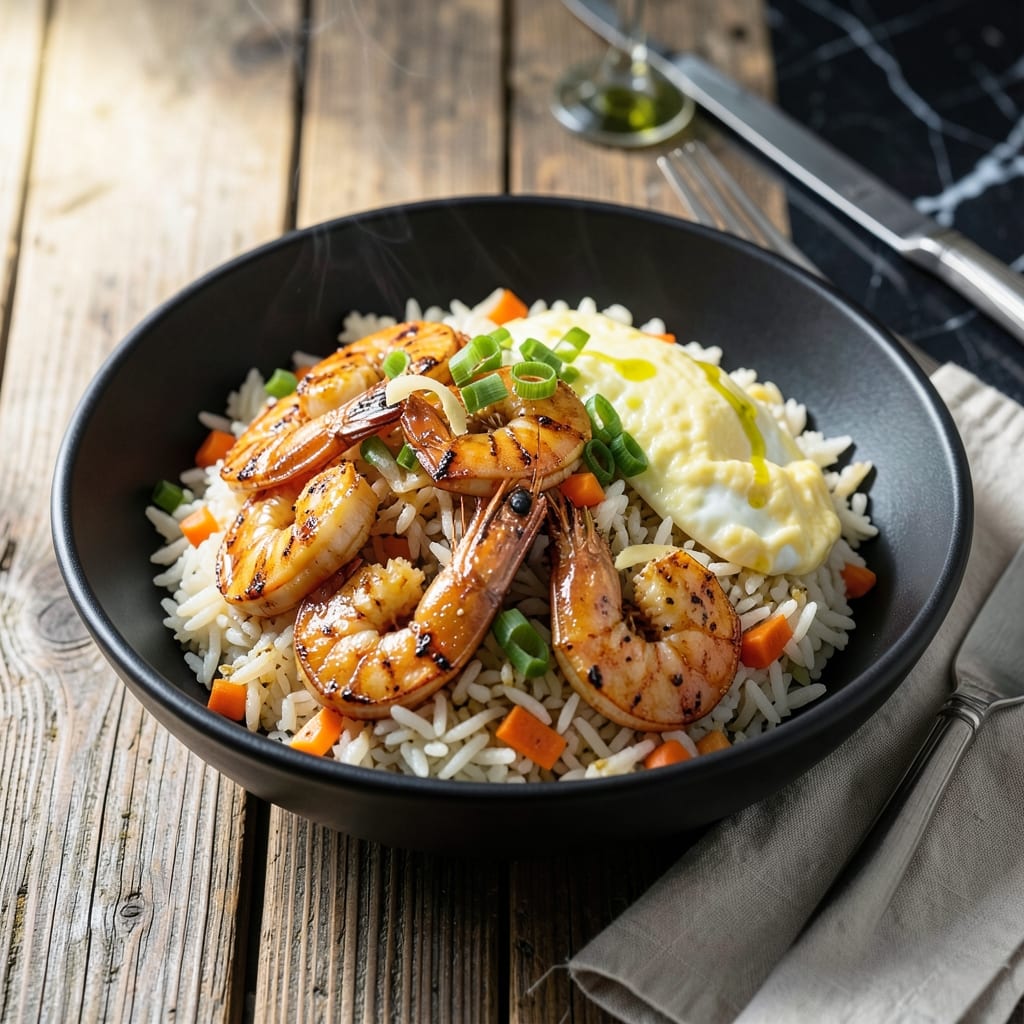
This gluten-free version delivers all the classic flavors of shrimp fried rice without compromise. Tamari replaces traditional soy sauce, while fresh ginger and scallions add bright, authentic character.
High heat and quick cooking preserve the shrimp’s tenderness and create that signature wok-seared texture. The result is a restaurant-quality dish that’s both satisfying and safe for gluten-sensitive diners.
Ingredients for Gluten Free Shrimp Fried Rice
Fresh ginger, tamari, and shrimp bring classic fried rice flavors to this gluten-free dish.
| Ingredient | Amount | Notes |
|---|---|---|
| White Rice 🍚 | 3 cups | Day-old, cooked and chilled |
| Large Shrimp 🍤 | 1 lb | Peeled, deveined, tails off |
| Tamari 🫒 | 3 tbsp | Gluten-free soy sauce alternative |
| Fresh Ginger 🌿 | 1 tbsp | Peeled and minced |
| Scallions 🧅 | 4 whole | Thinly sliced, whites and greens separated |
| Large Eggs 🥚 | 2 whole | Lightly beaten |
| Garlic Cloves 🧄 | 3 cloves | Minced finely |
| Frozen Peas 🌱 | ¾ cup | Thawed under warm water |
| Carrot 🥕 | 1 whole | Medium, finely diced |
| Sesame Oil 🫒 | 1 tbsp | Pure, not toasted |
| Vegetable Oil 🫒 | 2 tbsp | High smoke point, for stir-frying |
| Salt 🧂 | ½ tsp | Kosher or sea salt preferred |
| Black Pepper 🌶️ | ¼ tsp | Freshly ground |
| Green Onion 🧅 | 2 whole | Extra for garnish |
The tamari is non-negotiable for gluten-free integrity—San-J is a widely available brand that delivers consistent quality. For the shrimp, wild-caught from a trusted seafood counter ensures the best texture and flavor. Day-old rice is critical (the good stuff, not freshly cooked) as it fries up perfectly without turning mushy. Costco sells pre-cooked shrimp that works in a pinch.
No tamari? Coconut aminos work at a 1:1 ratio, though the flavor is slightly sweeter. Fresh ginger can be replaced with one-third the amount of ground ginger (less ideal but serviceable). For a seafood twist, scallops or diced firm white fish can substitute for shrimp. The peas can be swapped for diced bell peppers (or whatever frozen veg you’ve got).
This keeps well for 3-4 days in the fridge—reheat in a skillet to revive the texture. Not suitable for freezing due to the shrimp. Store tamari in a cool, dark place (it’ll last 1 year unopened, 6 months once opened).
Why You’ll Love This Recipe
- One Pan Wonder: I love that everything cooks together in a single skillet—rice, shrimp, tamari, and ginger all in one go.
- Umami Bomb: The tamari and fresh ginger give it that deep, savory kick that makes every bite addictive.
- Weeknight Hero: It’s my go-to for busy evenings when I need something fast but still packed with flavor.
- Leftovers Win: Between us, it tastes even better the next day—perfect for packing lunch the morning after.
Step-by-Step Instructions for Gluten Free Shrimp Fried Rice
Master the wok technique and achieve perfectly textured fried rice with vibrant flavor and color.
Step 1: Prepare and Season the Shrimp and Aromatics
Pat the 1 lb Large Shrimp completely dry with paper towels to ensure proper browning. Season lightly with 0.5 tsp Salt and 0.25 tsp Black Pepper. Finely dice the 1 whole Carrot into uniform pieces so they cook evenly and add color.
Separate the 4 whole Scallions into whites and greens, thinly slicing both. Mince the 3 cloves Garlic Cloves and 1 tbsp Fresh Ginger together to create a fine, flavorful paste. This prep work ensures all ingredients cook at the same rate and release their aromas into the dish.
Step 2: Scramble the Eggs and Cook the Shrimp
Heat 1 tbsp Vegetable Oil in a wok or large skillet over medium-high heat until shimmering. Pour in the 2 whole Large Eggs and scramble quickly with a spatula until just set but still slightly soft. Remove the eggs and set aside—they’ll finish cooking when combined with the rice.
Add the remaining 1 tbsp Vegetable Oil to the wok. Increase heat to high and add the shrimp in a single layer. Cook for 1-2 minutes per side until pink and opaque. Transfer the shrimp to the plate with the eggs, leaving the flavorful fond in the wok.
Step 3: Stir-Fry the Vegetables and Rice
In the same wok, add the diced Carrot and cook for 1 minute until slightly softened. Add the scallion whites, Garlic Cloves, and Fresh Ginger, stir-frying for 30 seconds until fragrant. The aromatics should sizzle but not brown, preserving their fresh, bright flavors.
Add the 3 cups White Rice, breaking up any clumps with the spatula. Drizzle 3 tbsp Tamari evenly over the rice and stir-fry for 2-3 minutes until the rice is heated through and slightly crispy. Incorporate the 0.75 cup Frozen Peas and cook for an additional 1 minute to warm them through.
Step 4: Combine and Finish with Sesame Oil
Return the shrimp and scrambled eggs to the wok. Toss everything together with a spatula, ensuring the Tamari coats every grain of rice and piece of shrimp evenly. The rice should be lightly browned with a subtle sheen from the sauce.
Remove from heat and drizzle with 1 tbsp Sesame Oil. Garnish with the reserved scallion greens and the 2 whole Green Onion, thinly sliced. The sesame oil adds a nutty depth, while the fresh scallions provide a bright, crisp finish to the dish.
Pro Tips For Making Gluten Free Shrimp Fried Rice
- Use Day-Old Rice: Fresh rice turns to mush in the wok—spread leftover white rice on a tray and refrigerate overnight to dry it out. I learned this the hard way after making soggy fried rice three times in a row.
- Pat Shrimp Dry: Large shrimp release water if they hit the pan wet, steaming instead of searing. Blot them with a paper towel before cooking—about 30 seconds of work that actually changes the outcome.
- Prep Everything First: Once the wok heats up, things move fast. Have your tamari measured, ginger grated, and scallions sliced before you start cooking—no frantic chopping mid-stir-fry.
- Cook Ginger First: Fresh ginger needs a minute in hot oil to mellow its bite and perfume the dish. Toss it in before the shrimp, and let it sizzle for about 45 seconds—sounds simple, but it makes a real difference.
Troubleshooting This Recipe
Mushy Rice Problem
If your rice turns out mushy, you likely used freshly cooked rice. Day-old, chilled 3 cups White Rice is critical as it has less moisture. Spread hot rice on a baking sheet and refrigerate for 30 minutes to dry it out if you’re in a pinch. 💡
Soggy Shrimp
Pat the 1 lb Large Shrimp completely dry before cooking. Any moisture will steam the shrimp instead of searing it. Also, avoid overcrowding the wok—cook in batches if needed. The shrimp should sizzle when they hit the pan.
Bland Flavor
If your dish tastes flat, you may have under-seasoned. The 3 tbsp Tamari is your primary seasoning, but don’t forget the 0.5 tsp Salt and 0.25 tsp Black Pepper for the shrimp. Taste as you go and adjust with more tamari at the end if needed.
Sticky Wok Mess
High heat is key to prevent sticking. Make sure your wok is ripping hot before adding oil. Use 2 tbsp Vegetable Oil with a high smoke point. If food sticks, let it develop a crust before stirring—it’ll release naturally.
Egg Overcooking
For soft, fluffy eggs, cook them first and remove them quickly when just set. They’ll finish cooking when combined with the hot rice later. Use medium-high heat and keep them moving constantly in the wok. 🔥
Vegetable Texture
To keep your 0.75 cup Frozen Peas and diced Carrot crisp, add them at the right time. Carrots go in first to soften slightly, while peas only need 1 minute to warm through. Overcooking turns them to mush.
Nutrition Facts
Frequently Asked Questions
Can I use regular soy sauce instead of tamari?
No, regular soy sauce isn’t gluten-free. Tamari is the perfect 1:1 substitute with a similar rich flavor. For a different taste, try coconut aminos in equal amounts.
What’s the best rice for this dish?
Use day-old cooked white rice, like jasmine or long-grain. Fresh rice contains too much moisture and will turn mushy. Spread hot rice on a tray and chill for 30 minutes if needed.
Can I make this ahead of time?
Yes, it keeps well for 3-4 days in the fridge. Reheat in a skillet over medium-high heat to restore texture. Avoid freezing, as shrimp becomes rubbery when thawed.
How do I prevent the shrimp from overcooking?
Pat them completely dry before cooking. Use high heat and cook for just 1-2 minutes per side. Remove them promptly to keep them tender and juicy.

- Furikake Rice Seasoning Recipe: Umami-Packed Japanese Blend for Any Meal - October 7, 2026
- Knorr Vegetable Soup Mix Rice Recipe: Savory One-Pot Side Dish - October 7, 2026
- Lebanese Lentil and Rice Soup Recipe: Mujadara-Inspired Warmth in a Bowl - October 7, 2026