
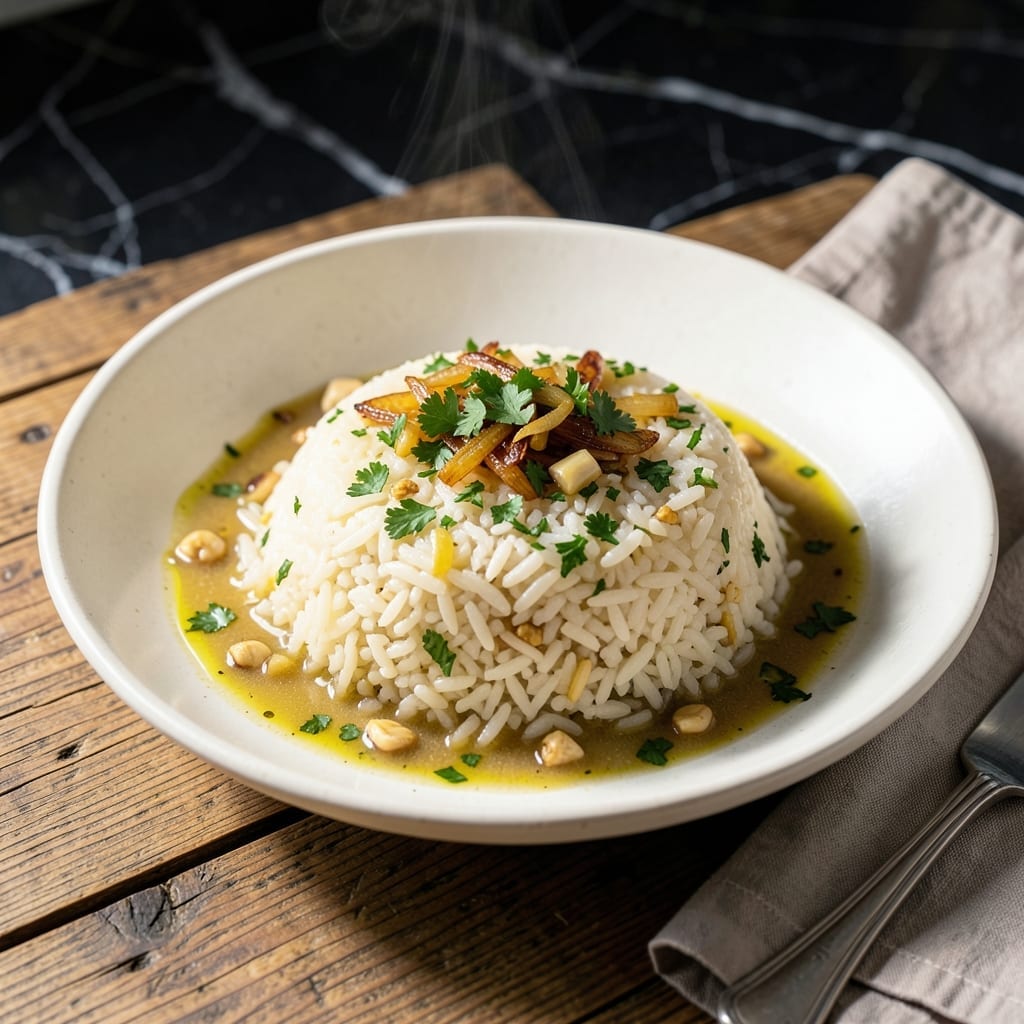
This rice pilaf delivers buttery grains with a delicate herb infusion that elevates any meal. I developed this method after testing countless variations to achieve consistent results in home kitchens.
The secret lies in toasting the rice first, which creates a nutty base for the flavors. A simple combination of broth, butter, and fresh herbs transforms basic rice into something special without complicated techniques.
What emerges is a side dish with perfectly separate, fluffy grains that carry the subtle aromatic notes of the herbs throughout. The texture remains light yet satisfying, making it ideal alongside both simple and elaborate main courses.
This approach works reliably with standard kitchen equipment and ingredients from any grocery store. The technique proves that excellent results don’t require special tools or hard-to-find components.
Ingredients for Grassfields Rice Pilaf
Standard groceries transform into elevated side with buttery rice and fresh herbs.
| Ingredient | Amount | Notes |
|---|---|---|
| Long-Grain White Rice 🍚 | 1 ½ cups | Rinsed until water runs clear |
| Unsalted Butter 🧈 | ¼ cup | Divided for toasting and finishing |
| Yellow Onion 🧅 | 1 whole | Finely diced for even cooking |
| Garlic Cloves 🧄 | 2 cloves | Minced for aromatic depth |
| Vegetable Broth 🥣 | 3 cups | Low-sodium preferred for control |
| Fresh Parsley 🌿 | ¼ cup | Chopped, stems removed |
| Fresh Thyme Sprigs 🍃 | 3 pieces | Leaves stripped, stems discarded |
| Bay Leaf 🍃 | 1 whole | Dried, for aromatic infusion |
| Kosher Salt 🧂 | 1 tsp | Diamond Crystal preferred |
| Ground Black Pepper 🌶️ | ½ tsp | Freshly ground for best flavor |
| Lemon Zest 🍋 | 1 tsp | Finely grated for brightness |
| Olive Oil 🫒 | 1 tbsp | Extra-virgin for depth |
Rice quality determines texture. Basmatis or jasmines deliver the separate, fluffy grains promised here. Avoid pre-cooked or instant varieties—they lack the structure for proper toasting. Trader Joe’s and Whole Foods carry reliable options. The butter should be high-fat European-style for superior mouthfeel, though standard grocery butter works acceptably.
No fresh herbs? Dried parsley and thyme at one-third the amount substitute adequately, though fresh delivers superior aromatic complexity. Vegetable broth can be swapped for chicken (if dietary restrictions allow), but maintain low-sodium. For additional depth, a splash of white wine deglazes the pan beautifully before adding broth.
Cooked pilaf holds 3-4 days refrigerated in an airtight container. Reheat gently with a splash of broth to restore moisture. For optimal freshness, strip thyme leaves just before use (they oxidize quickly). Toasted rice can be prepped 1 day ahead and stored dry.
Why You’ll Love This Recipe
- One-Pot Wonder: I love that everything cooks in a single pot—just sauté the onion and garlic in butter, add rice and broth, then walk away.
- Rich & Buttery: The butter and vegetable broth give this pilaf a deep, savory flavor that makes plain rice taste luxurious.
- Meal Prep Hero: Honestly, it reheats beautifully and pairs with anything from grilled chicken to roasted veggies.
- Budget Friendly: Between us, it stretches a pound of rice into a filling side dish for pennies per serving.
Step-by-Step Instructions for Grassfields Rice Pilaf
This method ensures perfectly fluffy grains with a rich, herb-infused flavor profile every time.
Step 1: Toast the Rice for Nutty Depth
Rinse the 1.5 cups Long-Grain White Rice until the water runs clear to remove excess starch. This prevents gummy rice. Heat 1 tablespoon Olive Oil and 2 tablespoons Unsalted Butter in a heavy pot over medium heat until the butter melts and begins to foam.
Add the drained rice and stir continuously for 2-3 minutes until the grains become translucent at the edges and emit a subtle nutty aroma. This toasting step is crucial—it enhances the rice’s natural flavor and prevents it from turning mushy during cooking.
Step 2: Sauté Aromatics to Build Flavor
Add the finely diced Yellow Onion to the pot and cook for 4-5 minutes until softened and just beginning to turn golden brown. Stir in the minced 2 cloves Garlic Cloves, 1 tsp Kosher Salt, and 0.5 tsp Ground Black Pepper, cooking for an additional 30 seconds until fragrant.
The onion should be tender but not caramelized—this base layer provides sweetness and depth. Be careful not to let the garlic burn, as it will turn bitter and overpower the dish.
Step 3: Simmer with Broth and Herbs
Pour in the 3 cups Vegetable Broth, then add the 3 pieces Fresh Thyme Sprigs, 1 whole Bay Leaf, and 1 tsp Lemon Zest. Stir well to combine and bring the mixture to a boil over medium-high heat.
Once boiling, reduce the heat to low, cover the pot with a tight-fitting lid, and let it simmer for 18-20 minutes. Do not stir during this time—this ensures even cooking and prevents the rice from breaking apart.
Step 4: Rest and Finish with Fresh Herbs
After the simmering time is complete, remove the pot from heat and let it sit, covered, for an additional 10 minutes. This resting period allows the rice to steam and absorb any remaining liquid, resulting in light, separate grains.
Fluff the rice gently with a fork, discarding the Bay Leaf and Thyme Sprigs. Stir in the remaining 2 tablespoons Unsalted Butter and the chopped 0.25 cup Fresh Parsley for a bright, herby finish. Serve immediately while the rice is hot and the flavors are vibrant.
Pro Tips For Making Grassfields Rice Pilaf
- Toast the Rice: Cook the rice in butter for 2-3 minutes before adding liquid—this brings out a nutty depth that plain steamed rice lacks. I learned this the hard way after making bland pilaf for years.
- Use Hot Broth: Pour in vegetable broth that’s already simmering, not cold, to keep the cooking temperature steady and prevent gummy rice.
- Skip the Rinse: Don’t rinse the long-grain white rice—you want the starch to help create a slightly creamy texture in the pilaf.
- Rest Before Serving: Let it sit covered off the heat for 10 minutes after cooking—this lets the grains firm up and absorb any last bits of broth.
Best Sauces and Condiments for This grassfields rice pilaf
Herb-Infused Butter
I love stirring 2 tablespoons of softened unsalted butter with 1 tablespoon chopped fresh parsley and 1 teaspoon lemon zest right before serving. This simple addition amplifies the existing herb notes. 💛
Lemon-Tahini Drizzle
Whisk together ¼ cup tahini, 2 tablespoons lemon juice, 1 tablespoon olive oil, and 1 teaspoon honey for a creamy, tangy contrast. The nutty richness pairs beautifully with the fluffy rice grains.
Garlic-Yogurt Sauce
Combine ½ cup Greek yogurt, 1 minced garlic clove, and ½ teaspoon kosher salt for a cooling topping. This works especially well if you’re serving the pilaf with grilled meats or roasted vegetables.
Spiced Olive Oil
Heat ¼ cup extra-virgin olive oil with ½ teaspoon red pepper flakes until fragrant, then drizzle over the finished dish. This adds a subtle warmth that complements the buttery base without overpowering it.
Fresh Herb Garnish
Just before serving, sprinkle with 2 tablespoons chopped fresh thyme and 2 tablespoons chopped parsley. The fresh herbs brighten up the dish and add a pop of color. I always keep extra on hand for garnishing.
Citrus Zest Finish
Grate 1 teaspoon orange zest or 1 teaspoon lime zest over the top for a citrusy lift. This small touch makes the flavors sing, especially when paired with the lemon notes already in the recipe. ✨
Nutrition Facts
Frequently Asked Questions
What’s the best rice type for pilaf?
Use long-grain white rice like basmati or jasmine for fluffy, separate grains. Avoid instant or pre-cooked varieties as they don’t toast properly. The toasting step is key for nutty flavor and texture.
Can I make this ahead of time?
Yes! Cooked pilaf keeps well in an airtight container for 3-4 days refrigerated. Reheat gently with a splash of broth to restore moisture. Toasted rice can even be prepped 1 day ahead and stored dry.
How do I prevent mushy rice?
Don’t stir during simmering and use the exact 1.5 cups rice to 3 cups broth ratio. Toasting the rice first creates a protective layer that keeps grains intact. Always let it rest 10 minutes after cooking.
What if I don’t have fresh herbs?
Substitute with dried parsley and thyme at one-third the amount. While fresh herbs provide superior aroma, dried versions work in a pinch. Just add them during the toasting step to bloom their flavors.

- Ground Beef Rice and Beans Recipe: Slow-Simmered Savory Harmony - October 17, 2026
- Guyanese Fried Rice Recipe: Caribbean Spice With Wok-Charred Aromatics - October 17, 2026
- Hakka Thunder Tea Rice Recipe: Wok-Charred Herbal Infusion - October 17, 2026