
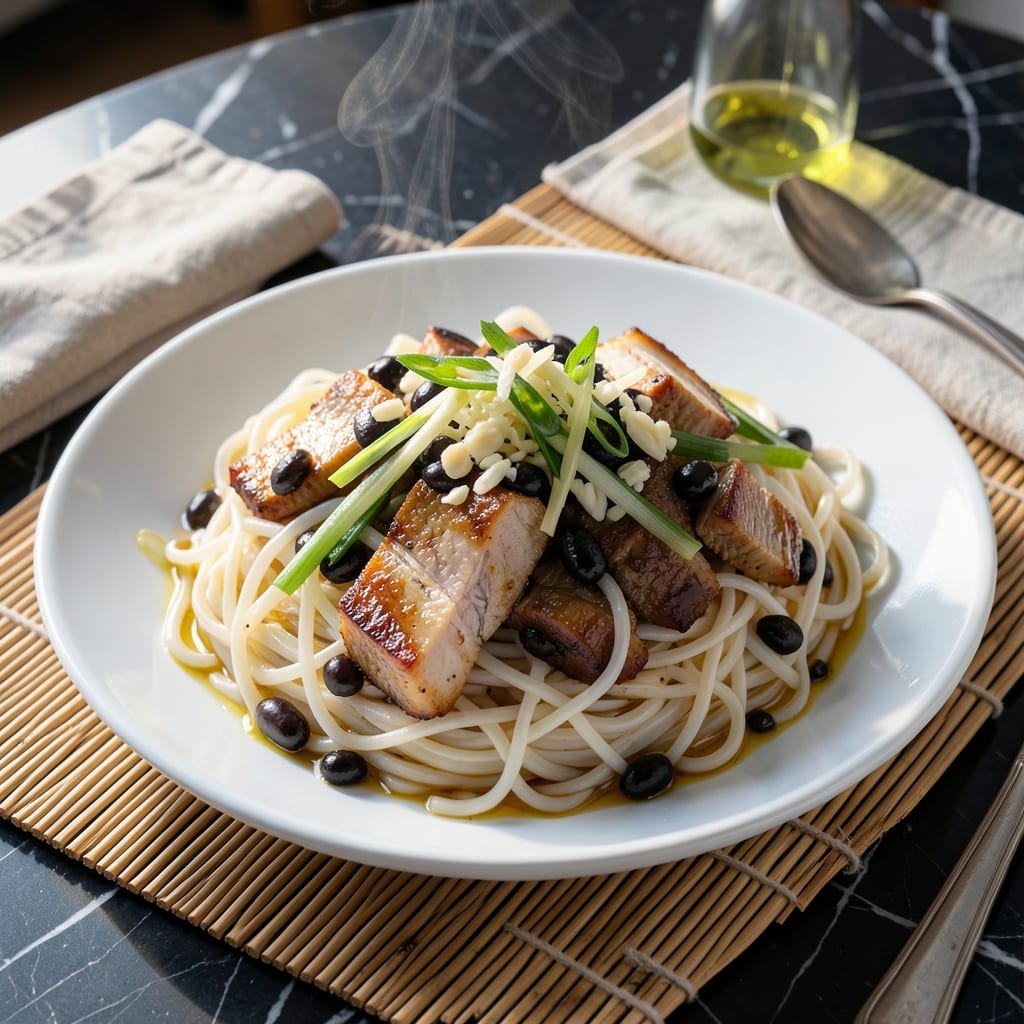
There’s something magical about the way wok aromatics transform simple rice vermicelli into a fragrant, flavorful dish. This recipe captures the essence of Guilin street food with bold, authentic flavors that come together quickly at home.
The secret lies in the balance of fresh herbs, fermented black beans, and savory pork, all stirred through chewy noodles. I tested this multiple times to ensure the ingredients work perfectly in a standard kitchen, not just a professional wok setup.
What you get is a dish with layers of complex flavors—umami from the fermented beans, freshness from the herbs, and a satisfying texture from the vermicelli. The aroma alone will transport you to a bustling night market.
Serve hot with extra herbs and a drizzle of chili oil for the full experience.
Ingredients for Guilin Rice Vermicelli
Authentic street food flavors start with these carefully selected aromatics and fresh herbs.
| Ingredient | Amount | Notes |
|---|---|---|
| Rice Vermicelli Noodles 🍜 | 8 oz | Soaked in warm water 10 minutes |
| Pork Shoulder 🥩 | ¾ lb | Thinly sliced for quick cooking |
| Fermented Black Beans ⚫ | 2 tbsp | Rinsed and chopped coarsely |
| Garlic Cloves 🧄 | 6 cloves | Minced finely for aromatics |
| Fresh Ginger 🌿 | 1 tbsp | Peeled and minced |
| Scallions 🧅 | 4 whole | Cut into 2-inch pieces |
| Fresh Cilantro 🌿 | ½ cup | Chopped, for garnish and flavor |
| Thai Basil 🌿 | ½ cup | Leaves only, for freshness |
| Soy Sauce 🫒 | 3 tbsp | Light or all-purpose variety |
| Oyster Sauce 🫒 | 1 tbsp | Vegetarian oyster sauce if needed |
| Shaoxing Wine 🍶 | 2 tbsp | Dry sherry as substitute |
| Sesame Oil 🫒 | 1 tsp | Toasted, for finishing aroma |
| Vegetable Oil 🫒 | 3 tbsp | High smoke point for stir-frying |
| Red Chili Flakes 🌶️ | 1 tsp | Adjust to taste for heat |
| White Pepper 🌶️ | ½ tsp | Ground, for authentic flavor |
The fermented black beans are non-negotiable for that signature umami depth. Asian markets carry the best quality, often in the dried goods section. Look for vacuum-sealed bags—avoid any with visible mold or off smells. For the pork, shoulder or butt has the right fat marbling. If your local store doesn’t carry it, Trader Joe’s has pre-sliced options that work well in a pinch.
No Shaoxing wine? Dry sherry is the closest substitute (use the same amount). Vegetarian? Swap oyster sauce for mushroom sauce—Lee Kum Kee makes a solid version. Can’t find Thai basil? Regular basil works, but add half a teaspoon of anise seeds to mimic that licorice note. The rice vermicelli must be the thin kind, not the wide rice sticks (those are for pad Thai).
Fresh herbs keep best wrapped in damp paper towels in a bag—3-4 days max. Fermented black beans last 6-12 months unopened, 3 months in the fridge after opening. The pork freezes well raw for 3 months, but cook from thawed for best texture.
Why You’ll Love This Recipe
- I’ll be real: this stretches beautifully. Leftovers taste even better the next day, and it’s cheap to make for a big group.
- One Pot Wonder: I love that everything simmers together—the noodles, pork, and those funky fermented black beans—so I’m not stuck washing a mountain of dishes.
- Umami Bomb: The combo of garlic, ginger, and fermented black beans gives this dish a deep, savory punch that’s honestly hard to beat.
- Feeds a Crowd: I’ll be real: this stretches beautifully. Leftovers taste even better the next day, and it’s cheap to make for a big group.
Step-by-Step Instructions for Guilin Rice Vermicelli
Master the wok technique for authentic texture and layered aromatics in this classic dish.
Step 1: Prepare the Noodles and Pork
Soak the 8 oz Rice Vermicelli Noodles in warm water for 10 minutes until pliable but still firm. Drain and rinse with cold water to stop the cooking process. This prevents them from becoming mushy when stir-fried later.
While the noodles soak, thinly slice the 0.75 lb Pork Shoulder against the grain into ¼-inch thick strips. The thin slices ensure quick, even cooking in the wok. Pat the pork dry with paper towels to promote better browning.
Step 2: Bloom the Aromatics
Heat a wok or large skillet over high heat until a drop of water sizzles and evaporates immediately. Add 3 tbsp Vegetable Oil and swirl to coat the surface. Add the 2 tbsp Fermented Black Beans, 6 cloves Garlic Cloves, and 1 tbsp Fresh Ginger, stirring constantly for 30-45 seconds until fragrant.
Watch for the garlic to turn just light golden at the edges—this signals the aromatics are fully bloomed. The fermented black beans should soften slightly in the oil. Be careful not to burn the garlic, as bitterness will ruin the dish’s balance.
Step 3: Stir-Fry the Pork and Scallions
Add the sliced pork shoulder to the wok, spreading it in a single layer. Let it sear undisturbed for 1 minute before stirring. Cook for 3-4 minutes total until the pork is no longer pink and develops light caramelization.
Add the 4 whole Scallions cut into 2-inch pieces and stir-fry for 1 minute until they soften slightly but retain their bright green color. The scallions should release their aroma without losing crispness.
Step 4: Combine Noodles with Sauce
Add the drained rice vermicelli noodles to the wok along with 3 tbsp Soy Sauce, 1 tbsp Oyster Sauce, 2 tbsp Shaoxing Wine, 1 tsp Red Chili Flakes, and 0.5 tsp White Pepper. Toss everything together with tongs for 2-3 minutes until the noodles absorb the sauce and turn glossy.
The noodles should be tender but still have a slight bite. If the mixture seems dry, add a splash of water to help distribute the sauce evenly. The wok should be hot enough to create a light sizzle as you toss.
Step 5: Finish and Garnish
Remove the wok from heat and drizzle 1 tsp Sesame Oil over the noodles. Toss once more to incorporate. Transfer to a serving platter and top with 0.5 cup Fresh Cilantro and 0.5 cup Thai Basil leaves.
The herbs should be added fresh at the end to preserve their vibrant color and aroma. Serve immediately while hot, with each portion featuring a balance of tender noodles, savory pork, and aromatic herbs in every bite.
Pro Tips For Making Guilin Rice Vermicelli
- Soak the Noodles: Cover rice vermicelli in hot water for exactly 8-10 minutes—any less and they stay brittle, any more and they turn mushy. I learned this the hard way after ending up with a sad, gummy bowl.
- Rinse the Beans: Give fermented black beans a quick rinse under cold water to cut some of the saltiness, but don’t soak them or you’ll wash away all that punchy flavor.
- Brown the Pork: Sear pork shoulder in small batches over medium-high heat for 3-4 minutes per side—crowding the pan steams it instead of browning, and you’ll lose that deep, caramelized base for the sauce.
- Smash the Aromatics: Lightly crush garlic cloves and ginger with the side of your knife before mincing—the extra surface area releases way more aroma into the oil. Sounds weird, but it works.
Common Mistakes When Making guilin rice vermicelli
Over-soaking Noodles
Soaking the 8 oz Rice Vermicelli Noodles for more than 10 minutes makes them gummy. I learned this the hard way—once left them for 20 minutes and ended up with a mushy mess. They should be pliable but still firm to the bite. 💡
Cold Wok Syndrome
Starting with a cold wok leads to steamed pork instead of seared. Heat it over high heat until water sizzles and evaporates instantly. I test with a drop of water—if it dances, you’re ready to add 3 tbsp Vegetable Oil.
Burning the Aromatics
Garlic and ginger burn in seconds over high heat. Stir constantly for 30-45 seconds until just fragrant. Burnt garlic adds bitterness that ruins the dish’s balance. Trust me, I’ve had to start over because of this.
Overcrowding the Wok
Adding all the pork at once lowers the temperature too much. Cook in batches if needed, giving each piece space to sear properly. This ensures light caramelization instead of steaming in its own juices.
Skipping the Rest
Letting the dish sit for 2-3 minutes after cooking allows flavors to meld. I always resist the urge to serve immediately. The noodles absorb the sauce better, and the herbs stay vibrant. 🌟
Wrong Noodle Type
Using wide rice sticks instead of thin vermicelli changes the texture completely. The thin noodles cook faster and absorb sauce better. Check the package—it should specify “vermicelli” not “rice sticks.”
Nutrition Facts
Frequently Asked Questions
Can I use chicken instead of pork?
Use 0.75 lb boneless chicken thighs sliced thinly. They cook even faster than pork—about 2-3 minutes total. Chicken breast works too but may dry out more easily.
What if I can’t find fermented black beans?
Substitute with 1 tbsp miso paste mixed with 1 tsp soy sauce. It won’t be identical but adds similar umami depth. Avoid skipping entirely—it’s key to the dish’s signature flavor.
How do I prevent the noodles from sticking?
Use a well-seasoned wok or nonstick skillet and high heat. Stir constantly once noodles are added, and add a splash of water if they seem dry. Never let them sit undisturbed for more than 10 seconds.
Can I make this vegetarian?
Swap pork for 8 oz firm tofu or mushrooms. Use vegetarian oyster sauce and add 1 tbsp soy sauce extra for depth. The technique remains the same!

- Iranian Jeweled Rice Recipe: Saffron-Infused Celebration on a Plate - October 19, 2026
- Jimmy Dean Sausage and Rice Recipe: Hearty One-Pot Savory Delight - October 19, 2026
- Indian Jasmine Rice Recipe: Fragrant Basmati-Free Elegance - October 19, 2026