
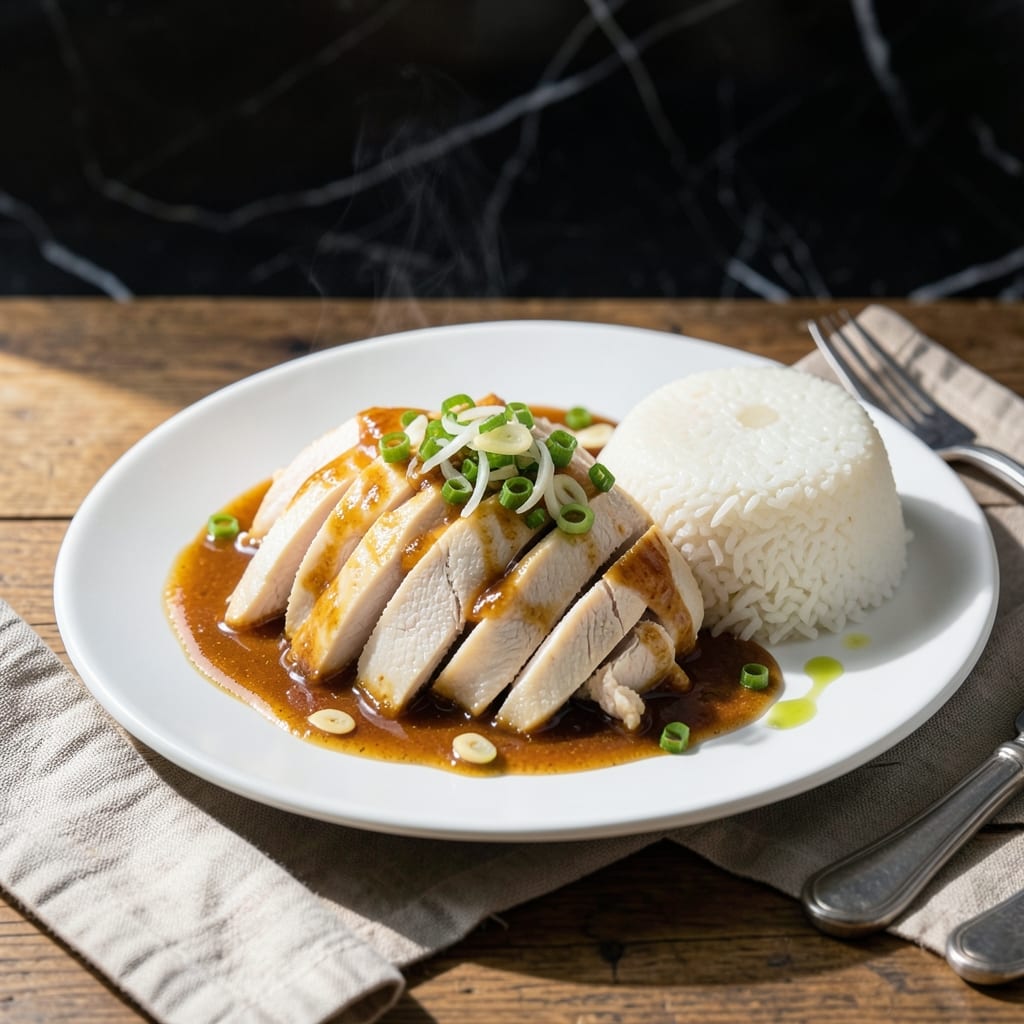
This ginger sauce elevates Hainan chicken rice with its bright, aromatic punch. The combination of fresh ginger, garlic, and green onions creates a fragrant and zesty accompaniment that cuts through the richness of the dish.
Easy to prepare with simple ingredients, this sauce balances heat and freshness perfectly. A small batch keeps well in the fridge for up to a week, ready to enhance any meal.
Ingredients for Hainan Chicken Rice Ginger Sauce
Nine ingredients create this bright, aromatic sauce that elevates every bite with zesty depth.
| Ingredient | Amount | Notes |
|---|---|---|
| Fresh Ginger 🌿 | ½ cup | Peeled and finely grated |
| Garlic Cloves 🧄 | 4 cloves | Peeled and minced |
| Green Onions 🧅 | ½ cup | Thinly sliced, white and green parts |
| Light Soy Sauce 🫒 | 2 tbsp | Low-sodium preferred |
| Sesame Oil 🫒 | 1 tbsp | Toasted for depth |
| Rice Vinegar 💧 | 1 tbsp | Or substitute lime juice |
| Granulated Sugar 🍚 | 1 tsp | Balances acidity |
| Chili Flakes 🌶️ | ½ tsp | Adjust for heat preference |
| Neutral Cooking Oil 🫒 | 3 tbsp | Like vegetable or canola |
The ginger is non-negotiable here. Look for firm, smooth roots with a spicy aroma—older ginger gets fibrous and bitter. Asian markets often have the freshest, but most grocery stores stock decent quality. I always buy extra and freeze it (peel before freezing) so I’m never without. The green onions should be crisp with bright green tops—avoid any with wilted or yellowed leaves.
No rice vinegar? Lime or lemon juice works in a pinch, though the flavor shifts slightly. For a milder heat, skip the chili flakes or use a pinch of cayenne instead. If you’ve got fresh chilies, finely mince a small red one for a vibrant kick. The soy sauce can be regular if that’s what you have, but low-sodium lets you control the salt better.
This sauce keeps beautifully. Store in an airtight jar in the fridge for up to 1 week. The flavors actually deepen after a day. For longer storage, freeze in ice cube trays—3 months max. Thaw at room temp before using.
Why You’ll Love This Recipe
- No-Fuss Blending: I toss ginger, garlic, and green onions into the blender—no fancy knife skills needed, just pulse and pour.
- Umami Bomb: The mix of light soy sauce and sesame oil with fresh ginger hits that savory-sweet spot I crave every time.
- Meal Prep Hero: I make a big batch on Sunday and drizzle it over rice, noodles, or roasted veggies all week. (Yes, even on a Tuesday night)
- Pennywise Flavor: A handful of affordable pantry staples stretches into a sauce so good it feels like a restaurant splurge.
Step-by-Step Instructions for Hainan Chicken Rice Ginger Sauce
Master this aromatic sauce with precise technique and balanced flavors in just minutes.
Step 1: Heat the Oil and Sauté Aromatics
Heat the 3 tbsp neutral cooking oil in a small saucepan over medium-low heat. The oil should shimmer but not smoke—this gentle heat prevents burning the delicate aromatics.
Add the 0.5 cup fresh ginger and 4 cloves garlic cloves, stirring constantly for 2-3 minutes until fragrant and just beginning to turn light golden brown. The ginger will release its pungent, citrusy aroma, signaling it’s ready for the next step. Watch closely—ginger burns easily.
Step 2: Bloom the Flavors with Green Onions
Stir in the 0.5 cup green onions and cook for an additional 1-2 minutes. The white parts will soften slightly while the green tops brighten in color, filling your kitchen with a fresh, oniony scent.
This step develops the base complexity of the sauce. The green onions should sizzle gently in the oil but not brown. Their mild sharpness balances the warmth of the ginger and garlic.
Step 3: Create the Sauce Base with Soy and Vinegar
Pour in the 2 tbsp light soy sauce and 1 tbsp rice vinegar. The mixture will bubble vigorously as the vinegar’s acid reacts with the hot oil. Stir well to combine, scraping up any browned bits from the bottom of the pan.
Add the 1 tsp granulated sugar and 0.5 tsp chili flakes, stirring until the sugar dissolves completely. The sauce will transform from translucent to a rich amber color as the sugar caramelizes slightly.
Step 4: Finish with Sesame Oil and Rest
Remove the pan from heat and stir in the 1 tbsp sesame oil. The sauce will become glossy and deeply fragrant—the toasted sesame aroma should be immediately noticeable.
Let the sauce cool to room temperature. As it sits, the flavors will meld together beautifully. The final texture should be slightly thick but still pourable, with visible flecks of ginger, garlic, and green onions suspended throughout.
Transfer to a serving bowl and use immediately, or store in an airtight container in the refrigerator for up to 5 days. The flavors deepen over time, making it even more delicious the next day.
Pro Tips For Making Hainan Chicken Rice Ginger Sauce
- Grate the ginger: Fresh ginger releases more juice when finely grated—use a microplane for a smooth, potent base that blends perfectly into the sauce.
- Bloom the aromatics: Cook the garlic and green onions in sesame oil over medium-low heat for 30 seconds until fragrant, but don’t let them brown or they’ll turn bitter.
- Skip the old ginger: Older ginger gets fibrous and less pungent—I learned this the hard way after using a knobby root that had sat in my pantry for months.
- Rest the sauce: Let the ginger sauce sit for 10 minutes after mixing to let the flavors meld—sounds weird, but it actually changes the outcome.
Dietary Considerations for This Recipe
Gluten-Free Option
This sauce is naturally gluten-free if you use tamari instead of regular soy sauce. I recommend San-J Tamari—it has the same depth of flavor without any wheat. Always check labels, as some brands process their tamari in facilities that handle gluten. 💪
Low-Sodium Adaptation
To reduce sodium, use low-sodium soy sauce and cut the amount to 1 tbsp. You can boost flavor with an extra 1 tsp rice vinegar and a pinch of MSG if you have it. Taste as you go—this sauce should be bold, not salty.
Vegan-Friendly
The base recipe is already vegan, but ensure your chili flakes and soy sauce don’t contain hidden animal products. Some brands add fish sauce to chili flakes, so McCormick’s or Simply Organic are safe bets. The sauce pairs well with tofu or tempeh.
Allergen Notes
This sauce contains sesame oil, a top allergen. For those with sensitivities, substitute with avocado oil or another neutral oil. The flavor will be milder, so add an extra ½ tsp toasted sesame seeds for depth if tolerated.
Spice Level Control
Adjust the heat by reducing or omitting the chili flakes. For a kid-friendly version, skip them entirely. If you love heat, add 1 tsp sriracha or a dash of Sichuan peppercorns for a numbing spice. 🌶️
Sugar Alternatives
Swap the granulated sugar for honey, maple syrup, or a sugar-free substitute like monk fruit sweetener. Use the same 1 tsp measurement, but taste first—some alternatives are sweeter than sugar and may need less.
Nutrition Facts
Frequently Asked Questions
Can I use ground ginger instead of fresh?
Fresh ginger is essential for authentic flavor and texture. Ground ginger lacks the bright, zesty notes and can make the sauce gritty. If absolutely necessary, use 1 tbsp ground ginger but expect a muted taste.
How long does this sauce keep?
Stored in an airtight container in the fridge, it stays fresh for up to 5 days. For longer storage, freeze in ice cube trays for up to 3 months. Thaw at room temperature before using.
Why did my sauce turn bitter?
Bitterness usually means the ginger or garlic burned during cooking. Always use medium-low heat and stir constantly to prevent browning. Fresh ingredients also help avoid this issue.
Can I make this sauce ahead of time?
Yes! The flavors actually improve after 24 hours in the fridge. Prepare it a day in advance for the best taste. Just give it a good stir before serving.

- Jollof Rice Sauce Recipe: West African Tomato and Spice Infusion - September 25, 2026
- Japanese Rice Soup Recipe: Umami-Rich Comfort in a Bowl - September 25, 2026
- Homemade Cream Of Rice Recipe: Silk-Smooth Breakfast in Minutes - September 25, 2026