
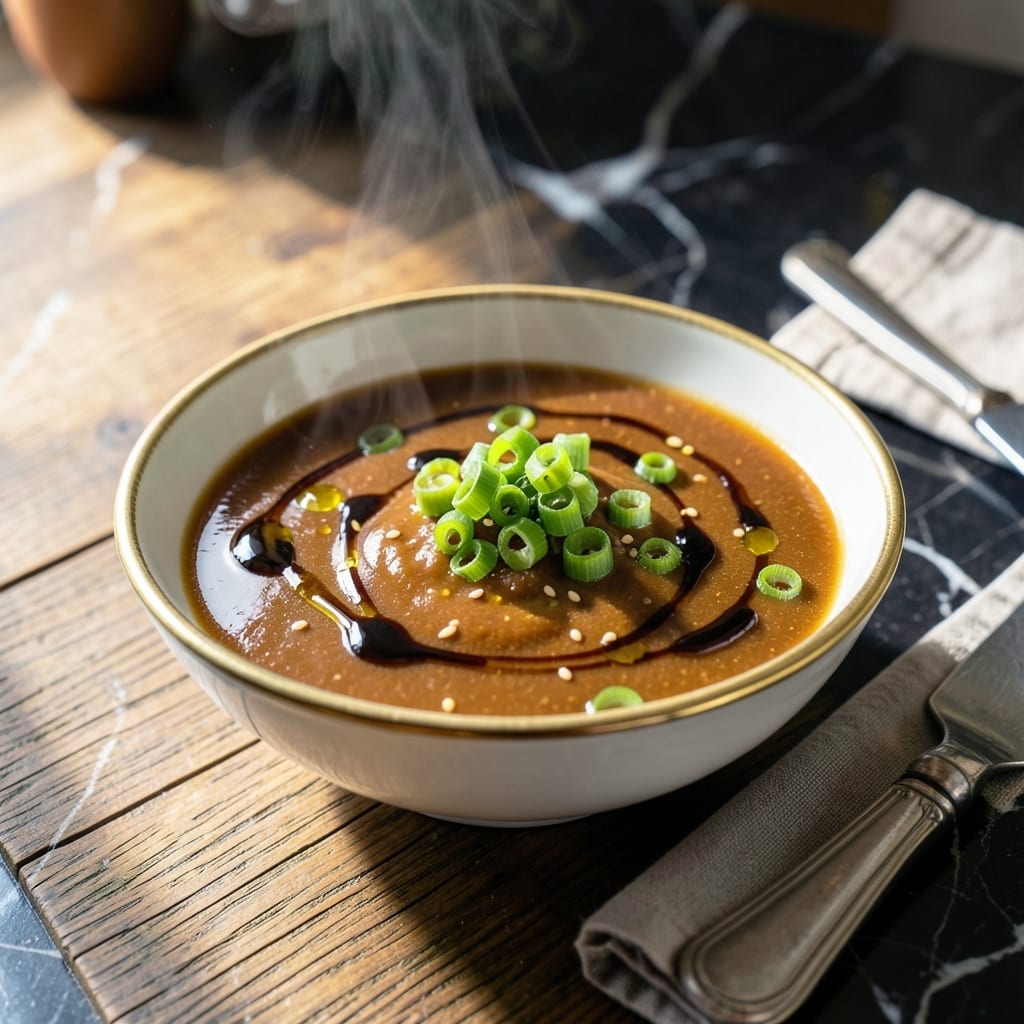
This dipping sauce elevates Hainanese chicken rice with its aromatic blend of ginger, garlic, and scallions. The simple combination delivers a punchy, savory depth that complements the dish perfectly.
I’ve refined this recipe to balance bold flavors without overpowering the chicken. The result is a versatile sauce that’s quick to make and enhances every bite with its bright, umami-rich profile.
Ingredients for Hainanese Chicken Rice Dipping Sauce
Nine ingredients transform into this aromatic, umami-packed dipping sauce with minimal effort.
| Ingredient | Amount | Notes |
|---|---|---|
| Fresh Ginger 🌿 | 1 piece | 2-inch knob, peeled and minced |
| Garlic Cloves 🧄 | 4 cloves | Minced finely for maximum flavor |
| Scallions 🧅 | 4 whole | Thinly sliced, white and green parts |
| Light Soy Sauce 🫒 | 2 tbsp | Low-sodium preferred for balance |
| Dark Soy Sauce 🫒 | 1 tsp | For depth and color |
| Sesame Oil 🫒 | 1 tsp | Toasted variety for nutty aroma |
| Rice Vinegar 🍯 | 1 tbsp | Or substitute apple cider vinegar |
| Chili Oil 🌶️ | ½ tsp | Adjust to heat preference |
| Chicken Stock 🍲 | 2 tbsp | Reduced from poaching liquid |
The ginger and garlic form the backbone of this sauce. Fresh ginger is non-negotiable—powder lacks the bright, zesty punch. Asian markets often carry the most fragrant ginger, but any grocery store will do if you pick firm, smooth knobs. For the soy sauces, Pearl River Bridge or Lee Kum Kee are professional-grade choices that deliver consistent quality.
No scallions? Shallots at half the amount work in a pinch, though the flavor profile shifts slightly. Missing dark soy sauce? Use regular soy sauce plus a pinch of sugar for color and depth. The chili oil can be swapped with Sriracha or gochujang—adjust the quantity to taste. For a vegetarian version, replace chicken stock with vegetable stock or mushroom broth.
This sauce keeps beautifully in the fridge for 5-7 days in an airtight container. The flavors deepen over time, making it even more delicious. For longer storage, freeze in ice cube trays for up to 3 months—perfect for single-serving portions.
Why You’ll Love This Recipe
- 5-Minute Mix: I just toss the ginger, garlic, and scallions into a bowl with the soy sauces—no cooking, no fuss, just stir and serve.
- Umami Bomb: The dark soy sauce adds this deep, caramelized richness that makes every bite of chicken taste even more savory.
- Dinner Saver: Between us, this sauce turns leftover chicken into a whole new meal the next day.
- Budget Keeper: A handful of pantry staples and a few fresh ingredients—this costs pennies but tastes like a restaurant dish.
Step-by-Step Instructions for Hainanese Chicken Rice Dipping Sauce
This method delivers the perfect balance of aromatic, savory, and slightly tangy flavors every time.
Step 1: Infuse the Oil with Aromatics
Heat a small saucepan over medium-low heat until warm. Add the 1 piece Fresh Ginger and 4 cloves Garlic Cloves, stirring constantly to prevent burning. Cook for 2-3 minutes until the mixture becomes fragrant and the garlic turns light golden—not brown.
Add the 4 whole Scallions and continue stirring for another 1-2 minutes until they soften slightly. This process extracts the essential oils from the aromatics, creating a deeply flavorful base for your sauce. Remove from heat immediately if the garlic starts to darken.
Step 2: Add Liquids and Simmer
Pour in the 2 tbsp Chicken Stock and 1 tbsp Rice Vinegar, using a wooden spoon to scrape up any browned bits from the bottom of the pan. These fond bits pack intense flavor and will dissolve into the sauce, enriching its depth.
Add the 2 tbsp Light Soy Sauce and 1 tsp Dark Soy Sauce, stirring to combine. Bring the mixture to a gentle simmer over medium heat and let it cook for 3-4 minutes until the liquids reduce slightly and the sauce begins to thicken. The soy sauces will deepen in color as they meld with the aromatics.
Step 3: Finish with Oils and Adjust
Remove the saucepan from the heat and stir in the 1 tsp Sesame Oil. This adds a nutty aroma that complements the ginger and garlic beautifully. Taste the sauce and adjust seasoning if needed, though the soy sauces should provide sufficient saltiness.
Finally, add the 0.5 tsp Chili Oil and stir to incorporate. The chili oil adds a subtle heat that balances the richness of the other ingredients. Let the sauce cool to room temperature, allowing the flavors to meld together fully. The finished sauce should have a glossy sheen and a complex, layered aroma.
Step 4: Strain and Serve
For a smoother texture, strain the sauce through a fine-mesh sieve into a serving bowl, pressing down on the solids with the back of a spoon to extract all the flavorful oil. Discard the solids, as their essence has already infused the sauce.
The sauce should be pourable but slightly viscous, coating the back of a spoon. Serve it alongside your Hainanese chicken and rice, where its vibrant flavors will elevate every bite. For best results, prepare the sauce at least 30 minutes before serving to allow the flavors to develop fully.
Pro Tips For Making Hainanese Chicken Rice Dipping Sauce
- Grate the Ginger: Fresh ginger releases more juice when finely grated, giving your sauce a stronger, more vibrant flavor. I learned this the hard way after chopping it for years and wondering why the taste was so muted.
- Bloom the Aromatics: Cook the ginger, garlic, and scallions in oil until fragrant—about 30-45 seconds—before adding the soy sauces. Skipping this step leaves the sauce tasting raw and one-dimensional.
- Balance the Soy Sauces: Use a 2:1 ratio of light to dark soy sauce for the right saltiness and depth. Too much dark soy can make the sauce bitter and overpowering.
- Rest Before Serving: Let the sauce sit for at least 10 minutes after cooking. This gives the flavors time to meld together, especially the sharpness of the raw aromatics.
Wine and Beer Pairings for These Flavors
Light Beer Pairings
An ice-cold Asian lager like Singha or Tsintgtao cleanses your palate between bites of the rich chicken. The crisp, light body lets the sauce’s ginger-garlic notes shine without competition. 🍺
Crisp White Wines
A dry Riesling from Germany or Washington State offers the perfect contrast with its bright acidity and citrus notes. The wine’s minerality complements the umami depth in the sauce beautifully.
Sparkling Options
For a celebratory touch, Prosecco works wonderfully. Its gentle bubbles and subtle apple notes refresh your palate while enhancing the sauce’s aromatic complexity. The slight sweetness balances the savory elements.
Dark Beer Alternatives
If you prefer darker beers, a Vietnamese black beer like 333 has the maltiness to stand up to the sauce’s bold flavors. The roasted notes create an interesting contrast with the ginger and garlic.
Serve at 45-50°F for optimal flavor and carbonation.
Non-Alcoholic Choices
For a non-alcoholic option, jasmine tea (chilled or hot) enhances the sauce’s aromatic qualities. The floral notes pair surprisingly well with the ginger and scallions. 💡
Nutrition Facts
Frequently Asked Questions
Can I make this sauce ahead of time?
The flavors actually deepen after 24 hours in the fridge. Store in an airtight container for up to 5-7 days for best quality.
What if I don’t have dark soy sauce?
Substitute with 1 tsp light soy sauce plus a pinch of sugar. This mimics the color and depth of dark soy while keeping the balance intact.
How do I adjust the spice level?
Start with 0.25 tsp chili oil, taste, then add more. For no heat, skip it entirely—the ginger and garlic still pack plenty of flavor.
Can I freeze leftover sauce?
Yes! Freeze in ice cube trays for up to 3 months. Thaw only what you need in the fridge overnight for fresh-tasting results.

- Jollof Rice Sauce Recipe: West African Tomato and Spice Infusion - September 25, 2026
- Japanese Rice Soup Recipe: Umami-Rich Comfort in a Bowl - September 25, 2026
- Homemade Cream Of Rice Recipe: Silk-Smooth Breakfast in Minutes - September 25, 2026