
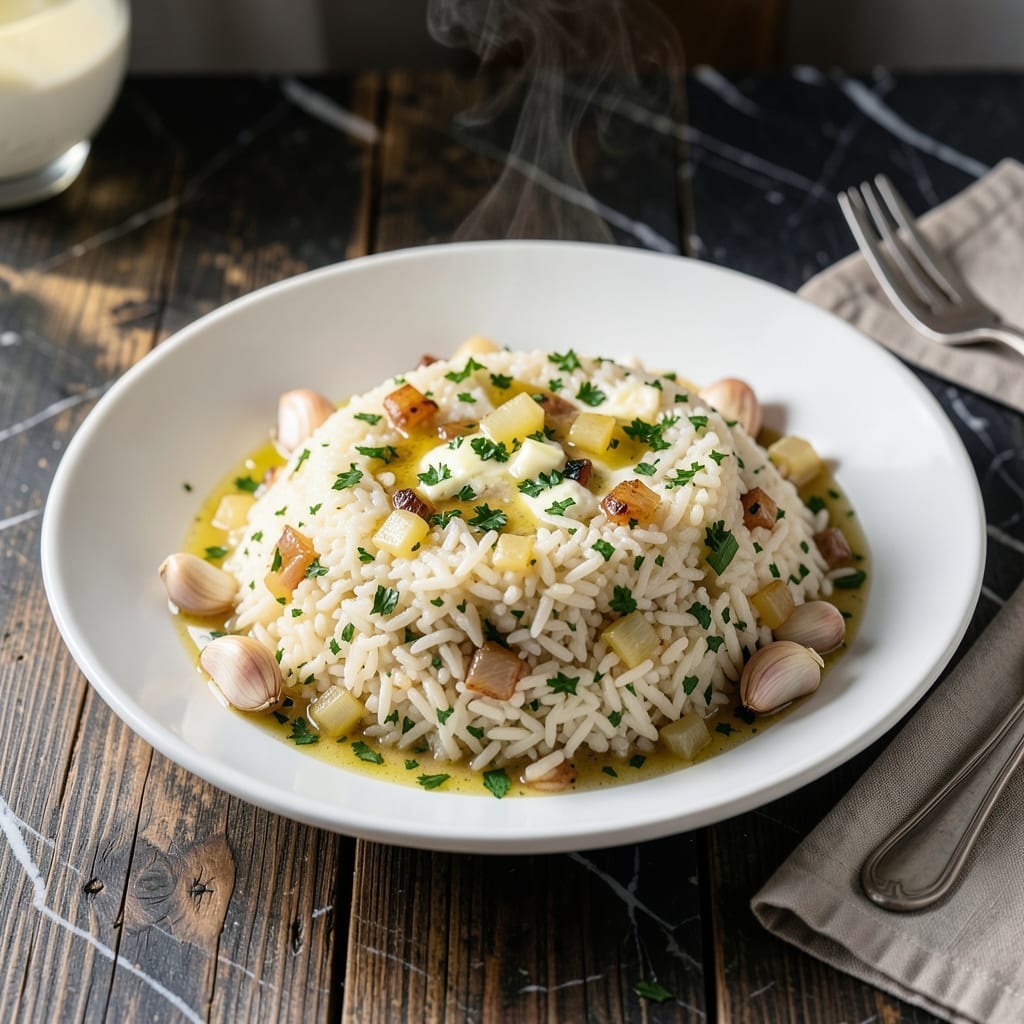
This herb rice pilaf transforms simple long-grain rice into a fragrant side dish worthy of any dinner table. The secret lies in toasting the rice before cooking, which enhances its natural nuttiness.
A blend of fresh herbs infuses every bite with bright, aromatic flavors. The technique ensures fluffy, separate grains that never clump, while a light broth base adds subtle depth without overpowering.
Perfect alongside roasted chicken, grilled fish, or as part of a vegetarian spread. The result is a versatile dish that’s as elegant as it is effortless.
With minimal prep and 20 minutes of cooking time, this pilaf delivers restaurant-quality results at home.
Ingredients for Herb Rice Pilaf
Transform long-grain rice into a fragrant, herb-infused side with these essential ingredients.
| Ingredient | Amount | Notes |
|---|---|---|
| Long-Grain White Rice 🌾 | 1 ½ cups | Uncooked, rinsed until clear |
| Unsalted Butter 🧈 | 2 tbsp | Divided for toasting and finishing |
| Yellow Onion 🧅 | 1 whole | Finely diced |
| Garlic Cloves 🧄 | 2 cloves | Minced finely |
| Vegetable Broth 🥣 | 3 cups | Low-sodium preferred |
| Fresh Parsley 🌿 | ¼ cup | Chopped, flat-leaf variety |
| Fresh Thyme Sprigs 🍃 | 4 sprigs | Leaves stripped, stems discarded |
| Fresh Rosemary 🌿 | 1 tbsp | Finely chopped |
| Bay Leaf 🍃 | 1 whole | Dried or fresh |
| Kosher Salt 🧂 | 1 tsp | Diamond Crystal preferred |
| Black Pepper 🌶️ | ½ tsp | Freshly ground |
| Lemon Zest 🍋 | 1 tsp | Finely grated for brightness |
The rice quality matters here. Long-grain varieties like Basmati or Jasmine yield the fluffiest results—avoid short-grain as it can turn gummy. Trader Joe’s and Whole Foods offer excellent options. Fresh herbs are non-negotiable for that bright, aromatic punch; farmers markets often have the most vibrant bunches. Toasting the rice in butter before adding liquid is what develops that nutty depth.
No fresh herbs? Dried at one-third the amount works in a pinch, though the flavor won’t be as vivid. Vegetable broth can be swapped for chicken broth if not strictly vegetarian, but stick with low-sodium to control seasoning. For a richer finish, ghee can replace butter—just watch the heat to prevent browning. Lemon zest is optional but adds a bright note that balances the dish beautifully.
Cooked pilaf keeps well in the fridge for up to 4 days. Reheat gently with a splash of broth to restore moisture. For make-ahead, toast the rice and prep herbs the night before—store separately and combine when ready to cook. Freezing isn’t recommended as it can make the grains mushy.
Why You’ll Love This Recipe
- One Pot Wonder: I love that it all comes together in a single pot—just sauté the onion and garlic, add rice and broth, then let it simmer.
- Rich & Aromatic: The butter and vegetable broth infuse every grain of rice with a deep, savory flavor that’s hard to resist.
- Pairs with Anything: I serve it with roasted chicken one night, then pack leftovers with grilled veggies for lunch the next day.
- Budget Stretcher: Long-grain rice and basic pantry staples make this dish as kind to my wallet as it is to my taste buds.
Step-by-Step Instructions for Herb Rice Pilaf
Master the technique for perfectly fluffy, aromatic rice with these precise steps.
Step 1: Toast the Rice and Aromatics
Melt 1 tablespoon Unsalted Butter in a heavy-bottomed saucepan over medium heat. Add the 1.5 cups Long-Grain White Rice and stir constantly for 2-3 minutes until the grains turn translucent and smell nutty—this toasting step enhances the rice’s natural flavor.
Immediately add the finely diced Yellow Onion and cook for another 3-4 minutes until softened and just beginning to turn golden. The onion should be translucent but not browned. Stir in the minced Garlic Cloves and cook for 30 seconds until fragrant but not colored.
Step 2: Build the Herb-Infused Liquid Base
Pour in the 3 cups Vegetable Broth and add the remaining 1 tablespoon Unsalted Butter, 1 whole Bay Leaf, stripped leaves from 4 sprigs Fresh Thyme Sprigs, 1 tablespoon Fresh Rosemary, 1 tsp Kosher Salt, 0.5 tsp Black Pepper, and 1 tsp Lemon Zest.
Stir well to combine and bring to a gentle boil over medium-high heat. As it heats, the herbs will release their essential oils, creating a fragrant steam that infuses the liquid. This step takes about 5 minutes—you’ll see small bubbles breaking the surface consistently.
Step 3: Simmer to Perfection
Once boiling, reduce heat to low, cover the saucepan tightly with a lid, and simmer for 15 minutes. Do not stir during this time—disturbing the rice releases starch and can make the final result gummy rather than fluffy.
After 15 minutes, remove from heat and let it sit covered for an additional 10 minutes. This steaming period allows the rice to absorb any remaining liquid and ensures even cooking throughout. The rice is done when all liquid is absorbed and the grains are tender with no chalky center.
Step 4: Finish and Serve
Remove the lid and fluff the rice gently with a fork to separate the grains. Discard the Bay Leaf at this point. Fold in the 0.25 cup Fresh Parsley, reserving a small amount for garnish if desired.
The pilaf should be light and separate easily with no clumping. Taste and adjust seasoning if needed—though the measured Kosher Salt should provide perfect balance. Serve immediately while hot, garnished with the remaining parsley for a pop of color and freshness.
Pro Tips For Making Herb Rice Pilaf
- Toast the Rice: Cook the rice in butter for 2-3 minutes before adding liquid—this brings out a nutty depth that plain steamed rice lacks.
- Sauté Onions Low: Let the yellow onions sweat gently in butter for 8-10 minutes until translucent; rushing this step leaves them raw and harsh in the finished pilaf.
- Use Warm Broth: I learned this the hard way—adding cold vegetable broth slows the cooking and can make the rice gummy; heat it first for even absorption.
- Rest Before Serving: After the rice is done, let it sit covered off the heat for 5 minutes—this lets the grains firm up and the herbs distribute evenly.
Flavor Customization for This herb rice pilaf
Citrus Brightness Boost
Add 1 additional tsp Lemon Zest and 1 tbsp fresh lemon juice for a vibrant citrus punch. The acidity cuts through the richness and brightens all the herb flavors. I love how this makes the dish feel lighter and more refreshing. 💛
Mediterranean Herb Blend
Swap the thyme and rosemary for 2 tbsp chopped fresh dill and 1 tbsp chopped fresh oregano. This combination gives a distinctly Mediterranean character that pairs beautifully with grilled lamb or fish. The dill adds a slightly grassy note that works wonderfully.
Spiced Warmth
Stir in ½ tsp ground cumin and ¼ tsp ground cinnamon with the rice during toasting. These warm spices add depth and complexity, creating a pilaf with Moroccan-inspired flavors. Just a pinch of each transforms the dish entirely.
Nutty Texture
Toast ¼ cup slivered almonds or pine nuts in a dry pan until golden, then fold into the finished pilaf. The crunch contrasts beautifully with the fluffy rice. I prefer almonds for their subtle sweetness and affordability. ⚡
Cheesy Indulgence
Fold in ½ cup crumbled feta or grated Parmesan just before serving. The saltiness of the cheese enhances all the herb flavors. Feta adds a creamy tang, while Parmesan gives a nutty, umami depth.
Fresh Herb Garnish
Top with additional chopped herbs like fresh mint or cilantro for a burst of color and flavor. This not only looks beautiful but adds another layer of freshness to each bite.
Nutrition Facts
Frequently Asked Questions
Why toast the rice first?
Toasting enhances the nutty flavor and prevents stickiness. It creates a barrier that helps grains stay separate during cooking.
Can I use dried herbs instead?
Yes, but reduce to 1/3 the amount. Fresh herbs provide brighter flavor, but dried work in a pinch. Add them with the liquid.
How do I fix mushy pilaf?
Spread it on a tray to cool quickly and dry out. Next time, use less liquid or rinse rice less.
What’s the best rice-to-liquid ratio?
For long-grain, use 1:2 rice to broth. This recipe’s 1.5 cups rice to 3 cups broth yields perfect texture.

- Ground Beef Rice and Beans Recipe: Slow-Simmered Savory Harmony - October 17, 2026
- Guyanese Fried Rice Recipe: Caribbean Spice With Wok-Charred Aromatics - October 17, 2026
- Hakka Thunder Tea Rice Recipe: Wok-Charred Herbal Infusion - October 17, 2026