
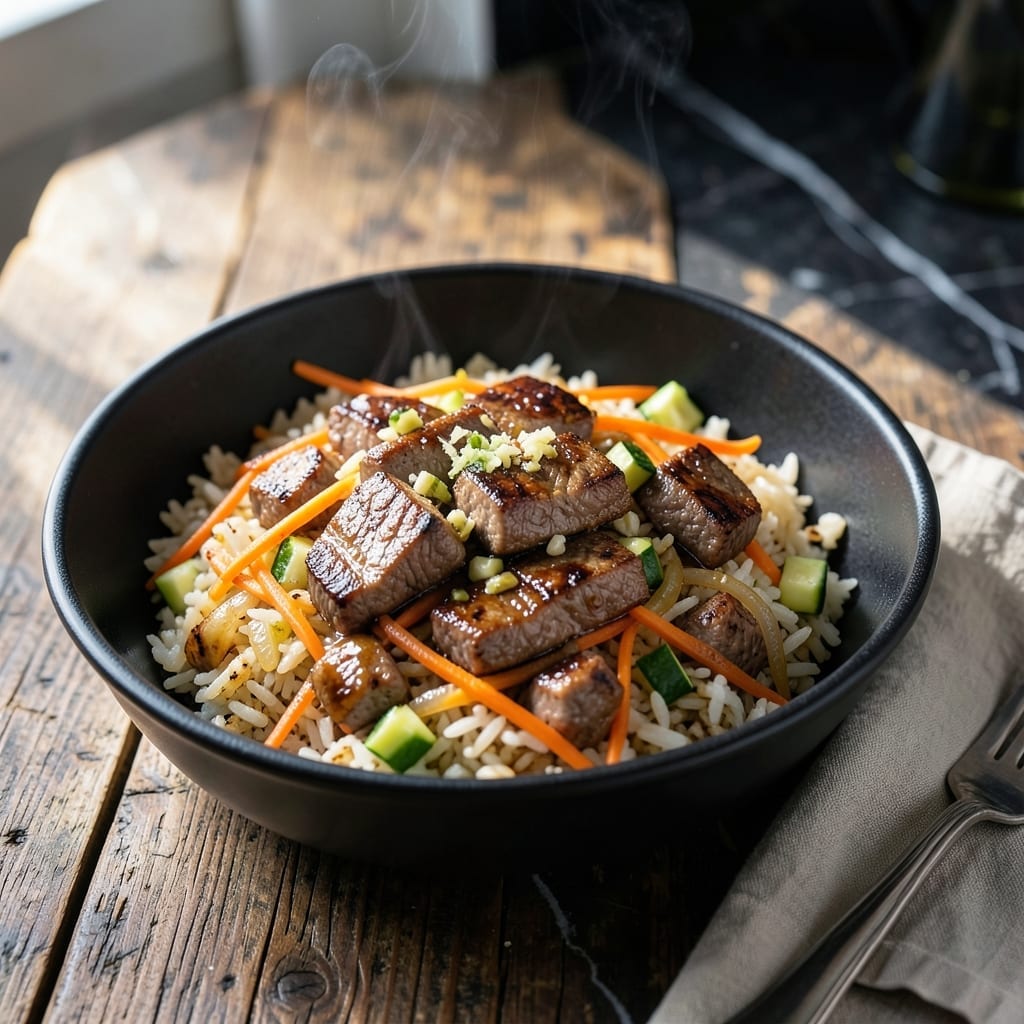
This hibachi-style dish brings restaurant flair to your home kitchen with minimal effort. The secret lies in cooking the beef and rice at high heat to achieve that signature charred flavor and texture.
I developed this method after testing multiple approaches to replicate the teppanyaki experience. The key is using cold, day-old rice and cutting the beef into small, uniform pieces for even cooking.
You’ll end up with tender beef, slightly crispy vegetables, and rice with that distinctive smoky taste. The sauce ties everything together with a perfect balance of savory and sweet notes.
Ready in under 30 minutes, this creates a complete meal that’s sure to impress. The technique is straightforward but delivers professional results.
Ingredients for Hibachi Beef Fried Rice
Ribeye, day-old rice, and a handful of fresh veggies—this is teppanyaki at home.
| Ingredient | Amount | Notes |
|---|---|---|
| White Rice 🍚 | 3 cups | Day-old, cooked and chilled |
| Ribeye Steak 🥩 | 1 lb | Thinly sliced into small cubes |
| Soy Sauce 🫒 | ⅓ cup | Low-sodium preferred for balance |
| Onion 🧅 | 1 whole | Yellow or white, finely diced |
| Carrots 🥕 | 2 whole | Medium, julienned or diced |
| Zucchini 🥒 | 1 whole | Medium, diced into small pieces |
| Garlic Cloves 🧄 | 4 cloves | Minced for maximum flavor |
| Ginger Root 🌿 | 1 tbsp | Freshly grated (about 1-inch piece) |
| Sesame Oil 🫒 | 2 tbsp | Toasted variety for depth |
| Vegetable Oil 🫒 | 3 tbsp | High smoke point for stir-frying |
| Large Eggs 🥚 | 2 whole | Lightly beaten for scrambling |
| Green Onions 🧅 | 3 whole | Thinly sliced for garnish |
| Butter 🧈 | 2 tbsp | Unsalted, for finishing |
| Salt 🧂 | 1 tsp | Kosher or sea salt preferred |
| Black Pepper 🌶️ | ½ tsp | Freshly ground for best flavor |
The beef is non-negotiable here. Ribeye gives you that buttery, charred flavor you expect from hibachi—sirloin or flank work in a pinch but lack the same richness. I grab mine from Whole Foods or Costco when it’s on sale. For the rice, use jasmine or short-grain—long-grain stays too separate. Must be cold and day-old (fresh rice turns mushy). The veggies? Whatever’s crisp in your crisper drawer works.
No ribeye? Flank steak or even ground beef can sub in, but slice it thin and cook it fast. Soy sauce is the backbone of the flavor, so use a quality brand like Kikkoman or San-J. Out of ginger? Ground ginger at one-fourth the amount works, but fresh adds that bright zing. The sesame oil is worth hunting down at an Asian market—Kadokawa is my go-to. Skip the pre-shredded carrots (they dry out).
Fried rice is a fridge clean-out champion. Keeps 3-4 days in an airtight container. Reheat in a skillet with a splash of water to bring back the sizzle. Freezes for 2 months if you want to meal prep. Always cook the rice the day before—no shortcuts here (worth the extra minute).
Why You’ll Love This Recipe
- One Pan Meal: I love that everything—ribeye, rice, veggies—cooks together in one pan, so cleanup’s a breeze.
- Umami Bomb: The soy sauce and ribeye create this rich, savory depth that makes every bite ridiculously good.
- Weeknight Hero: Honestly, it’s my go-to for busy evenings when I need dinner on the table fast.
- Stretches Further: Leftovers taste even better the next day, and it’s a solid way to use up that extra rice.
Step-by-Step Instructions for Hibachi Beef Fried Rice
Here’s the method. Straightforward, tested, works every time.
Step 1: Prep All Ingredients for High-Heat Cooking
Start by thinly slicing the 1 lb Ribeye Steak into small cubes—this ensures quick, even cooking. Finely dice the 1 whole Onion, julienne the 2 whole Carrots, and dice the 1 whole Zucchini into small pieces. Mince the 4 cloves Garlic Cloves and grate the 1 tbsp Ginger Root.
Lightly beat the 2 whole Large Eggs and thinly slice the 3 whole Green Onions. Measure out the 0.33 cup Soy Sauce, 2 tbsp Sesame Oil, 3 tbsp Vegetable Oil, 2 tbsp Butter, 1 tsp Salt, and 0.5 tsp Black Pepper. Having everything prepped (mise en place) is crucial for stir-frying—once you start cooking, there’s no time to chop.
Step 2: Cook the Ribeye to Medium-Rare Perfection
Heat 1 tbsp Vegetable Oil in a wok or large skillet over high heat until shimmering. Add the cubed Ribeye Steak, spreading it into a single layer. Let it sear undisturbed for 45-60 seconds until browned on the bottom.
Stir-fry for another 1-2 minutes until the beef is just cooked through but still slightly pink inside. Transfer the beef to a plate and set aside. Don’t overcook it—it’ll continue cooking slightly when added back to the fried rice later. The key here is high heat and quick cooking to maintain tenderness.
Step 3: Scramble the Eggs and Sauté the Vegetables
In the same pan, add another 1 tbsp Vegetable Oil and swirl to coat. Pour in the beaten Large Eggs and scramble quickly with a spatula until just set but still slightly runny—about 30-45 seconds. Remove the eggs and set aside with the beef.
Add the remaining 1 tbsp Vegetable Oil to the pan, then toss in the diced Onion, Carrots, and Zucchini. Stir-fry over high heat for 4-5 minutes until the vegetables are tender-crisp and the onions are translucent. Add the minced Garlic Cloves and grated Ginger Root, stir-frying for 30 seconds until fragrant.
Step 4: Combine Everything with the Rice and Season
Add the chilled 3 cups White Rice to the pan, breaking up any clumps with your spatula. Stir-fry for 2-3 minutes until the rice is heated through and slightly crispy in spots. Drizzle the 0.33 cup Soy Sauce and 2 tbsp Sesame Oil over the rice, tossing to coat evenly.
Return the cooked Ribeye Steak and scrambled Eggs to the pan, along with the 2 tbsp Butter, 1 tsp Salt, and 0.5 tsp Black Pepper. Stir-fry for another 2 minutes until everything is well combined and heated through. Taste and adjust seasoning if needed—the soy sauce should provide a balanced umami flavor without being overly salty.
Step 5: Garnish and Serve Immediately
Remove from heat and stir in half of the sliced Green Onions. Transfer to a serving platter and garnish with the remaining Green Onions. The rice should have a slight char and a glossy sheen from the sesame oil, with the beef and vegetables evenly distributed throughout.
Serve immediately while hot. The contrast of tender beef, crisp vegetables, and slightly charred rice is what makes this dish special. For an authentic hibachi experience, serve with extra soy sauce on the side and a sprinkle of sesame seeds if you have them.
Pro Tips For Making Hibachi Beef Fried Rice
- Chill the Rice: Use day-old, refrigerated white rice—fresh rice turns mushy. I learned this the hard way after my first three batches turned into a sticky mess.
- Slice Against the Grain: Cut the ribeye into thin strips against the grain for tender bites. About ¼-inch thick works best, and don’t skip trimming the fat first.
- High Heat Only: Crank the heat to medium-high when stir-frying the beef and veggies. After burning two batches, I finally figured out that low heat just steams the rice instead of frying it.
- Salt the Beef Early: Toss the ribeye with soy sauce and a pinch of salt 10 minutes before cooking. Sounds weird, but it works—it actually changes the outcome by keeping the meat juicy.
Regional Styles of This Dish
Japanese Teppanyaki Style
This is the classic approach you’d find at Benihana or Kona Grill. I use short-grain rice and add 1 tbsp mirin to the soy sauce for extra depth. The chefs cook everything in sequence on the flat top, creating that signature sizzle and char. 🔥
Chinese Wok Style
For a Cantonese twist, swap the ribeye for char siu pork or shrimp. I add 1 tsp oyster sauce and ½ tsp sugar to the mix. Cook in a well-seasoned carbon steel wok over high heat for that authentic wok hei flavor.
Korean Bibimbap Style
Inspired by Korean flavors, I add 1 tbsp gochujang to the sauce and top with a fried egg. Use kimchi instead of zucchini for a spicy kick. The rice gets a crispy bottom layer, called nurungji, that’s absolutely addictive.
Thai Basil Style
This version incorporates Thai basil leaves and 1 tbsp fish sauce. I also add 1 diced Thai chili for heat. The aromatic basil transforms the dish completely, making it fragrant and slightly sweet. Serve with lime wedges for brightness. ✨
Hawaiian Plate Style
Popular in Hawaiian plate lunches, this includes Spam cubes or kalua pork alongside the beef. I add 1 cup diced pineapple for sweetness. The flavors are bold and satisfying, perfect for a hearty meal.
Boston Fusion Style
My local twist uses lobster meat from New England markets instead of beef. I keep the classic veggies but add a splash of sherry wine to the sauce. It’s a luxurious take that still feels approachable for home cooks.
Nutrition Facts
Frequently Asked Questions
Can I use fresh rice instead of day-old?
No, fresh rice has too much moisture and will turn mushy. Day-old rice is drier and fries up perfectly fluffy with that signature char.
What’s the best cut of beef to use?
Ribeye is ideal for its rich flavor and tenderness. Sirloin or flank work too but may be slightly chewier. Always slice against the grain for maximum tenderness.
How do I prevent the eggs from overcooking?
Scramble them quickly over high heat for just 30-45 seconds until barely set. Remove immediately and set aside to finish cooking later when combined with the rice.
Can I add other vegetables?
Try bell peppers, mushrooms, or snap peas. Just cut them small and uniform so they cook evenly in the 4-5 minutes stir-fry time.

- Jamaican Jollof Rice Recipe: Island Spice in Every Bite - October 18, 2026
- Hamburger Rice Hot Dish Recipe: Midwest Comfort in One Pan - October 18, 2026
- Iranian Cabbage Rice Recipe: Aromatic Herbs and Spiced Layers - October 18, 2026