
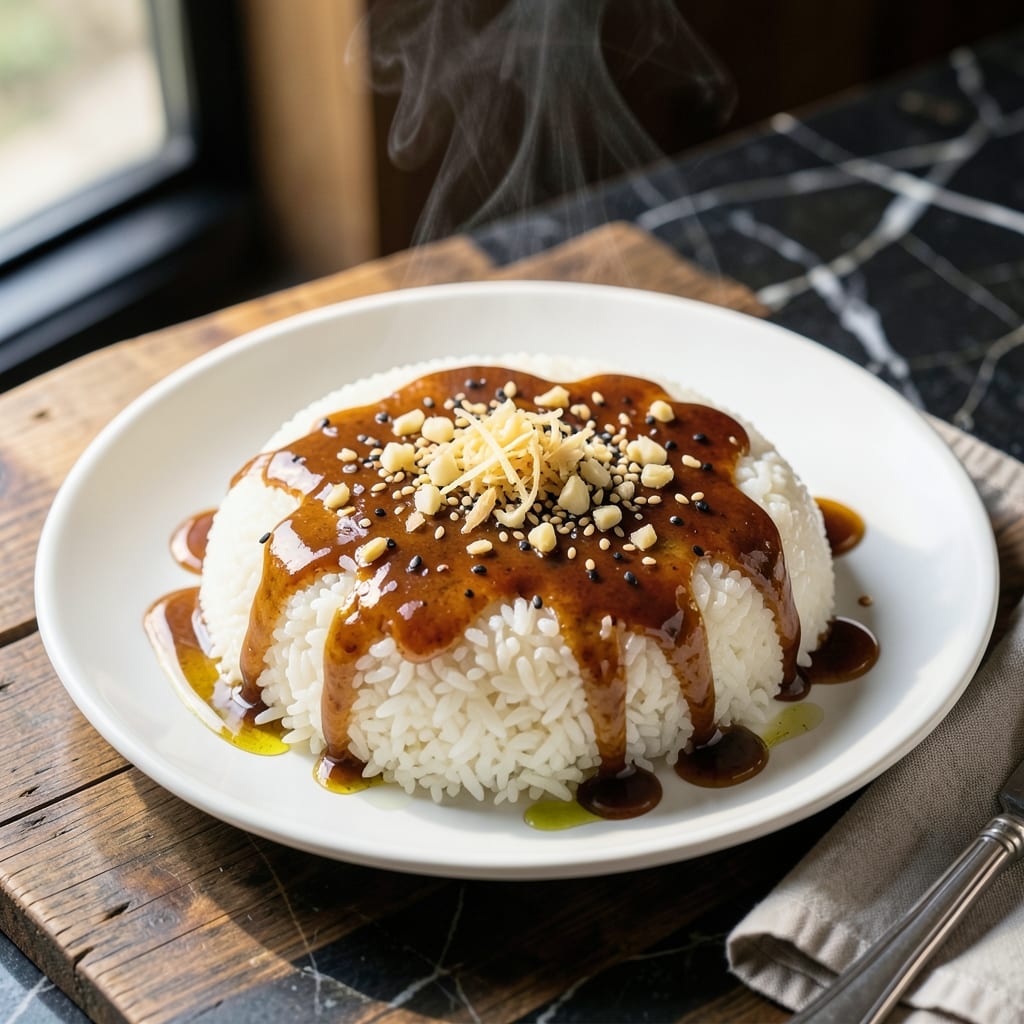
There’s nothing quite like the aroma of freshly cooked hibachi rice sizzling on a hot griddle. This recipe brings that same savory tradition to your home kitchen with minimal effort.
Using just a few simple ingredients, you can achieve that signature charred flavor and slightly crispy texture that makes hibachi rice so special. The key is high heat and proper seasoning.
What you’ll get is a dish that pairs perfectly with grilled proteins and vegetables, just like your favorite Japanese steakhouse. The rice develops a subtle smokiness that’s irresistibly satisfying.
No special equipment needed—just a skillet and about 20 minutes of your time. The results will transport you straight to the teppanyaki table.
Ingredients for Hibachi Rice
Short list. Big flavor. Just like your favorite steakhouse griddle.
| Ingredient | Amount | Notes |
|---|---|---|
| Japanese Short-Grain Rice 🍚 | 2 cups | Sushi rice variety preferred |
| Water 💧 | 2 ½ cups | For cooking rice |
| Soy Sauce 🫒 | 3 tbsp | Low-sodium for control |
| Sesame Oil 🫒 | 1 tbsp | Toasted for authentic flavor |
| Rice Vinegar 💧 | 1 tbsp | Seasoned or unseasoned |
| Granulated Sugar 🍚 | 1 tsp | Balances acidity |
| Garlic Cloves 🧄 | 3 cloves | Minced for even distribution |
| Fresh Ginger 🌿 | 1 tbsp | Grated or finely minced |
| Green Onions 🧅 | 4 whole | Thinly sliced for garnish |
| Vegetable Oil 🫒 | 2 tbsp | High smoke point for charring |
| Salt 🧂 | ½ tsp | Adjust to taste |
| White Pepper 🌶️ | ¼ tsp | Traditional in hibachi rice |
| Butter 🧈 | 2 tbsp | Unsalted for control |
The rice is non-negotiable here. Japanese short-grain (sushi rice) gives you that sticky, slightly chewy texture that clumps perfectly for hibachi. Look for brands like Koshihikari or Nishiki at Asian markets or the international aisle. Don’t rinse it too aggressively—just until the water runs mostly clear. The soy sauce should be fresh; if yours has been sitting open for months, grab a new bottle.
No rice vinegar? Apple cider vinegar in a pinch—just reduce the sugar slightly. For extra depth, swap half the water for dashi or chicken stock. The butter is classic, but vegetable oil works if you’re avoiding dairy. White pepper is traditional, but black pepper is fine (just a slightly different flavor). Fresh ginger is ideal, but ground ginger at half the amount gets you close.
Cooked rice keeps 3-4 days in the fridge, but it’s best fresh—hibachi rice loses its charred magic when reheated. Freeze extras for up to 1 month, though the texture changes slightly. Always bring rice to room temp before stir-frying for the best results.
Why You’ll Love This Recipe
- One Pot Wonder: I toss everything in a single pot—rice, water, soy sauce—and let it steam while I prep the rest of dinner.
- Umami Bomb: The combo of sesame oil and rice vinegar hits that sweet-savory spot every time. Honestly, it’s the reason I keep making it.
- Meal Prep Hero: Makes a big batch that reheats beautifully for lunches all week.
Step-by-Step Instructions for Hibachi Rice
Master the technique and you’ll recreate that signature smoky, savory restaurant flavor at home.
Step 1: Cook the Japanese Short-Grain Rice
Rinse the 2 cups Japanese Short-Grain Rice under cold water until the water runs clear—this removes excess starch and prevents gummy rice. I use a fine-mesh strainer for this step to avoid losing grains down the drain.
Combine the rinsed rice with the 2.5 cups Water in a saucepan. Bring to a boil, then reduce heat to low, cover, and simmer for 15 minutes. Remove from heat and let it sit covered for another 10 minutes—this steam period ensures every grain is tender and fluffy.
Step 2: Prepare the Aromatic Sauce Base
While the rice cooks, mince the 3 cloves Garlic Cloves and grate the 1 tbsp Fresh Ginger. In a small bowl, whisk together the 3 tbsp Soy Sauce, 1 tbsp Sesame Oil, 1 tbsp Rice Vinegar, 1 tsp Granulated Sugar, 0.5 tsp Salt, and 0.25 tsp White Pepper until the sugar dissolves completely.
This sauce is the heart of your dish—taste it and adjust the seasoning if needed. The vinegar should provide a subtle tang, while the sugar balances the saltiness of the soy. Set this aside until the rice is finished cooking.
Step 3: Charr the Rice with High Heat
Heat a large skillet or wok over medium-high heat until it’s very hot. Add the 2 tbsp Vegetable Oil and swirl to coat the pan evenly. The oil should shimmer but not smoke—if it smokes, your pan is too hot and you risk burning the garlic and ginger.
Add the minced garlic and grated ginger to the pan and stir constantly for 30 seconds until fragrant. Immediately add the cooked rice, breaking up any clumps with your spatula. Press the rice firmly into the pan and let it sit undisturbed for 2-3 minutes to develop that coveted char.
Step 4: Incorporate the Sauce and Finish
Pour the prepared sauce evenly over the charred rice. Add the 2 tbsp Butter and stir everything together, scraping up any browned bits from the bottom of the pan. These bits are packed with flavor and will dissolve into the rice as you mix.
Cook for another 2-3 minutes, stirring occasionally, until the rice is evenly coated and heated through. The butter should melt completely, giving the rice a rich, glossy finish that’s characteristic of hibachi-style cooking.
Step 5: Garnish and Serve
Thinly slice the 4 whole Green Onions and sprinkle them over the rice just before serving. The green onions add a fresh, crisp contrast to the rich, savory rice. Give everything one final toss to distribute the garnish evenly.
Serve immediately while the rice is still hot and at its peak texture. Each bite should deliver a balance of smoky char, umami depth from the soy, and a hint of sweetness that makes this dish irresistibly moreish. This makes enough for 4 servings of perfectly seasoned hibachi rice.
Pro Tips For Making Hibachi Rice
- Rinse the Rice: Wash the short-grain rice under cold water until the water runs clear—this removes excess starch and keeps the grains separate. I learned this the hard way after ending up with a gummy mess.
- Toast Before Steaming: Sauté the drained rice in the pot for 1-2 minutes before adding water. Sounds weird, but it works: it adds a nutty depth that pairs perfectly with the soy sauce.
- Skip Over-Saucing: Resist the urge to drown the rice in soy sauce—start with 1 tablespoon per cup of cooked rice, then adjust. After burning three batches, I finally figured out less is more here.
- Finish with Vinegar: Stir in the rice vinegar at the very end, off the heat. My grandmother swore by this, and she was right: it brightens the flavor without overpowering the dish.
Serving Suggestions for This hibachi rice
Protein Pairings
This rice shines alongside grilled chicken breast or shrimp cooked in the same pan. I marinate my proteins in soy sauce and garlic for 30 minutes before cooking. The juices from the meat mingle beautifully with the charred rice. 🔥
Vegetable Additions
Toss in zucchini, mushrooms, or onions during the final 2 minutes of cooking. Cut them into small, even pieces so they heat through quickly. A handful of bean sprouts adds a satisfying crunch.
Garnish Ideas
Beyond green onions, try sesame seeds or nori strips for extra texture and visual appeal. A drizzle of sriracha or eel sauce adds a flavor boost. Fresh cilantro works surprisingly well too.
Serving Style
Serve family-style in a large bowl with serving spoons, or plate individual portions. For presentation, shape the rice into a small mound and top with garnishes. The charred bits should be visible for that authentic hibachi look.
Beverage Pairings
A cold Asian lager like Sapporo or Asahi complements the smoky flavors perfectly. For non-alcoholic options, green tea or ginger beer cleanse the palate between bites. 🍺
Extra Flavor Boost
For a restaurant touch, add 1 tsp fish sauce to the sauce mix. It deepens the umami without being noticeable. A pat of extra butter on top as it serves adds a luxurious finish.
Nutrition Facts
Frequently Asked Questions
Can I use regular rice instead of Japanese short-grain?
Japanese short-grain is ideal for its sticky texture, but you can use jasmine rice in a pinch. Avoid long-grain varieties like basmati, as they won’t clump properly. Rinse well to remove excess starch.
Why does my rice turn out mushy?
Over-stirring or not letting the rice char undisturbed causes this. Press the rice firmly into the pan and resist stirring for 2-3 minutes to achieve that crispy texture. Use medium-high heat for best results.
How do I make it vegetarian?
Skip the butter and use vegetable oil instead. Add tofu or extra veggies like bell peppers and carrots. The soy-ginger sauce keeps it flavorful without meat.
Can I make this ahead of time?
Cooked rice can be refrigerated for 3-4 days, but the charred texture is best fresh. Reheat in a skillet with a splash of oil to revive the crispiness.

- Jamaican Jollof Rice Recipe: Island Spice in Every Bite - October 18, 2026
- Hamburger Rice Hot Dish Recipe: Midwest Comfort in One Pan - October 18, 2026
- Iranian Cabbage Rice Recipe: Aromatic Herbs and Spiced Layers - October 18, 2026