
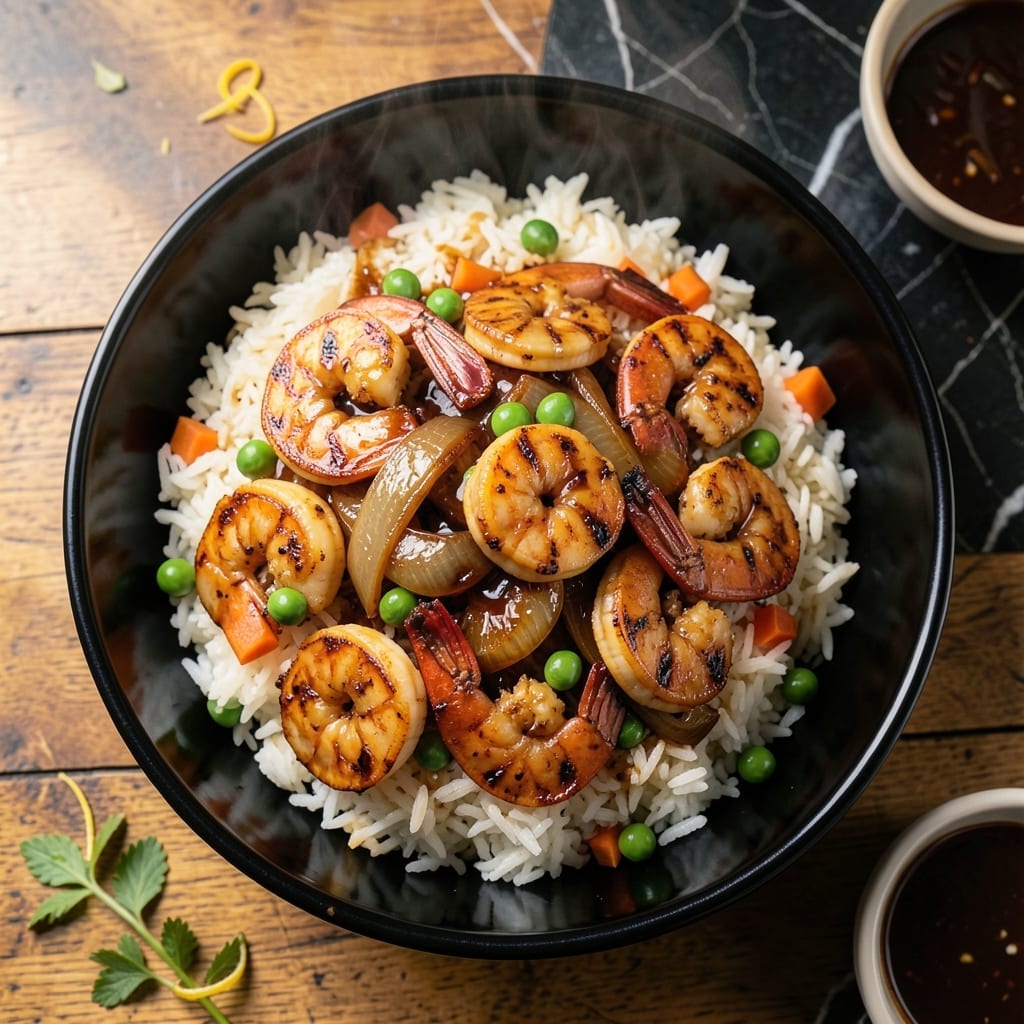
This hibachi-style dish brings restaurant-quality flavors to your kitchen with minimal effort. The secret lies in high-heat cooking that creates charred shrimp and perfectly seared rice with umami depth.
I’ve refined this method to ensure every bite delivers that signature wok-seared taste—tender shrimp, crisp vegetables, and rice with just the right amount of smoky char. No special equipment required.
Ingredients for Hibachi Shrimp Fried Rice
High-heat essentials for that signature wok-seared taste with charred shrimp and umami-packed rice.
| Ingredient | Amount | Notes |
|---|---|---|
| Large Shrimp 🦐 | 1 ½ lb | Peeled, deveined, tails on |
| Jasmine Rice 🍚 | 3 cups | Day-old, cooked and chilled |
| Soy Sauce 🫒 | ⅓ cup | Low-sodium preferred |
| Sesame Oil 🫒 | 2 tbsp | Toasted for depth |
| Vegetable Oil 🫒 | 3 tbsp | High smoke point required |
| Garlic Cloves 🧄 | 4 cloves | Minced finely |
| Fresh Ginger Root 🌿 | 1 tbsp | Grated or minced |
| Green Onions 🧅 | 4 whole | Thinly sliced, white and green parts separated |
| Carrots 🥕 | 2 whole | Julienned or finely diced |
| Zucchini 🥒 | 1 whole | Diced into small cubes |
| Peas 🌱 | ¾ cup | Fresh or frozen, thawed |
| Large Eggs 🥚 | 2 whole | Lightly beaten |
| Butter 🧈 | 2 tbsp | Unsalted, for finishing |
| Salt 🧂 | ½ tsp | Kosher or sea salt |
| Black Pepper 🌶️ | ¼ tsp | Freshly ground preferred |
The shrimp must be fresh—look for wild-caught if possible, or high-quality frozen from Whole Foods or Trader Joe’s. Day-old jasmine rice is non-negotiable; fresh rice turns mushy. For soy sauce, Kikkoman Low-Sodium strikes the right balance. Sesame oil should be toasted for that deep, nutty aroma. Don’t skip the high smoke point oil—avocado or peanut oil work too if you’re out of vegetable.
No jasmine rice? Basmatis or short-grain sushi rice are solid backups. Shrimp can be swapped for scallops or firm white fish like cod. For a gluten-free version, tamari instead of soy sauce works perfectly. Fresh ginger is key, but ground ginger at one-quarter the amount in a pinch. The peas can be swapped for corn or bell peppers—whatever’s crisp in your fridge.
Cooked rice keeps in the fridge for 3-4 days, but for fried rice, day-old is ideal. The dish reheats well—store leftovers in an airtight container for up to 3 days. For best results, freeze shrimp uncooked and thaw in the fridge overnight.
Why You’ll Love This Recipe
- I’ll be real: large shrimp feel fancy, but jasmine rice keeps it affordable for leftovers tomorrow.
- One Pan Magic: Honestly, I just toss the shrimp, rice, and sauces in one pan—no fancy techniques, no extra dishes.
- Umami Bomb: That combo of soy sauce and sesame oil with juicy shrimp? Ridiculously good, like takeout but better.
- Weeknight Hero: Between us, this feeds my family in 20 minutes flat on busy evenings.
Step-by-Step Instructions for Hibachi Shrimp Fried Rice
Master the technique that transforms simple ingredients into restaurant-quality fried rice with charred shrimp.
Step 1: Prepare the Shrimp and Aromatics
Pat the 1.5 lb Large Shrimp completely dry with paper towels—this prevents steaming and ensures proper charring. Season both sides with 0.5 tsp Salt and 0.25 tsp Black Pepper. In a small bowl, combine the 4 cloves Garlic Cloves (minced) and 1 tbsp Fresh Ginger Root (grated) for even distribution during cooking.
Heat 1 tbsp of the 3 tbsp Vegetable Oil in a wok or large skillet over high heat until it shimmers but doesn’t smoke. Add the shrimp in a single layer, working in batches if necessary to avoid crowding. Cook undisturbed for 1-2 minutes per side until pink and slightly charred at the edges. Transfer to a plate and set aside.
Step 2: Sauté the Vegetables
In the same wok, add the remaining 2 tbsp Vegetable Oil. Add the 2 whole Carrots (julienned) and 1 whole Zucchini (diced) and stir-fry for 3-4 minutes until the edges begin to soften and take on color. The carrots should retain a slight bite—overcooking will make them mushy in the final dish.
Push the vegetables to one side of the wok and add the garlic-ginger mixture to the empty space. Stir constantly for 30 seconds until the aromatics become fragrant but don’t brown. Immediately add the 4 whole Green Onions (white parts only) and 0.75 cup Peas, stirring to combine. Cook for 1 minute to meld the flavors.
Step 3: Scramble the Eggs and Combine
Create a well in the center of the wok and add the 2 whole Large Eggs (lightly beaten). Scramble quickly with a spatula, breaking the curds into small pieces as they set—this should take 20-30 seconds. The eggs should be just set but still slightly runny, as they’ll finish cooking with the rice.
Add the 3 cups Jasmine Rice (day-old and chilled) to the wok, breaking up any clumps with your hands or the spatula. The cold rice is critical—it fries rather than steams, giving you that signature texture. Stir-fry for 2 minutes to heat the rice through and integrate all the ingredients evenly.
Step 4: Season and Finish
Drizzle the 0.33 cup Soy Sauce evenly over the rice mixture, then add the 2 tbsp Sesame Oil. Toss everything together for 1-2 minutes until the rice is uniformly coated and the soy sauce has darkened the grains. The rice should be slightly crispy in spots with a glossy sheen from the oils.
Return the shrimp to the wok along with the 2 tbsp Butter. Stir-fry for 1 final minute to heat the shrimp through and allow the butter to melt, adding a rich finish. Garnish with the green onion tops and serve immediately, while the rice is at its peak texture and the shrimp are still juicy.
Pro Tips For Making Hibachi Shrimp Fried Rice
- Pre-cook the rice: Use day-old, cold jasmine rice—fresh rice turns to mush. I learned this the hard way after my first attempt ended up as a sticky, sad pile.
- Dry your shrimp: Pat the shrimp very dry with paper towels before cooking, or they’ll steam instead of sear. About 2 tablespoons of vegetable oil in a screaming-hot pan guarantees that golden crust.
- Skip the crowding: Cook the shrimp in a single layer and don’t stir for the first 30 seconds—this gives them that hibachi-style char. Resist the urge to poke at them; they’ll release when ready.
- Finish with sesame oil: Drizzle the sesame oil after removing from heat—it loses its fragance if cooked too long. About 1 teaspoon is enough to add that nutty aroma without overpowering the dish.
Flavor Customization for This hibachi shrimp fried rice
Extra Spicy Kick
For heat lovers, add 1 tbsp sriracha or 1 tsp chili oil when tossing the rice with soy sauce. I also mix in ½ tsp red pepper flakes with the garlic and ginger for layered spice. The heat builds gradually without overpowering the dish. 🌶️
Teriyaki Glaze Twist
Swap 2 tbsp of soy sauce for teriyaki sauce—I use Kikkoman Teriyaki for consistency. Add 1 tbsp honey and 1 tsp rice vinegar for balance. This creates a sweeter, glossier finish that kids and adults both love.
Extra Veggie Boost
Add 1 cup diced bell peppers or ½ cup corn kernels with the carrots and zucchini. For extra crunch, toss in ½ cup bean sprouts at the very end. The additional vegetables soak up the umami flavors beautifully.
Protein Swap
Replace shrimp with 1.5 lb chicken breast (diced) or 1 lb firm tofu (pressed and cubed). For chicken, cook until 165°F internal temp. For tofu, press for 30 minutes first to ensure proper charring.
Umami Bomb
Enhance depth with 1 tbsp oyster sauce or 1 tsp fish sauce mixed into the soy sauce. I also sprinkle 1 tsp sesame seeds and 1 tbsp furikake at the end for a nutty, salty finish. 💡
Citrus Zing
Finish with 1 tbsp lime juice and 1 tsp lime zest for brightness. The acidity cuts through the richness while complementing the shrimp. Add just before serving to preserve the fresh citrus notes.
Nutrition Facts
Frequently Asked Questions
Why must the rice be day-old for this dish?
Fresh rice contains too much moisture, causing it to steam instead of fry. Day-old rice dries out slightly, ensuring it gets that perfect slightly crispy texture when stir-fried.
Can I use a regular skillet instead of a wok?
Yes! A large, heavy skillet with high sides works well. Just ensure it’s heated to high heat before adding ingredients to achieve proper searing and charring.
How do I prevent the shrimp from becoming rubbery?
Cook shrimp in batches to avoid overcrowding, and remove them from heat as soon as they turn pink and slightly charred. They’ll finish cooking when added back to the wok later.
What’s the best way to store leftovers?
Store in an airtight container in the fridge for up to 3 days. Reheat in a skillet over medium-high heat to restore the texture.

- Jamaican Jollof Rice Recipe: Island Spice in Every Bite - October 18, 2026
- Hamburger Rice Hot Dish Recipe: Midwest Comfort in One Pan - October 18, 2026
- Iranian Cabbage Rice Recipe: Aromatic Herbs and Spiced Layers - October 18, 2026