
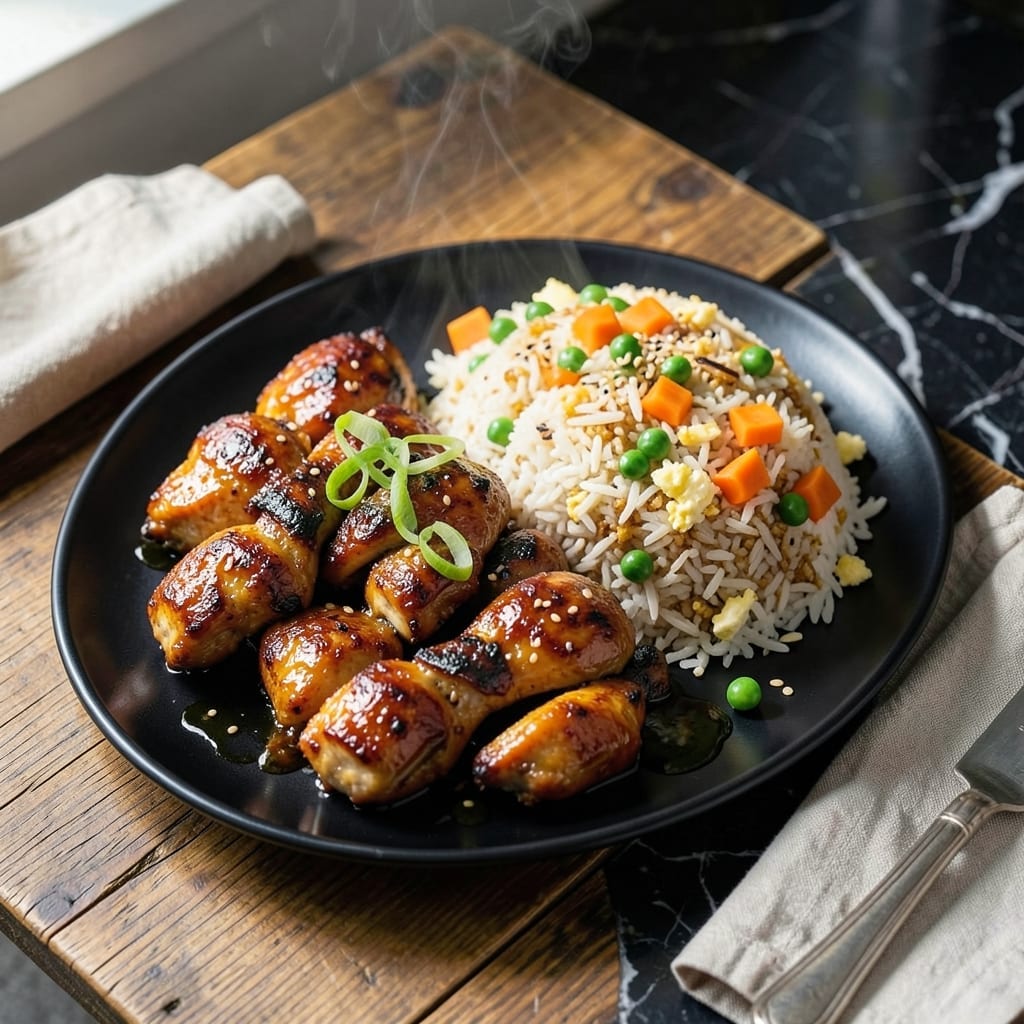
There’s something captivating about the sizzle of hibachi-style cooking, where protein and rice meet in a symphony of smoky, savory flavors. I’ve refined this technique over years of wok work, focusing on high heat and precise timing to replicate that restaurant experience at home.
This dish brings together tender teriyaki-glazed chicken and perfectly charred fried rice, each bite delivering layers of umami and texture. The chicken is cooked quickly at high temperatures to lock in juices, while the rice develops that signature caramelized finish.
The teriyaki sauce is reduced just enough to coat the chicken without overwhelming it, and the fried rice gets its depth from a combination of soy, garlic, and a touch of sesame oil. It’s a meal that feels indulgent but comes together with straightforward, repeatable steps.
Serve it straight from the wok for that authentic hibachi presentation, with the chicken and rice mingling on the plate. The result is a dish that satisfies both the eyes and the palate.
Ingredients for Hibachi Teriyaki Chicken and Fried Rice
Restaurant-quality ingredients bring authentic hibachi flavors to your home kitchen with ease.
| Ingredient | Amount | Notes |
|---|---|---|
| Boneless Skinless Chicken Breast 🍗 | 1 ½ lb | Cut into bite-sized pieces |
| Long-Grain White Rice 🍚 | 2 cups | Day-old, cooked and chilled |
| Soy Sauce 🫒 | ½ cup | Low-sodium preferred |
| Teriyaki Sauce 🍯 | ½ cup | Store-bought or homemade |
| Sesame Oil 🫒 | 1 tbsp | Toasted variety for depth |
| Garlic Cloves 🧄 | 4 cloves | Minced finely for maximum flavor |
| Fresh Ginger Root 🌿 | 1 tbsp | Grated or minced |
| Vegetable Oil 🫒 | 3 tbsp | High smoke point for frying |
| Frozen Peas and Carrots Mix 🥕 | 1 cup | Thawed before cooking |
| Large Eggs 🥚 | 2 whole | Beaten lightly for scrambling |
| Green Onions 🧅 | 4 whole | Thinly sliced for garnish |
| Granulated Sugar 🍚 | 1 tbsp | Balances savory flavors |
| Cornstarch 🌾 | 1 tbsp | For velvety sauce consistency |
| Kosher Salt 🧂 | 1 tsp | Adjust to taste |
| Ground Black Pepper 🌶️ | ½ tsp | Freshly ground preferred |
The chicken quality is non-negotiable for texture. Boneless, skinless chicken breast from a reliable butcher or Whole Foods ensures tender results. For the rice, day-old cooked rice from a previous meal works best—jasmine or long-grain white are ideal. The teriyaki sauce should be bold and balanced; Kikkoman is a trusted brand. Toasted sesame oil adds the signature nutty aroma essential to hibachi dishes.
No teriyaki sauce on hand? Soy sauce plus brown sugar and a splash of pineapple juice makes a quick substitute. Fresh ginger is preferable, but ground ginger at half the amount works. For the vegetable mix, fresh diced carrots and peas can replace frozen. If avoiding eggs, simply omit—they add richness but aren’t essential. Tamari can replace soy sauce for a gluten-free option.
Cooked chicken and rice keep well in the fridge for 3-4 days. Store in airtight containers to maintain freshness. The teriyaki sauce can be made ahead and refrigerated for up to 1 week. For best results, reheat the chicken and rice in a skillet to restore that sizzling hibachi texture.
Why You’ll Love This Recipe
- One Pan Meal: I love that the chicken and rice cook together in the same pan with just sesame oil and teriyaki—minimal cleanup.
- Sweet-Savory Combo: The teriyaki sauce caramelizes on the chicken while soy sauce gives the rice that deep umami kick.
- Lunchbox Hero: Pack leftovers for work or school—honestly, it tastes even better the next day.
- Budget Stretch: A pound of chicken breast and a bag of rice feeds my family of four with change to spare.
Step-by-Step Instructions for Hibachi Teriyaki Chicken and Fried Rice
Master the wok technique with precision timing and layering for authentic hibachi flavor at home.
Step 1: Velouté the Teriyaki Chicken
Heat 2 tablespoons vegetable oil in a wok or large skillet over high heat until shimmering. Add the bite-sized boneless skinless chicken breast pieces in a single layer, working in batches if necessary to avoid crowding. Season immediately with 1 teaspoon kosher salt and 0.5 teaspoon ground black pepper.
Cook undisturbed for 3-4 minutes until the chicken develops a golden-brown sear on one side. Flip and cook for another 2-3 minutes until just cooked through. Remove the chicken from the wok and set aside. The residual heat will continue cooking the pieces to perfection.
Step 2: Create the Teriyaki Glaze
In the same wok, reduce heat to medium and add the remaining 1 tablespoon vegetable oil. Sauté the minced garlic cloves and grated fresh ginger root for 30-45 seconds until fragrant but not browned. This builds the aromatic foundation for your sauce.
Pour in the 0.5 cup soy sauce, 0.5 cup teriyaki sauce, and 1 tablespoon granulated sugar. In a small bowl, mix the 1 tablespoon cornstarch with 2 tablespoons water to create a slurry, then whisk it into the sauce. Simmer for 2-3 minutes until the mixture thickens to a glossy, velvety consistency that coats the back of a spoon.
Return the cooked chicken to the wok and toss to coat evenly in the teriyaki glaze. Cook for an additional 1-2 minutes until the chicken is fully glazed and the sauce has reduced slightly. Remove from heat and drizzle with 1 tablespoon sesame oil for depth of flavor.
Step 3: Execute the Fried Rice
Increase heat to high and add the remaining 1 tablespoon vegetable oil to the wok. Pour in the beaten large eggs and scramble quickly for 30-45 seconds until just set but still slightly runny. This creates ribbons of egg that will integrate beautifully with the rice.
Add the day-old cooked long-grain white rice, breaking up any clumps with the back of your spatula. Stir-fry for 2-3 minutes until the rice is heated through and begins to develop a slight crispness. Incorporate the thawed frozen peas and carrots mix and continue cooking for another 2 minutes until the vegetables are tender.
Step 4: Finish and Plate
Add the teriyaki chicken to the wok with the fried rice and toss everything together gently. Cook for an additional 1-2 minutes to allow the flavors to meld. The rice should have a slight sheen from the sauce, with distinct grains that aren’t mushy.
Transfer to a serving platter and garnish with thinly sliced green onions. The dish should have a balance of savory, sweet, and umami flavors with a satisfying texture contrast between the tender chicken, fluffy rice, and crisp vegetables. Serve immediately while hot for the full hibachi experience.
Pro Tips For Making Hibachi Teriyaki Chicken And Fried Rice
- Chill the Chicken: Cut the boneless chicken breast into bite-sized pieces and refrigerate for 15-20 minutes before cooking—this keeps the pieces firm so they sear instead of steaming in the pan.
- Use Day-Old Rice: I learned this the hard way—fresh rice turns to mush in fried rice. Cook your long-grain white rice the day before and refrigerate it overnight so it stays separate and gets that perfect chewy texture.
- Skip the Overcrowding: Resist the urge to dump all the chicken in the pan at once. Cook in batches to avoid steaming, or you’ll end up with rubbery pieces instead of that golden hibachi sear.
- Toast the Rice First: Before adding the teriyaki sauce, let the rice sizzle in the pan with a little sesame oil for 2-3 minutes—this brings out a nutty flavor that makes the fried rice taste just like the restaurant version.
Regional Styles of This hibachi teriyaki chicken and fried rice
Tokyo Teppanyaki Style
In Tokyo, hibachi-style cooking uses a flat iron griddle called a teppan. Chefs cook chicken in small batches with precise timing, achieving that signature smoky flavor. The teriyaki glaze is often brushed on at the end for a glossy finish. I love how the chicken stays juicy despite the high heat. 🔥
Osaka Street Food
Osaka’s version is more casual, often served from food stalls. The fried rice includes extra vegetables like bean sprouts and cabbage, plus a drizzle of okonomiyaki sauce for tang. Chicken is sliced thinner and cooked with a touch of mirin for sweetness.
Hokkaido Comfort
In Hokkaido, the dish leans into heartier flavors. They use local dairy butter in the fried rice and add corn kernels for sweetness. The teriyaki sauce is often homemade with Hokkaido honey, giving it a deeper, richer taste.
Kyoto Refinement
Kyoto’s approach is more delicate, with an emphasis on presentation. The chicken is marinated in white soy sauce for a lighter color, and the rice is cooked with dashi stock for umami depth. Garnishes like pickled ginger add a refreshing contrast. ✨
Sapporo Winter Warmth
Sapporo’s cold winters call for a heartier dish. They add miso paste to the teriyaki glaze and include shredded napa cabbage in the fried rice. The chicken is often served with a side of miso soup for extra warmth.
Nagoya Bold Flavors
Nagoya’s version is bolder, with a stronger soy presence. They use dark soy sauce for the chicken and add crushed garlic to the fried rice. The dish is finished with a sprinkle of toasted sesame seeds for crunch. 💫
Nutrition Facts
Frequently Asked Questions
Can I use fresh rice instead of day-old?
Fresh rice will turn mushy in the wok. Use day-old cooked rice that’s been chilled in the fridge for at least 4 hours to achieve the perfect texture.
What’s the best way to slice the chicken?
Cut boneless chicken breast into 1-inch cubes for even cooking. Uniform pieces ensure every bite cooks through in 3-4 minutes without drying out.
How do I prevent the fried rice from sticking?
Use a well-seasoned wok or cast iron skillet with high heat. Stir constantly and add oil in 1 tablespoon increments as needed.
Can I make this dish gluten-free?
Absolutely—swap soy sauce for tamari and use a gluten-free teriyaki sauce. Verify all ingredients meet your dietary needs.

- Chuy’s Green Chili Rice Copycat Recipe: Spicy Southwest Flavor in Every Bite - September 25, 2026
- Beaten Rice Recipe: Fluffy Grains With Nutty Depth - September 25, 2026
- Machboos Rice Recipe: Bahraini Spiced One-Pot Tradition - September 25, 2026