
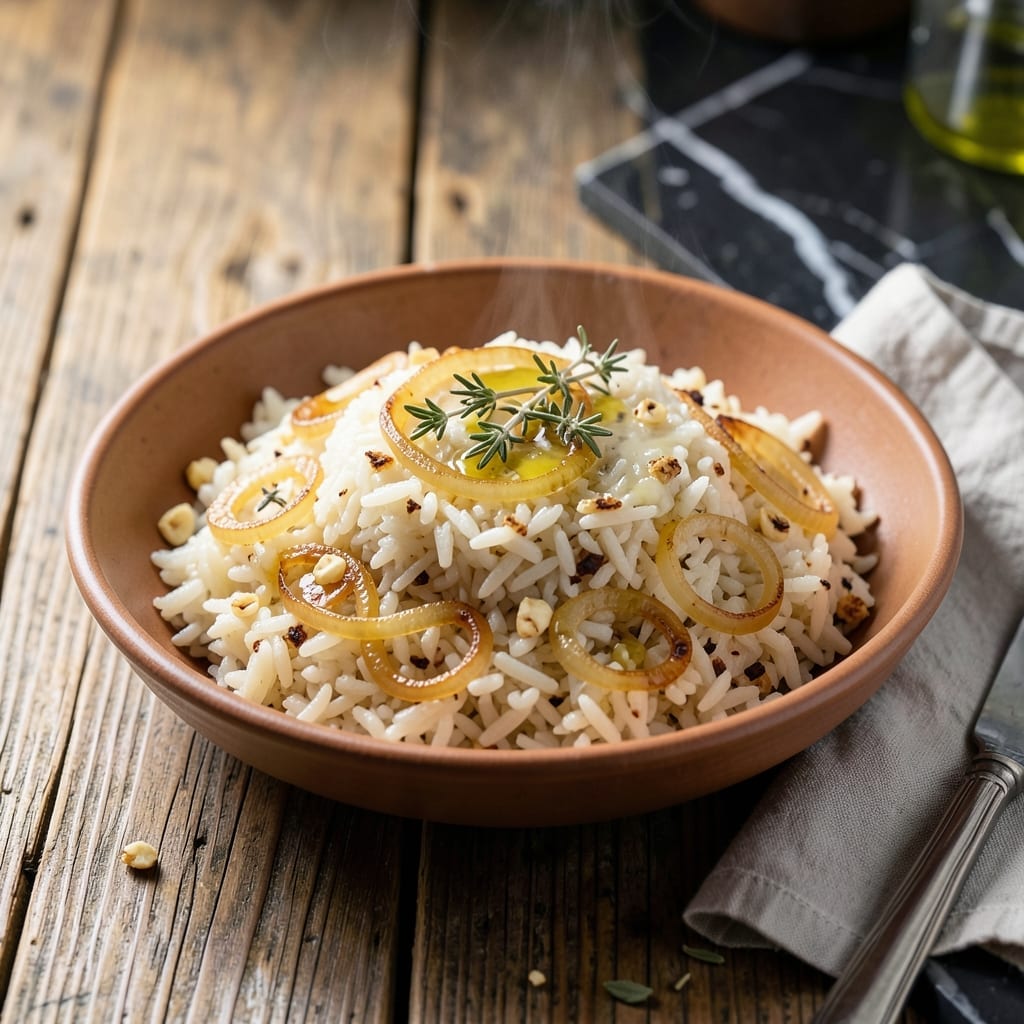
This rice pilaf delivers restaurant-quality results with a simple, foolproof method. Toasted aromatics and long-grain rice create fluffy, separate grains with rich, nutty depth.
I’ve perfected this technique to ensure every bite is fragrant and perfectly textured. The key is blooming the spices in butter before adding the liquid, which builds layers of flavor.
Ingredients for Homemade Rice Pilaf
Toasted aromatics and long-grain rice create this fragrant, perfectly textured dish with nutty depth.
| Ingredient | Amount | Notes |
|---|---|---|
| Long-Grain White Rice 🍚 | 1 ½ cups | Rinsed until water runs clear |
| Unsalted Butter 🧈 | 4 tbsp | Divided for toasting and finishing |
| Yellow Onion 🧅 | 1 whole | Finely diced for even cooking |
| Garlic Cloves 🧄 | 3 cloves | Minced for aromatic base |
| Chicken Stock 🥣 | 3 cups | Vegetable stock for vegetarian |
| Dried Thyme 🌿 | 1 tsp | Crushed to release oils |
| Dried Bay Leaf 🍃 | 1 whole | Removed before serving |
| Kosher Salt 🧂 | 1 ½ tsp | Diamond Crystal preferred |
| Ground Black Pepper 🌶️ | ½ tsp | Freshly ground for best flavor |
| Dried Parsley 🍃 | 1 tbsp | For garnish and color |
| Slivered Almonds 🌰 | ¼ cup | Toasted for crunch |
| Lemon Zest 🍋 | 1 tsp | Finely grated for brightness |
The rice quality is paramount. Basmatis or jasmine work best—avoid instant or pre-cooked varieties as they lack the structural integrity for proper toasting. Unsalted butter allows precise seasoning control, and Diamond Crystal kosher salt dissolves evenly. For vegetable stock, Better Than Bouillon offers excellent depth without added preservatives. Source your spices from Penzeys for maximum potency.
For a vegan adaptation, substitute olive oil for butter. No slivered almonds? Pine nuts or cashews add similar texture. Fresh herbs can replace dried at a 3:1 ratio, though the flavor profile will differ. The lemon zest is optional but highly recommended for balancing richness. If using pre-toasted aromatics, reduce the butter by half to avoid over-browning.
Store uncooked rice in an airtight container for up to 6 months.Toasted aromatics can be prepped 2 days ahead. Leftovers keep 4-5 days refrigerated and reheat beautifully with a splash of water or stock to restore moisture.
Why You’ll Love This Recipe
- One Pan Wonder: I love that I only need one pot and 20 minutes to turn rice, butter, and stock into something special.
- Rich & Toasty: The butter toasts the rice and onions first—honestly, that nutty aroma alone hooks me every time.
- Pairs With Everything: It’s my go-to side for chicken, fish, or even just a fried egg on top. Between us, leftovers taste even better the next day.
- Budget Stretch: A pound of rice and a few pantry staples feed my family for two meals. Not fancy, but always reliable.
Step-by-Step Instructions for Homemade Rice Pilaf
Master the technique for perfectly fluffy grains with rich, layered flavors.
Step 1: Toast the Rice and Aromatics
In a heavy-bottomed pot, melt 2 tbsp Unsalted Butter over medium heat until foaming. Add the 1.5 cups Long-Grain White Rice and cook, stirring frequently, for 2-3 minutes until the grains turn translucent at the edges. This toasting step is crucial—it deepens the nutty flavor and prevents a gummy texture.
Add the finely diced Yellow Onion and cook for another 3-4 minutes until softened and just beginning to caramelize. Stir in the minced Garlic Cloves and cook for 30 seconds until fragrant. The aroma should be rich and savory, not sharp or raw.
Step 2: Bloom the Spices and Deglaze
Add the 1 tsp Dried Thyme and 1 whole Dried Bay Leaf to the pot, stirring for 15-20 seconds until the spices release their oils. This blooming step intensifies their flavor. Immediately pour in the 3 cups Chicken Stock and bring to a gentle boil.
As the liquid heats, use a wooden spoon to scrape up any browned bits from the bottom of the pot. These fond bits dissolve into the stock, adding depth to the final dish. The liquid should be lightly simmering at this stage, not a rolling boil.
Step 3: Simmer and Steam to Perfection
Once boiling, reduce heat to low, cover the pot, and let it simmer undisturbed for 15-18 minutes. The steam trapped inside cooks the rice evenly. Resist the urge to peek—lifting the lid releases steam and can lead to uneven cooking.
After 15 minutes, check for doneness: the liquid should be fully absorbed, and the grains should be tender but still distinct. If the rice is still firm, cover and cook for another 2-3 minutes. Remove the Dried Bay Leaf before serving.
Step 4: Toast the Almonds and Finish
While the rice cooks, melt the remaining 2 tbsp Unsalted Butter in a small skillet over medium-low heat. Add the 0.25 cup Slivered Almonds and toast, stirring frequently, for 3-4 minutes until golden brown and fragrant. Watch closely—they burn easily.
Once the rice is done, gently fluff it with a fork. Stir in the 1.5 tsp Kosher Salt, 0.5 tsp Ground Black Pepper, 1 tsp Lemon Zest, and 1 tbsp Dried Parsley. Fold in the toasted almonds, reserving a few for garnish. Serve immediately for the best texture.
Pro Tips For Making Homemade Rice Pilaf
- Toast the Rice: Cook the rice in butter for 2-3 minutes until lightly golden—I learned this the hard way, but it adds a nutty depth that skipping leaves the dish flat.
- Use Room-Temp Stock: Adding cold chicken stock straight from the fridge slows the cooking and can make the rice gummy. Let it sit out for 15 minutes first.
- Don’t Stir Too Much: Resist the urge to stir the rice after adding the stock. One gentle mix at the start is enough; over-stirring breaks the grains.
- Salt the Butter: Since you’re using unsalted butter, add a pinch of salt to it as it melts—this seasons the rice from the very first step.
Common Mistakes When Making Perfect Results
Over-Toasting the Rice
Let the rice toast until it’s golden brown, not dark brown. Burnt grains can turn bitter and overpower the dish. I aim for 2-3 minutes of toasting—just until the edges turn translucent. Dark spots mean you’ve gone too far.
Skipping the Rinse
Always rinse your long-grain rice until the water runs clear. Unrinsed rice releases excess starch, leading to a gummy texture. I use a fine-mesh strainer and cold water for 30-45 seconds. This small step makes a huge difference.
Peeking While Cooking
Every time you lift the lid, you release precious steam, which can result in uneven cooking. Keep the pot covered for the full 15-18 minutes. I set a timer and resist the urge to check until it goes off. 💡
Using Wrong Liquid Ratio
The standard ratio is 2:1 liquid to rice. For this dish, 3 cups Chicken Stock to 1.5 cups rice is perfect. Too much liquid leads to mushy rice, while too little leaves it undercooked. Measure carefully for best results.
Over-Stirring After Cooking
Once the rice is done, gently fluff with a fork, but don’t overmix. Stirring too much breaks the grains and releases starch, making the dish pasty. I use a light hand and fold rather than stir vigorously.
Forgetting to Bloom Spices
Blooming the thyme and bay leaf in butter for 15-20 seconds is crucial. This releases their oils, adding depth to the dish. Skipping this step can result in a flat, underwhelming flavor. 🔥
Nutrition Facts
Frequently Asked Questions
Can I use brown rice instead of white?
Yes, but adjust the liquid to 3.5 cups and simmer for 40-45 minutes. Brown rice needs more water and time to soften its outer bran layer.
Why do I need to toast the rice first?
Toasting deepens the nutty flavor and prevents a gummy texture. It also helps the grains stay separate after cooking for 15-18 minutes.
Can I make this ahead of time?
Cook and cool completely, then store in an airtight container for up to 4-5 days. Reheat with a splash of water or stock.
What if my rice turns out mushy?
This usually means too much liquid or stirring. Next time, measure 2:1 liquid to rice and avoid peeking while cooking for 15-18 minutes.

- Jimmy Dean Sausage and Rice Recipe: Hearty One-Pot Savory Delight - October 19, 2026
- Indian Jasmine Rice Recipe: Fragrant Basmati-Free Elegance - October 19, 2026
- KFC Rizo Rice Recipe: Copycat Side Dish With Savory Spice Blend - October 19, 2026